
A queen air mattress can look spacious online, but a few inches can make a big difference once it is inflated inside a room.
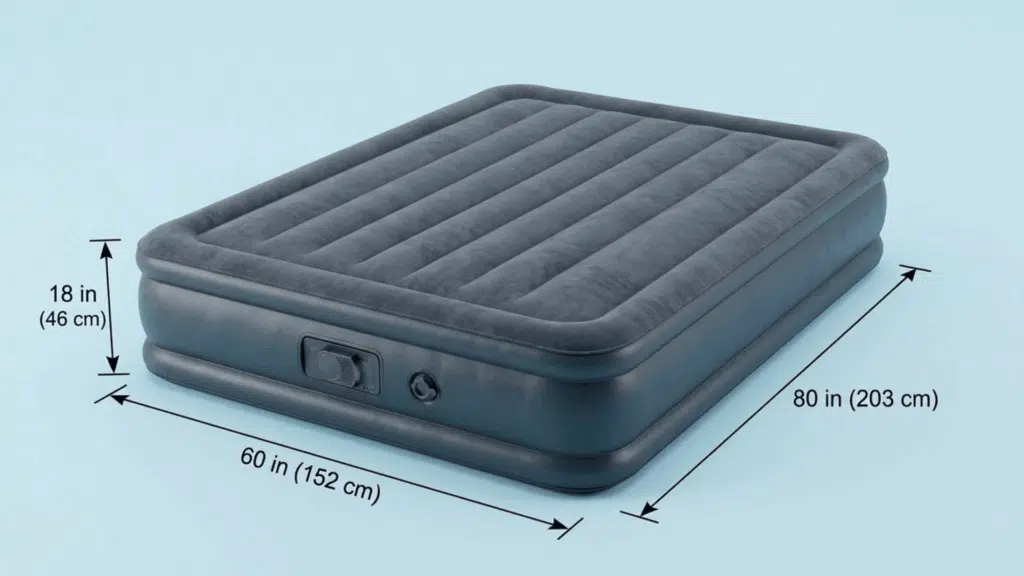
A standard queen air mattress typically measures about 60 inches wide and 80 inches long, although height and exact dimensions can vary between models.
Knowing how queen dimensions compare with twin, full, and king sizes can make it easier to plan floor space, choose suitable sheets, and accommodate guests comfortably.
Keep reading to compare queen air mattress sizes, common height variations, different airbed types, and practical measurements to check before buying.
What are Queen Air Mattress Dimensions?
A queen air mattress measures about 60 inches wide and 80 inches long once it’s fully inflated. That’s close to the size of a real queen bed, so it fits comfortably in most bedrooms or guest rooms.
Height is where things change the most. Some models sit as low as 9 inches off the floor, while raised versions can reach 18 to 22 inches, almost as tall as a regular bed frame.
A few brands trim the width down to 58 inches or shorten the length to 78 inches, so it’s smart to check the exact listing before you buy.
These small size shifts won’t affect comfort much, but they can affect it if your sheets fit snugly or slide around at night. Knowing these numbers upfront saves you from any surprises later.
Queen Air Mattress Size Compared With Other Sizes
Air mattresses come in several standard sizes, with noticeable differences in width, length, sleeping capacity, and the amount of floor space required.
For a closer look at the smaller option, compare full size mattress dimensions before deciding between a full and queen setup.
Size | Width | Length | Typical Height | Best For |
|---|---|---|---|---|
Twin | 39 in | 75 in | Varies | One sleeper |
Full | 54 in | 75 in | Varies | One adult needing more room |
Queen | 60 in | 80 in | Varies | Two adults |
King | 76 in | 80 in | Varies | Two adults wanting more space |
Will Queen Sheets Fit a Queen Air Mattress?
Queen sheets do fit a queen air mattress, but not always perfectly. Regular queen sheets are made for a 60 x 80 inch mattress with an 8 to 12 inch profile, so they work best on lower and mid-height air mattresses.
Once you go above 15 inches, standard sheets can start to slip off during the night.
For raised or tall queen air mattresses, look for deep-pocket sheets built for mattresses 15 to 22 inches thick.
These have extra fabric and stronger elastic around the corners, so they stay snug even when you toss and turn. If the sheets still feel loose, mattress bands or clips can hold them in place.
A simple fit check before bedtime saves you from waking up on bare vinyl.
Checking queen size sheet dimensions can also help confirm whether the fitted sheet has enough depth for a taller air mattress.
Note: Air mattress dimensions are approximate and may vary slightly by brand, model, construction, and inflation level. Always check the manufacturer’s listed measurements before purchasing.
How Much Floor Space Does a Queen Air Mattress Need?
A queen air mattress itself takes up about 5 by 6.7 feet of floor space, since it measures 60 inches wide and 80 inches long once inflated .
If it’s going in a bedroom, leave enough space to open doors and closets without bumping into the mattress. In a living room, measure the spot first so the mattress doesn’t block walkways or furniture.
Ceiling height matters too if you’re using a raised model, since an 18- to 22-inch mattress sits much taller off the ground.
A quick measurement with a tape measure before setup saves you from squeezing a big mattress into a small room.
Why Does Height Vary So Much Between Models?
Height depends on how the mattress is built and what it’s made for, not just brand preference.
Understanding mattress height can make it easier to compare low-profile and raised airbeds with conventional mattresses. Here’s what actually drives the difference:
- Coil Design: Mattress height mainly depends on the overall chamber/construction design and intended profile. More air coils inside the mattress mean more layers stacked on top of each other, which pushes the height up to 18-22 inches.
- Intended Use: Camping models stay low, around 9-12 inches, so they’re easier to carry and fit inside a tent.
- Guest Comfort: Raised models mimic real bed height, making it easier for older guests to sit down and stand up.
- Material Thickness: Thicker PVC or fabric layers on the top and sides add height but also improve durability.
How to Measure for a Queen Air Mattress
Always measure the mattress after it is fully inflated, since its final dimensions can differ slightly from its uninflated measurements.
Use a tape measure to check width and length at the widest points, then measure height from the floor to the top of the sleeping surface, not the trim or side edging, which can throw off the number.
If you’re buying online, compare these measurements against the product listing rather than assuming every queen model matches the standard 60 x 80 inch size.
It also helps to measure your room, doorway width, and closet storage space beforehand, especially for raised or premium models that are bulkier to carry and store.
Queen Air Mattress Dimensions by Type
Air mattresses aren’t all built the same, even within queen size. Here’s how the four main types compare on dimensions and everyday use.
Type | Typical Size | Height Range | Best For |
|---|---|---|---|
Camping air mattress | Around 60 x 80 inches | 8–12 inches | Camping, tents, and portable setups |
Raised guest airbed | Around 60 x 80 inches | 18–22 inches | Guest rooms and easier bed access |
Premium everyday airbed | Around 60 x 80 inches | 18–22 inches | Frequent indoor use and added comfort |
Low-profile queen air mattress | Around 60 x 80 inches | 6–10 inches | Small rooms, occasional guests, and easy storage |
How Do You Choose the Right Air Mattress Size?
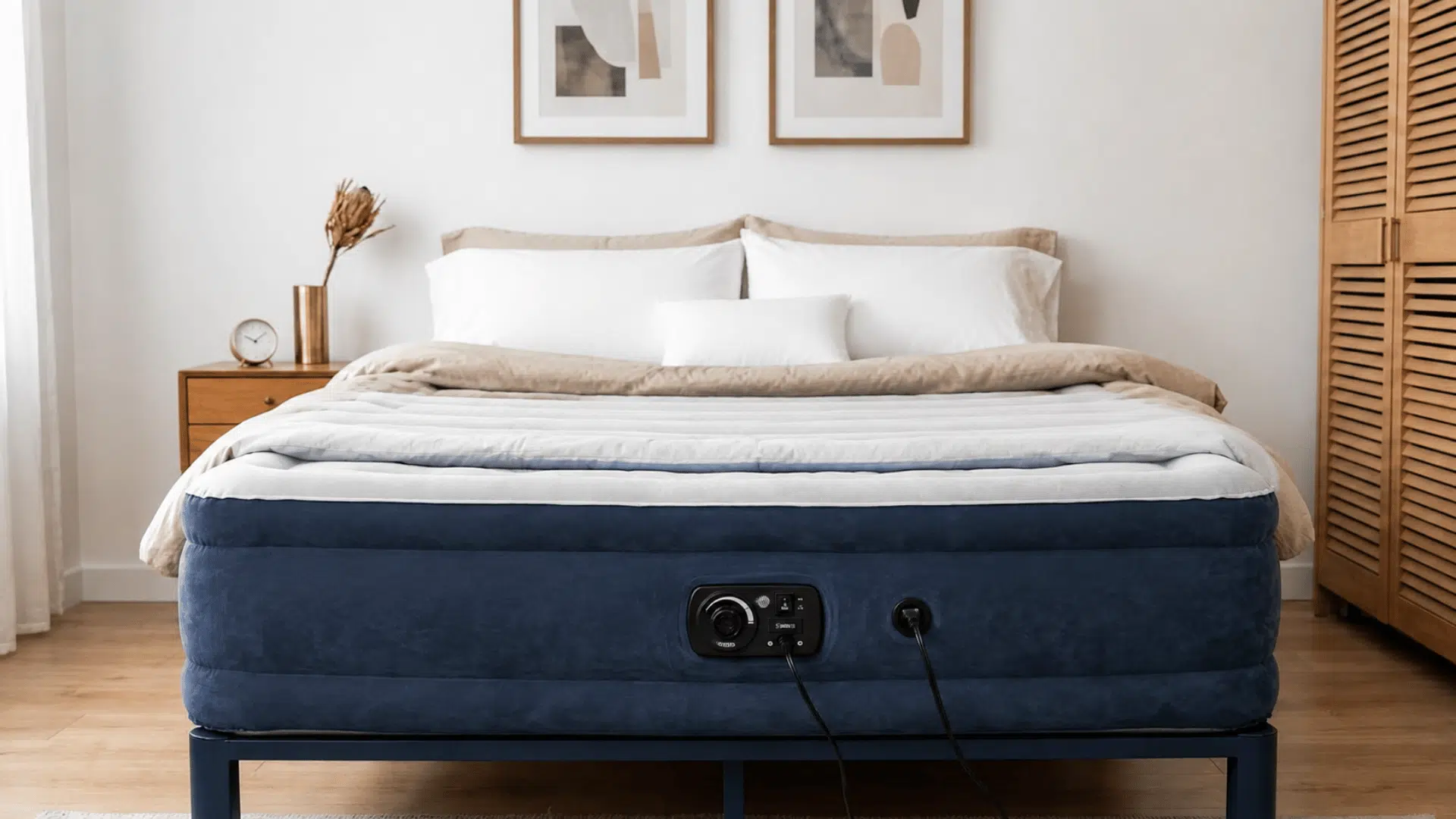
Picking the right size comes down to a few practical factors, not just going with the biggest option available. Here’s what to weigh before you buy:
1. Number of Sleepers: A full size works fine for one adult or two kids, but two adults need the extra width a queen provides to avoid rolling into each other overnight.
2. Available Floor Space: Measure the room first. A queen needs roughly 7 by 8 feet of clear space, so a full size may be the smarter fit for smaller bedrooms or shared rooms.
3. How Often It’s Used: For occasional guests, a mid-height model is enough. For frequent use, a raised, well-built mattress holds up better over time.
4. Indoor vs Outdoor Use: Camping calls for a low-profile, lightweight size that’s easy to carry, while home use allows for taller, heavier models with more comfort features.
5. Storage Constraints: Smaller sizes like twin or full pack down tighter, which matters if you’re storing the mattress in a closet or car trunk between uses.
Wrapping Up
A queen air mattress typically runs 60 inches wide, 80 inches long, and 9 to 22 inches tall, depending on the model you pick.
A full size works well for one person or a smaller room, while a queen gives couples more space to sleep without bumping into each other overnight.
Before you buy, measure your floor space, check the height, and make sure your sheets will fit once it’s blown up. A quick check now saves you from a bad night’s sleep later.
Take a few minutes to compare two or three queen models side by side, keep this size chart handy while you shop, and pick the one that matches your room, budget and your guests’ needs.
Frequently Asked Questions
How Long Does it Take to Inflate a Queen Air Mattress?
Most electric pumps fill a queen air mattress in 3 to 5 minutes, while manual or foot pumps can take 10 minutes or longer depending on how hard you’re pumping.
Can a Queen Air Mattress Fit in a Small Bedroom?
It can fit many bedrooms, but enough clearance should remain around the inflated mattress for doors, furniture, and safe walking paths.
Where Should a Queen Air Mattress Be Stored?
Store it completely deflated, clean, and dry in a protected location away from sharp objects, excessive heat, and moisture.