
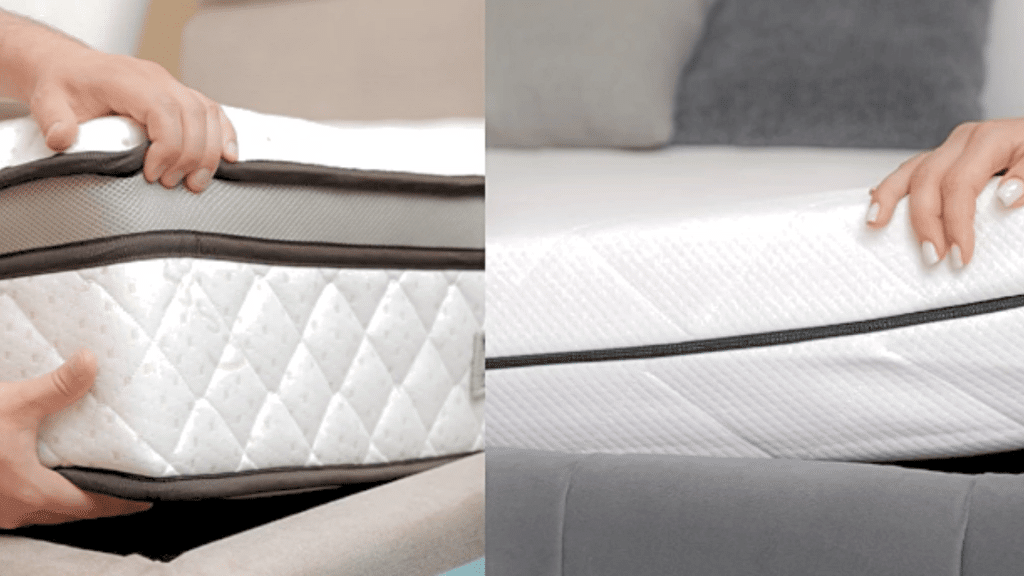
Ever feel like your bed just doesn’t feel right, too high, too low, hard to climb into, or awkward to get out of? It might not be your mattress itself; it could be the mattress height.
While it’s easy to overlook, the thickness of your mattress plays a big role in how well you sleep and how comfortable your bed feels day to day.
In this guide, I’ll walk you through everything you need to know about mattress height.
You’ll learn what’s considered standard, how to choose the best height based on your sleep style, body type, and bed frame, and what to avoid. By the end, you’ll feel confident picking the right setup that works for you.
What is Mattress Height?
Mattress height refers to the total thickness of your mattress from bottom to top. This measurement includes all layers inside the mattress, from the support core to the comfort layers on top.
Don’t confuse mattress height with bed height. Bed height is the total distance from the floor to the top of your mattress, including your bed frame or foundation.
For example, if you have a 10-inch mattress on a 14-inch bed frame, your total bed height is 24 inches.
Standard Mattress Thickness Ranges
Choosing the right mattress thickness isn’t just about comfort; it’s also about how it fits your lifestyle, sleep habits, and even your room setup.
To help you compare your options at a glance, here’s a quick breakdown of the most common mattress height ranges and who they work best for:
| Mattress Height | Best For | Pros | Cons |
|---|---|---|---|
| Slim (5–8 inches) | Kids, bunk beds, temporary setups | Lightweight, easy to move | Lacks support for regular adult use |
| Standard (8–12 inches) | Most adults generally use | Good balance of comfort and support; fits most bed frames | May not offer enough cushioning for some heavier sleepers |
| Thick (12–16 inches) | Heavier sleepers, luxury feel seekers | Extra comfort layers, supportive and plush | Requires deep-pocket sheets; raises bed height significantly |
| Extra-thick (16+ inches) | Luxury comfort, specific support needs | Maximum comfort; hotel-like experience | Expensive; very high bed setup |
Factors to Consider When Choosing Mattress Height
When it comes to finding the perfect mattress, thickness isn’t just a number; it affects everything from how well you sleep to how easily you get out of bed.
The right height depends on several personal and practical factors. Here’s what to think about before making your choice.
1. Body Weight & Sleep Position
Your body weight and how you sleep greatly influence the ideal mattress thickness for you.
- Side sleepers typically need thicker mattresses (10-14 inches) to cushion pressure points at the hips and shoulders.
- Back sleepers usually do well with medium thickness (8-12 inches) that provides good spinal support without too much sinkage.
- Stomach sleepers often prefer thinner, firmer mattresses (8-10 inches) to keep their spine aligned and prevent back pain.
- Heavier sleepers (over 200 pounds) generally need thicker mattresses (12+ inches) for adequate support and to prevent bottoming out.
- Lighter sleepers (under 150 pounds) can often sleep comfortably on thinner mattresses (8-10 inches) without losing support.
2. What’s the Ideal Bed Height (Including Mattress)
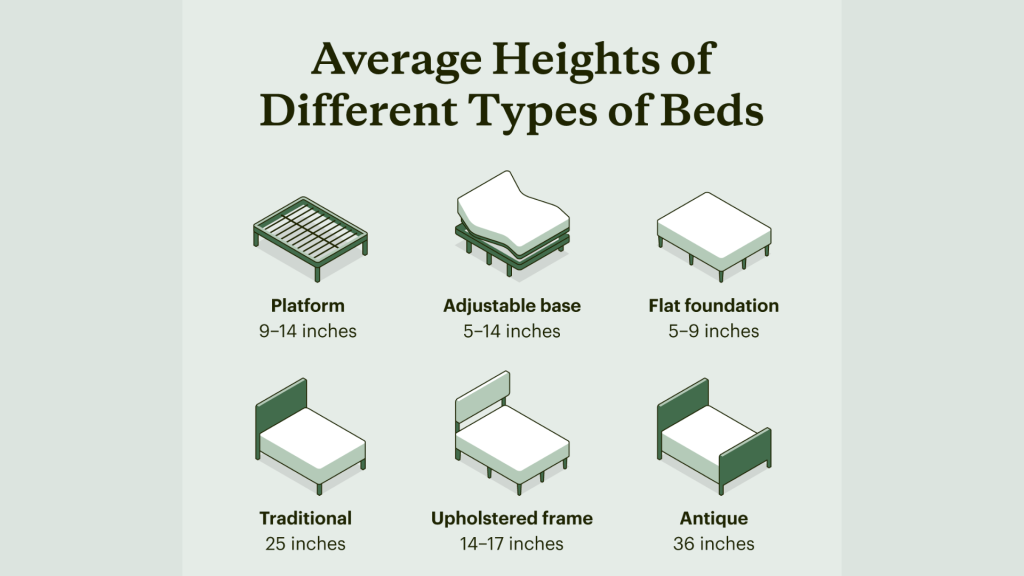
The ideal bed height combines both your mattress thickness and bed frame height. On average, most beds measure between 18 to 25 inches from the floor to the top of the mattress.
However, what’s “ideal” depends on your body type and mobility.
- Average bed height: ~25 inches
- Comfort rule of thumb: The top of your mattress should align with your knees when standing. This makes it easier to get in and out of bed.
Taller individuals may prefer slightly higher beds for less strain. Shorter individuals, children, or seniors often benefit from lower heights that prevent falls or allow safer movement.
Platform beds are lower by design, while box springs or antique frames tend to raise bed height significantly.
Pro Tip: To measure bed height, use a tape measure from the floor to the top of your mattress. Don’t forget to factor in any topper or pillow top layers.
3. Room Type & Usage
Different rooms and situations call for different mattress heights.
- Kids’ rooms: Thinner mattresses (6-8 inches) are safer for bunk beds and easier for children to get in and out of.
- Guest rooms: Standard thickness (8-10 inches) works for most visitors without being too expensive.
- Master bedrooms: You can choose any thickness based on your personal preferences and comfort needs.
- Dorm rooms: Thinner mattresses fit better in small spaces and work with standard dorm bed frames.
- RVs and campers: Slim mattresses (5-8 inches) fit better in tight spaces and are lighter to transport.
Mattress Height by Material
Different materials affect both the feel and thickness of a mattress. Here’s how each type influences overall height.
1. Memory Foam
Memory foam mattresses typically range from 8 to 14 inches thick. Thicker memory foam mattresses often have more comfort layers for pressure relief.
The support core in memory foam mattresses is usually high-density foam, which provides the foundation for the softer top layers.
2. Latex
Latex mattresses commonly range from 8-12 inches thick. Natural latex is denser than memory foam, so you don’t always need as much thickness for good support.
Latex mattresses often feel more responsive than memory foam, regardless of thickness.
3. Innerspring
Traditional innerspring mattresses are usually 8-12 inches thick. The coil system takes up most of the height, with comfort layers on top.
Innerspring mattresses tend to sleep cooler than foam mattresses, especially in standard thickness ranges.
4. Hybrid
Hybrid mattresses combine coils with foam or latex layers and typically range from 10 to 16 inches thick. The extra height comes from multiple comfort layers over the coil base.
Hybrids often provide the best of both worlds but tend to be heavier due to their construction.
How to Measure Mattress Height Correctly
Measuring mattress height accurately helps you make the right choice for your bed setup.
- Step 1: Place the mattress on a flat, hard surface like the floor.
- Step 2: Use a tape measure or ruler to measure from the bottom of the mattress straight up to the highest point on top.
- Step 3: Take measurements at several points across the mattress, as some areas might compress differently.
- Step 4: Record the thickest measurement, as this represents the true mattress height.
Common measuring mistakes: Don’t measure while the mattress is on a soft surface or bed frame, as this can compress the bottom and give inaccurate readings.
Also, avoid measuring compressed areas where someone has been sleeping, as these spots may not represent the full height.
Summing Up
I hope this gave you a clear understanding of mattress height and how it can affect your sleep and comfort.
You’ve seen the different thickness ranges, what impacts them, and how your body, sleep habits, and room setup all come into play. The best height isn’t one-size-fits-all; it’s what feels right for you.
If you’re choosing between options, think about what matters most to you: ease of use, support, or space. Don’t rush it. You’ll spend a lot of time on your bed, so it’s worth getting right.
Need more help setting up your sleep space? I’ve put together more blogs you can check out for fresh ideas and solutions.