Most mattress advice for back pain stops at “medium-firm” and calls it a day. That is roughly as useful as telling someone with a headache to take a tablet without asking which kind.
Lower back stiffness, sciatica and a herniated disc are three different problems. Two of them want more support, one of them often wants more give, and the right answer flips again depending on whether you sleep on your back, side or front.
So work in that order. Symptom first, then position, then firmness. Here is how the three most common scenarios actually differ.
Key Takeaways
- Choose by symptom before firmness. The same mattress can help lower back stiffness and aggravate sciatica.
- General lower back pain usually responds to medium-firm support with reinforced lumbar zoning.
- Sciatica is a pressure and rotation problem, so it needs cushioning at the hip alongside support that stops the pelvis dropping.
- A herniated disc typically calls for a firmer, flatter surface, because sagging bends the lumbar spine exactly where it is already irritated.
- Body weight and age shift every recommendation up or down by roughly one firmness step.
- All three symptoms trace back to spinal alignment, which is why zoned lumbar support beats chasing a single firmness rating.
Scenario One: General Lower Back Pain
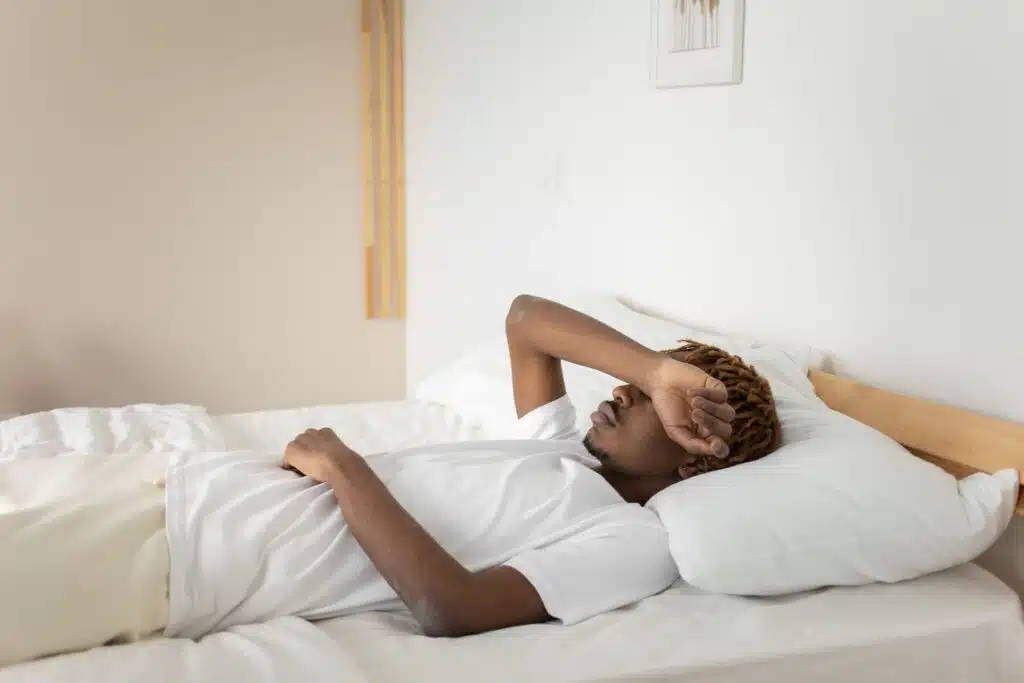
This is the dull, achy version. Worst on waking, eases within half an hour of moving, no pain travelling down the leg.
The usual cause is a mattress that lets the heaviest part of the body sink lower than the rest. Your pelvis drops, the lumbar curve flattens or exaggerates, and the muscles around it spend all night quietly bracing.
If you sleep on your back: you want a surface that fills the gap under your lumbar curve rather than letting it arch into empty space. Medium-firm, with genuine reinforcement through the middle third of the bed.
If you sleep on your side: you need enough give for the shoulder and hip to sink, but firmness underneath so the pelvis stays level with the ribs. Medium is usually the landing spot.
If you sleep on your front: firmer. Any sag pushes the lower spine into a backward bend, which is the position most likely to leave you stiff in the morning.
Adjust for your body: heavier sleepers compress every layer further, so a bed that reads medium-firm in a showroom behaves softer under them. Go one step firmer than the position alone suggests, and one step softer if you are light, since you will never sink far enough into a firm surface for the comfort layers to do anything.
Scenario Two: Sciatica
Sciatica is different because the pain travels. You feel it in the buttock, down the back of the thigh, sometimes to the calf or foot, often with tingling or numbness attached.
Here the mattress has two jobs at once, and they pull against each other. It needs to cushion the hip so nothing presses into an already irritated nerve pathway, while still stopping the pelvis from rotating downward and twisting the lumbar spine.
That is why going firmer often backfires with sciatica even though it helps ordinary lower back pain. A rigid surface removes the sag but concentrates pressure on the hip.
Side sleeping tends to be the most manageable position, provided you put a pillow between your knees to stop the top leg dragging the pelvis forward. If you want the position-by-position breakdown in more depth, this guide to sciatica sleeping positions goes further than we can here.
Adjust for your body: age matters more here than in the other two scenarios, because joint sensitivity tends to rise with it. An older sleeper with sciatica usually needs more surface cushioning than the symptom alone suggests, which argues for zoning rather than simply buying a softer bed.
Scenario Three: Herniated Disc

A diagnosed disc herniation changes the calculation again, and this is the scenario where softer is most often the wrong instinct.
When a mattress sags, the lumbar spine curves into the dip. For an irritated disc, that sustained bend is exactly the load you are trying to avoid for seven or eight hours at a stretch.
The general direction is firmer and flatter than you would choose for comfort alone. Back sleeping with a pillow under the knees reduces lumbar load for many people, and an adjustable base that lifts the knees slightly does the same job more precisely.
Front sleeping is the position most likely to aggravate it, since hyperextension compresses the back of the disc space. If you cannot break the habit, a firm surface at least limits how far the pelvis drops.
Adjust for your body: weight is the variable that bites hardest in this scenario. A heavier sleeper can compress a mattress rated firm in the showroom until it develops the exact sag they were trying to eliminate, so the step up in firmness matters more here than anywhere else.
The Thread Running Through All Three
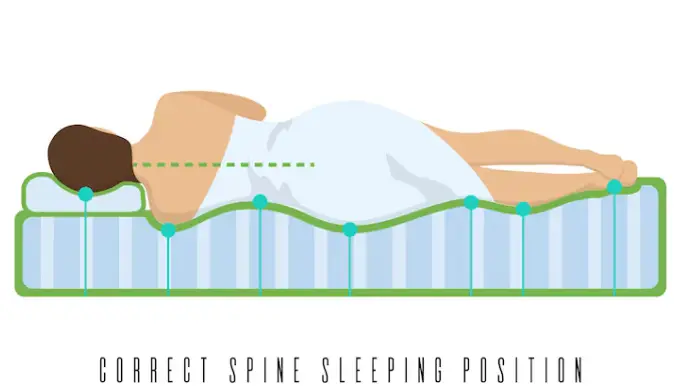
Look back at the three scenarios and the same idea keeps surfacing under different names. Stiffness, nerve pain and disc irritation all trace back to spinal alignment, meaning whether your spine holds a roughly straight line from neck to tailbone through the night.
Alignment fails in two directions. The pelvis sinks below the ribcage and the lumbar spine sags into a hammock, or the surface refuses to give and the spine arches over a rigid plane instead.
That is why firmness alone is such a poor proxy. A single firmness rating applies the same resistance under your shoulders, your waist and your hips, when those three areas carry very different loads and need very different amounts of pushback.
Zoning is the answer to that problem. A mattress that stiffens through the middle third holds the pelvis level while still letting the shoulder sink, which is how one surface can serve a back sleeper and a side sleeper without compromising either.
Best Mattress for Back Pain: Bear Elite Hybrid
The construction that handles all three scenarios is the same: a comfort layer deep enough to cushion joints, sitting on a coil system that firms up specifically under the lumbar region rather than uniformly.
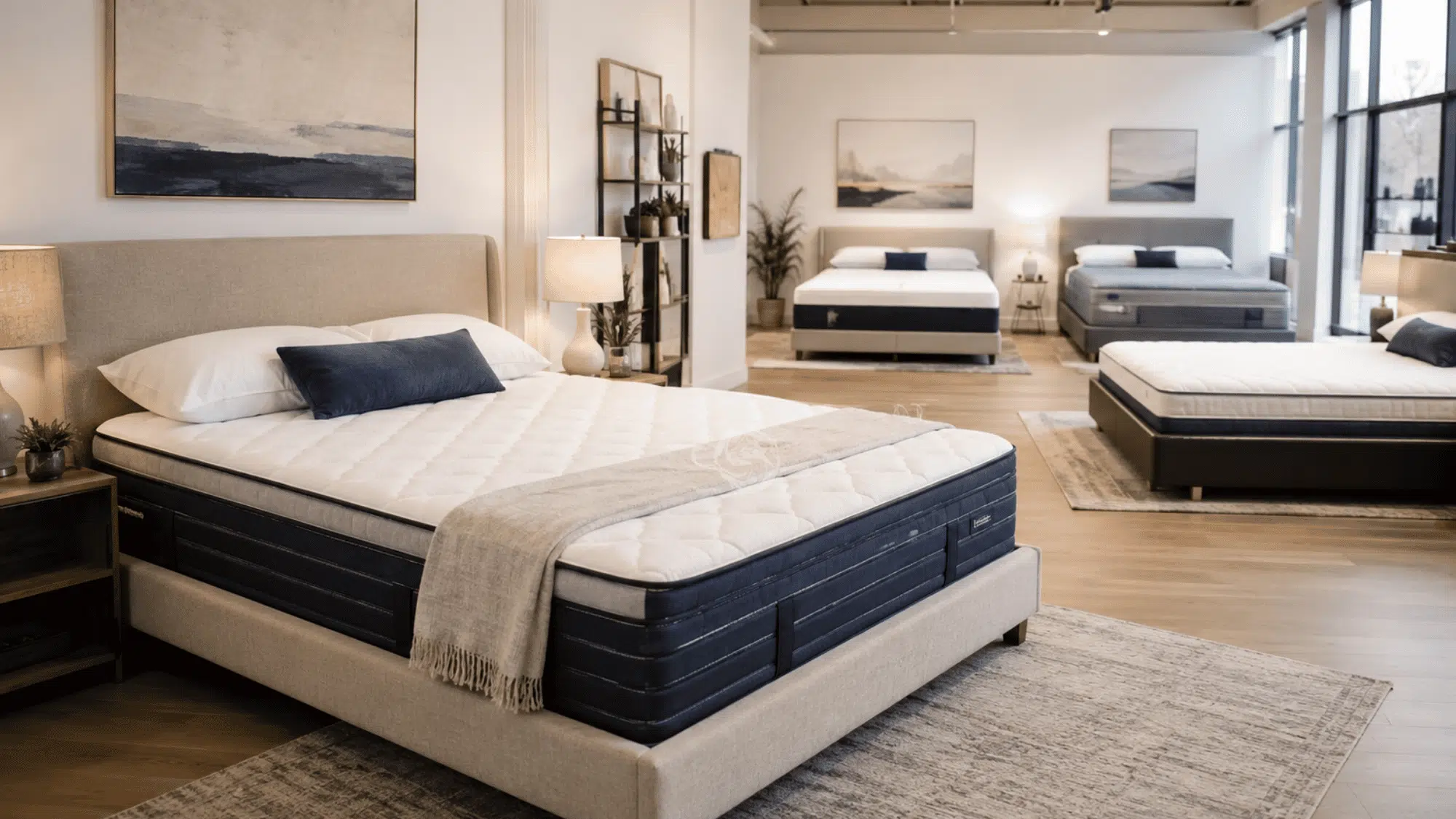
The Bear Elite Hybrid is built to that spec. It is a 14-inch, eight-layer hybrid whose support core is an 8-inch bank of individually wrapped Zoned Ascension Coils with five targeted support zones, enhanced lumbar support and reinforced edge coils, and it is endorsed by the American Chiropractic Association.
The zoning is the part that matters for back pain. Because the coils stiffen through the middle third, the pelvis gets lifted rather than allowed to sink, which is the single mechanism behind most morning stiffness. The brand states that the design promotes healthy alignment in every sleep position, and the coil system is tuned for spinal alignment rather than for a firmness rating alone.
Above the coils sit copper-infused memory foam and a responsive comfort foam layer, with a transition foam layer between the two to damp movement coming up from the springs. The result is contouring at the joints without the whole surface giving way underneath the hips.
Firmness is where you tune it to your scenario. Soft runs 5 out of 10 and suits lighter side sleepers, Medium runs 6 out of 10 and is the usual pick for side and back sleepers, and Firm runs 7 out of 10 and is aimed at stomach sleepers and heavier back sleepers.
One honest limit. If you specifically want the deep, slow contouring of an all-foam bed, or you are a heavier sleeper who sleeps strictly on your stomach, this is not the mattress for you and the brand says so itself.
The Base Under It Matters More Than People Think
A zoned coil system can only work if what it sits on is rigid. Put a good hybrid on a sagging foundation and you have bought the sag, not the support.
The requirement here is a firm, flat, sturdy base with slats less than 5.5 inches apart, or an adjustable base. A box spring is not compatible, and neither is a slatted frame with wider gaps.
If a disc or sciatic issue is your reason for shopping, an adjustable base is worth costing out alongside the mattress. Being able to raise the knees a few degrees changes lumbar load in a way no mattress can replicate.
Test It Across Weeks, Not Nights
Back pain is the worst possible symptom to judge on one night’s sleep, because it fluctuates for reasons that have nothing to do with your bed.
This one comes with a 120-night sleep trial, and the structure is sensible: sleep on it through a 30-night break-in period, then request a free return before the trial ends if it has not helped. There is a limited lifetime warranty behind it, the foams are CertiPUR-US certified, and the mattress is GREENGUARD Gold certified and fiberglass-free.
Give it the full month. Your body has adapted to whatever you were sleeping on, and the first week on any new surface tells you very little.
And the caveat that matters most: if your pain is severe, worsening, waking you every night, or comes with numbness, weakness or changes in bladder or bowel function, that is a conversation for a clinician. A mattress can reduce the load on a painful back. It cannot diagnose why the back is painful.
Putting It Together
Name the symptom first. Dull morning stiffness, radiating leg pain and a diagnosed disc problem are three different briefs, and the best mattress for back pain is whichever one answers the brief you are actually working from.
Then layer your position on top, adjust one step firmer if you are heavier or one step softer if you are light, and look for zoned lumbar support rather than a single firmness rating.
Get those three inputs right and the shortlist usually narrows to two or three beds. Then test properly, on a rigid base, for a full month.
Frequently Asked Questions
Is a Firm or Soft Mattress Better for Lower Back Pain?
Neither extreme. Medium-firm with reinforced lumbar zoning suits most people with general lower back pain, because it stops the pelvis sinking without removing the cushioning your joints need.
What Is the Best Mattress for Back Pain if I Have Sciatica?
Look for a hybrid that cushions the hip while keeping the pelvis level, rather than simply choosing a firmer bed. The Bear Elite Hybrid fits that pattern with its five-zone coil core and copper-infused memory foam comfort layers, and it comes in three firmness levels so you can match it to your sleep position.
Should I Sleep on A Firmer Mattress with A Herniated Disc?
Generally yes. A sagging surface bends the lumbar spine into the position most likely to load an irritated disc. Firmer and flatter is the usual direction, ideally with a pillow under the knees when sleeping on your back.
Does My Weight Change Which Firmness I Should Pick?
Significantly. Heavier sleepers compress the comfort layers further and usually need one step firmer than the symptom suggests, while lighter sleepers often need one step softer to sink in far enough for the contouring to work.
How Long Before a New Mattress Helps Back Pain?
Allow at least a month. Most sleep trials include a 30-night break-in period for exactly this reason, since your body has adapted to your previous bed and early discomfort is common.