


Choosing the perfect mattress for your little one may seem like a simple task, until you realize how much their comfort and safety depend on getting the size right.
As your toddler takes their first steps toward independent sleep, you want a cozy, supportive space where they can stretch, wiggle, and dream peacefully.
But with so many options available, knowing which mattress to choose can quickly become confusing.
What size is a toddler mattress, and will it fit your child’s bed perfectly?
Understanding toddler mattress dimensions can save you from costly mistakes, uncomfortable sleeping arrangements, and unnecessary worries.
What Size is a Toddler Mattress?
A standard toddler mattress is about 28 inches wide and 52 inches long, the same size as a full-size crib mattress.
The federal toddler bed standard is written around a crib mattress of at least 51⅝ inches long and 27¼ inches wide, so a mattress sold at that size can measure slightly less.
That minimum comes from the U.S. Consumer Product Safety Commission (CPSC) toddler bed standard, and it’s why many crib mattresses are made to be used later for toddler beds too.
Toddler beds built to the federal standard are meant for children at least 15 months old who weigh 50 pounds or less, so check the weight limit on yours.
Mini cribs and play yards are the exception, since they use smaller mattresses that won’t fit a toddler bed.
Toddler Mattress Size Chart
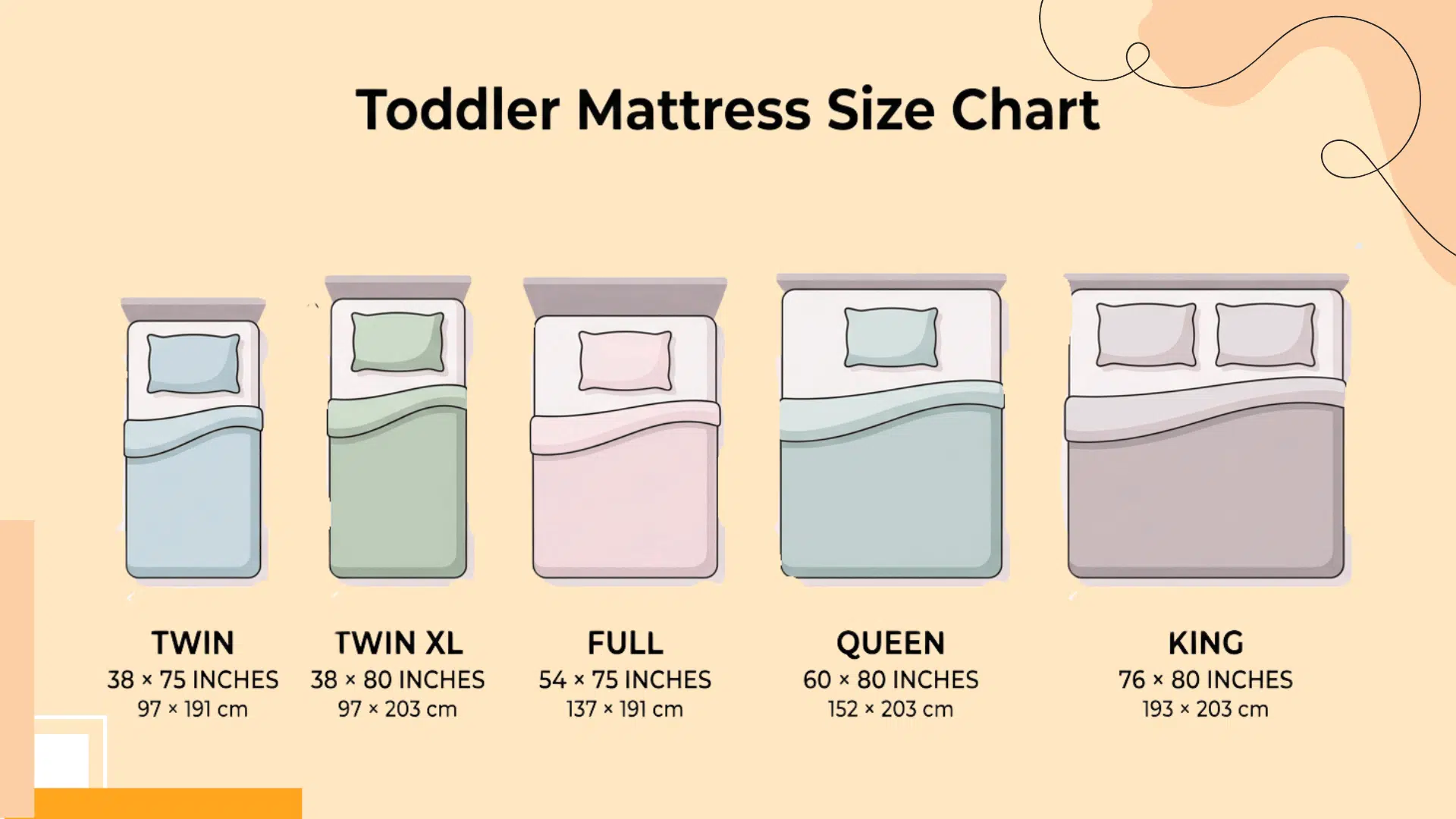
A toddler mattress should fit snugly inside the bed frame, providing enough room for comfortable sleep without leaving unsafe gaps.
Twin Mattress: Measures approximately 38 × 75 inches (97 × 191 cm), offering extra sleeping space for growing children.
Twin XL Mattress: Measures approximately 38 × 80 inches (97 × 203 cm), providing additional length for taller children.
Full Mattress: Measures approximately 54 × 75 inches (137 × 191 cm), offering more width and room to move around comfortably.
Queen Mattress: Measures approximately 60 × 80 inches (152 × 203 cm). It provides generous sleeping space and may suit a shared family sleeping arrangement or a larger bedroom.
King Mattress: Measures approximately 76 × 80 inches (193 × 203 cm). It offers plenty of sleeping space for families who co-sleep, but is generally too large for a toddler’s bedroom.
Mattress dimensions can vary slightly between manufacturers, so always check your bed frame’s specifications before purchasing.
How to Check the Fitof the Mattress
A good fit leaves no gaps between the mattress and the bed frame or rails, because a gap is where a child’s head or body can get trapped. To check yours:
Check the instructions that came with the bed for the mattress size it was built for, and make sure yours matches.
Walk around the mattress and check all four sides and the corners for gaps.
Check that any guardrails sit flat against the mattress and frame.
If the mattress leaves a gap, it’s the wrong size for that bed, even if it’s sold as a toddler mattress.
Toddler Mattress Thickness and Material Options
Choosing the right toddler mattress isn’t just about size; what’s inside matters too.
The type, thickness, and firmness all play a big role in your child’s comfort and safety. Here are the most common options and what to consider when picking one:
Foam vs Innerspring Mattresses
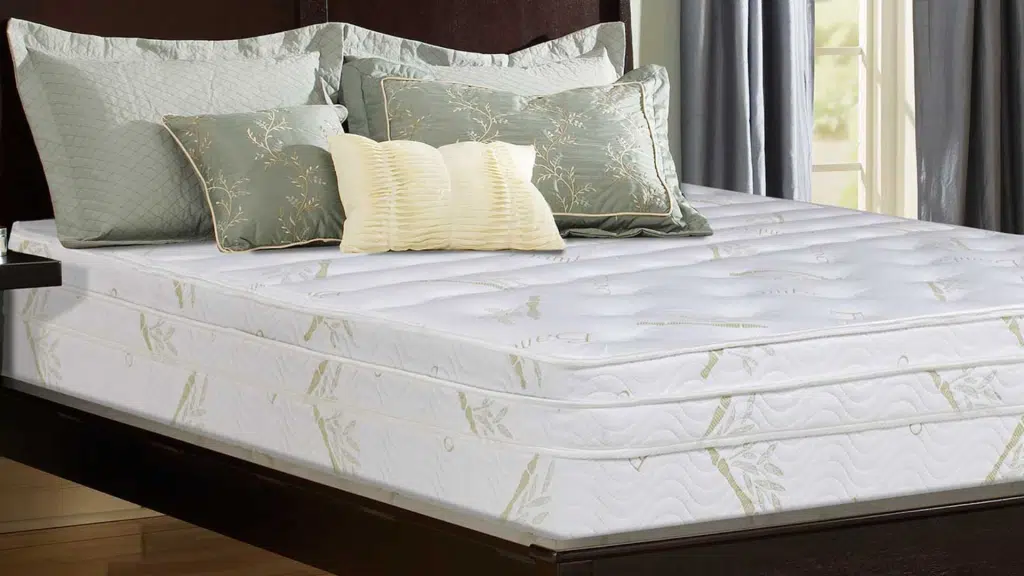
Foam toddler mattresses are lightweight, easy to move, and often cheaper. They’re made of firm foam that supports your child’s body and helps with safe sleep.
These are a good pick if you want a simple, no-fuss mattress.
Innerspring mattresses have coils inside, like adult beds. They’re usually heavier and cost a bit more. But they last longer and offer strong support. Some even feel bouncier, which some kids enjoy.
Dual-Sided Mattresses
Dual-sided mattresses have two different surfaces. One side is extra firm for infants. The toddler side is a little less firm but should still feel firm and flat to the touch.
This gives you more use out of one mattress.
Keep the firm infant side up for your baby’s whole first year.
Once your child turns 1, you can flip to the softer toddler side, following the timing on the mattress label.
This kind of mattress saves money and lasts longer. Just make sure it’s clearly labeled so you know which side is which. It’s a smart pick for growing kids.
Thickness Guidelines for Comfort and Safety
Toddler mattresses are usually 4 to 6 inches thick. This is enough for comfort and support, without being too high.
A mattress that’s too thick might not fit well in toddler bed frames or work with safety rails, so check the bed’s manual for the thickest mattress it takes.
Stick to firm, flat mattresses, because a soft one lets your toddler sink in. A 5-inch thick mattress with a firm feel is a safe and comfy choice for most kids.
Choosing the Right Toddler Mattress for Safety and Comfort
A toddler mattress should offer firm support, a comfortable sleeping surface, and easy maintenance. Consider these essential features before making your purchase.
Safety certifications: Look for GREENGUARD Gold certification for low chemical emissions. CertiPUR-US applies to foam and verifies specific standards for emissions, content, and durability.
Breathable materials: Choose materials that promote airflow and help your toddler stay comfortable throughout the night.
Waterproof covers: A removable, waterproof cover makes cleaning easier during potty training and helps protect the mattress from spills.
Organic options: If you prefer natural materials, consider organic cotton or natural wool mattresses, and check what the certification actually covers.
Edge support: A stable mattress edge can make sitting easier, but it should not be relied on to prevent falls. Keep the sleeping area safe and supervise climbing in and out.
Bedding and Sheet Fit for Toddler Mattresses
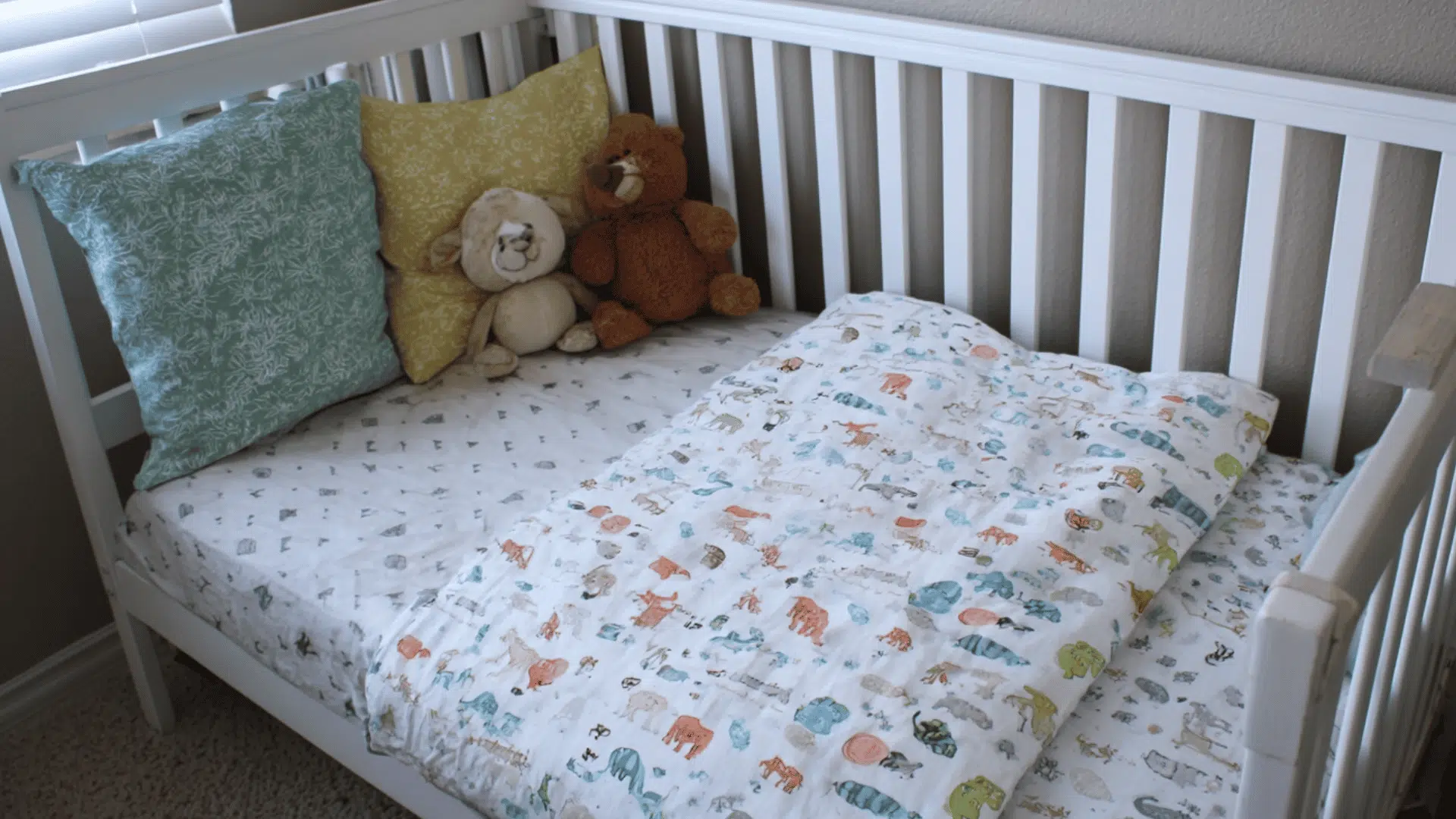
Sheets and protectors made for cribs usually work for toddler beds too, but it’s important to check the details.
Toddler mattresses use the same size fitted sheets as cribs, so look for sheets labeled “crib” or “toddler.”
Make sure the sheet has tight elastic edges so it stays in place all night. Loose sheets can bunch up, which is uncomfortable and unsafe.
Safe Bedding Tips
Once you’ve picked the right mattress and sheets, it’s important to make sure everything is safe for sleep.
Avoid loose blankets, pillows, or stuffed toys, as they can raise the risk of suffocation. Use a fitted sheet only for younger toddlers.
For warmth, try a wearable blanket or sleep sack instead of a loose one.
If you use a blanket, make sure it’s thin and tucked in tightly at the bottom of the bed.
When to Transition From Crib to Toddler Bed
Many toddlers move from a crib to a toddler bed between 18 months and 3 years, and most have made the switch by about age 2.
Emotional and Physical Readiness
Every child is different. Some toddlers are ready to leave the crib early, while others may need more time. It’s not a race.
Look for these signs that your child is ready, not just what others are doing:
Climbing out of the crib: This is a big safety risk. If your toddler starts climbing, it’s time to switch.
Asking for a big-kid bed: If your child shows interest in a bed like yours or a sibling’s, that’s a good sign.
Potty training: If they’re using the potty, they’ll need easy access to get out of bed at night.
Outgrowing the crib: If they’re getting too tall or squished in the crib, a toddler bed gives more room.
Sleeping through the night: A steady sleep routine can make the move easier for everyone.
Reaching 35 inches tall: This is a common sign it’s time for a bed.
Average Age for the Transition
Most toddlers move from crib to toddler bed between 18 months and 3 years. Here’s a rough breakdown:
18-24 months: Some toddlers are ready, especially if they’re climbing or potty training early.
Around age 2: Most children have made the switch by now.
3+ years: Some kids stay in the crib longer and still do just fine. That’s okay too.
Don’t rush it. Wait until your child shows they’re ready, not just because they hit a certain birthday.
Safety Considerations During the Transition
Safety is key when switching to a toddler bed. Here are important tips to keep your child safe:
Use a bed with guardrails: Toddler beds often come with rails to prevent falls. These help your child feel secure, especially early on.
Keep the bed low to the ground: This makes it easier for your toddler to get in and out without help. Keeping the total bed height low also lowers the chance of injury from falls.
Secure the room: Once your toddler can leave the bed alone, secure dressers and shelves and add a gate if needed.
Conclusion
Once you learn the standard toddler mattress dimensions and the key features to look for, choosing everything else gets easier, from bed frames to fitted sheets and mattress types.
Now you have that same clarity. You can focus on what matters most: a mattress that fits your bed with no gap, feels firm, and supports safe sleep.
Comment down below with your experience while you looked for options for your toddler’s bed.
Frequently Asked Questions
Can My Toddler Sleep in a Twin Bed Instead?
Yes, if the bed sits low and has guardrails on any open side. Skip upper bunks and other raised beds for children under age 6.
Is My Old Crib Mattress Still Good Enough to Reuse?
Yes, if it is firm, undamaged, and the right size. It should spring back right away when pressed. Replace it if it sags, stays dented, or has a torn cover.
How Far off the Ground Should a Toddler Bed Be?
A toddler bed should sit low to the ground so your child can climb in and out without help, and so a fall from the mattress is a short one.