

The first twelve weeks following childbirth—often termed the “fourth trimester”—represent a period of profound physiological and sensory adaptation for both infant and mother. Inside the uterus, a fetus experiences continuous tactile pressure, warm temperatures, and an unbroken background roar of maternal blood flow and internal organ movement.
Upon entering the external world, the sudden absence of these familiar sensory anchors can leave an infant feeling overwhelmed, leading to prolonged crying spells and fragmented sleep cycles. Integrating a high-performancewhite noise machine into the nursery environment recreates this soothing uterine acoustic backdrop, easing the infant’s transition while providing essential sleep recovery opportunities for postpartum parents.
As families focus more on postpartum wellness, modern sleep technology has evolved beyond rudimentary static noise boxes. Smart, connected solutions like the Momcozy Baby Sound Machine App Remote Control demonstrate how responsive environmental design can support fragile newborn sleep.
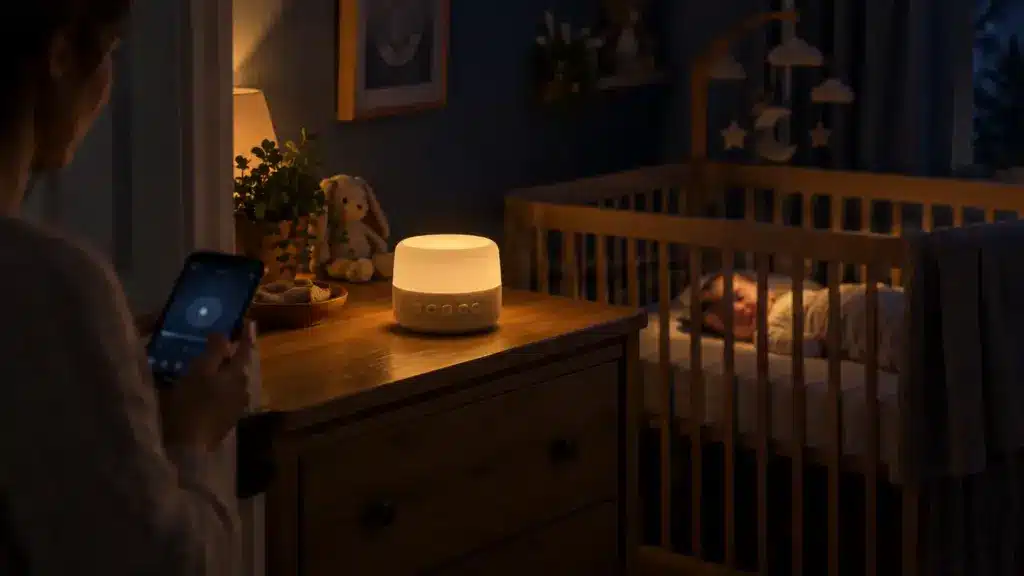
Designed with customizable acoustic spectrums, smartphone remote accessibility, and warm nightlight spectrums, this device allows exhausted parents to adjust sound frequencies and light brightness from another room, calming a restless baby without disrupting the nursery’s peaceful ambiance.
In addition to soothing daytime fussiness, evening sleep routines require precise environmental consistency to promote longer consolidated rest blocks. Relying on the intuitive companion interface of theMomcozy Baby Sound Machine App Remote Control enables caregivers to establish automated “bedtime cues.”
By scheduling gradual light dimming and soothing pink noise activation at fixed times each night, parents can condition their baby’s developing nervous system to recognize bedtime, encouraging faster sleep onset and fewer unexpected night awakenings.
1. Sensory Integration and the Calming Reflex in Newborns
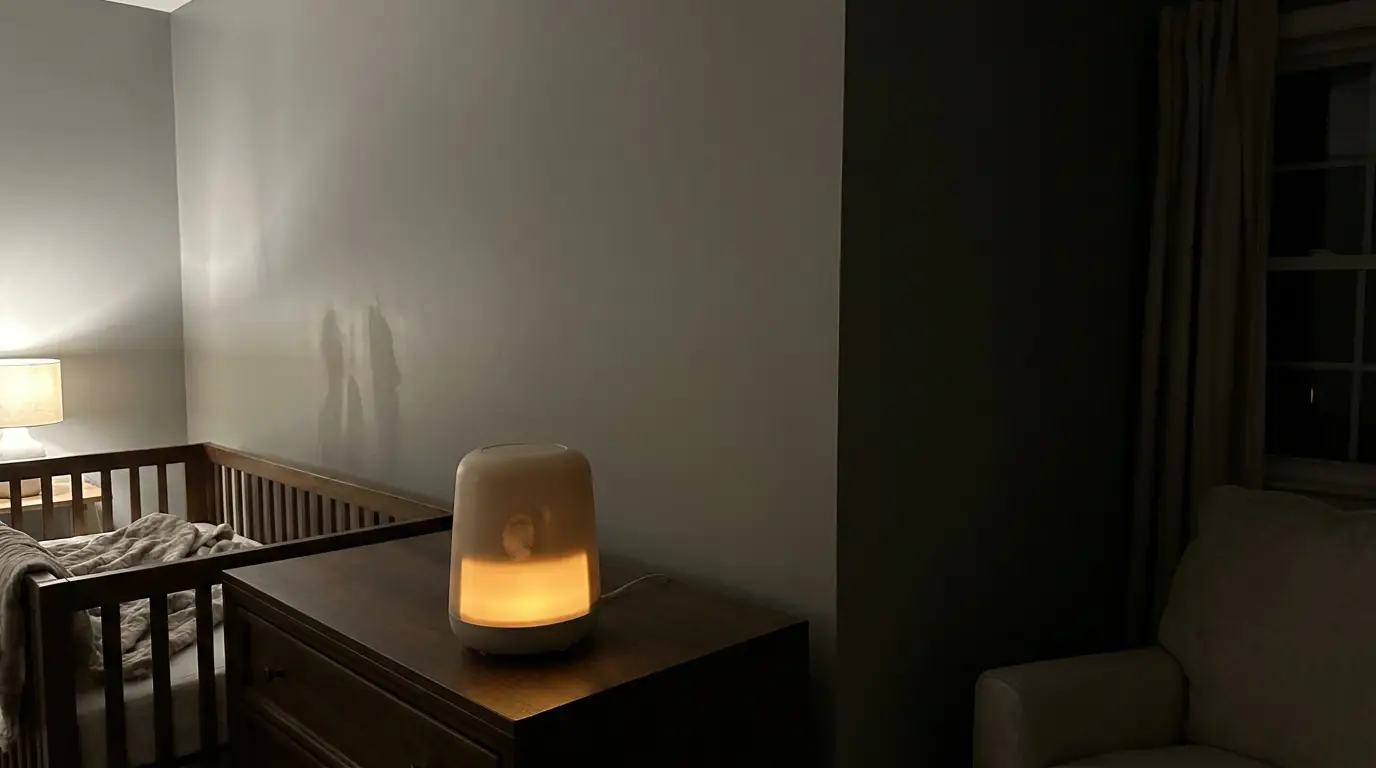
Pediatric research highlights that newborns respond instinctively to sensory stimuli that mirror the womb environment. Understanding these sensory triggers helps parents design a nurturing nursery layout.
Recreating the Auditory Environment of the Womb
Inside the womb, ambient sound levels fluctuate between 75 and 85 decibels—comparable to the hum of a household vacuum cleaner or heavy traffic outside a closed window. Absolute silence can feel unnerving to a newborn unused to stillness. Reintroducing continuous, low-frequency sound blankets satisfies the brain’s deep-seated expectation for acoustic feedback, lowering stress hormones and stimulating the parasympathetic nervous system.
Auditory Masking and Moro Reflex Suppression
During early development, an infant’s nervous system lacks fully developed sensory filtering mechanisms. Sudden household noises—such as footsteps on hardwood floors, kitchen appliances, or doorbell rings—trigger the Moro reflex, causing the arms to snap outward and instantly waking a deeply sleeping baby. Continuous sound masking smooths out surrounding noise spikes, establishing a stable acoustic threshold that protects fragile sleep phases.
2. Postpartum Maternal Health and Sleep Fragmentation
Infant sleep deprivation impacts more than just the baby; it plays a central role in maternal postpartum physical recovery, mental health, and emotional resilience.
- Mitigating Postpartum Exhaustion: Chronic sleep interruption disrupts maternal cortisol levels and delays physical healing. Stabilizing infant sleep cycles with consistent background noise allows mothers to achieve longer blocks of restorative REM and slow-wave sleep.
- Reducing Late-Night Anxiety: New parents often suffer from hyper-vigilance, waking up at the slightest rustle or breath change. Controlled background sound paired with soft nightlights creates a calm room environment that helps parents relax and drift back to sleep faster after nighttime feedings.
- Silent Remote Control Access: Entering a nursery to flip a physical switch or press a noisy button on a bedside device frequently startles a half-asleep baby. Smartphone app integration allows mothers to adjust sound volume, change tracks, or turn off lights completely silently from their phone screen.
3. Structural Comparison: Nursery Sleep Solutions vs. Standard Audio Tools
Choosing the right sound tool for an infant’s room requires evaluating acoustic safety, lighting safety, and long-term convenience:
Evaluated Metric | Household Mobile Phone / Tablet App | Traditional Basic Sound Box | Advanced Smart App Sound Machine |
|---|---|---|---|
Acoustic Fidelity & Looping | Low (Short loops, compression artifacts) | Moderate (Standard sound tracks) | High (Continuous non-looping white/pink noise) |
Decibel Safety Lock | None (Risk of sudden loud notifications) | Manual knob (Difficult to gauge) | Precise app-calibrated volume controls |
Nightlight Spectrum | Blue-light screen glare (Suppresses melatonin) | Fixed white/cool LED light | Customizable warm red/amber light spectrums |
Remote Adjustability | Requires bringing phone near crib | Physical buttons only | Full Wi-Fi/Bluetooth remote smartphone control |
Schedule Automation | None | Simple mechanical timer | Fully programmable multi-stage sleep schedules |
4. Decibel Safety, Placement, and Environmental Best Practices
Protecting an infant’s developing hearing while maximizing sleep benefits requires following key pediatric placement and decibel guidelines.
- Optimal Placement Distance: Position the sound device at least 3 to 6 feet away from the baby’s head. Place it near the door or window to block outside noises before they reach the sleeping area.
- Safe Volume Levels: Keep continuous background sound levels around 50 to 60 decibels (dB) at the mattress level—roughly equivalent to the sound of soft rainfall or a running bathroom shower.
- Cable Safety & Cable Routing: Keep power cords neatly routed and secured along walls or baseboards, far beyond the reach of curious babies who might pull or tug on loose wires.
5. Cleaning, Hygiene, and Long-Term Usage
Proper maintenance ensures your sound device remains hygienic, safe, and fully operational throughout your baby’s growth stages.
- Weekly Sanitization: Unplug the device and clean exterior surfaces, light diffusers, and speaker grilles using a soft microfiber cloth lightly dampened with warm water. Never spray liquid cleaners directly onto electrical components.
- Transitioning to Toddlerhood: As your child moves from infant crib to toddler bed, repurpose the device as a visual “OK-to-Wake” trainer, using custom light color changes to teach toddlers when it is time to stay in bed and when it is time to wake up.
6. Summary: Science-Backed Comfort for the Modern Family
Supporting a newborn’s transition into the world requires gentle, responsive care tools that respect both infant physiological needs and caregiver health. By pairing safe acoustic masking with warm ambient lighting and convenient smartphone control, modern families can cultivate a peaceful, restorative sleep sanctuary at home.