Make A Small Room Look Bigger With Smart Design

Why Small Rooms Feel Cramped (And How to Fix It Without Knocking Down a Wall)

If you’ve ever walked into a perfectly normal sized room and thought, “Why does this feel like a fancy storage closet?”, welcome. You’re not imagining it. Small rooms don’t feel tight because of the square footage alone they feel tight because your eyes keep hitting “dead ends.”

And the good news (the kind that saves money and your sanity) is that you can make a room feel noticeably bigger without renovating, re-flooring, or hiring someone with a tool belt and a mysterious hourly rate.

When a small room feels wrong, it’s usually one of these three culprits: your sightlines, your light, or your visual “busy-ness.” Fix those, and suddenly your room stops bullying you.

Let’s do this.


The 3 Things That Decide Whether Your Room Feels Big or “Help, I’m Trapped”

Here’s what actually changes the vibe:

1) Sightlines
How far your eye can travel before it hits a visual traffic jam (furniture, clutter, a giant dark blob of a chair, a laundry pile that’s “temporarily” living there…).

2) Light
Not just “do you have a lamp,” but whether light reaches the corners and walls. Dark corners make rooms shrink. Period.

3) Continuity
Hard breaks high contrast trim, choppy color changes, busy patterns make a room read as chopped up and smaller. Smooth + consistent = your brain reads “bigger.”

Quick test: stand at the entrance to the room. Can you see most of the floor and the far wall, or is something blocking your view like it’s guarding a treasure? Wherever your eye gets stuck first is your starting point.


Paint: Not “Just Paint It White,” But Don’t Go Full Cave Either

I know, everyone says “paint it white.” And sure, white can work. But the real trick is choosing a color that reflects light well in your actual room, with your actual lighting (not the magical lighting in paint ads).

If you want the nerdy detail: paints have an LRV (Light Reflectance Value) from 0-100. Higher numbers bounce more light.

My sweet spot for small rooms: LRV around 65-80.

Below that can start feeling heavier unless you’ve got great natural light and enough lamps to land planes.

But please hear me: paint can’t reflect light that doesn’t exist. If your room currently has one sad ceiling boob light and vibes of a basement, fix the lighting first (we’ll get there).

My favorite “make it feel bigger” paint move

Go low contrast.

The more your trim screams “LOOK, AN EDGE!”, the more your room looks like it’s outlined in Sharpie.

If you’re brave (or just tired of decisions), you can even paint the walls, trim, and doors the same color. It’s a little design magic trick: your eye stops stopping.

Want more height? Paint the ceiling a touch lighter than the walls. Not “bright white ceiling that cuts the room in half,” but like… a gentle lift.

Yes, you can have a dark accent wall (don’t panic)

Dark can actually add depth when you do it on purpose and not as a “well, I got bored” moment.

My rules:

  • Put the dark wall where it makes sense often the wall you see across the room, so it feels like it falls back.
  • Don’t paint every wall moody charcoal and then act surprised it feels like a dramatic little cave.
  • Add lighting aimed at that wall so it reads “cozy depth,” not “why is it so gloomy in here?”

Lighting: The Fastest Way to Make a Room Feel Less Squished

The #1 small room mistake I see (and yes, I’ve done it too) is relying on one overhead light and calling it a day. One ceiling fixture makes harsh shadows, dark corners, and that weird spotlight effect where the middle is bright and the edges feel like they’re closing in.

Think in layered warm lighting:

  • Ambient: your general light (flush mount, recessed, etc.)
  • Task: reading lamp, desk lamp, under cabinet lighting whatever helps you actually live your life
  • Accent: little glow moments picture lights, LED strips, a lamp tucked in a corner

Here’s the easiest upgrade: add one more lamp and aim it so it washes light onto a wall or ceiling instead of blasting straight down. Wall washed light makes the walls feel farther away. It’s like contouring, but for your room.

Also: try to keep your bulb temperature consistent in one room. Mixing three different “whites” looks weirdly chaotic, like your lighting can’t commit to a personality.


Windows: Make Them Look Bigger Than They Are (It’s Legal)

If your curtains are hung right on top of the window frame, we need to talk. That’s a classic small room shrink move.

Hang your curtain rod higher and wider:

  • Rod goes 6-12 inches above the window
  • Extend it 8-12 inches past each side

When the curtains are open, you actually see the window instead of fabric stealing its spotlight. And the extra height tricks your brain into thinking the ceilings are taller.

Go for lighter fabric or sheers if you can. If you need privacy/light blocking, layer a heavier panel over a sheer instead of going full dark curtain cave.

Renting? Use tension rods or damage free hooks. (Your deposit thanks you.)


Mirrors: Use One Big One Like You Mean It

One large mirror almost always beats a bunch of tiny ones scattered around like you’re starting a mirror collection hobby.

A big mirror bounces light, opens up a dark corner, and gives your eye somewhere to travel.

Best mirror placements:

  • Across from (or near) a window to fling light around the room
  • In the darkest corner that feels like it’s swallowing furniture
  • At roughly eye level so it reflects something nice, not your ceiling fan

One important PSA: don’t point a mirror at clutter. It’s like doubling the mess and then paying for it with your eyeballs. Before you hang anything, lean the mirror where you want it and live with it for a day. Your future self will be less rage-y.

Bonus: glass tables, shiny lamp bases, metallic hardware those little reflective bits help too. Not “disco ball apartment,” just a little bounce.


Furniture: The Part Where I Tell You to Break Up With at Least One Piece

If your room feels cramped, there’s a strong chance your furniture is either:

  1. too deep,
  2. too bulky, or
  3. too much.

I love a cozy sofa as much as the next person, but in a small room, a super deep couch can eat your walking space like it’s its job.

My real life rule: if you can’t walk through the room without turning sideways or doing that awkward shuffle, something has to go.

A few things that help immediately:

Choose “visually light” furniture

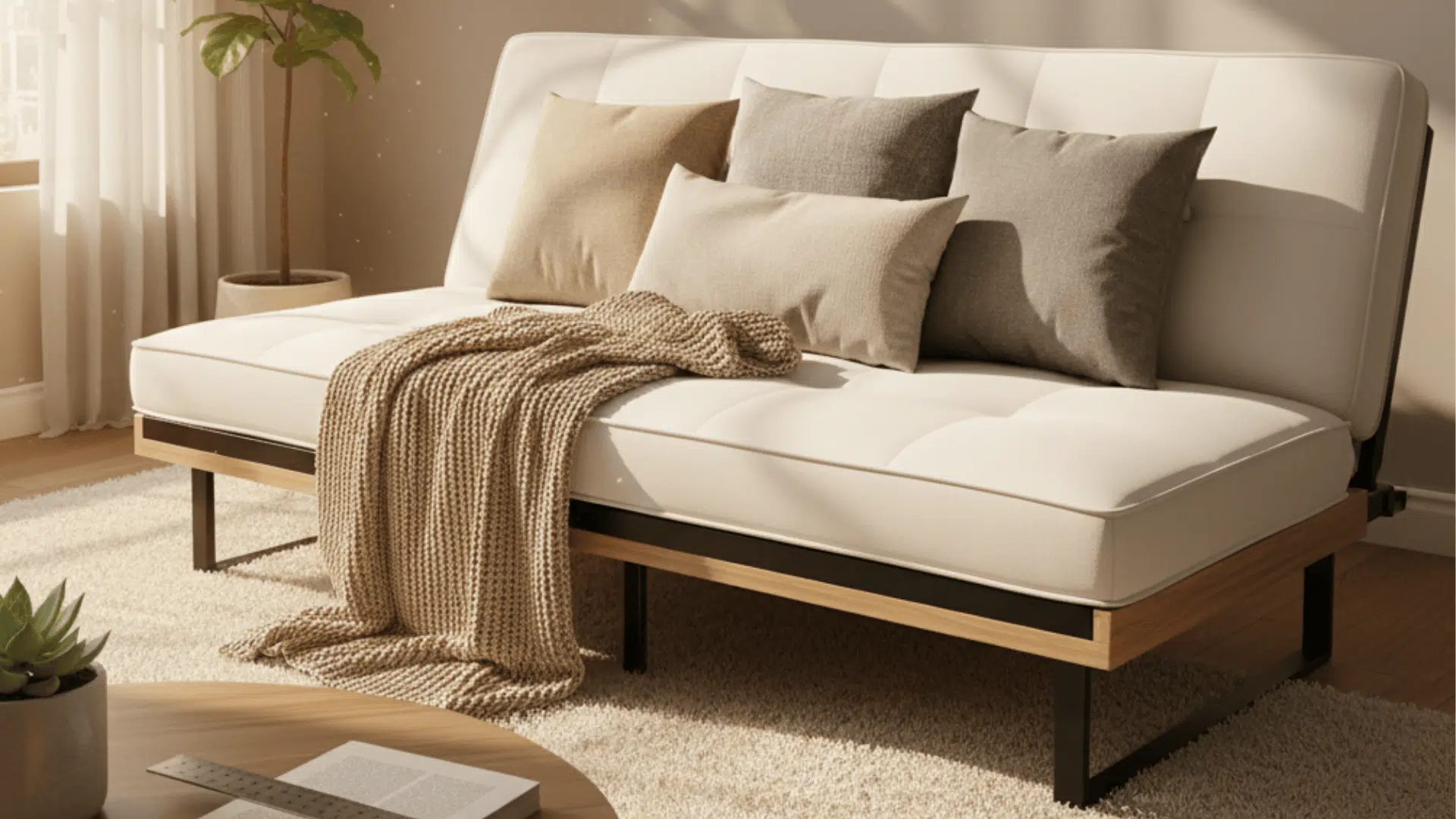
Pieces with legs you can see under = your eye reads more floor = it feels bigger. Chunky skirted sofas and heavy closed bases can look like they’re squatting in the room.

Also, lower furniture (think: low media console, low profile chairs) makes ceilings feel higher. It’s a sneaky win.

Pick pieces that do double duty

In a small room, every piece should earn its keep.

  • Storage ottoman (seat + stash)
  • Nesting tables (use one, hide the rest)
  • Bed with drawers (bye-bye extra dresser)
  • Wall mounted nightstands (more floor showing = more breathing room)

If a piece only does one thing, it better do that one thing beautifully.

Yes, you can pull furniture away from the wall

I know it sounds backwards. But sometimes floating a sofa even a few inches (or more, if you can) creates depth like the room has layers instead of everything being pressed flat around the perimeter like a sad diorama.

And please, for the love of your shins: try to keep a clear walking path. If you’re constantly bumping into corners, the room will always feel tight no matter how pretty it is.


Clutter: The Silent Space Thief

Small rooms don’t forgive clutter. They can’t. You see everything at once, so every stray item becomes a tiny “noise” in your brain.

You don’t have to become a minimalist who owns one fork and a plant. But you do need fewer piles and fewer surfaces covered in “stuff I’m dealing with later.”

A few quick wins:

  • Keep surfaces intentionally clear (even just one table or dresser)
  • If you use open shelves, style them sparsely (packed shelves shrink rooms fast)
  • Use matching-ish containers so your eye reads calm instead of chaos

And no, buying more bins doesn’t count as decluttering. Bins are just clutter with better PR.


The Two “Finishing Touches” That Make a Room Look Instantly More Pulled Together

1) Get the rug size right

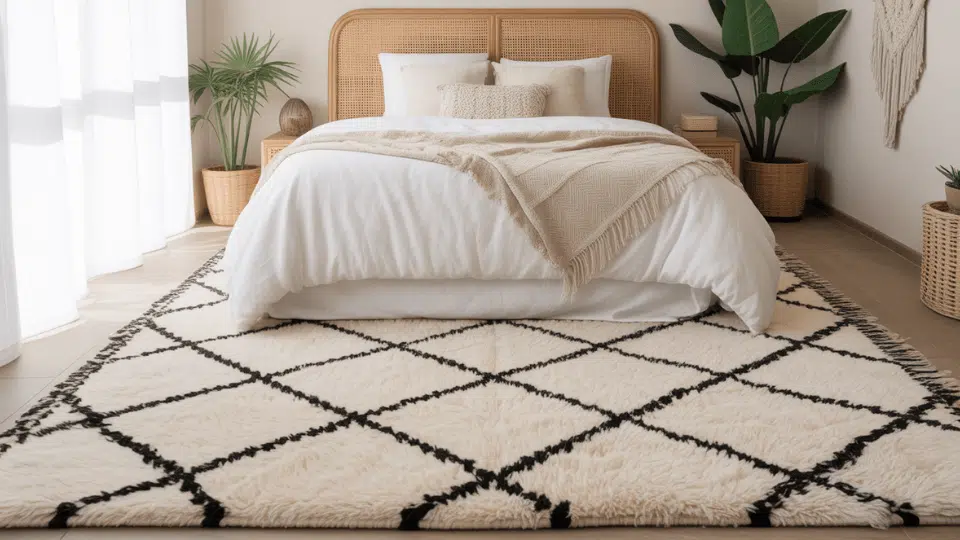
A too small rug makes a room look smaller. It’s like putting a postage stamp in the middle of the floor and hoping it ties the room together.

At minimum, try to get the front legs of your main furniture pieces on the rug. If you can fit all legs on it, even better. One properly sized rug beats three little floaty ones every time.

2) Go bigger with art (yes, bigger)

Tiny art sprinkled around can make walls feel chopped up. One larger piece can actually calm things down and make the room feel more expansive with a calm curated room vibe.

Hang it so the center is around 57-60 inches from the floor (aka average eye level). And if you love gallery walls, keep the frames cohesive so it reads as one “moment,” not visual confetti.


If You Do Nothing Else… Do These 5 Things

If you want the “I have 30 minutes and zero patience” version, here you go:

  1. Add one more light source and aim it at a wall
  2. Hang curtains higher and wider
  3. Use one large mirror in a strategic spot
  4. Swap/choose furniture with legs (or at least remove one bulky piece)
  5. Clear one major surface completely (dresser, coffee table, whatever you touch daily)

Small rooms can feel airy. They can feel calm. They can even feel kind of fancy.

They just need fewer visual stop signs and a little help from you (and maybe a lamp that isn’t from your college dorm).

About the Author

Delaney is a sleep expert and product reviewer with a background in interior design. She writes about mattresses, bedding, and sleep accessories, offering expert advice on creating the perfect sleep environment. With years of product testing experience, Delaney’s focus is on helping you find the best sleep solutions for comfort and support, ensuring you wake up feeling refreshed.

Related categories

Also read

positive energy placement feng shui bedroom

How to Create Positive Energy in Your Bedroom with Feng Shui

I used to think bedroom comfort was only about the mattress and lighting. Over time, I noticed how much the layout itself affected how rested...

feng shui bed direction chart for better energy flow

Feng Shui Bed Direction Chart for Better Energy Flow

I used to think arranging my bed according to Feng Shui meant following some universal “best direction” rule. Turns out, your ideal sleeping position is...

how long after septoplasty can you sleep on your side

How Long After Septoplasty Can You Sleep on Your Side?

Sleeping after nose surgery can feel harder than expected. I remember thinking rest would come easily, then finding myself awake, uncomfortable, and worried about moving...

Readers Comments

Leave a Reply

Your email address will not be published. Required fields are marked *

Related Articles

best mattress for back and hip pain
Read 7 min

6 Best Mattresses for Back and Hip Pain Relief

I’ve spent years waking up with stiff hips and a lower back that felt like..

Natural Sleep Aids for Kids
Read 7 min

11 Safe and Natural Sleep Aids for Kids

Bedtime can feel calm one night and completely exhausting the next. You’re doing everything right,..

how fast can sleep apnea kill you risks signs
Read 8 min

How Quickly Can Sleep Apnea Lead to Serious Health Issues?

Sleep apnea can feel frightening, especially when you hear that breathing can stop during sleep...

sleeping upright complete guide for comfort sleep
Read 10 min

Sleeping Upright: Complete Guide for Comfort Sleep

Want to know if sleeping upright could actually improve your rest and comfort at night?..