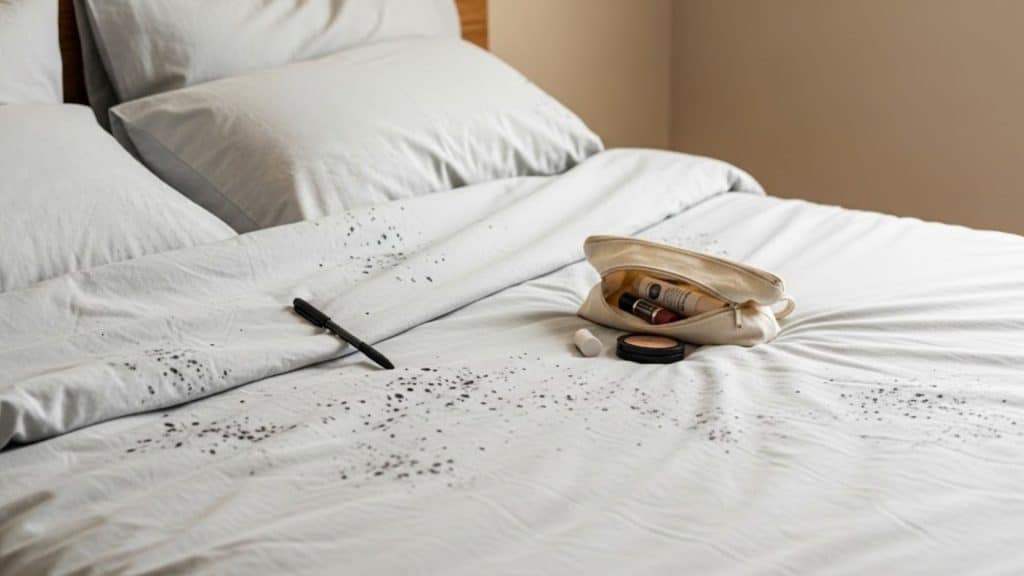


Finding tiny black bugs crawling across your mattress or bedsheets can make you feel uneasy, especially when your first thought is that they might be bed bugs.
You start checking every corner, wondering if your bed is safe and if those little intruders could be biting you while you sleep.
But before you panic, take a closer look.
Black bed bugs are not necessarily what you are dealing with. But a few simple identification clues can help you understand what you’re seeing and decide what to do next.
Bed Bug Color Chart by Life Stage
Bed bugs change color as they grow and feed, which is why a single sighting can be confusing.
Stage | Color Range | Notes |
|---|---|---|
Egg | Pearl-white, about 1 mm | Pinhead size, with a dark eye spot after about 5 days |
Nymph | Translucent to pale yellow | Very small and easy to miss |
Older Nymph | Light brown to medium brown | Color deepens as they feed |
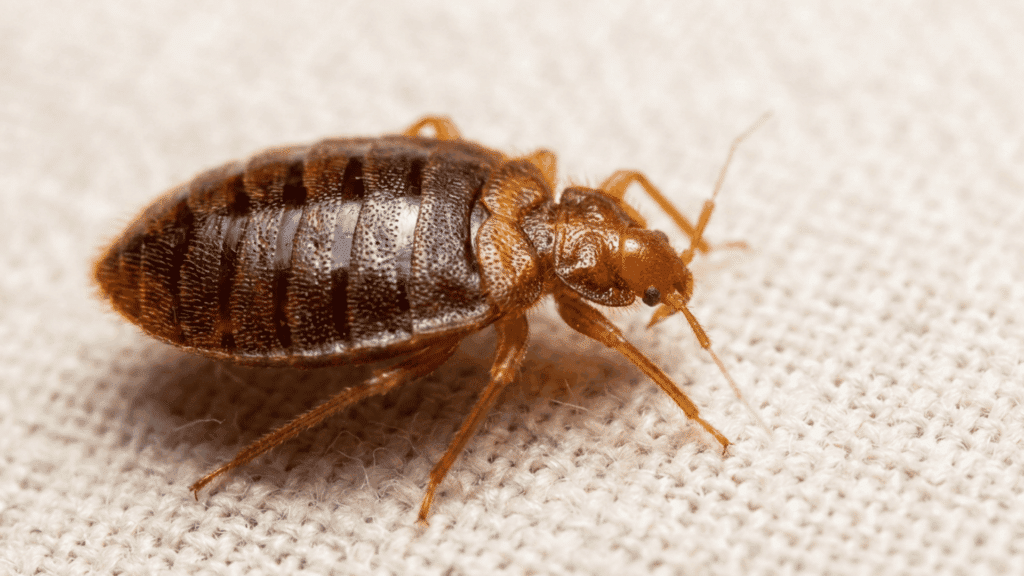
Adult | Medium brown to deep brown | Flat body unless fed |
Recently Fed | Reddish-brown | It can look darker due to the stretched body |
Nymphs stay light because their bodies lack heavy pigment. After each meal, they darken slightly, making older nymphs easier to notice.
So a dark bug or a few specks on your sheets isn’t proof on its own. Its shape, speed, and hiding spot tell you far more than its color does.
A Quick Check to Tell Bed Bugs From Small Black Bugs
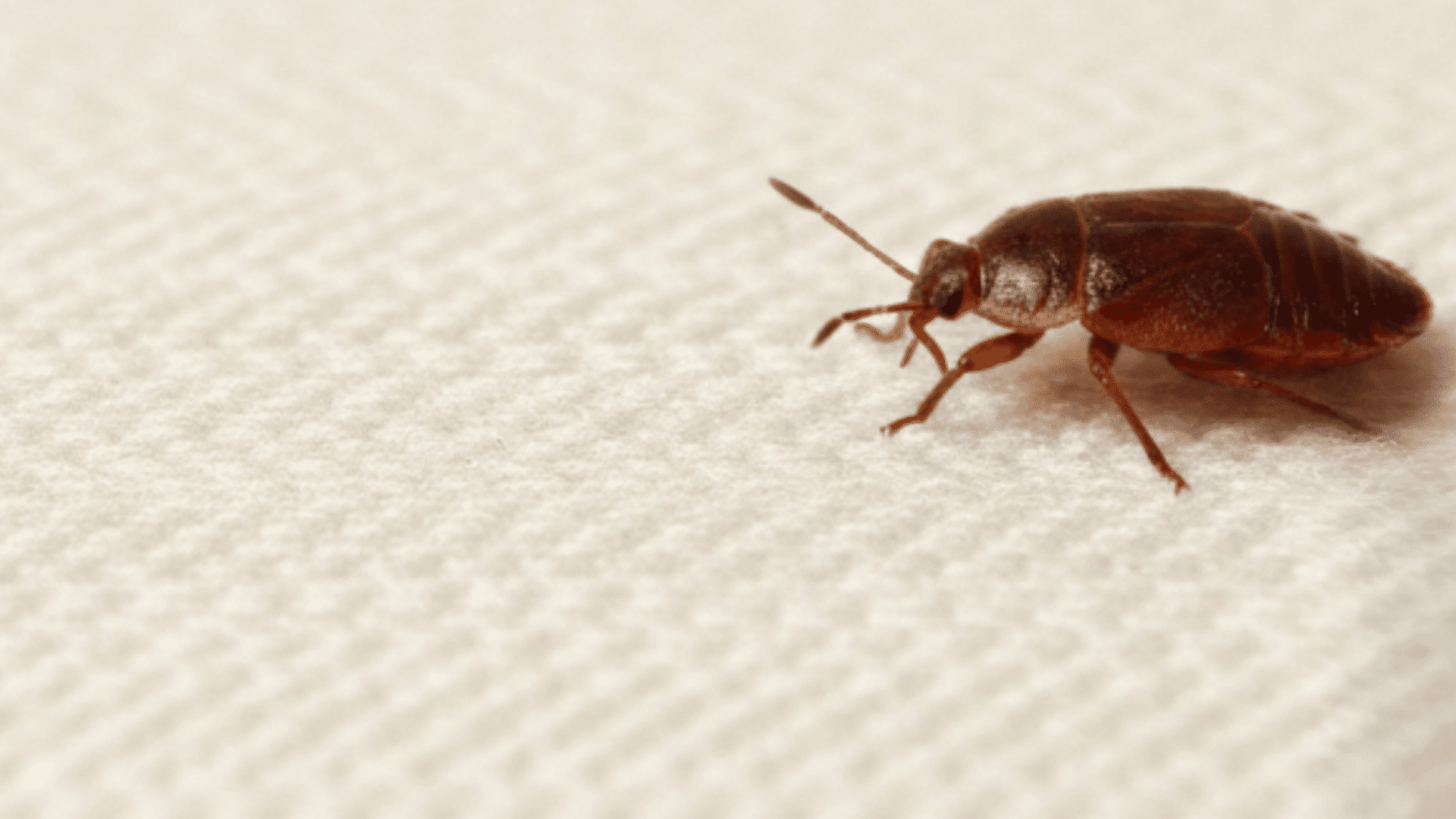
You don’t need a microscope to rule out most look-alikes. Five quick checks, done with your phone’s flashlight, will rule out most of them.
Body Shape: A bed bug has a flat, oval body that widens near the abdomen. After feeding, its body becomes fuller and longer.
Movement Speed: Bed bugs move slowly and often try to hide rather than run in the open. If the bug darts away, jumps like a flea, or races across the sheet, it likely isn’t a bed bug.
Size Range: Most adult bed bugs are about the size of an apple seed. Young ones are smaller but share the same shape. A dot-sized bug or one much larger than a seed is likely something else.
Wing Presence: Bed bugs cannot fly, but adults do have small, stubby wing pads on their backs.
Hiding Spot: Bed bugs hide in mattress seams, bed frames, and tight gaps, so a bug on a wall, a window, or far from where you sleep often points to a different species.
Size Chart for Bed Bugs and Dark Look-Alikes
Size is often the quickest way to sort a bed bug from the bugs that share its bedroom.
Bug Type | Size Range | Notes |
|---|---|---|
Bed Bug (adult) | 5-7 mm | Flat, oval, slow |
Bed Bug (nymph) | 1.5-4.5 mm | Same shape as adults, paler until fed |
Bat Bug | Same as a bed bug | Nearly identical, with longer hairs behind the head, and usually tied to bats in an attic or wall |
Black Carpet Beetle (adult) | 2.8-5 mm | Shiny, oval, and black to reddish brown, and often found near windows |
Carpet Beetle Larva | About 4-13 mm, depending on species | Narrow or fuzzy, moves faster, and has tiny hairs |
Spider Beetle | 1-3 mm, round body | Dark, shiny, and shaped like a small bead |
Booklice | 1 mm or smaller | Very small and pale or slightly darker |
Fleas and Ants | 1-3 mm depending on species | Jump (fleas) or move quickly (ants) |
Compare size and shape closely, since many small dark insects fall outside the range seen in real bed bugs. If your bug fits none of these rows, a photo and a sample will help an expert sort it out.
Skin Reactions Caused by Bugs and What They Mean
Itchy marks are often the first thing that sends people looking for bugs. Still, your skin is an unreliable witness, and several pests can leave similar marks.
Bites alone can’t confirm or rule out bed bugs. Bed bug bites often show up in small groups or a straight line on arms, legs, or the back, and they may feel warm or itchy.
Marks usually appear one to several days after a bite and can take as long as 14 days, and some people never react at all.
Carpet beetle irritation looks different because it comes from tiny hairs on the larvae, not from a bite. These hairs can cause small red spots that spread in a random pattern.
Loose hairs shed into bedding and clothes can trigger it, so you can react without ever seeing a larva.
Bed bugs are not known to spread disease, but their bites can itch, cost you sleep, and rarely cause an allergic reaction. If you think you’re having one, talk to your healthcare provider.
How to Confirm a Real Bed Bug Infestation at Home?
One bug is a clue, not a verdict. To confirm a real problem, look for several signs in the places where these insects hide most, such as mattress seams, bed frames, and nearby cracks.
Most stay within about 8 feet of where people sleep, so check nightstands and headboards too.
Dark spots: Small spots of dried waste on sheets and seams. These spots often stay grouped rather than scattered.
Blood marks: Small rusty or reddish stains from crushed bugs.
Shed skins: Pale skins that nymphs leave behind as they grow. These skins collect in tight spaces and corners.
Eggs: Tiny white eggs tucked into seams and cracks.
Live bugs: Bed bugs move slowly and stay close to places where people rest.
If you see steady signs in more than one area, the odds of a true infestation rise. A single dark insect without other clues usually points to a different pest.
What to Do in the First 24 Hours After Finding a Dark Bug?
The first day matters most, mainly because quick action keeps a few bugs from spreading. These steps help you collect proof and limit the problem without wasting money.
Catch the insect in a sealed bag or pill bottle, or take a clear photo of it. Your local cooperative extension office may be able to identify it; call ahead to ask about any fee.
Check your mattress seams, headboard, and nearby cracks for dark spots, shed skins, or slow-moving insects.
Wash all bedding, then dry it on the highest setting for 30 minutes.
Vacuum the mattress, frame, and floor, then seal the bag and throw it out in an outdoor trash can right away.
Move furniture slightly to check the edges without turning your room upside down.
Avoid using sprays during the first day. Never use rubbing alcohol, kerosene, or gasoline, which can catch fire, and skip foggers, since the spray can’t reach the cracks where bed bugs hide.
If you find steady signs in more than one area, contact a pest control company experienced with bed bugs. If you rent, tell your landlord too, since nearby units may need an inspection.
If you treat later, use only EPA-registered products that list bed bugs on the label.
How to Get Rid of Black Bed Bugs and Their Look-Alikes?
Once you’ve identified the bug, the next step is choosing the right way to get rid of it.
Since real bed bugs and their look-alikes require different treatments, here’s how to tackle each one effectively and keep them from coming back.
Clearing Out Real Bed Bugs
First-day steps slow bed bugs down, and clearing them out takes steady follow-up.
Encase the mattress and box spring in zippered covers made for bed bugs, so bugs can’t hide in the seams or get back into the bed.
Set interceptor cups under the bed legs. They catch bugs climbing up and show whether treatment is working.
Keep drying bedding and clothes on high heat after each wash, and clear clutter around the bed so there are fewer hiding spots.
For an infestation that has spread, a pest professional can treat cracks, furniture, and wall gaps that you can’t reach.
Getting Rid of Small Black Bugs That Aren’t Bed Bugs
Vacuum carpets, mattress seams, and baseboards to pick up carpet beetle larvae and their shed hairs, then wash your bedding on hot.
Fleas usually ride in on pets, so treat your pet with a vet-recommended product and vacuum often. Booklice thrive in damp rooms, so a dehumidifier or a fan usually clears them.
Conclusion
Remember, black bed bugs are not necessarily true bed bugs; carpet beetles, fleas, spider beetles, and other small black bugs can look surprisingly similar.
If you are still unsure, consider getting the insect professionally identified so you can choose the right treatment.
Have you spotted tiny black bugs in your bed or around your home? Share your experience in the comments below.
Frequently Asked Questions (FAQs)
Is There a Smell That Signals an Infestation?
Sometimes. A sweet, musty odor near the bed is one of the signs the CDC lists. On its own, a smell can’t confirm anything, so treat it as a reason to inspect mattress seams, corners, and nearby furniture more closely.
How Far From the Bed Do They Usually Hide?
Most stay within about 8 feet of where people sleep, even though they can travel more than 100 feet in a night. That makes nightstands, headboards, and nearby chairs worth checking along with the mattress itself.
How Long Can They Survive Without Feeding?
Adult bed bugs can live for several months without a blood meal. That is why an empty guest room or a couch kept in storage can still hold live bugs long after anyone last slept there.
Do They Come Out During the Day?
Usually not. Bed bugs hide in seams, cracks, and furniture during daylight and come out at night to feed while people sleep. Checking with a flashlight late at night can help you catch them moving.