
Finding itchy bites on the skin can quickly raise questions, especially after waking up or spending time indoors.
Bed bugs and fleas are among the most common causes, but telling them apart isn’t always simple since their bites often look alike.
Bite appearance alone cannot confirm which pest is responsible, so the most reliable answers come from examining bite patterns, timing, and physical evidence around the home.
Location, pattern, and a few key behavioral clues can make the difference clear. Keep reading to learn how to weigh those clues with more confidence before deciding on next steps.
Why Bed Bug and Flea Bites Look Similar
Both bed bugs and fleas inject saliva while feeding, triggering the body’s immune response. That reaction creates small red, itchy bumps.
Since every person’s skin reacts differently, one family member may have severe itching while another shows almost no visible marks.
Even trained doctors generally cannot identify which insect caused a bite by looking at it alone.
The surrounding environment, sleeping habits, pets, and evidence inside the home provide equally important clues.
The combination of these factors leads to a more accurate identification than the bites themselves.
Signs of Bed Bug and Flea Bites
Recognizing the bite pattern, body location, and timing can help narrow down the source before confirming the infestation with physical evidence.
Bed Bug Bite Signs
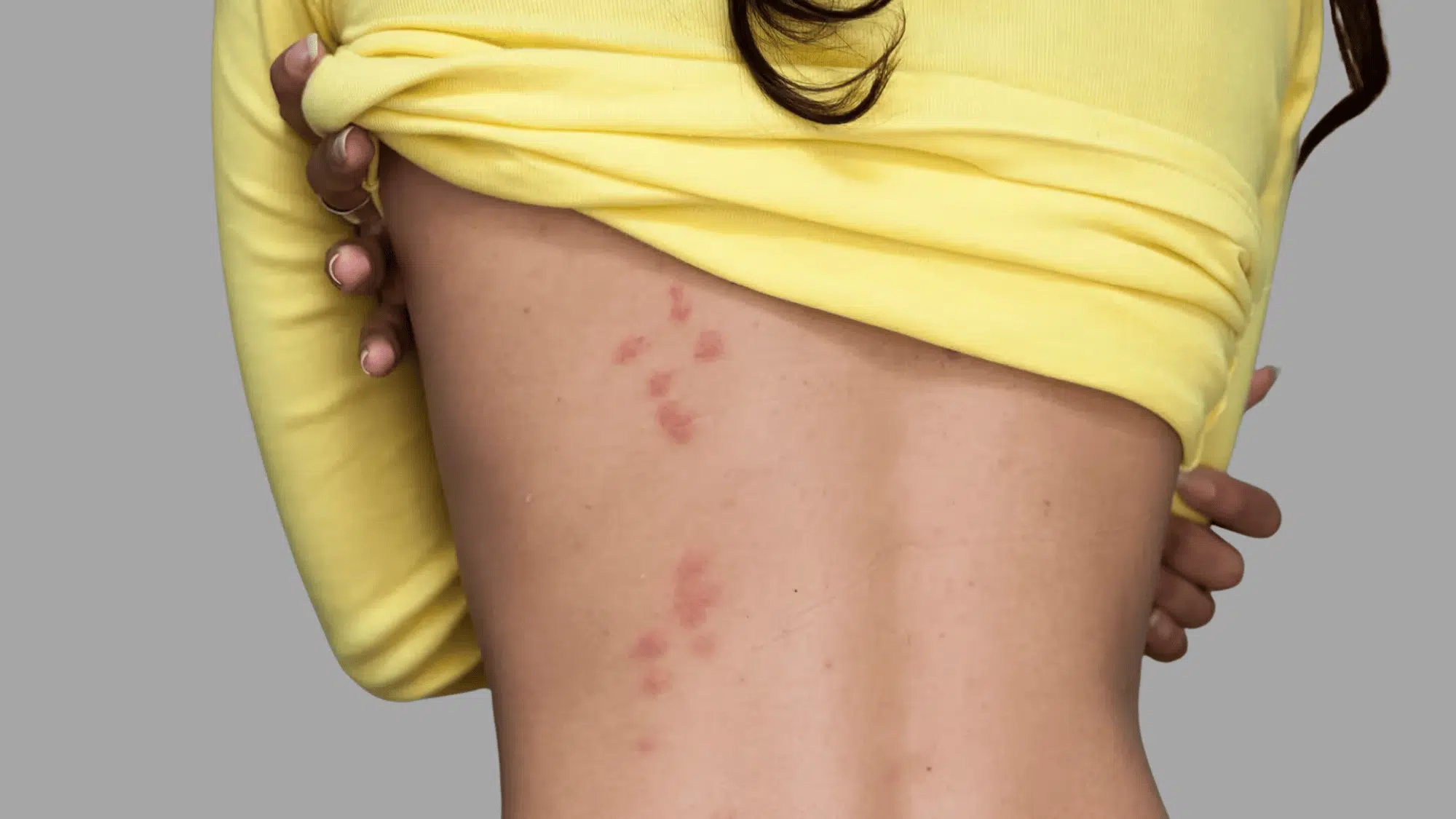
Bed bug bites follow a few consistent patterns that help set them apart from other insect bites.
- Pattern: Rows, zigzag patterns, or tight clusters rather than scattered spacing.
- Location: Exposed areas during sleep, such as the arms, neck, shoulders, face, and hands
- Time to appear: A few hours, though some people don’t show marks for several days.
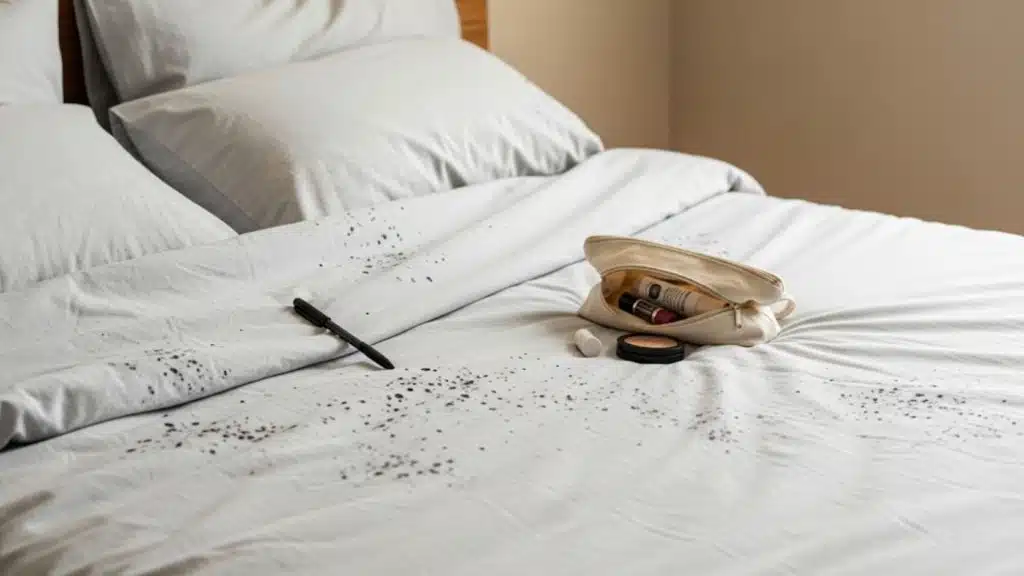
- Physical evidence: Bloodstains on sheets, dark spots on bedding, shed insect skins, or live bugs near mattress seams and box springs.
Flea Bite Signs
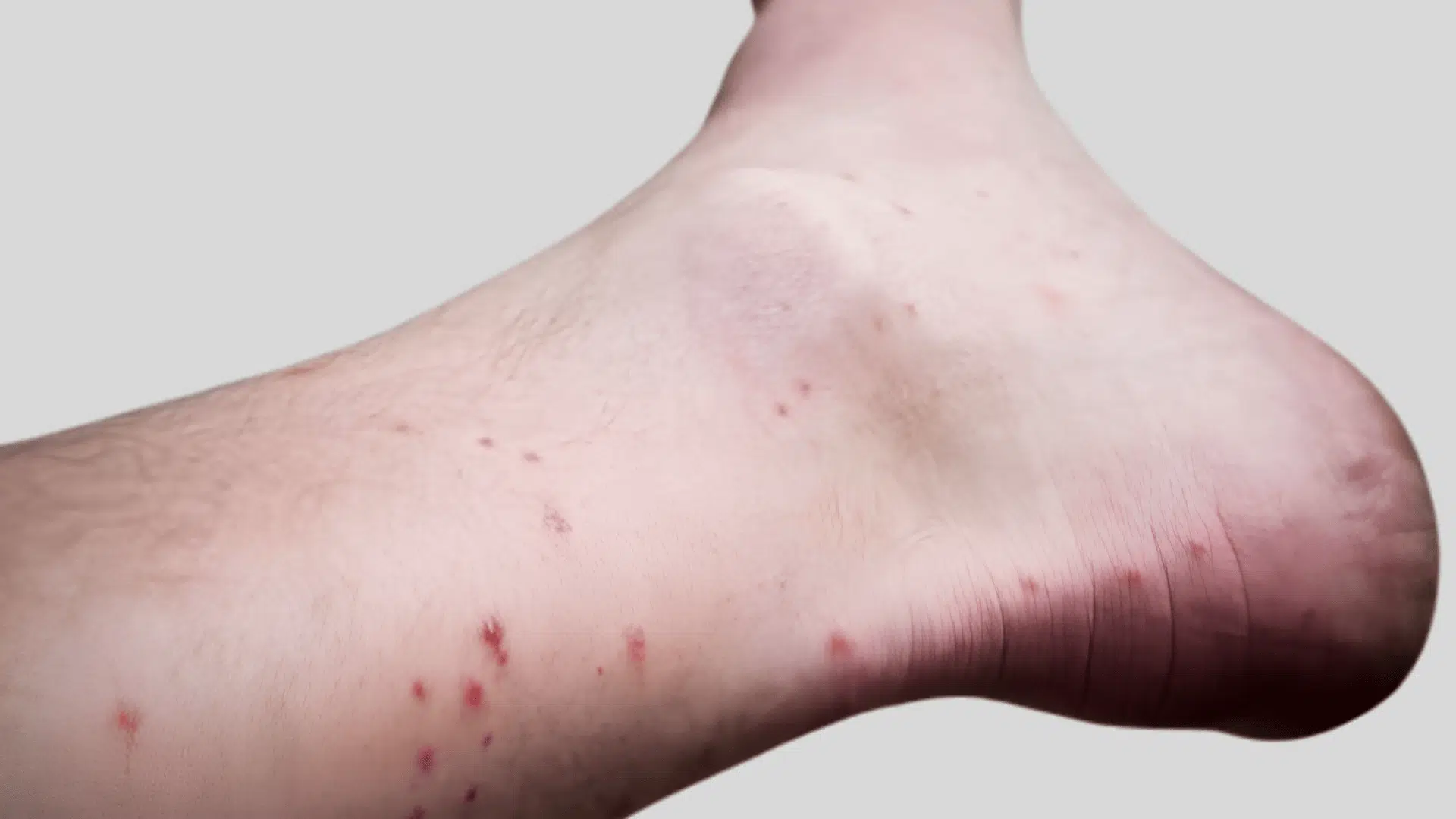
Flea bites have their own set of patterns that separate them from bed bug bites.
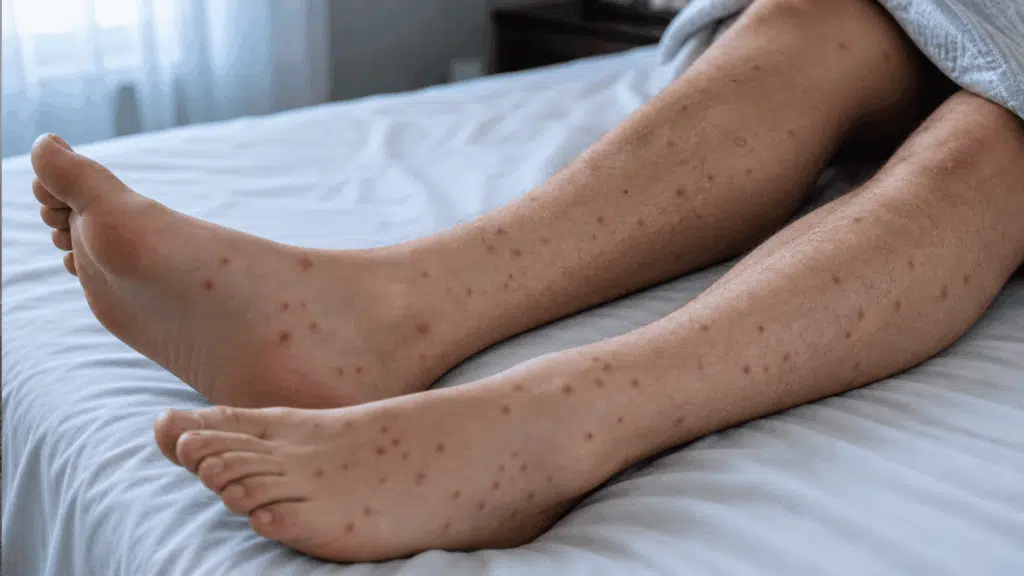
- Pattern: Small, scattered bites rather than rows or clusters
- Location: Ankles, feet, and legs
- Appearance: Very itchy, often with a small, dark spot at the center
- Physical Evidence: Scratching pets, flea dirt, or bites after visiting an infested area
Jumping vs. Non-Jumping
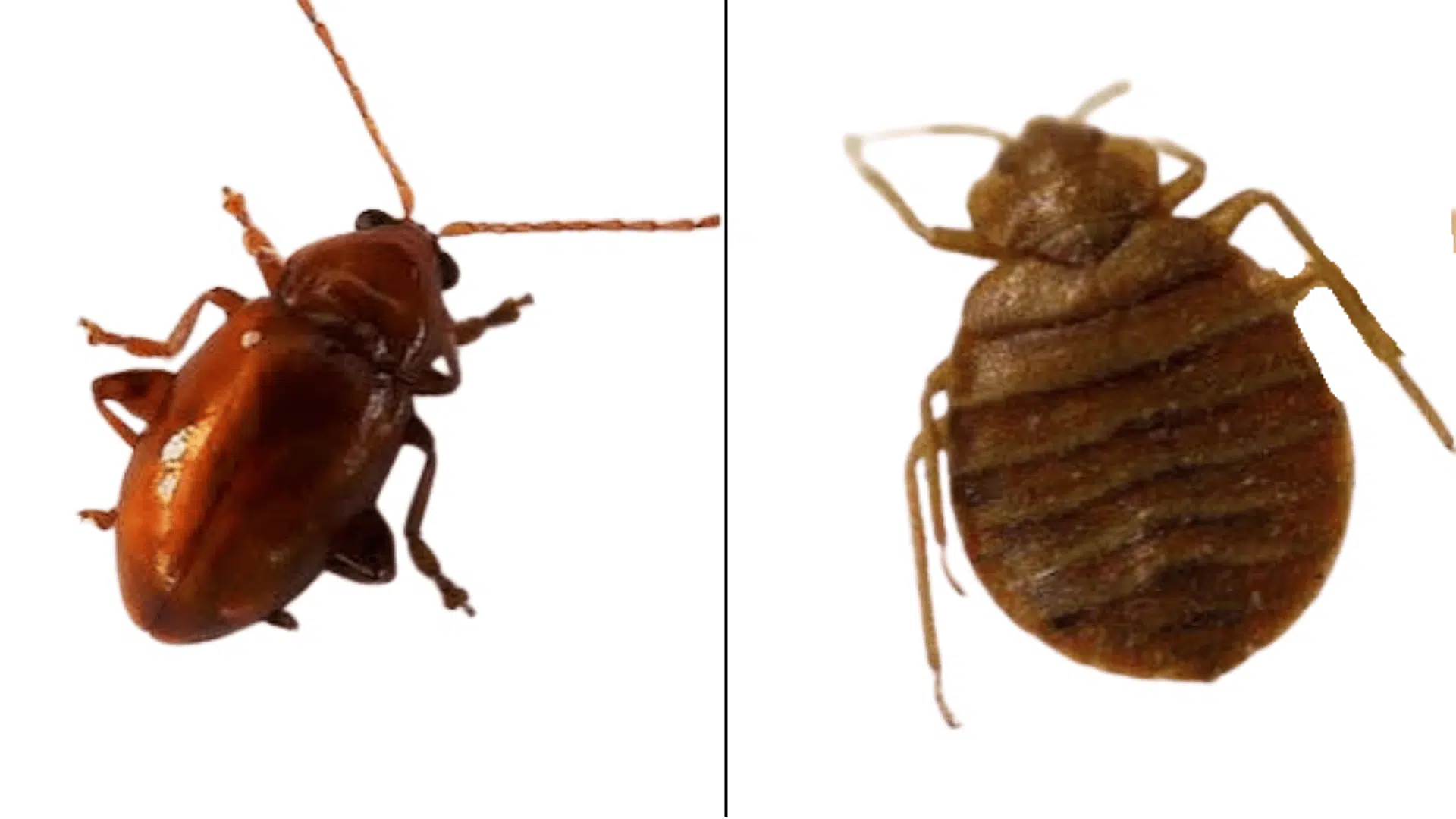
Fleas jump, but bed bugs never do. This single behavior is one of the most reliable ways to tell them apart at a glance.
- Fleas: Small, dark, and fast, often seen hopping across carpet, pet fur, or bare skin, and far more likely the cause if something is seen jumping near a bite site
- Bed bugs: Flat, reddish-brown, and slow-moving, crawling rather than jumping or flying, since they simply can’t jump at all
Does Waking Up With Bites Mean Bed Bugs?
Waking up with new bites does not confirm the presence of bed bugs on its own. Fleas can and do bite overnight too.
Especially in homes with pets that sleep on or near the bed. Bed bug reactions are also often delayed.
A bite that happened last night may not show up until tomorrow, and a bite from three nights ago in an unfamiliar bed can appear today.
That gap means the timing of new marks doesn’t always match the timing of the actual bite, which is why relying on “when did this show up” alone can point to the wrong pest.
Bed Bug vs Flea Identification Clues
These practical clues- bite pattern, location, timing, pet association, jumping behavior, and physical evidence make it easier to identify the pest responsible.
| Clue | Bed Bugs | Fleas |
|---|---|---|
| Active time | Mostly at night | Day and night |
| Common hiding place | Mattresses and bed frames | Carpets and pet bedding |
| Main source | Infested furniture or luggage | Pets, carpets, or secondhand furniture |
| Home evidence | Blood spots and shed skins | Flea dirt in carpet or bedding |
| First inspection area | Mattress seams | Carpets, rugs, and pet bedding |
| Primary control method | Professional pest treatment | Treat pets and the home |
Example Scenarios: Weighing the Clues
The scenarios below are illustrative composites built to show how clues get weighed against each other. They are not documented case reports, and real situations are often messier than any single example.
Scenario 1: After a Trip, With a Dog at Home
A person returns from a short trip and notices three bites in a row on one forearm the next morning.
A dog at home makes fleas seem like the obvious cause. Two days later, similar bites appear on the neck.
The dog shows no signs of scratching or flea dirt, but the mattress seams reveal small rust-colored spots and shed skins, suggesting bed bugs from travel rather than fleas from the pet.
Scenario 2: A New Rescue Dog and a Recent Trip
A family brings home a rescue dog. Within a week, two members develop itchy bumps around the ankles in the living room.
One stayed in a hotel that month, so bed bugs aren’t ruled out. The dog scratches, and dark speckling appears in its bed.
No rows or clusters appear on the arms or neck, and the mattress seams show nothing, suggesting fleas rather than bed bugs from the trip.
Scenario 3: Visiting a Friend’s House With Kittens
After playing with kittens at a friend’s house, a child develops itchy bites around the ankles and legs. The child gets itchy bites on his ankles and legs after playing with the cats at a friend’s place.
The absence of new bites overnight indicates that the exposure is gone; however, the presence of bites on the ankles and fleas on the car blanket indicates the cause of the bites.
Bed bugs usually bite again once they become established in the residence, so the single exposure and bites on the ankles show the bed bugs.
When to See a Doctor
Any bite with signs of infection or one causing a strong reaction should be evaluated by a licensed medical practitioner.
In most cases, bed bug and flea bites will heal on their own; however, there are certain cases in which immediate action is needed.
A situation where swelling worsens over time rather than healing, the formation of pus from the bite due to pain, and fever after being bitten by an insect are all cases that need medical attention.
Difficulty breathing and swelling in the face and throat, among other signs of a severe allergic reaction, require immediate medical intervention.
How to Identify the Source
Identifying the pest requires more than examining the bites. Checking the surrounding environment provides stronger evidence and helps avoid treating the wrong infestation.
- Inspect The Mattress: Check mattress seams, box springs, and headboards for live bed bugs, shed skins, tiny eggs, or black fecal spots.
- Examine Pets: Look for excessive scratching, flea dirt, or visible fleas on dogs and cats, especially around the neck and tail.
- Check Carpets and Furniture: Inspect rugs, upholstered furniture, and pet bedding where fleas commonly hide and reproduce.
- Monitor New Bites: Note when and where fresh bites appear, keeping in mind that bed bug reactions can lag behind the actual bite.
- Use Simple Traps: Place flea traps near pet areas or bed bug interceptors under bed legs to confirm insect activity.
- Look for Additional Signs: Blood spots on sheets usually suggest bed bugs, while jumping insects near floors point to fleas.
Disclaimer: This post is for general information only, not professional pest control or medical advice. Bite appearance alone can’t confirm bed bugs or fleas; consult a licensed professional for diagnosis or treatment.
Final Takeaway
The easiest way to tell bed bug and flea bites apart is to look past the bites themselves and weigh several clues together.
Bed bugs often leave rows or clusters on exposed skin after sleeping, while fleas usually cause scattered bumps around the ankles and lower legs.
Checking mattresses, pet bedding, carpets, and furniture provides the evidence that actually settles the question.
Have a bite pattern that doesn’t fit neatly into either category? Share the details in the comments; working through the clues together often turns up the answer.
Frequently Asked Questions
Can Fleas Live in a Bed Like Bed Bugs?
Fleas usually prefer pets, carpets, and nearby bedding rather than the mattress itself, while bed bugs primarily hide inside mattresses, bed frames, and cracks in furniture.
Can Fleas Bite Someone in a Home with No Pets?
Yes. Fleas can enter through secondhand furniture, rugs, a visiting animal, or an infested neighboring unit, so a pet-free home isn’t automatically flea-free.
Should Every Bite Be Treated by a Doctor?
Most bites heal without medical care. Seek professional treatment if severe swelling, infection, fever, or allergic reactions develop after a bite.