

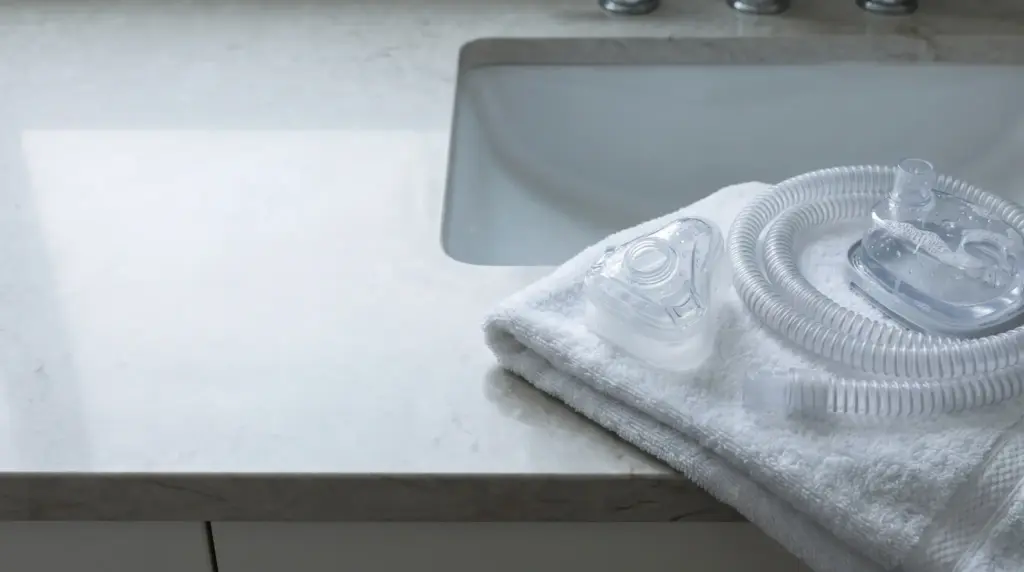
TL;DR: Wipe your mask cushion daily, empty and rinse the water chamber every morning, and give the mask, tubing and chamber a proper wash in warm soapy water once a week. Check your filters weekly and replace them as the manufacturer recommends. Swap out cushions, tubing and other consumables on a regular schedule, and get support from a qualified CPAP therapist if you notice smells, leaks or skin irritation.
If you have recently started CPAP (Continuous Positive Airway Pressure) therapy, you have probably noticed how quickly it becomes part of your nightly routine. The machine gently pushes air through a tube and mask to keep your airway open while you sleep, and for many people with sleep apnoea it is life-changing. What often gets overlooked, though, is how much that equipment depends on regular cleaning to keep working well.
Your mask sits against your face for hours every night. It collects natural skin oils, sweat and moisture from your breath. The humidifier chamber holds warm water, and the tubing stays damp. Left alone, that combination can lead to unpleasant smells, a poor mask seal, faster wear on parts and, in some cases, irritation to your skin or airways. The good news is that a simple routine takes only a few minutes and makes a real difference.
Daily Cleaning: The Quick Habits
Most of the daily work happens first thing in the morning, before you get on with your day.
Start with the mask cushion. This is the part that touches your skin, so it picks up the most oil. Wipe it down with a damp cloth or a mask wipe designed for CPAP use. Removing that oil helps the cushion keep its shape and seal properly, which means fewer leaks and less noise during the night.
Next, empty the water chamber. Never leave yesterday’s water sitting in it. Pour it out, give it a quick rinse, and let it air dry away from direct sunlight. Refill it with fresh water before bed. Many manufacturers recommend distilled or cooled boiled water to reduce mineral build-up, so check the guidance for your specific machine.
Finally, hang your tubing somewhere it can drip dry, such as over a towel rail or a shower rod. A tube that stays coiled up with moisture inside is where problems start.
Weekly Cleaning: The Deeper Wash
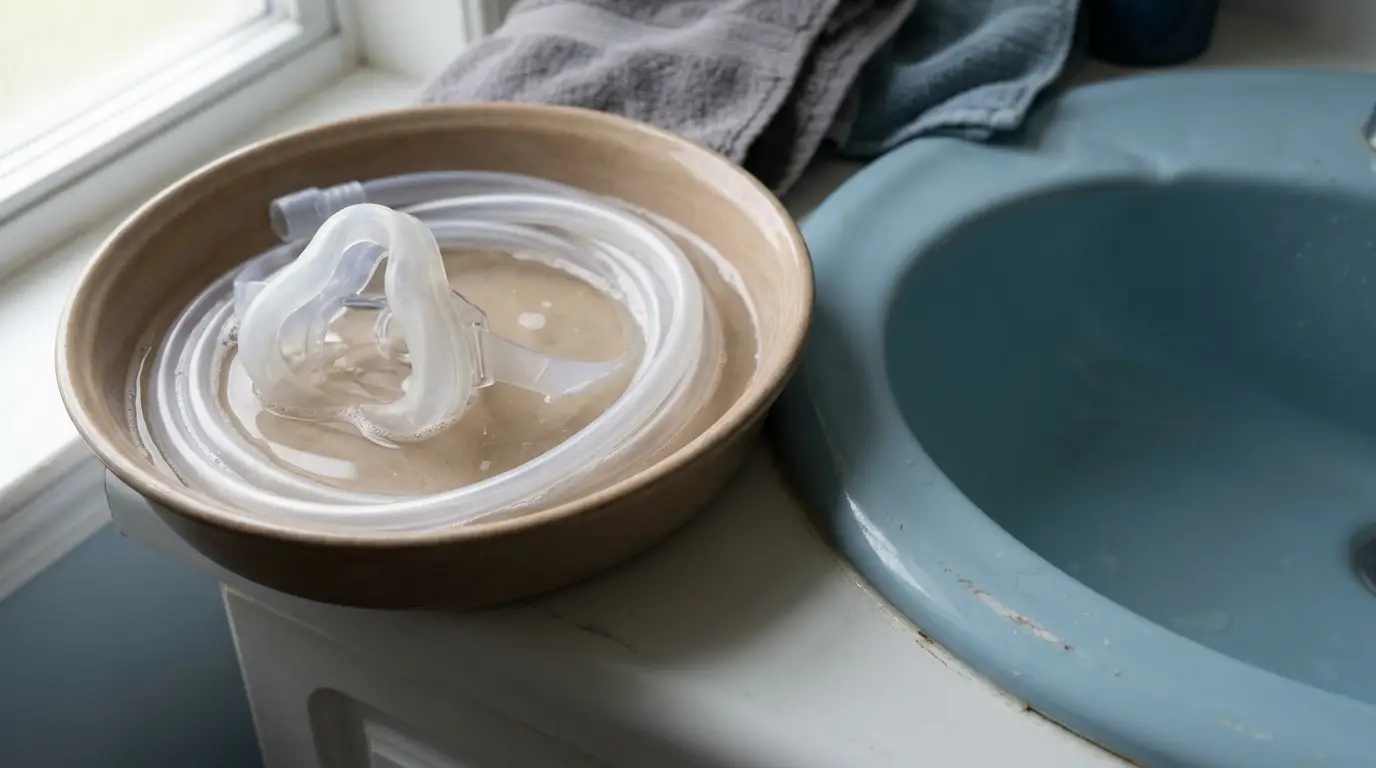
Once a week, set aside around 20 minutes for a more thorough clean. Here is a simple checklist to follow:
- Take the mask apart and wash the cushion, frame and headgear in warm water with a mild, fragrance-free soap
- Wash the tubing by running warm soapy water through it, then rinse well and hang it to dry completely
- Wash the water chamber in the same way, or follow the manufacturer’s instructions if it is dishwasher safe
- Wipe the outside of the CPAP machine with a damp cloth, keeping moisture away from the vents and electronics
- Inspect the air filter and rinse or replace it depending on whether it is reusable or disposable
- Let every part air dry fully before putting your setup back together
Avoid harsh cleaners such as bleach, alcohol, scented soaps or antibacterial products. These can break down silicone and plastic over time, and the residue can irritate your nose and lungs when the machine is running.
When to Replace Parts
Cleaning extends the life of your equipment, but it does not make it last forever. Mask cushions and pillows soften and lose their seal over time. Headgear stretches. Tubing can develop tiny cracks. Filters fill with dust and stop doing their job.
A general guide is to replace cushions and nasal pillows every few weeks to a month, masks and headgear every few months, and tubing and water chambers around every six months. Disposable filters typically need replacing every few weeks. Your exact schedule will depend on the brand, how often you use your equipment and the conditions in your home, so always refer to the manufacturer’s recommendations.
Signs it is time to replace something sooner include a mask that no longer seals no matter how you adjust it, visible discolouration, cracks or tears, or a lingering smell even after washing.
Getting Help With Your CPAP Routine
If you are unsure what your machine needs, or you are having trouble with leaks, dryness or comfort, talking to someone who works with CPAP equipment every day can save a lot of frustration. A good supplier can help with setup, troubleshooting and choosing the right replacement parts for your mask and machine.
For New Zealanders looking for replacement cushions, filters, tubing, cleaning products or a new mask, it is worth taking the time to visit the website of CPAP NZ. The online store is run by Sleep Well Clinic, which offers support from qualified CPAP therapists along with a full range of masks, machines and parts delivered across the country.
The Bottom Line
Keeping your equipment clean is one of the easiest ways to get the most out of CPAP (Continuous Positive Airway Pressure) therapy. A quick daily wipe and rinse, a weekly deep wash and a regular replacement schedule will keep your mask comfortable, your machine running smoothly and your nights more restful. Build these habits into your routine now, and your equipment will look after you in return.