


Fall brings travelers home, students back from dorms, and holiday guests into spare rooms, and bed bugs often ride along in their bags. Because these insects hide by day and feed at night, the first clues usually show up on sheets and mattress seams before anyone sees a live bug.
Catching those clues early keeps a small problem from spreading into nearby rooms, closets, and furniture. When several of the signs below appear together, a licensed pest control company with proven bed bug expertise can confirm the activity and map every hiding spot before treatment begins.
Why Fall Brings Bed Bugs Into the Bedroom
Bed bugs cannot fly or jump, so they travel by hitchhiking in luggage, clothing, used furniture, and other personal belongings. Fall packs several of those routes into a few short weeks, which raises the odds that a few bugs reach the bedroom unnoticed.
Suitcases from late summer trips often get unpacked right on the bed, and college students carry dorm bedding and backpacks home for long weekends. Secondhand shopping before the holidays also brings upholstered chairs, headboards, and mattresses indoors without any inspection.
Once inside, a small group of bugs can grow quickly because people spend longer nights in bed as the weather cools. According to the EPA, a female can lay one to three eggs per day, and the full egg-to-egg cycle takes four to five weeks under favorable conditions.
Signs Bed Bugs Have Reached Your Bedroom
The most reliable evidence is physical, and most of it collects where people sleep for several hours each night.
Rusty or Reddish Stains on Sheets
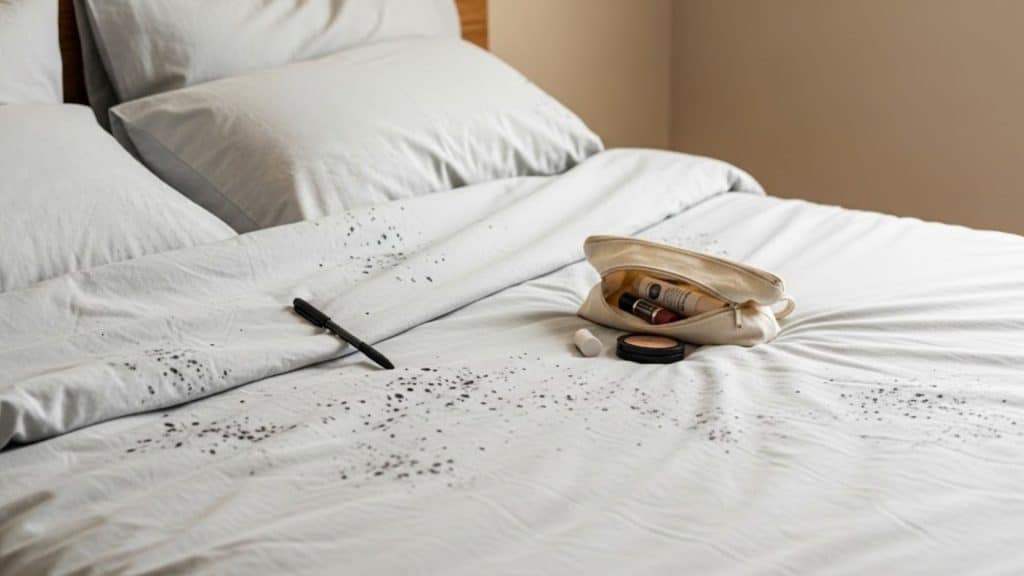
Small rust-colored smears on fitted sheets or pillowcases often come from bed bugs crushed during sleep. These stains tend to appear near the edges of the mattress, where bugs travel to and from their hiding spots.
Dark Spots on the Mattress and Bed Frame
Tiny dark dots that bleed into fabric like a marker are bed bug droppings made of digested blood. They cluster along mattress piping, seams, and tags, and they also gather inside cracks on the bed frame and headboard.
Pale Shed Skins and Tiny Eggs
Bed bugs shed their skin as they move through each life stage, leaving pale, empty casings behind in seams and corners. Their eggs measure about one millimeter long and look like specks of pale rice stuck to fabric or wood.
Live Bugs in Seams, Tags, and Cracks
Bed bugs are about as thin as a credit card, so any crack that holds a card can hide one. Seeing live insects along the box spring, behind the headboard, or inside a nightstand drawer joint confirms an active infestation.
New Bites After Sleeping
Itchy welts after a night in bed can raise suspicion, but the EPA notes that bites alone are a poor indicator of bed bugs. Their bites can look like mosquito bites or common rashes, and some people show no reaction at all.
Activity Beyond the Bed
Bed bugs will travel five to 20 feet from their hiding places to feed, so a growing population spreads outward over time. In heavier infestations, they settle into chair seams, curtain folds, outlet covers, and the line where the wall meets the ceiling.
How to Check Your Bedroom This Fall
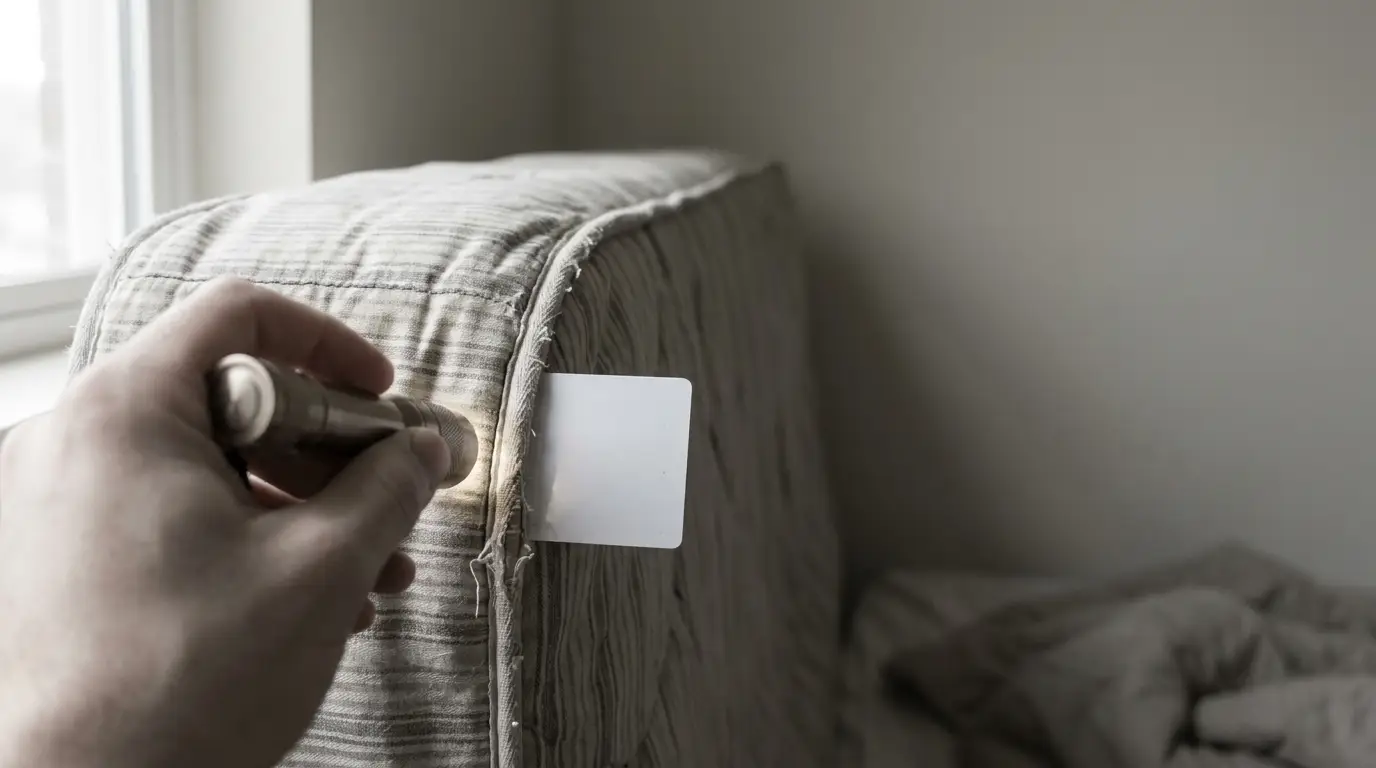
A careful inspection takes less than an hour and works best with a flashlight, a plastic card, and a roll of clear tape.
- Strip the bed and examine mattress piping, seams, and tags, running the card edge along each seam to push hidden bugs into view.
- Lift the mattress and inspect the box spring, its fabric underside, and every crack or screw hole in the bed frame.
- Pull the headboard away from the wall and check its back panel, mounting brackets, and the wall surface behind it.
- Empty nightstand drawers and look along the joints, then check baseboards and outlet covers nearest the bed.
- Inspect suitcases and travel bags before unpacking them, and keep luggage off the bed and away from upholstered furniture.
- Lift any suspected bug or skin with clear tape so a professional can confirm the species later.
That last step matters because carpet beetles and other small insects are easily mistaken for bed bugs. A wrong identification gives a real infestation more time to spread while the household treats the wrong pest.
What to Avoid Once You Find Signs
Quick fixes often make bed bug problems harder to solve, since disturbed bugs scatter into new rooms and deeper hiding spots.
- Skip total-release foggers. Foggers rarely reach bugs hidden in seams and cracks, and they can push the population into other rooms.
- Keep items in the room. Moving bedding, clothes, or furniture into another room before treatment can carry bugs and eggs along with them.
- Hold off on tossing the mattress. Dragging an infested mattress through the house spreads bugs, and inspection, treatment, or a sealed encasement may save it.
Clothing and bedding from the affected room can go through a high-heat dryer cycle, then stay sealed in plastic bags until the room is treated.
When to Call a Professional
Bed bugs hide in so many places that store-bought sprays rarely reach every adult, nymph, and egg in a bedroom. A professional inspection confirms the pest, maps every harborage, and sets a follow-up schedule for any bugs that hatch after the first treatment.
Family-owned companies like Buono Pest Control confirm live insects, eggs, shed skins, or stains before treating anything. Plans often combine vacuuming, heat or other nonchemical methods, mattress encasements, monitors, and targeted label-compliant products.
Keep the Bed a Place to Rest
Fall travel, dorm visits, and holiday guests give bed bugs plenty of chances to reach the bedroom in a short span of weeks. A monthly check of the mattress, frame, and headboard catches the early signs. Calling a professional at the first clear sign keeps a few hitchhikers from turning into a long winter infestation.