Early morning should be quiet.
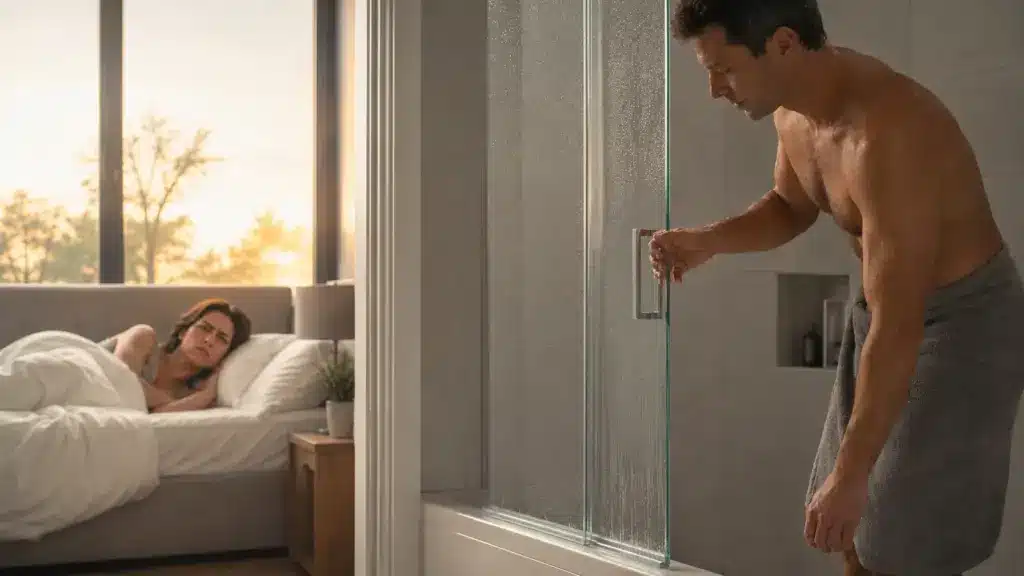
You are still in bed, half asleep, enjoying those last few minutes of rest. Then a sharp scraping sound comes from the bathroom.
It is not the alarm. It is the shower door.
Your husband or wife is only getting ready for work. They open the glass shower door as usual, but the bottom edge drags across the shower tray with a dry, harsh noise. In a quiet bedroom, that sound can feel much louder than it really is.
It may only last a second, but it is enough to wake you up.
Most people would first blame the shower door itself. Maybe the hinges are old. Maybe the door is not aligned. Maybe the floor is uneven. But quite often, the problem is much smaller than that.
It may come from the shower door bottom seal strip.
Why Small Bathroom Noises Feel Worse in the Morning
During the day, a little scraping sound is easy to miss. There is traffic outside, people talking, appliances running, and other sounds around the house.
Early in the morning, everything is different. The house is quieter. Sleep is lighter. A small dragging noise from the bathroom can suddenly feel sharp and irritating.
This is even more noticeable when the bathroom is close to the bedroom or part of an en-suite. One person may simply be starting their day, while the other is pulled out of sleep by the sound of the shower door opening.
Home comfort is not only about a good mattress, soft bedding, or the right room temperature. Sometimes, it is the small everyday noises that affect how calm a home feels.
A noisy shower door seal is one of those details people often ignore until it becomes impossible not to notice.
Why the Bottom of a Shower Door Scrapes
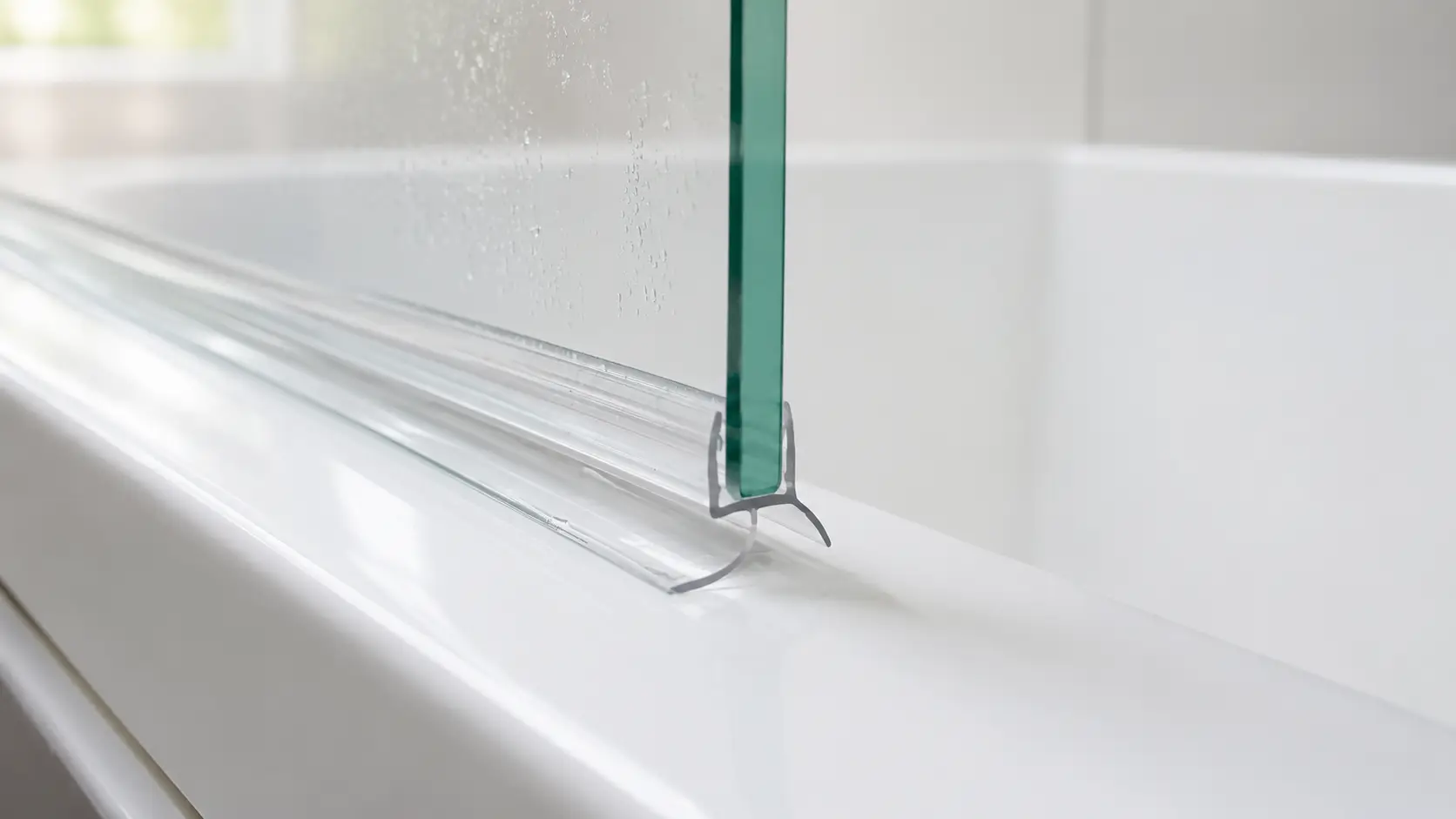
A shower door bottom seal sits along the lower edge of the glass door. It helps keep water inside the shower area and allows the door to move smoothly.
At least, that is what it should do.
When the seal fits properly, it lightly touches the shower tray, threshold, or floor. It should create a gentle barrier without dragging too hard.
The trouble starts when the seal is the wrong fit for the door or the gap below it.
One common issue is a bottom fin that is too stiff. Most bottom seals have one or more flexible fins. These fins are meant to bend as the door moves. If the material is too hard, the fin does not flex smoothly. Instead, it rubs against the tray or floor and creates that sharp scraping sound.
Another common issue is a fin that is too long. When the fin is longer than the gap under the door, it gets squeezed every time the door opens or closes. It may bend, drag, or even catch against the tray. Instead of gliding, the door feels like it is pressing the seal down and dragging it along.
That is when you start hearing squeaking, scraping, or a rough dragging noise.
The same problem can also happen if the seal is the wrong size, the glass thickness does not match the seal, the old seal has hardened over time, or the strip was not trimmed properly during installation.
In many cases, the sound is not random. It is a sign that the bottom seal is not suited to the door anymore.
The Problem Is Often Poor Fit, Not the Door
Many people only think about replacing a shower seal when they see water leaking onto the floor. But noise can be just as useful as a warning sign.
If the bottom of the shower door scrapes every time it moves, the seal is probably making too much contact with the tray, floor, or threshold.
A long fin may stay compressed all the time. A hard fin may refuse to bend with the movement of the door. A poorly matched seal may leave the door dragging instead of sliding or swinging smoothly.
Over time, this can make the door feel heavier than it should. You may even start pulling or pushing harder without realising it.
A good shower door bottom seal should do three things well: help control water, sit securely on the glass, and move without harsh friction.
The bottom fin does not need to be rock hard. In fact, too much stiffness is often part of the problem. The better option is usually a seal that has enough structure to block water, but enough flexibility to bend naturally as the door moves.
How to Check If the Seal Is Causing the Noise
If your shower door makes that scraping sound in the morning, you do not need to assume the whole door is faulty. The bottom seal is usually easier to check.
Look at the bottom fin first. If it bends sharply, drags along the tray, or gets trapped when the door moves, it may be too long for the gap.
Then check the feel of the material. If the seal has become hard, brittle, or slow to spring back, it may no longer be flexible enough for quiet use.
It is also worth checking whether the seal matches the glass thickness and the height of the gap under the door. A strip that is too tight, too loose, or constantly pressed against the tray can create extra resistance.
There is a simple test you can try. Open the door and gently lift the bottom fin with your hand. If the scraping sound becomes much quieter, the noise is probably coming from the fin rubbing against the tray, floor, or threshold.
When that is the case, replacing the seal with a softer, better-fitting option can often make the door feel smoother and quieter.
For UK homeowners, suppliers such as SIMBA seals offer shower door seal products through showerdoorseal.uk. Their bottom seals are made with softer, more environmentally conscious materials, helping the fin bend more naturally as the door moves and reducing the harsh noise caused by dragging or over-compression.
A Small Part Can Change the Feel of Your Morning
A shower door bottom seal is not something most people think about. It is small, clear, and easy to overlook.
But when it is too hard, too long, or poorly fitted, you hear it every day.
The shower may still work. The door may still close. But the bathroom no longer feels as smooth or quiet as it should.
If your shower door makes a sharp scraping sound every time it opens or closes, start with the bottom seal. You may not need a new door or a major repair. You may only need to replace the strip that is dragging, rubbing, or no longer flexible enough.
A suitable, soft, and well-fitted shower door bottom seal can help the door move more smoothly, reduce unwanted noise, and make early mornings at home feel calmer.
For many households, it is a small change. But it is one you may notice every morning.