
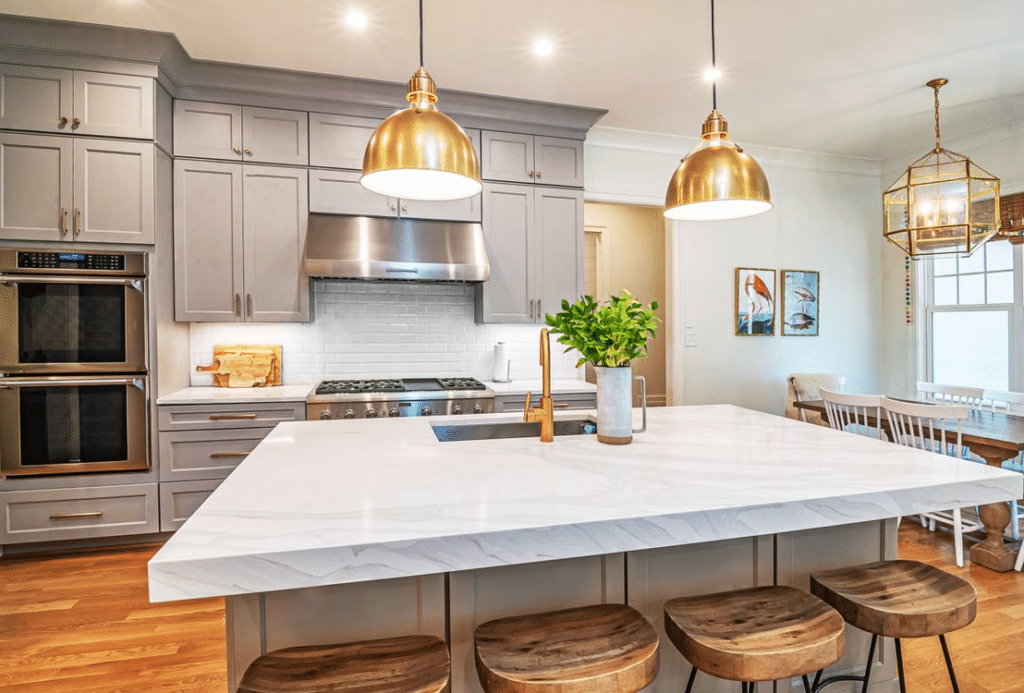
Want a brand-new kitchen without ripping out the one you already have?
That is the question homeowners across the country are starting to ask themselves. Kitchen remodeling is still by far the most popular home renovation project going…
However, costs have skyrocketed out of control. Demolishing intact cabinet boxes, throwing them in the landfill, and trying to build back from square one seems foolish.
Here’s the good news:
There is a middle option, and plenty of people have never heard of it.
Cabinet refacing maintains the boxes already screwed to the wall and changes everything you can see. Doors. Drawer fronts. Hardware. Finish. Your kitchen will feel brand new. Without demolition.
Here’s why homeowners keep picking it…
What You’ll Uncover:
- What Cabinet Refacing Actually Means
- Why Drawer Front Replacement Does The Heavy Lifting
- The Cost Gap Between Refacing And Replacement
- How Long Each Option Really Takes
- When Full Replacement Still Wins
What Cabinet Refacing Actually Means
Refacing involves replacing the kitchen cabinet fronts without changing their location.
A proper refacing job includes:
- New cabinet doors
- New drawer fronts, and often brand new drawer boxes
- New veneer or laminate across the exposed cabinet frames
- New hinges, handles and soft-close hardware
The bones stay. The skin changes.
And that’s important than it sounds. Boxes are the one thing in a kitchen no one ever sees. And in most homes they’re still square and perfectly functional. Demolishing them does not improve your kitchen. It just increases your bill.
Why Drawer Front Replacement Does the Heavy Lifting
Here’s something most homeowners get backwards…
People fuss over cabinet doors. Drawers are an afterthought. But drawer fronts are eye level. They’re handled dozens of times a day. They chip, they sag, and wear the dated profiles that age kitchens 20 years.
That’s precisely why drawer front replacement ends up with so much visual impact in a refacing project. Change out the drawer fronts and doors, and that room looks like new before you even touch a countertop.
It’s also where most of the money goes — expect doors and drawer fronts to consume about 40% to 50% of the total material cost of a reface.
Why would you want them trimmed down from standard stock sizes out in the driveway? You hire a professional refacing contractor who measures all of your openings, fabricates your doors and drawer fronts to fit that kitchen perfectly, then does the drawer front replacement and installation as a single project.
That’s how you get uniform reveal gaps and drawers that slide straight instead of snagging every time you grab a spoon.
Coverage does vary by region, so it is worth checking which towns are served before booking a drawer front replacement, here: https://www.kitchensaver.com/locations/
One caution: If the drawer glides are worn, replace those as well. Installing new fronts on worn out glides is halfhearted.
The Cost Gap Is Impossible to Ignore
Now to the part everyone actually wants to know about.
Full cabinet replacement has hidden costs that don’t become apparent until after the quote is signed. New cabinets never line up with existing countertops so the counters are replaced as well.
Flooring under the old footprint is exposed that needs patching. Offset a run of cabinets by two inches and now you have an electrician on site.
Houzz recently polled almost 1,800 homeowners and reported a median spend of $55,000 on an ambitious kitchen remodel where cabinets and appliances are replaced, while light refreshers come in closer to $20,000.
Refacing usually lands between $4,000 and $12,000 for an average kitchen.
Consider what that cost difference buys. The savings from preserving the boxes can pay for new countertops, a new sink, upgraded lighting, and you’ll still have money left over.
Homeowners aren’t picking refacing because it’s cheap. They’re picking it so they have money to spend on the things that truly affect the ambiance of a kitchen.
How Long Each Option Really Takes
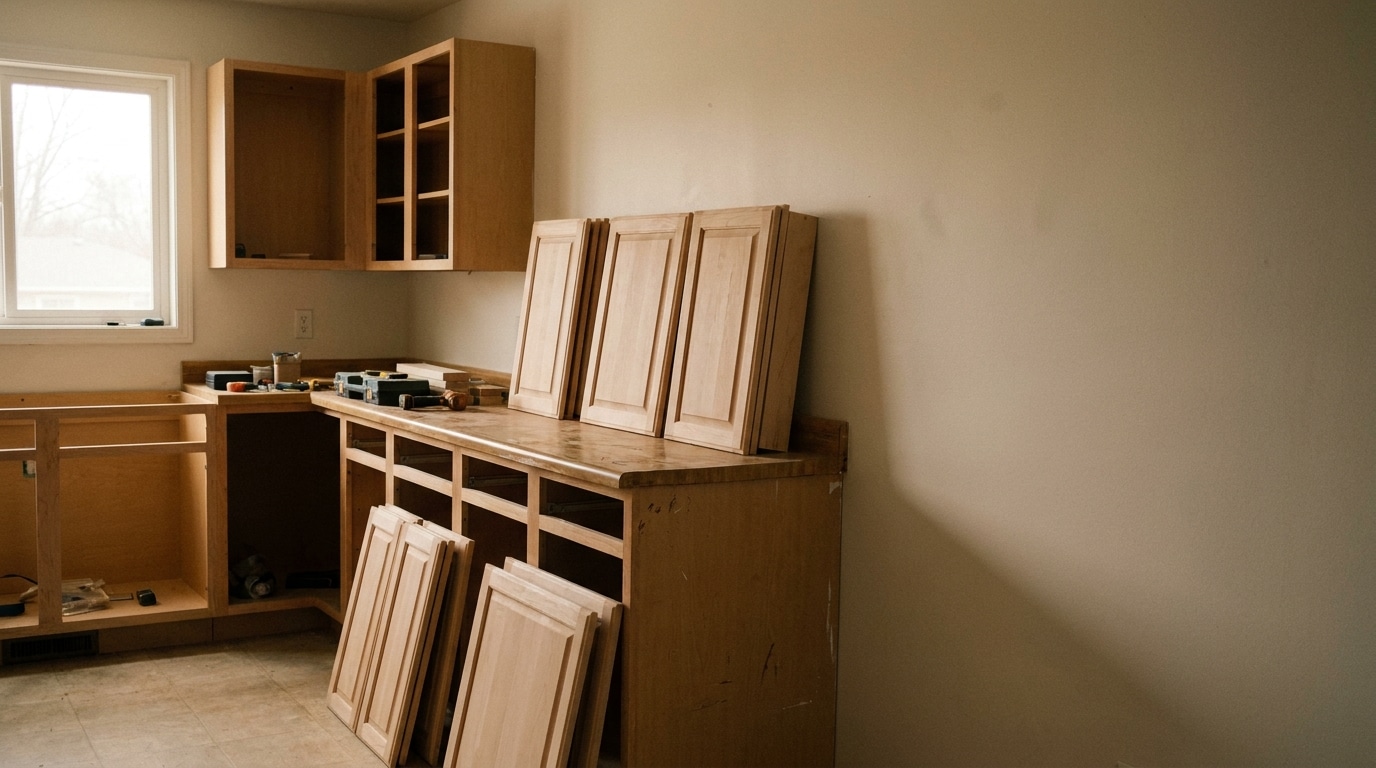
Price is only one factor. The other is how long do you have to live without kitchen.
A whole-home remodel takes weeks. Usually months. You deal with demolition, dust, a dumpster in the driveway, and weeks of microwaving dinner in the garage.
Refacing is a different experience entirely:
- Most projects finish in three to five days
- The kitchen stays usable for most of that time
- There is no demolition and almost no debris
- Dishes and pantry items mostly stay where they are
That’s no minor perk. For families with children or anyone working from their kitchen table, the inconvenience of a full remodel is usually the true dealbreaker — not the cost.
The Resale Numbers Are on Refacing’s Side
Here’s the part that surprises people…
Spending more on a kitchen does not mean getting more back. Report after report from across the home building industry comes to the same conclusion.
According to the Journal of Light Construction, a minor kitchen remodel, which is defined as the scope that leaves the existing cabinet boxes and simply replaces the doors and drawer fronts, is the only interior project to make the national top five list for return on investment.
Every project above it is exterior-related: garage doors, entry doors, etc. Meanwhile, upscale gut renovations sit near the bottom of the list.
Here’s why. Buyers decide if they like a kitchen in 10 seconds or less. New doors, clean drawer fronts and updated hardware photograph well and feel fresh. No one opens a cabinet and wonders what kind of box it is made of.
When Full Replacement Still Wins
Refacing is not always the answer, and any company saying otherwise should be avoided.
Full replacement makes sense when:
- The layout is wrong. Refacing can’t shift a wall, move a sink or create an island.
- Boxes are damaged. Boxes with water damage, swollen particle board, sagging shelves or mould should be discarded.
- You need more storage. New cabinets can provide extra height, depth and pull-out mechanisms your old cabinets can’t accommodate.
- Anyways, the kitchen is being gutted. If you’re pulling out the flooring, plumbing and counters you won’t save that much.
Test this way. Open a cabinet door, push on the frame and study the joints. If cabinets are sturdy and the layout is sound, refacing is usually the best option.
Bringing It All Together
Cabinet refacing is winning consumers over by solving the problem. Most kitchens aren’t lacking square footage, they just want to stop looking outdated.
To recap:
- Cabinet refacing maintains the boxes and only changes the doors, drawer fronts, veneer and hardware.
- Replacing the drawer front accounts for most of the visual difference and material cost.
- The project finishes in days instead of months
- Modest kitchen updates consistently return more than full gut jobs
- Full replacement is still the right call for bad layouts and damaged boxes
Buy boxes, properly finish drawer fronts and your kitchen will look like new for a fraction of the cost.