

Household dust isn’t really one thing—it’s a mix of tracked-in soil, fabric fibers, skin flakes, pet dander, pollen, and whatever else happens to be floating around, all settling onto every surface in your home. Cutting back on dust matters for more than appearances; it can help limit the particulate matter and potential allergens circulating indoors. Households that struggle to keep up with floors might find a robot vacuum useful for maintaining a more regular routine, though it won’t replace detailed cleaning of upholstery, corners, stairs, and other trickier surfaces. The most effective approach combines source control, regular cleaning, moisture management, and ventilation. No single method catches every pollutant, so a layered, consistent routine tends to beat relying on any one fix.
Start With Source Control
Source control means cutting off pollutants before they spread through living spaces, rather than scrambling to clean them up afterward. It’s generally easier to keep debris from entering the home than to filter it out once it’s already airborne. Simple measures help: doormats at exterior entrances, removing shoes indoors, keeping windows shut during poor outdoor air quality, fixing leaks promptly, and clearing clutter that traps dust and makes cleaning harder.
These measures should fit each household’s actual circumstances—pets, kids, climate, and flooring type all shape what’s realistic. It’s also worth distinguishing between settled dust and airborne particles: cleaning surfaces cuts down on resuspension, but it won’t eliminate every indoor pollutant. Promises of a totally “dust-free” home or guaranteed allergy relief simply aren’t realistic, and they’re not backed by evidence.
Build a Consistent Cleaning Routine
Frequent, manageable cleaning generally beats occasional deep cleans. Focus on entryways, floors, rugs, baseboards, window coverings, shelves, upholstered furniture, and pet resting areas. The order matters too—work from higher surfaces downward, handle dry surfaces before washing floors, and finish with floors so loosened particles actually get removed instead of just redistributed.
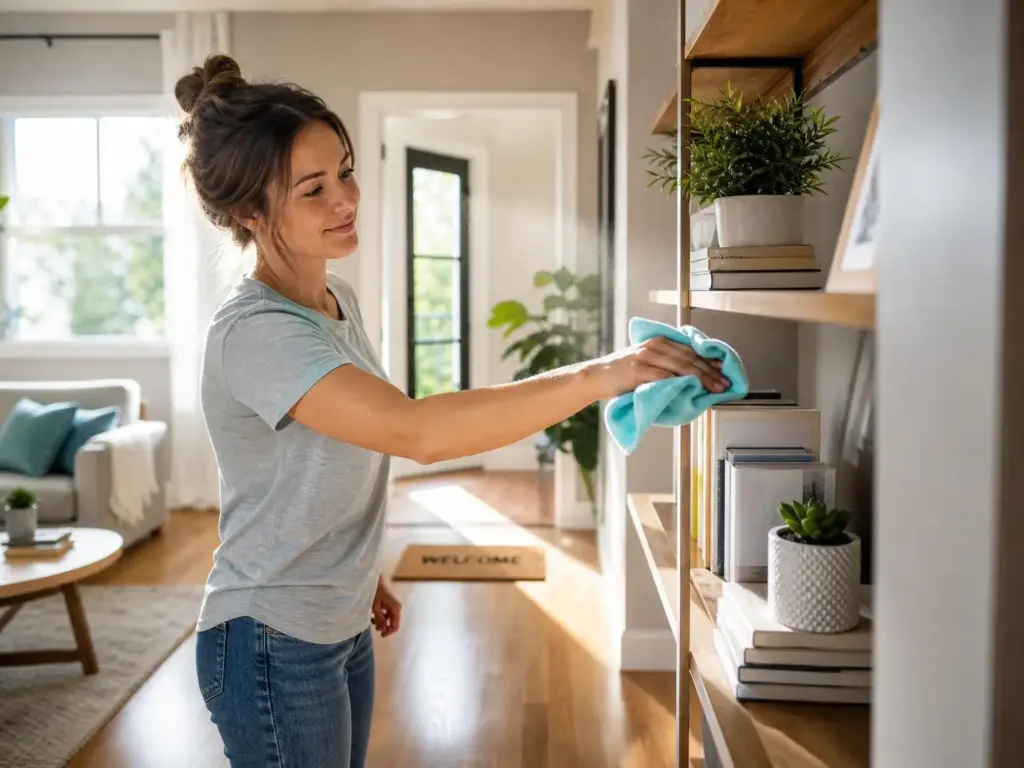
Damp microfiber cloths and similar tools trap particles rather than sending them back into the air. How often you vacuum should depend on your household’s foot traffic, flooring, pets, and allergen sensitivity rather than some fixed schedule.
Key Takeaway: Consistency and prioritization usually matter more than trying to clean every surface every single day. Take a family that notices dust piling up fast near the front door—they might respond by adding doormats, encouraging shoe removal, and cleaning that entryway more often, rather than overhauling the entire home’s routine.
Use the Right Method for Each Surface
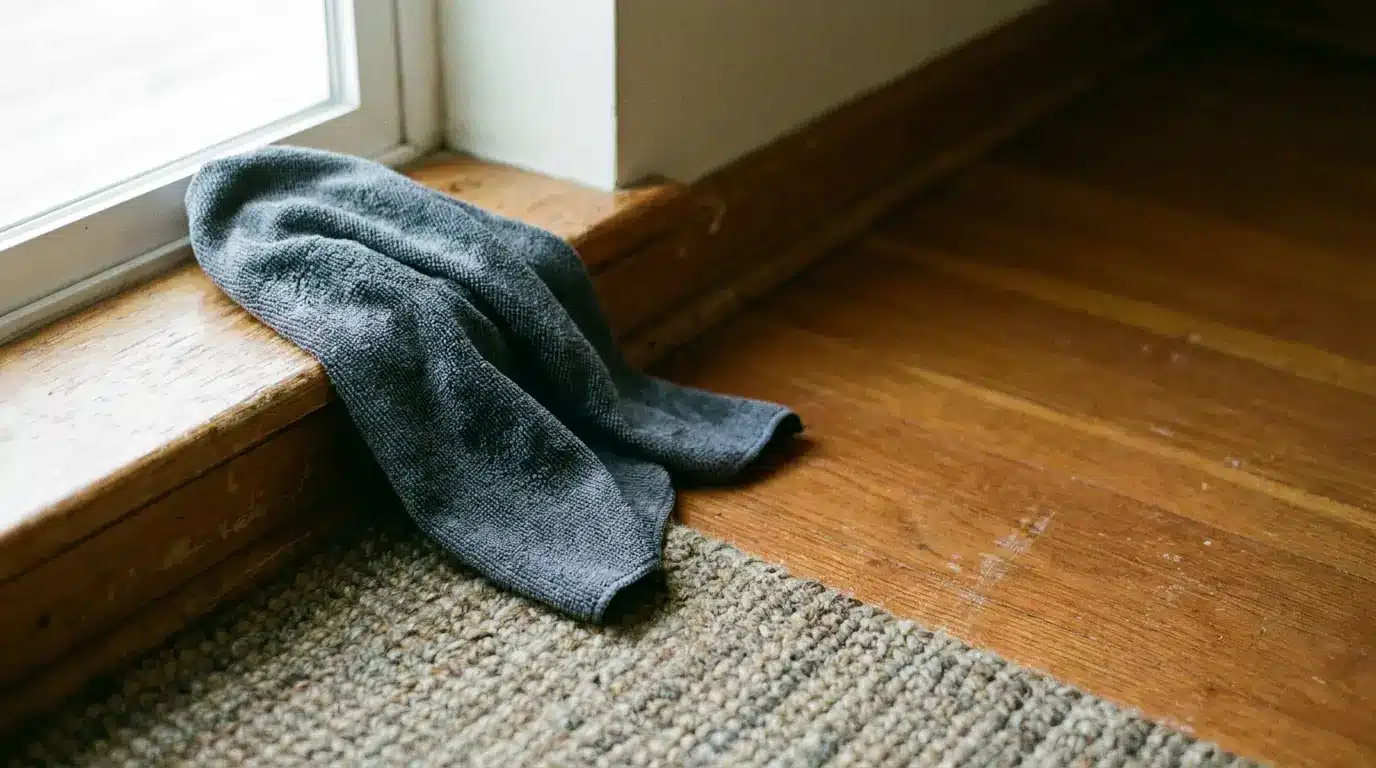
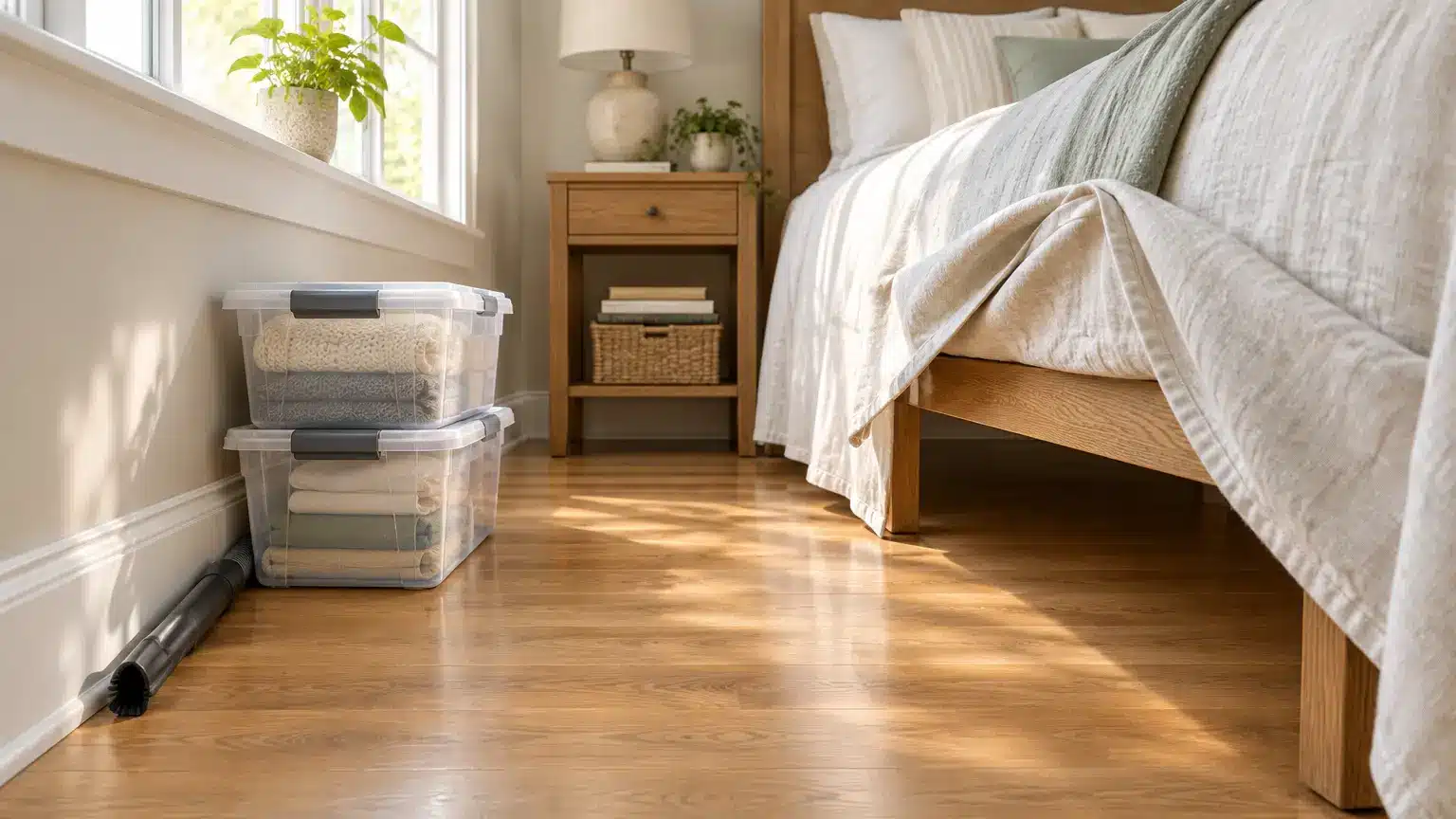
Hard floors: Dry sweeping tends to stir up settled particles, while vacuuming or damp mopping captures more material. Don’t skip corners, gaps, baseboards, and the space beneath furniture.
Carpets and rugs: Textiles trap dust, pollen, and hair, which is why regular vacuuming and periodic deep cleaning pay off. Follow care instructions for delicate rugs, and go easy on moisture. People with asthma or strong sensitivities may want to step out of the room during dusty cleaning tasks.
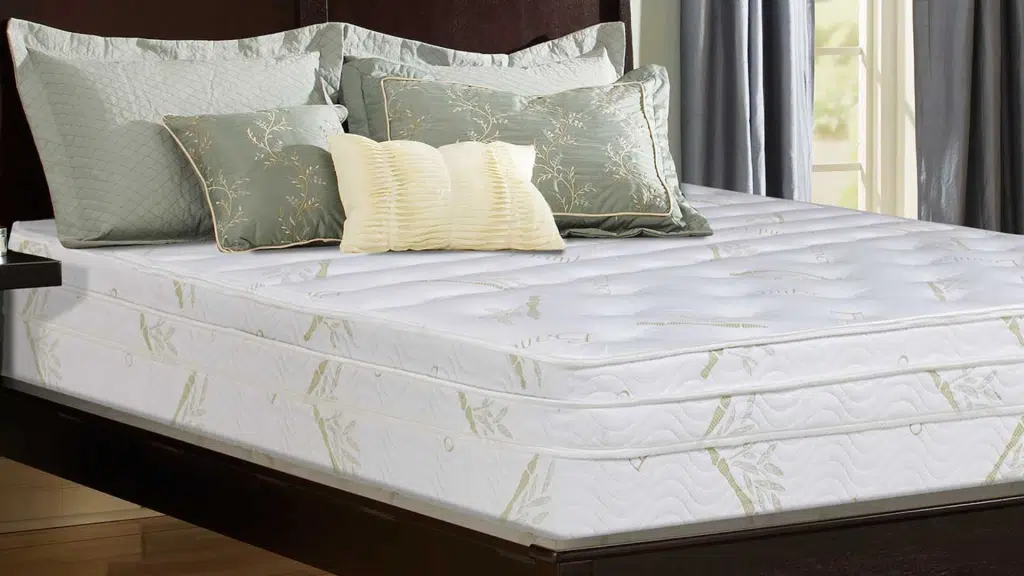
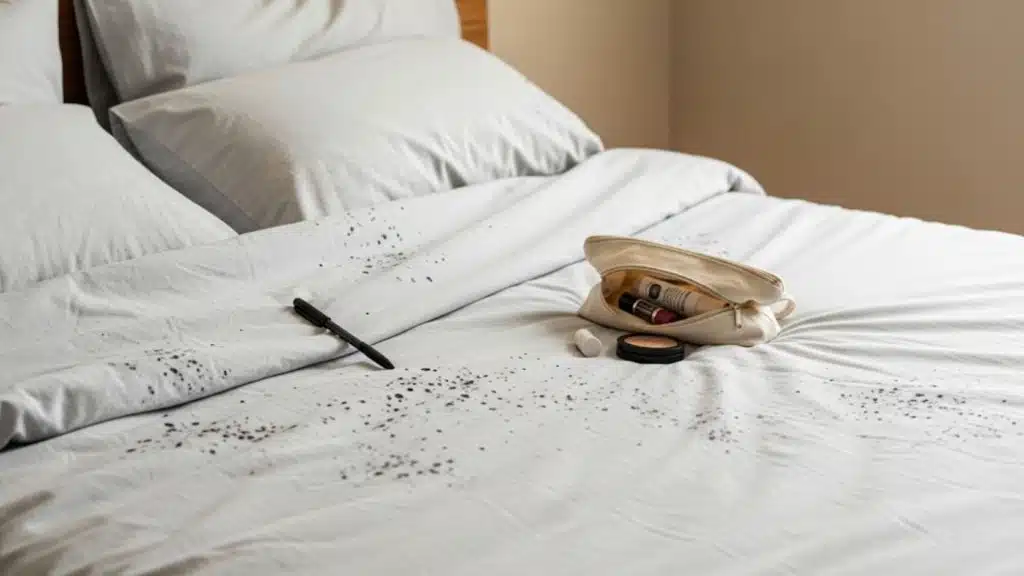
Upholstery and bedding: Sofas, mattresses, curtains, and pet beds all deserve a spot in your cleaning plan. Wash removable fabrics according to their care labels, and pay extra attention to textiles that get touched or used often. Worth noting: a filter rating alone doesn’t determine how well a cleaning device performs—fit, maintenance, airflow, and correct use all factor in.
Manage Moisture, Mold, and Biological Contaminants
Excess moisture invites biological contaminants like mold. Common culprits include leaking plumbing, condensation, poorly ventilated bathrooms, damp basements, and water damage. Running exhaust fans and fixing moisture problems at the source addresses this at the root rather than the surface. Visible mold, persistent dampness, or significant water damage may call for a professional assessment rather than routine cleaning—no amount of dusting will resolve a mold problem or a serious air-quality issue.
Improve Ventilation Without Creating New Problems
Bringing in outdoor air can dilute indoor pollutants when conditions cooperate. Practical options include briefly opening windows, running exhaust fans that vent outdoors, and keeping mechanical ventilation systems maintained as instructed. That said, opening windows can backfire during wildfire smoke, high pollen counts, or poor outdoor air quality. Ventilation works best as a companion to source control and cleaning, not a replacement for them.
Consider Air Filtration as a Supplement
It helps to separate three strategies: source control reduces pollutants at their origin, ventilation dilutes indoor pollutants with outdoor air, and air cleaning filters out some pollutants already present indoors. The U.S. Environmental Protection Agency and organizations like the American Lung Association generally treat these as complementary tools, not interchangeable ones. If you’re considering portable filtration, factor in room size, noise, filter replacement costs, and the manufacturer’s maintenance guidance—filtration supports a cleaning routine, but it doesn’t substitute for one.
Tailor the Routine to Household Needs
Cleaning priorities shift depending on pets, children, carpeting, renovation work, allergies, outdoor pollution, and humidity. A flexible framework might look something like this:
- Daily or near-daily: Handle spills, high-traffic debris, and kitchen or bathroom moisture.
- Weekly: Vacuum main floors, wipe down dust-collecting surfaces, wash frequently used textiles.
- Periodically: Clean under furniture, vents, curtains, and upholstery.
Treat this as an adaptable example rather than a universal standard.
Common Mistakes That Spread Dust
Some habits work against you without you realizing it: dusting with a bone-dry cloth that just redistributes particles instead of collecting them, cleaning visible surfaces while ignoring floors or entryways, letting filters and vacuum bins go unchecked until performance drops, overusing cleaning chemicals without proper ventilation, and assuming an air purifier or automated floor cleaner can stand in for thorough cleaning.
Measuring Whether the Routine Is Working
Watch for practical signs—less visible dust on frequently used surfaces, reduced debris near entrances, fewer musty odors, and better-maintained floors and fabrics. That said, visible cleanliness isn’t a complete measure of air quality. Persistent respiratory symptoms deserve a conversation with a healthcare professional rather than automatic blame on household dust.
Keeping a Healthier Home Is a Process
Dust reduction works best as a combination of modest, consistent habits: keeping tracked-in debris and moisture from entering in the first place, cleaning in ways that capture rather than scatter particles, maintaining floors and textiles appropriately, ventilating when conditions allow, and using filtration as a supporting measure rather than a cure-all. A practical starting point is identifying the two areas in your home where dust builds up fastest and building a realistic routine around them before expanding further. From there, reviewing your cleaning methods, checking moisture and ventilation sources, and consulting trustworthy guidance when problems persist can keep the effort manageable—and effective—over time.