“Comfortable living” can sound like a soft consideration in multifamily investing. A nice to have, maybe, but secondary to acquisition basis, rents, financing, and operating costs.
In practice, however, the line is not that clean.
Residents experience an asset through things like:
- whether the HVAC works
- how quickly a repair gets handled
- whether common areas feel maintained
- whether the apartment still feels worth the rent six months after move-in, etc.
It’s those details, specifically, that affect whether people stay, leave, or recommend the property, which is why anyone evaluating an Alabama multifamily investment portfolio should also be asking what happens after acquisition.
Read on for a closer look at why resident comfort matters financially, where targeted improvements can create the most value, and why “better living” and stronger multifamily performance are not necessarily competing goals.
Comfortable Living Is More Operational Than Aesthetic
Comfort doesn’t necessarily mean granite countertops, elaborate amenity packages, or making every older property look newly built.
Often, it’s much less glamorous, and it comes in the shape of the apartment cooling properly in August. Or plumbing problems that are fixed quickly. Or residents being able to report an issue without chasing someone for three weeks.
This is backed by the AppFolio’s 2026 survey of 3,002 U.S. renters, where residents satisfied with maintenance were substantially more likely to plan to renew or stay than residents dissatisfied with it.
Meaning: the basic operating experience should not be treated as separate from the quality of the asset.
Resident Satisfaction Can Affect How Long People Stay
Nobody renews a lease because it improves an owner’s NOI. They renew because the home still works for them.
But those two perspectives eventually meet: a resident who stays means one less vacant unit to lease again, one less turnover process, and potentially fewer costs associated with preparing and marketing that unit.
Does that mean a comfortable property automatically produces superior returns? Of course not. Price, location, employment, supply and many other factors still matter.
But it does mean resident experience belongs in the operating equation rather than in a separate “community” conversation.
The Basics May Matter More Than the Flashy Upgrades
There is an easy trap in value-add multifamily, and that’s assuming visible renovation is automatically valuable renovation.
Residents may appreciate a redesigned clubhouse, but if the air conditioning repeatedly fails or maintenance requests disappear into a black hole? Yeah, the upgraded clubhouse probably won’t rescue the experience.
The broader U.S. rental stock makes this particularly relevant. For instance, Harvard’s Joint Center for Housing Studies reported that the median rental unit was 44 years old as of 2021, with substantial repair needs across the existing stock.
In an older property, improving comfort may therefore mean very practical work: building systems, unit functionality, energy efficiency, safety, maintenance response and durable finishes.
Not Every Improvement Deserves the Same Dollar
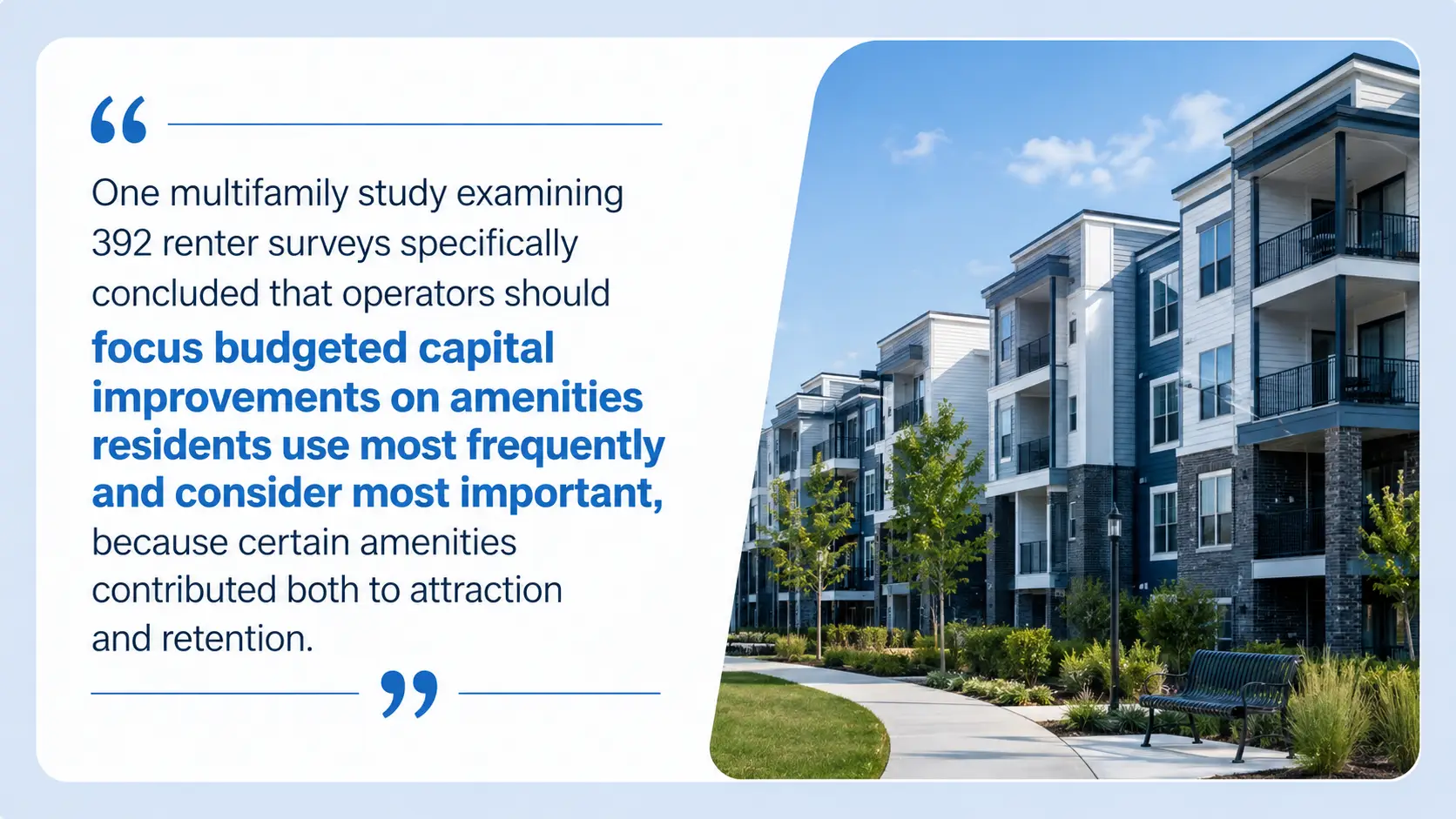
This is where resident experience becomes a capital-allocation question.
The reality is that “improve the property” is not a useful investment plan on its own. The real questions are:
- what to improve
- how much to spend
- what residents actually value
- whether the improvement changes the economics enough to justify the cost.
A new HVAC system, for example, can improve temperature consistency while potentially reducing utility and maintenance costs.
Ultimately, value-add should not mean renovating everything available to renovate. It should mean directing capital towards improvements that solve real property problems and make sense for that particular asset and resident base.
In Overlooked Markets, Execution Becomes Part of the Opportunity
Secondary and undercapitalized markets can offer attractive acquisition conditions, but buying an overlooked property cheaply is not the same thing as creating value from it.
Some of that work happens after closing.
For instance, ECA has found that in markets where ownership is fragmented, new supply is limited, or existing housing stock has simply seen less institutional investment, property-level execution can become a meaningful part of the opportunity.
That means improving what residents actually experience day to day: functional units, reliable building systems, well-maintained common areas, responsive maintenance and targeted renovations that solve real problems rather than just make a property look newer.
Where much of the competing stock is older or underinvested, those improvements can help a property stand out.
Residents will not describe that as “operational execution,” of course.
They just know which apartment feels better run, which problems get fixed, and which place still feels worth renewing six or twelve months later.
Bottom Line
Overall, when residents consistently feel the property works, management is usually doing several things right at once—maintenance, capital allocation, communication and execution.
Comfort, then, becomes a test of operational quality.