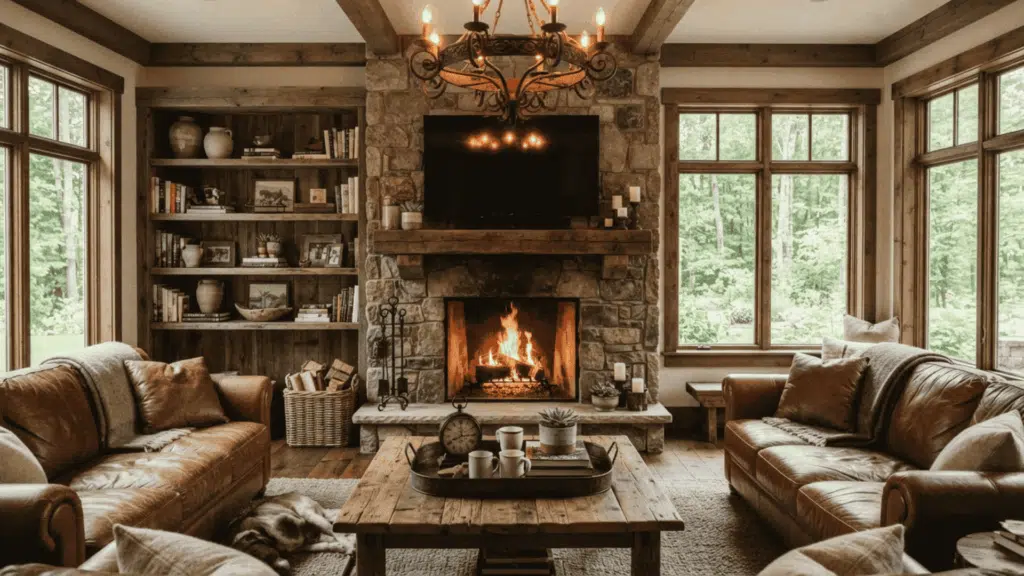
A fireplace can make a room feel warm and inviting, while a TV often becomes the center of everyday entertainment.
Putting both in one space can look polished, but only when the layout feels balanced and comfortable.
A well-planned living room with a fireplace and TV can support movie nights, quiet evenings and easy conversation without forcing either feature to dominate.
Keep reading for practical layouts, smart placement ideas and simple design choices that can make the entire room work better.
Choosing the Right Seating Arrangement
The Seating arrangement should support comfortable viewing and easy movement through the room. The best configuration depends on the room’s size, shape, fireplace position, and TV location.
- Traditional Layout: Position sofas and chairs toward the fireplace or TV to create a straightforward arrangement that keeps the main features in view.
- Floating Furniture: Place seating away from the walls to define a central conversation area while maintaining clear pathways around the room.
- Corner Configuration: Position a sectional along two walls to create a comfortable seating zone with views toward both the fireplace and television, particularly in square rooms.
Living Room with Fireplace and TV Layout Ideas
The right arrangement should support comfortable viewing while keeping the fireplace as part of the room’s design. These layouts suit different room sizes, wall shapes, and decorating styles.
1. TV Mounted Directly Above The Fireplace
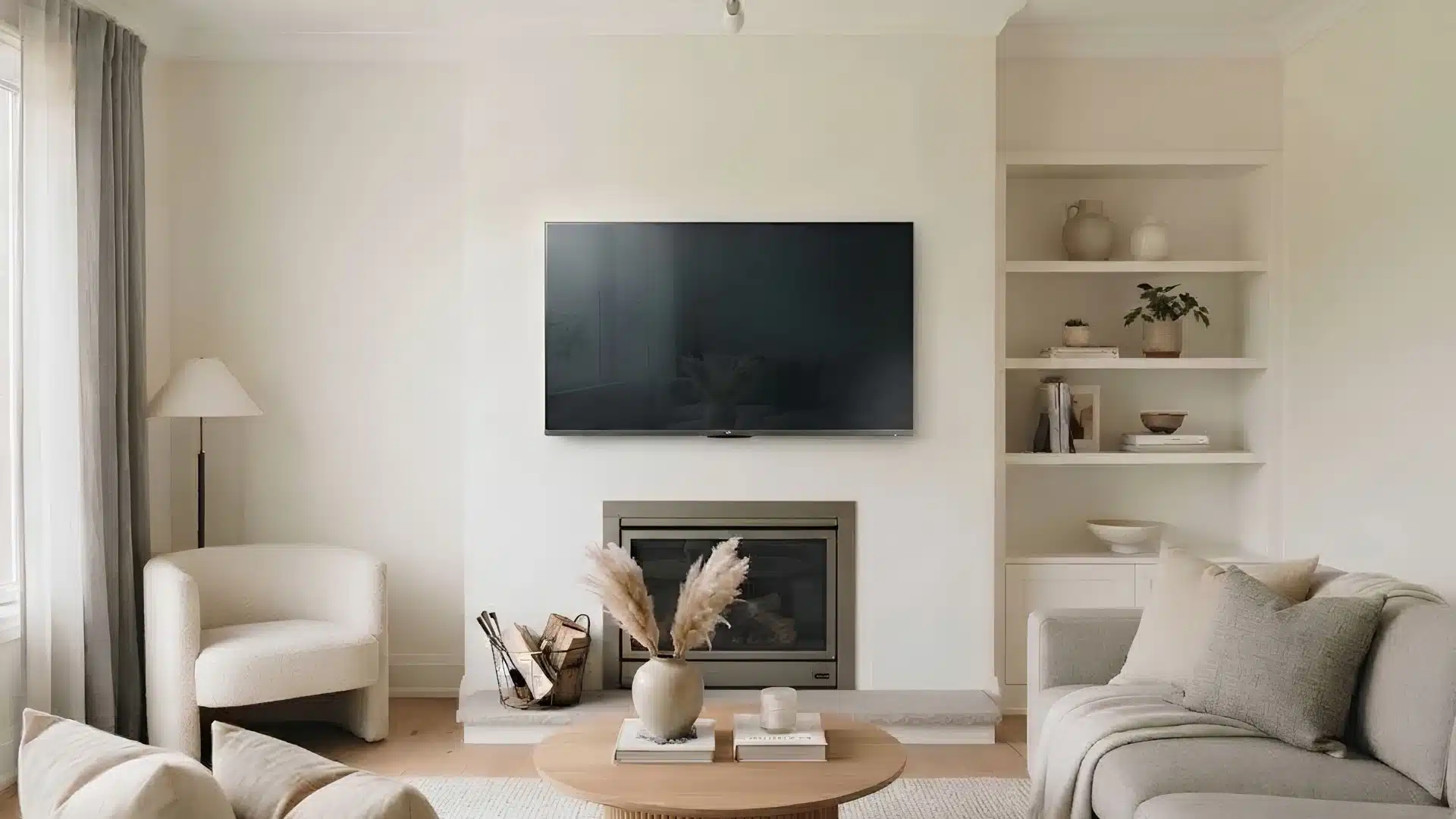
Mounting the TV directly above the fireplace combines two major features into one vertical arrangement. This approach works well when wall space is limited, and the room benefits from a single focal area.
Keep the television appropriately scaled to the fireplace and surrounding wall. A simple mantel and restrained finishes can prevent the combined setup from feeling visually heavy.
Check fireplace and television manufacturers’ installation instructions before mounting a TV above or beside a fireplace, as clearance requirements vary by equipment.
2. TV Beside The Fireplace
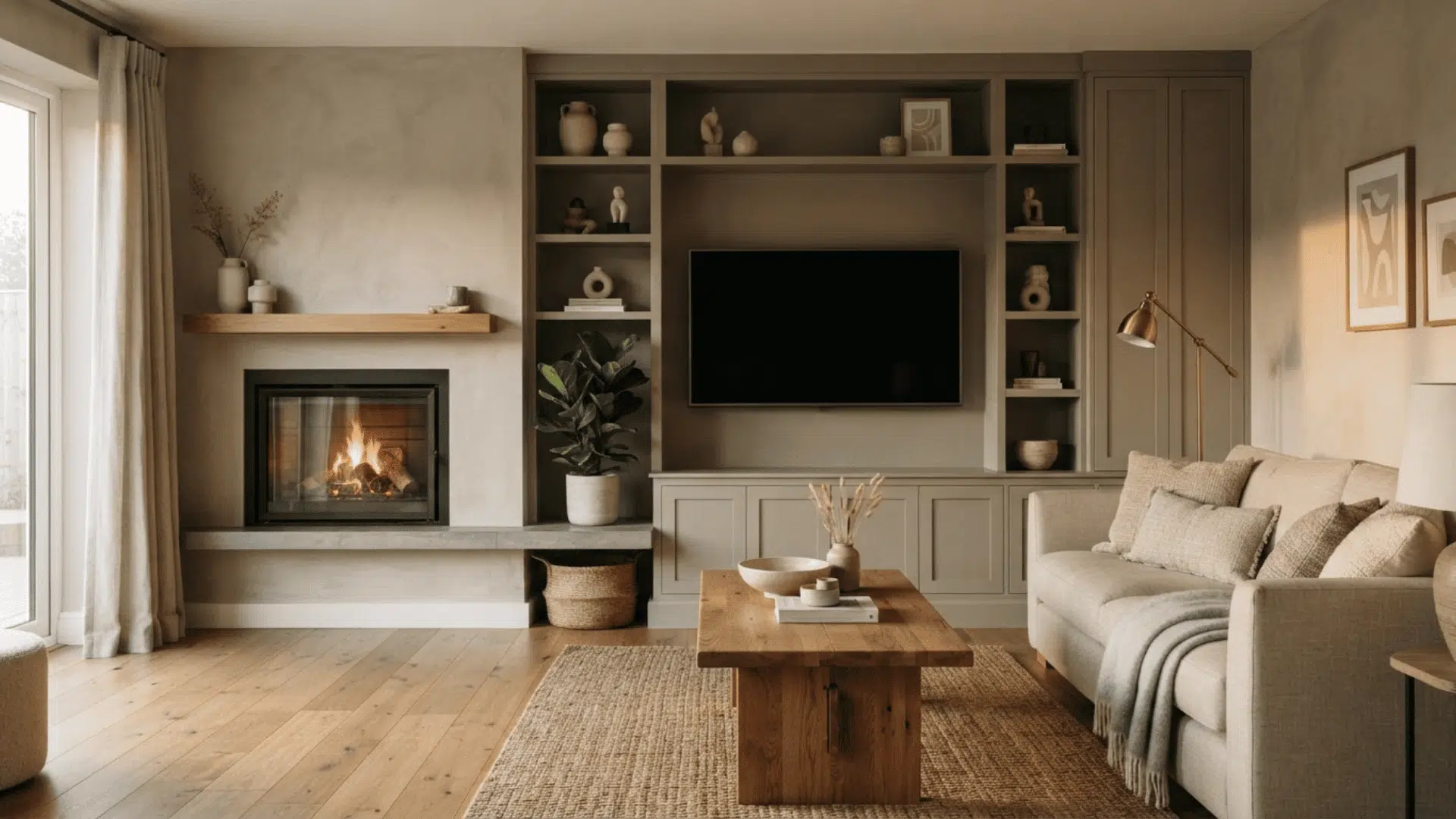
Placing the TV directly beside the fireplace keeps both features on the same wall while allowing the screen to sit closer to a conventional seated viewing height.
This arrangement works particularly well on wide walls where the fireplace and television can function as separate features. A low console, matching cabinetry, or shared wall finish can visually connect them.
Arrange the seating toward the television first, then balance the fireplace side with furniture or simple décor rather than forcing both features into symmetrical positions.
3. TV on an Adjacent Wall
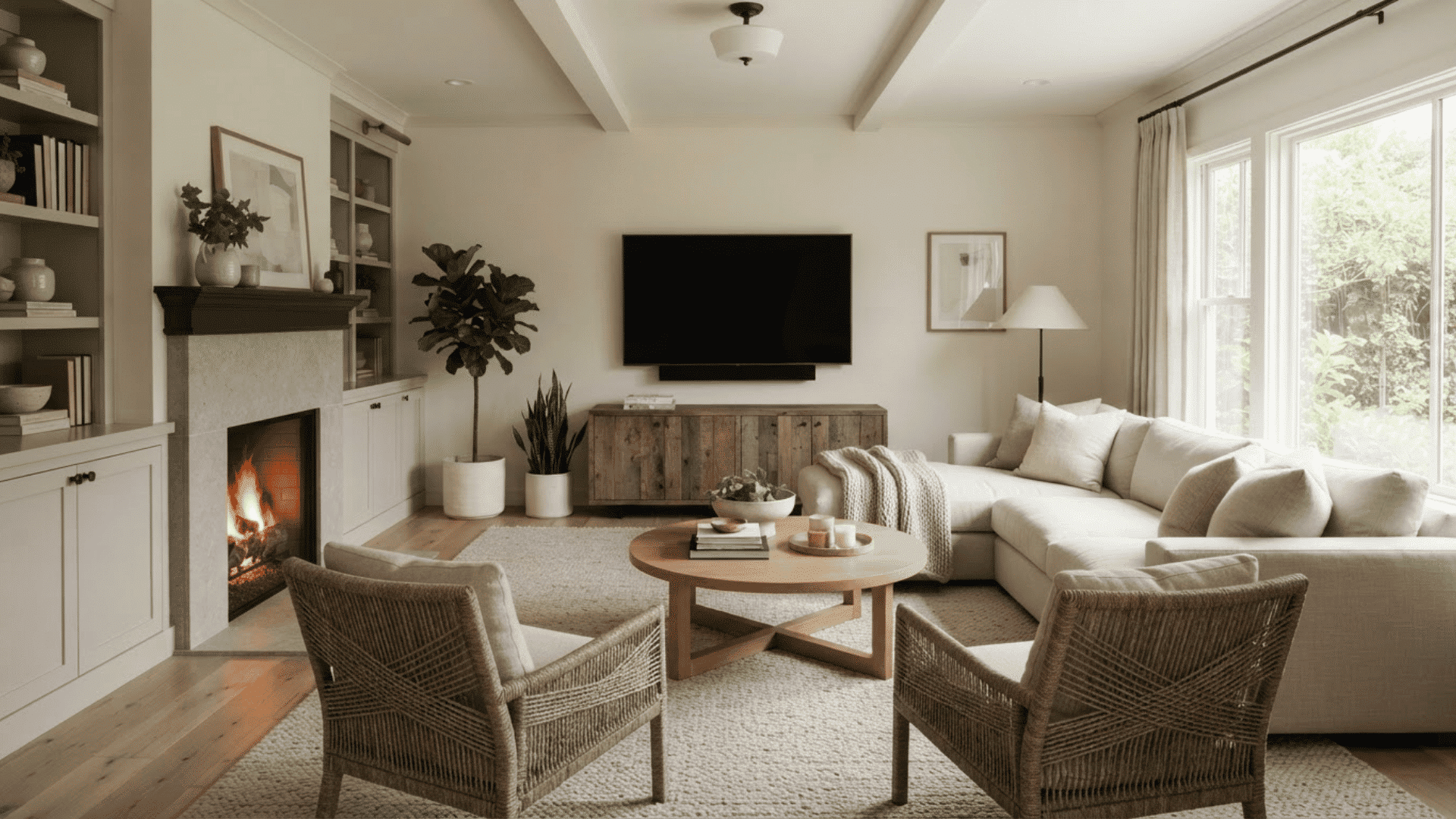
Placing the TV on an adjacent wall separates it from the fireplace while keeping both features visible from the main seating area.
This arrangement works well in square or open rooms where furniture can face the television without completely turning away from the fireplace. A sectional can help define the viewing area while maintaining an open connection between the two walls.
Swivel chairs can provide additional flexibility when the room needs to transition between television viewing and conversation.
4. TV Opposite The Fireplace
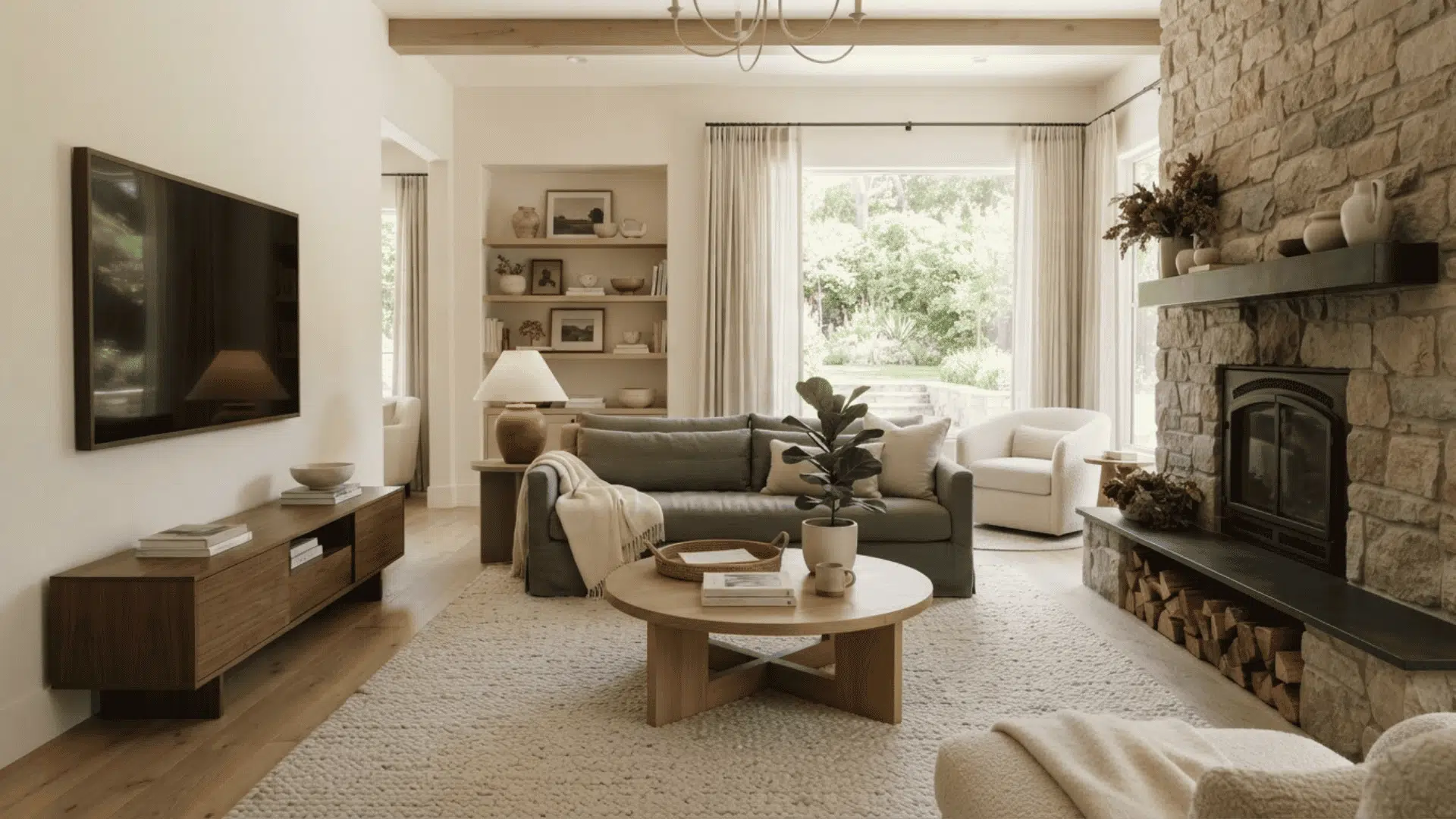
A TV positioned opposite the fireplace creates two distinct focal points and can work in longer rooms. The main challenge is arranging seating so neither feature feels ignored.
Place a sofa between the two zones or use flexible seating that can face either direction. Keep furniture away from direct fireplace access and avoid blocking walking paths.
This setup works best when the room is wide enough to maintain comfortable circulation. It also gives the seating area more flexibility without making either focal point feel crowded.
5. TV Above a Linear Fireplace
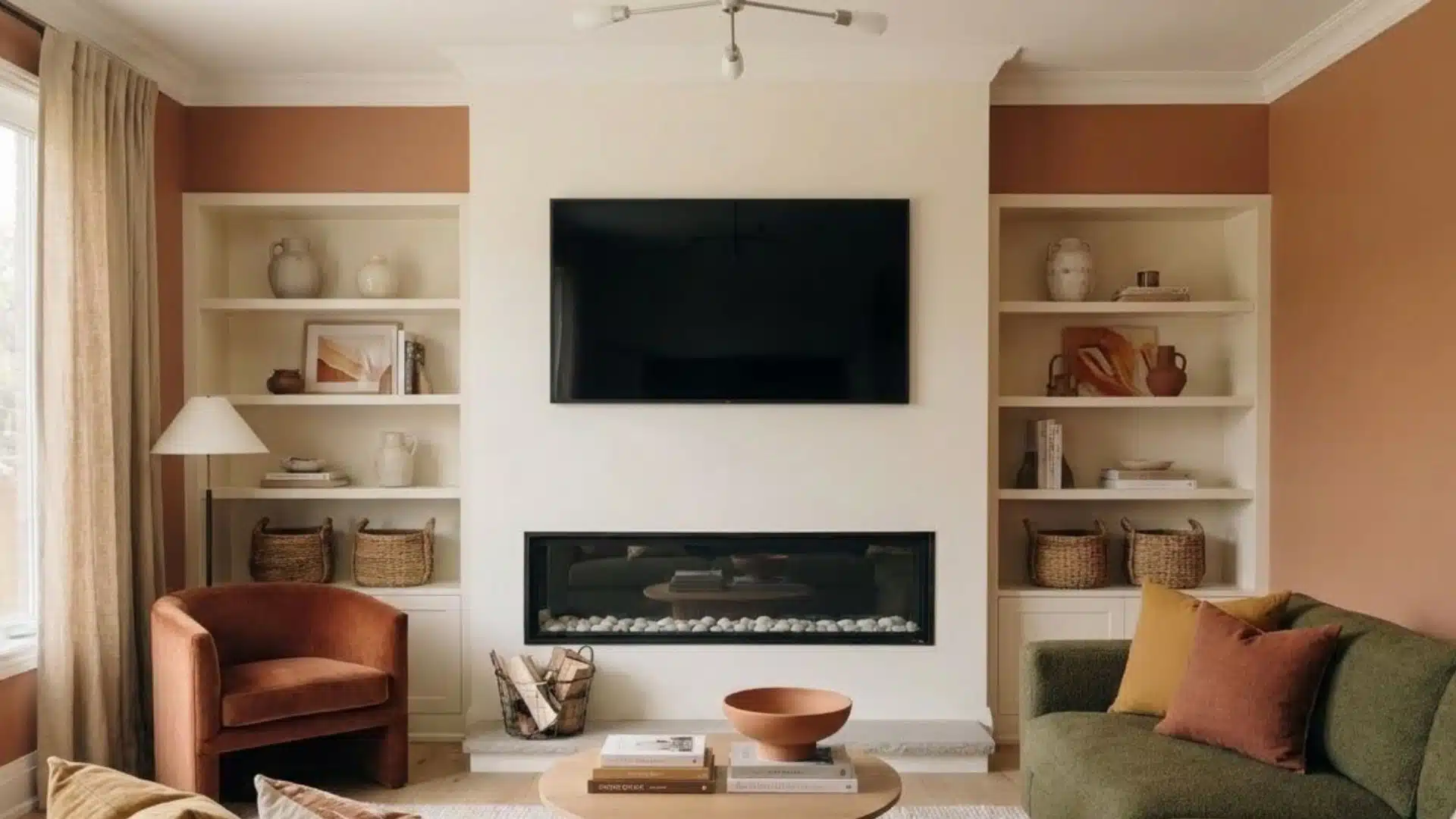
A linear fireplace creates a different opportunity for above-fireplace TV placement because its long, low profile can leave more usable wall height above the firebox.
This arrangement suits contemporary rooms with horizontal architectural lines. Large-format tile, smooth plaster, or subtle stone can reinforce the long proportions without adding excessive visual detail.
The fireplace’s specific installation requirements still determine the safe mounting position, so the available wall height should be checked before choosing the television size.
6. Recessed TV Above The Fireplace
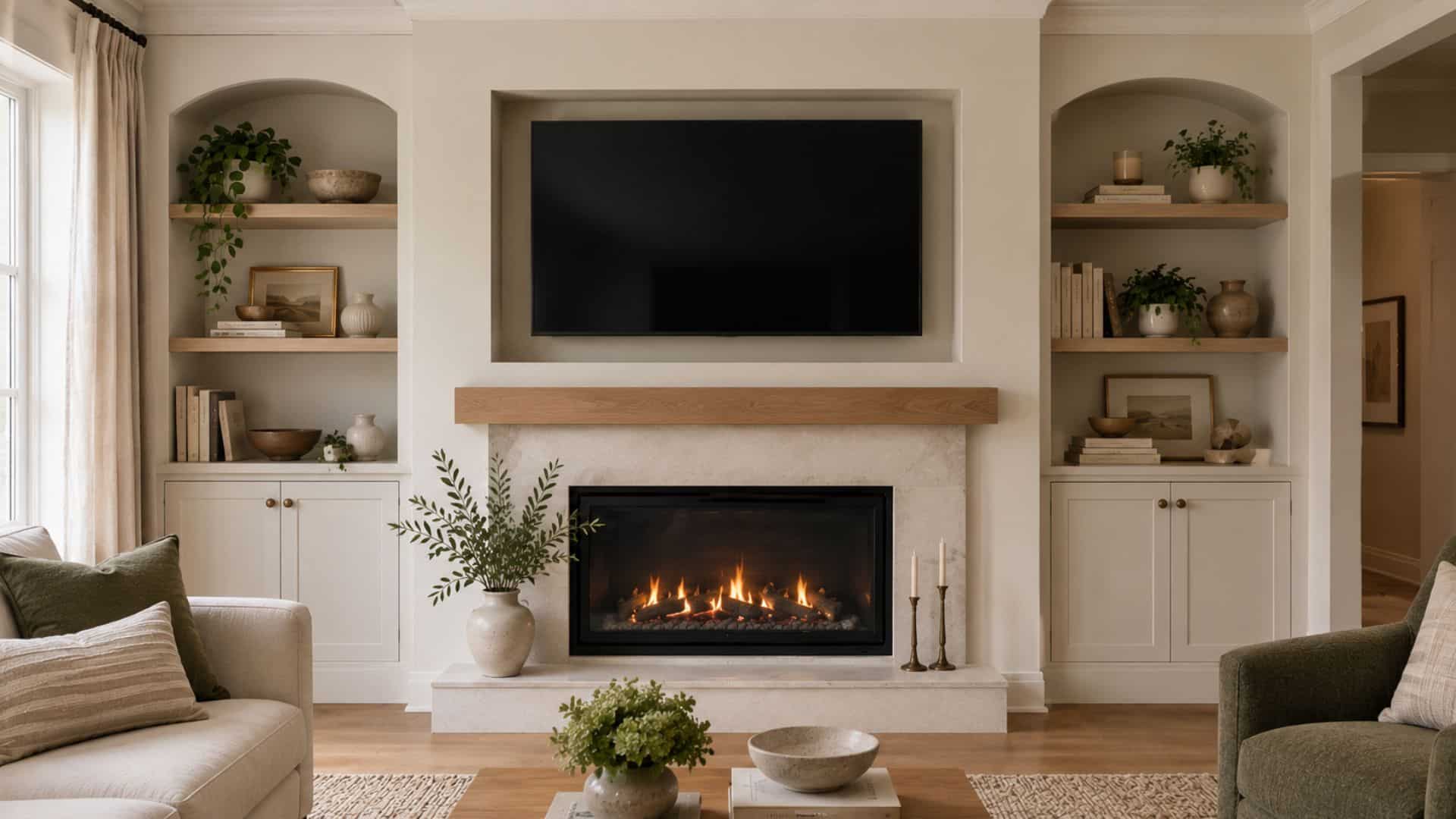
A recessed TV can make the screen look more integrated with the fireplace wall, rather than an added object.
The recess should be planned carefully so the television has enough space around it and remains accessible for future replacement.
A shallow niche works best with simple surrounding materials. Keep the wall finish understated to prevent the fireplace, television, and architectural details from competing for attention.
7. Fireplace with Built-In Shelving
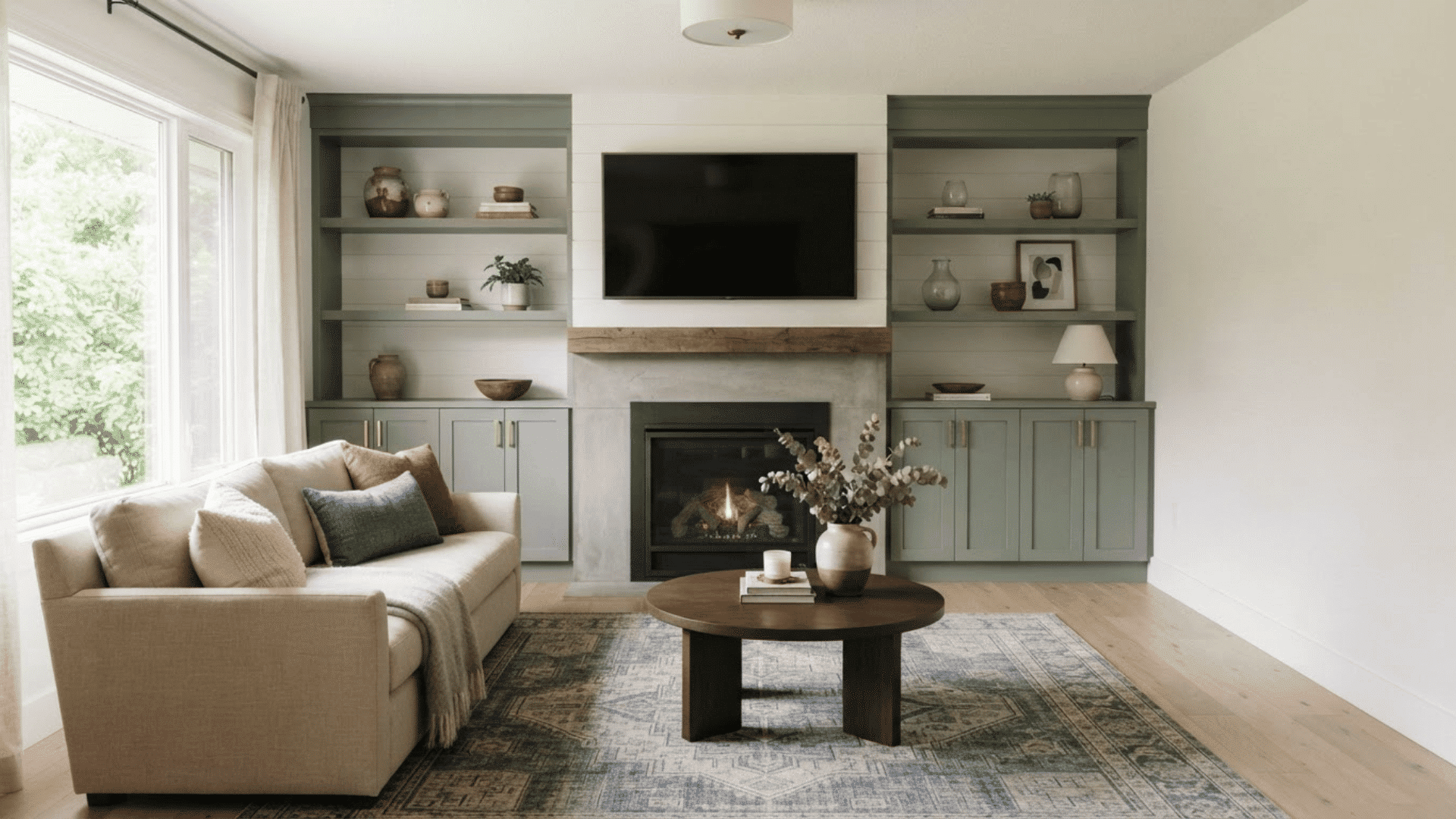
Built-in shelves placed around the fireplace and TV can add storage while making the wall feel more complete. Keep shelves balanced rather than filling every surface with décor.
Closed cabinets below can hide electronics, cables, games, and everyday items. Open shelving works best with a limited number of accessories.
TVs placed on furniture should be properly secured, and CPSC recommends anchoring TVs and furniture to help prevent tip-over injuries.
8. TV Offset from The Fireplace
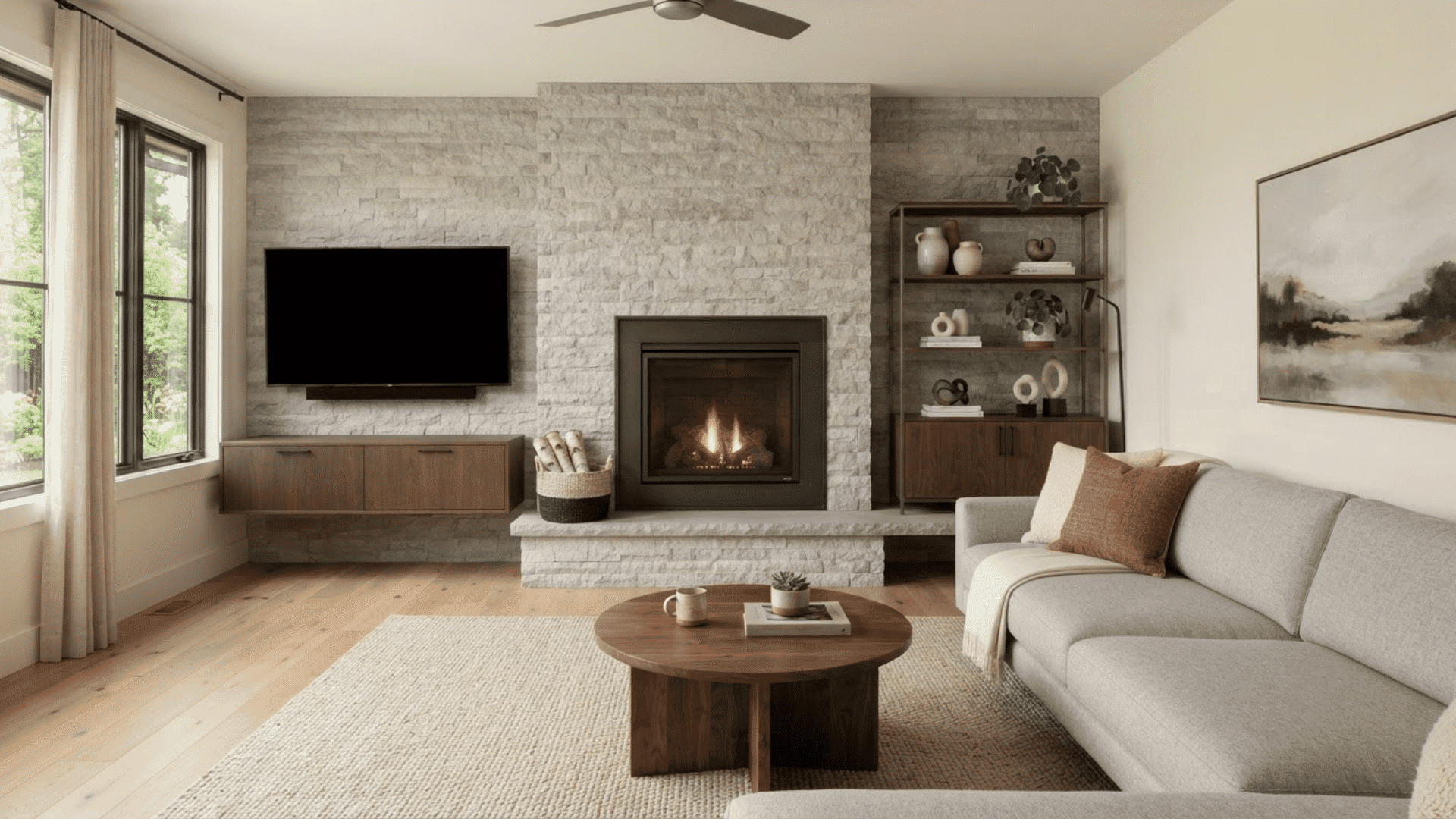
An offset TV does not need to sit directly beside the fireplace. Instead, the screen can shift farther to one side to accommodate windows, doors, built-ins, or other architectural features.
This creates an intentionally asymmetrical arrangement that can make an awkward wall easier to furnish. Balance the opposite side with artwork, shelving, a cabinet, or another substantial element.
The seating should still face the television comfortably, while the fireplace remains visible as a separate feature within the overall composition.
9. Corner Fireplace with Nearby TV
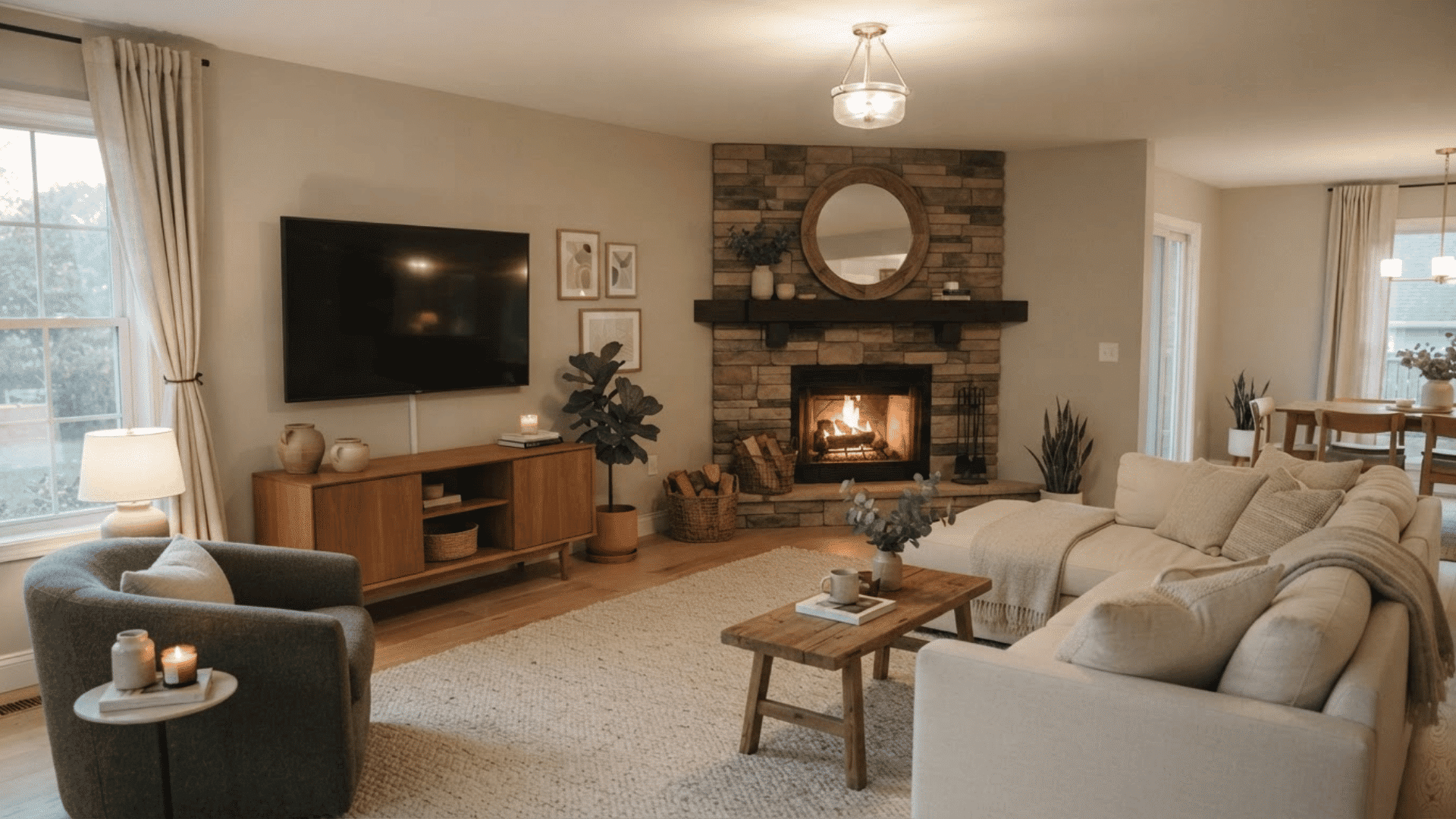
Corner fireplaces can make furniture placement challenging because they naturally pull attention toward an angle.
Place the TV on the nearest flat wall and arrange seating to provide a clear view of both features. A sectional or angled accent chair can help connect the layout.
Avoid forcing the television into the corner unless the viewing angle remains comfortable. Keeping the room lightly furnished can also prevent awkward circulation.
10. Fireplace with TV and Floating Console
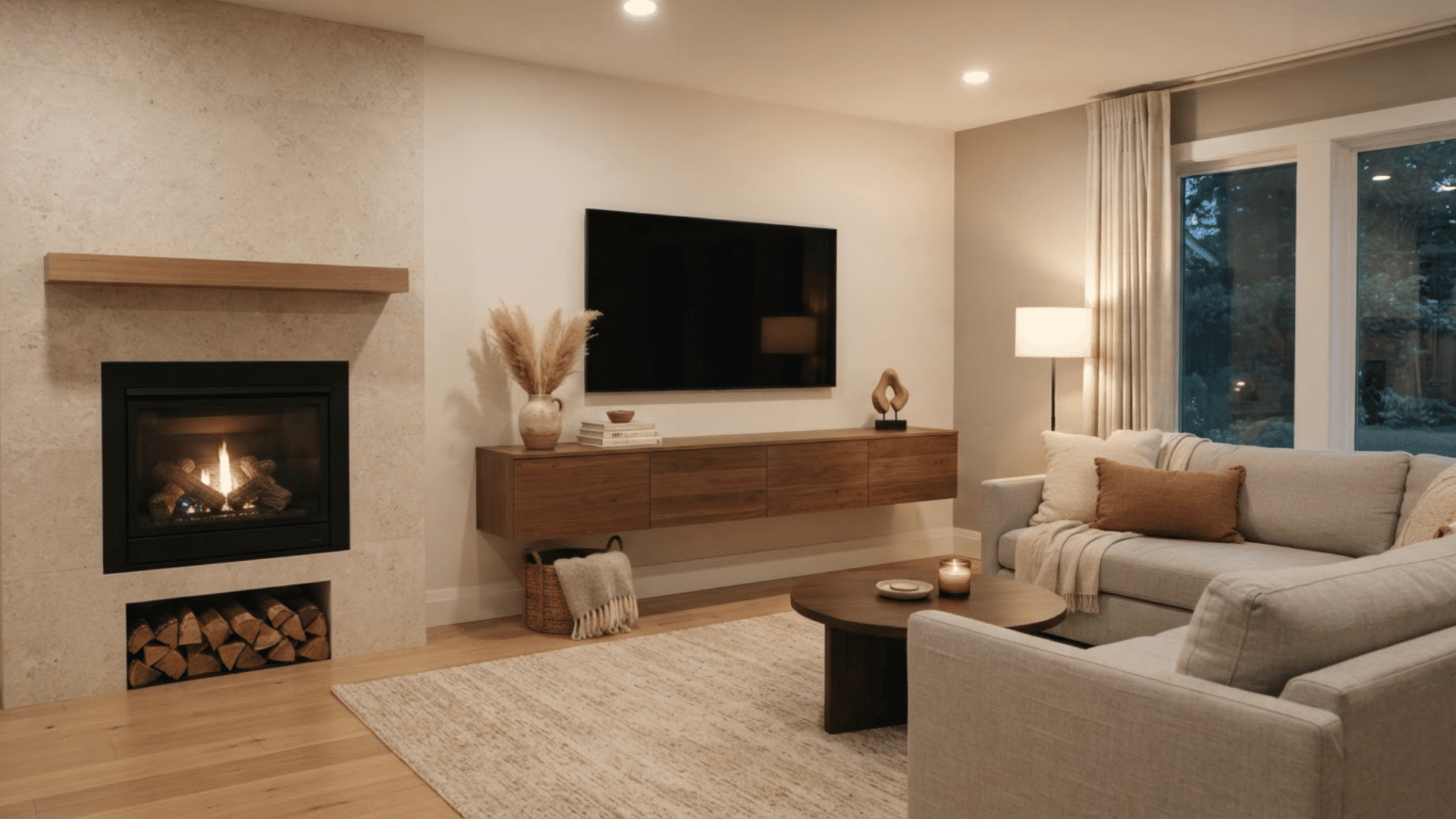
A floating console beside or beneath the TV can add storage without making the room feel crowded.
This arrangement works well when the fireplace occupies one side of a wide wall. Choose a console that aligns visually with the fireplace hearth or mantel for a more cohesive look.
Keeping the unit off the floor also exposes more flooring, which can make smaller rooms appear more open and easier to maintain.
11. Small Living Room Fireplace and TV Layout
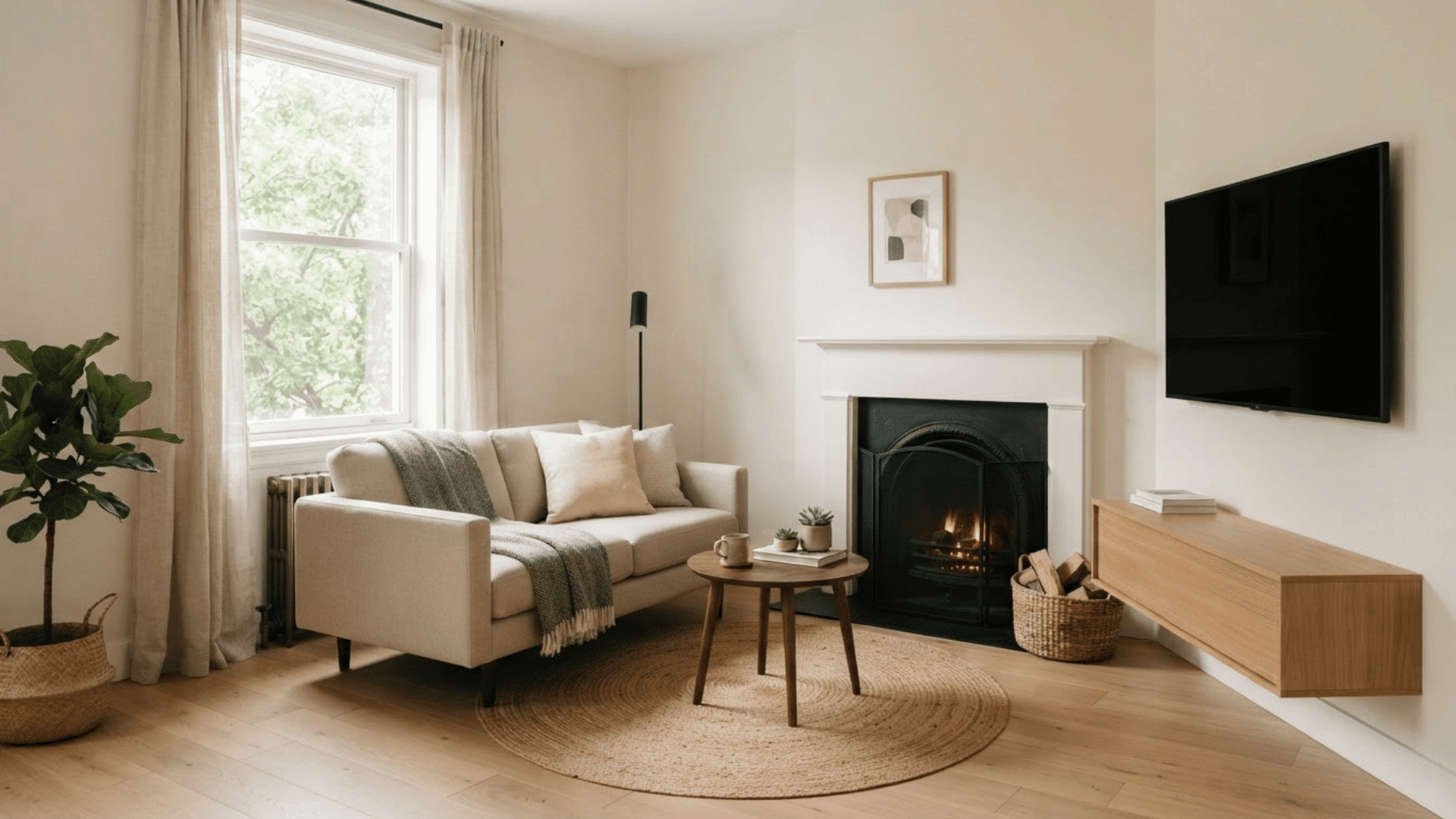
Small rooms benefit from layouts that reduce bulky furniture and make use of vertical wall space.
Mounting the TV, choosing a slim media unit, or placing the screen beside the fireplace can preserve valuable floor area. Keep seating compact and avoid oversized coffee tables that interrupt movement.
A simple color palette can also reduce visual clutter. Prioritize clear sightlines so the room feels functional rather than tightly packed.
12. Open-Concept Fireplace and TV Layout
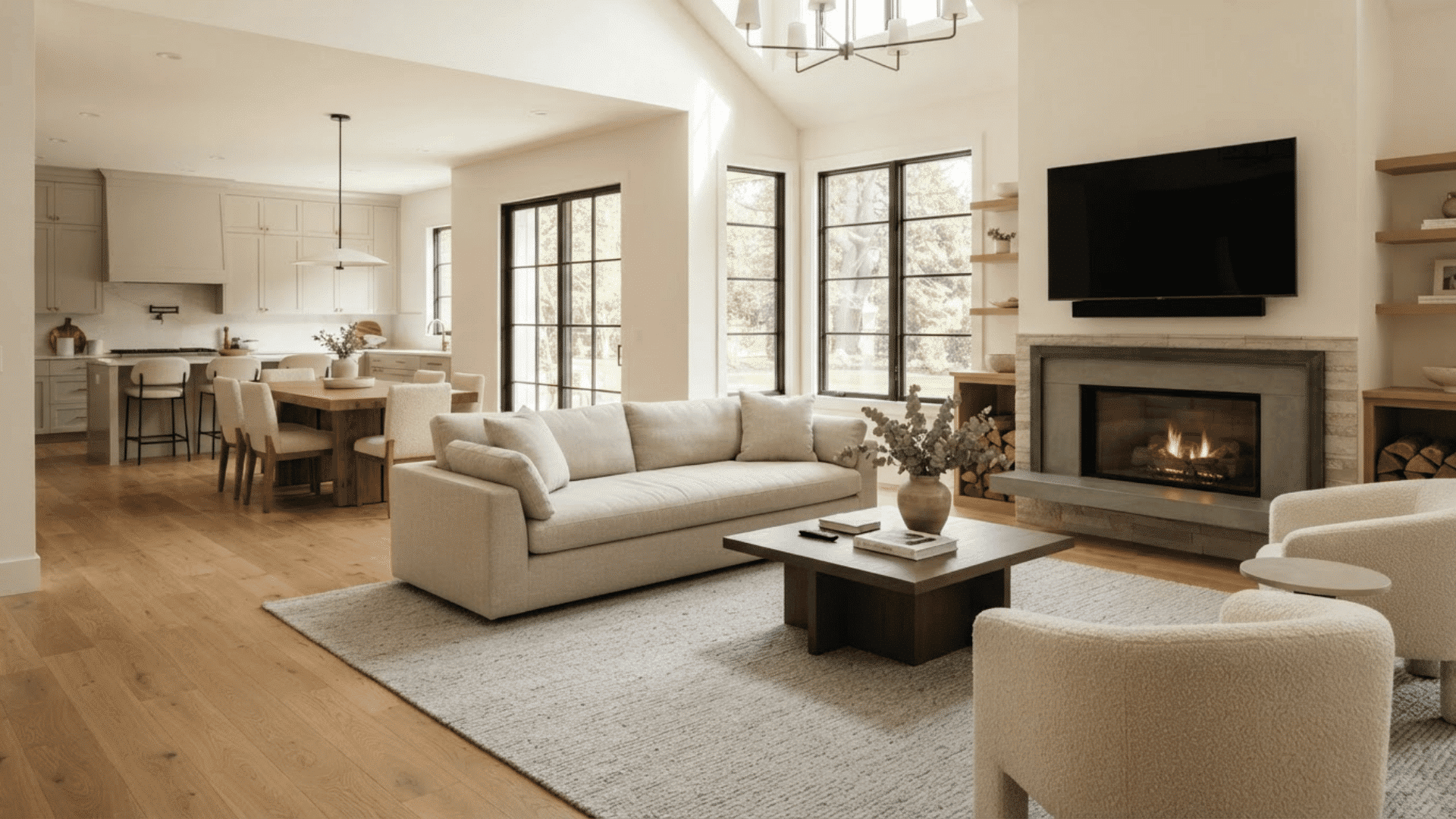
In an open-concept space, the fireplace and TV can help define the living area without physical walls.
Float the sofa or sectional to create a clear seating zone while keeping pathways open to nearby dining or kitchen areas. Position the television to limit glare from large windows.
A rug can visually anchor the seating arrangement and help the fireplace wall feel connected to the rest of the room.
13. Fireplace with Hidden TV
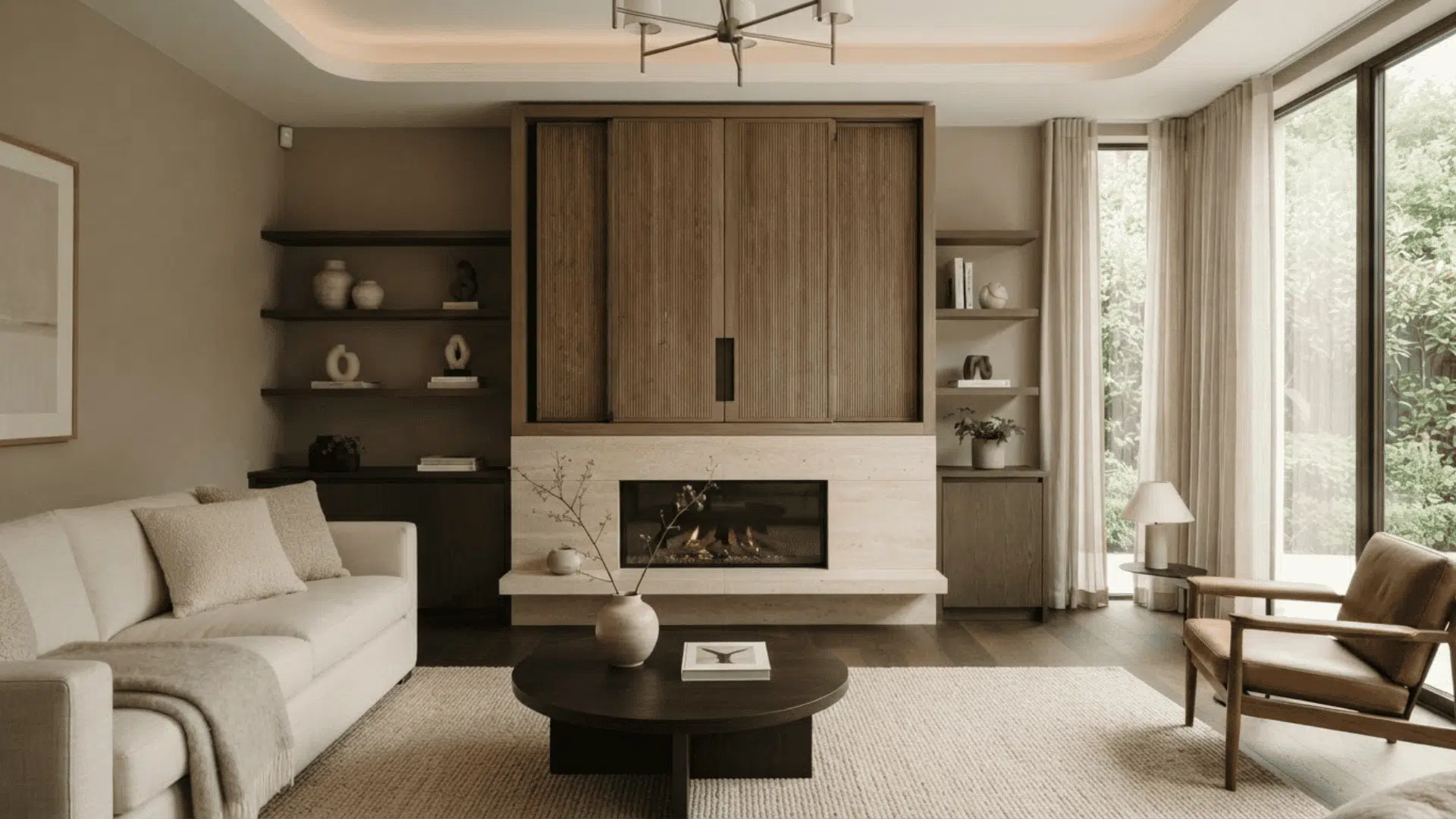
A hidden TV layout is useful when the fireplace should remain the main visual feature while the screen is not in use.
Sliding panels, cabinet doors, or artwork-style displays can soften the appearance of electronics.
Keep the surrounding design simple so the wall still feels balanced once the television is revealed during use.
14. TV Above Fireplace with a Floating Mantel
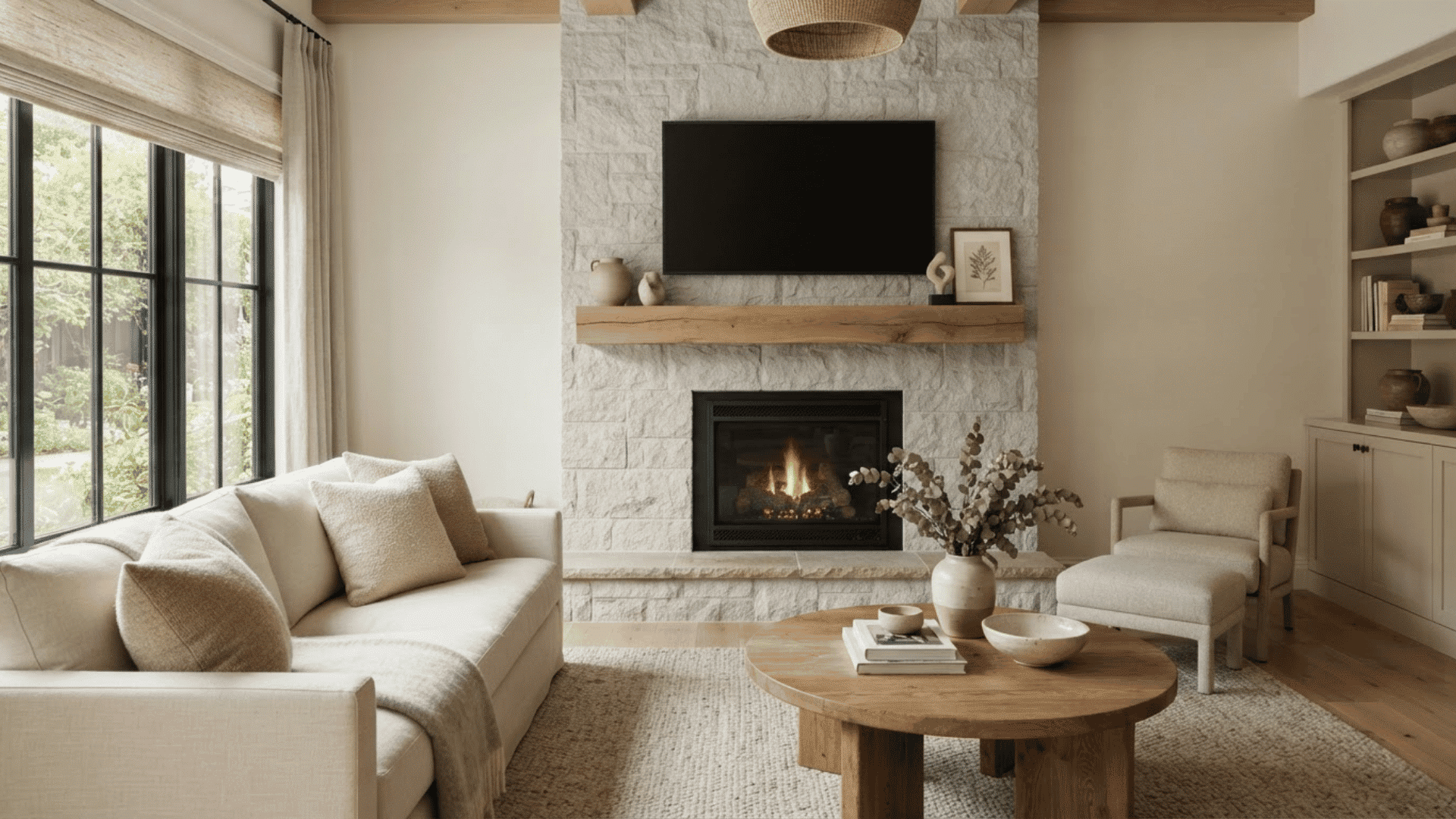
A floating mantel can visually separate the television from the fireplace and create a stronger horizontal break on the wall.
Choose a mantel size that feels proportionate to both features rather than extending too far across the wall.
This approach works especially well for homeowners comparing TV over fireplace ideas that feel modern but still include traditional fireplace character.
15. Fireplace and TV on Separate Walls
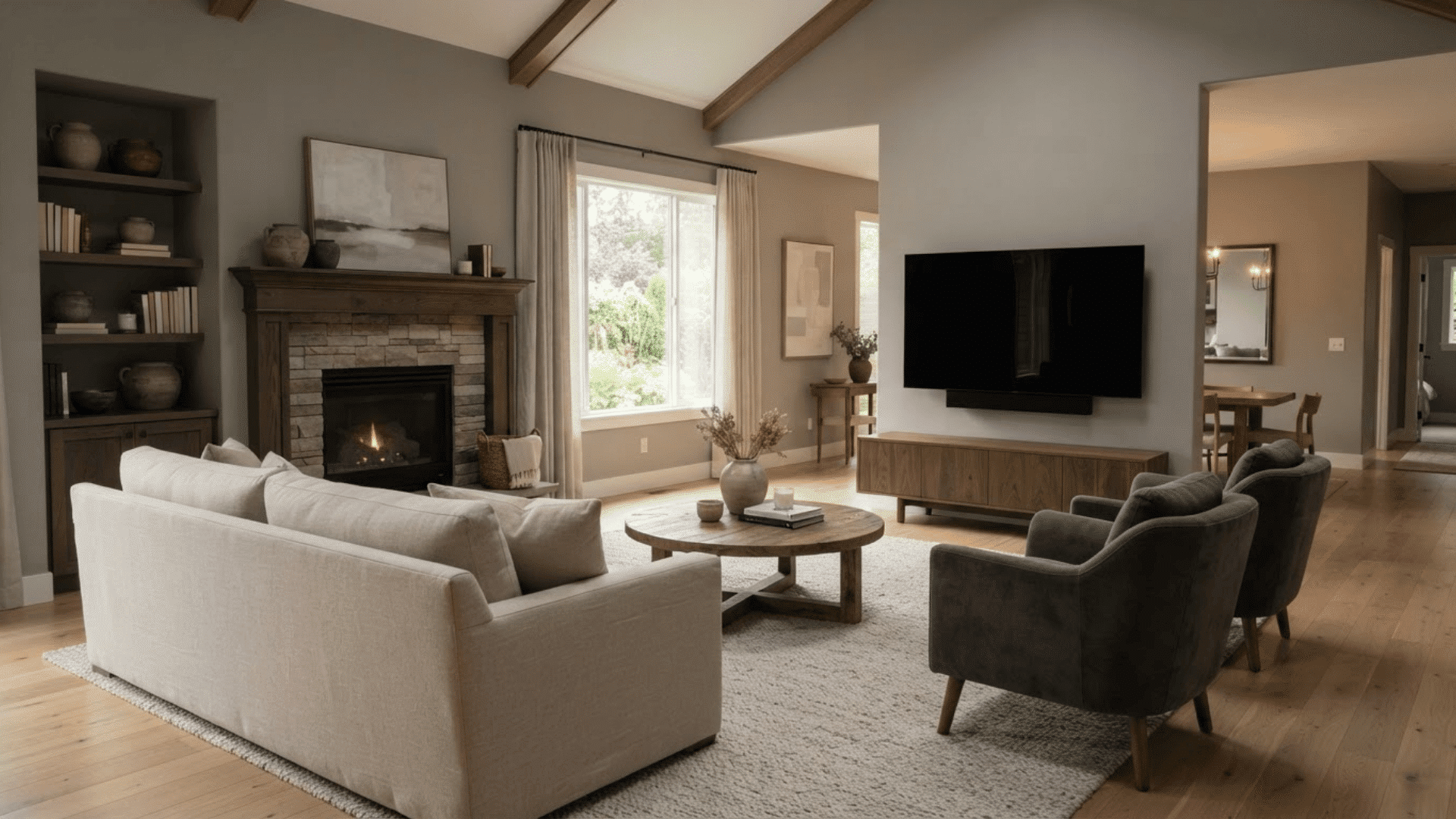
A larger living room may have enough space to give the fireplace and television completely separate walls. This prevents either feature from competing directly with the other.
Position the sofa and additional seating between the two areas, so both remain accessible without forcing an awkward viewing angle. The television can receive the primary viewing position, while the fireplace anchors another part of the room.
This layout works best when the room has enough depth and width to create two distinct functional zones.
Mounting a TV Above the Fireplace: Pros and Cons
Mounting the screen above the fireplace is popular because it combines two major focal points. Still, the layout works better in some rooms than others.
| Pros | Cons | |
| Wall space | Frees up other walls for artwork, shelving, or windows | Concentrates visual weight on one wall |
| Focal point | Creates one clean, organized center for the room | Two features may compete if both are visually heavy |
| Room size | Works well in compact rooms with limited wall options | Tall fireplaces push the screen above comfortable eye level |
| Design | Built-in cabinets, stone, or paneling can frame both features | Wiring can be difficult on masonry walls |
| Heat | Manageable with proper clearance and shielding | Requires checking manufacturer specs before installation |
TV Mounting Height and Heat Safety
Mounting a TV near a fireplace involves two practical concerns to address before choosing a layout: viewing height and heat clearance.
1. Viewing Height: Keep the TV center around 42–48 inches from the floor when possible. A tilting mount can help when fireplace placement makes the screen higher.
2. Heat Clearance: Required clearance varies by fireplace type and manufacturer. Electric, gas, and wood-burning fireplaces may have different heat considerations.
3. Before Mounting: Check the fireplace and TV manufacturer’s clearance instructions. Measure heat at the planned TV location if the manufacturer recommends doing so.
4. TV Size and Proportion: Keep the TV proportionate to the fireplace and mantel. Consider the wall, furniture, and viewing distance when selecting the screen size.
Conclusion
A fireplace and television do not have to compete for control of the room. With thoughtful placement, both can feel like natural parts of the same space while supporting comfort.
The strongest living room layouts with a fireplace and TV start with viewing comfort, clear movement and visual balance, not a single design trend.
Use TV-over-fireplace ideas only when they suit the room, rather than forcing the screen into place.
Choose the arrangement that fits how the space is actually used, then plan the focal wall around those needs.
Frequently Asked Questions
Do Dark Walls Help Hide Televisions?
Dark wall finishes can reduce the contrast between the screen and surrounding surface when the television is turned off.
Should Fireplace Décor Match the TV Console?
It does not need to match exactly. Repeating similar materials, tones, or proportions can create a more coordinated appearance.
Can Curtains Affect TV Placement Near Fireplaces?
Yes. Curtains may influence glare, available wall space, and safe clearance around the fireplace depending on their location.