A messy bathroom cabinet can turn a calm morning into a rushed one. Bottles fall over, daily products get buried under extras, and precious minutes slip away.
A simple setup can fix that. Learning how to organize bathroom cabinet space helps keep everyday items easy to reach while giving every product a clear home.
The best part is that it does not require a costly makeover. A few smart changes can make a big difference.
Keep reading for practical steps, storage ideas, and simple DIY fixes that make daily routines faster and easier.
Why a Cluttered Bathroom Cabinet Slows Down Your Entire Morning
A crowded bathroom cabinet creates small delays that quickly add up. Shampoo hides behind cleaning bottles. Toothpaste gets buried under spare products.
Hair tools become tangled with cords. Every search takes time, especially when several people share the same space.
Clutter can also lead to buying products that are already sitting at the back of the cabinet. This adds more mess and wastes money.
A clear setup makes mornings easier because frequently used items stay within reach. Backup products have their own spot, and similar items stay together.
Knowing how to organize bathroom cabinet storage also makes it easier to notice empty bottles and items thats are no longer needed. A few minutes spent organizing can save time every day.
Types of Bathroom Cabinets and Why Each One Needs a Different Approach
Bathroom cabinets come in many shapes and sizes. The right storage method depends on depth, height, shelves, drawers, and plumbing.
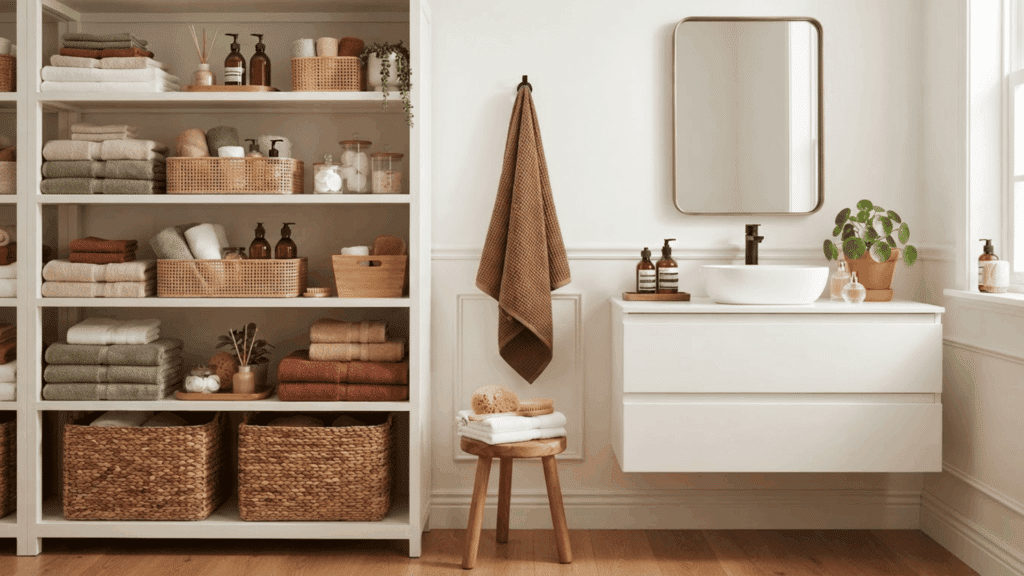
1. Under-Sink Cabinet: Pipes take up valuable room, so narrow bins, stackable drawers, and small baskets work well around plumbing without blocking access.
2. Medicine Cabinet: Shallow shelves suit small daily items such as skincare, dental products, and grooming supplies that need to stay visible and easy to grab.
3. Vanity Cabinet: Wider spaces can hold towels, toiletries, hair tools, and backup products when divided into clear zones based on how often items are used.
4. Bathroom Drawers: Dividers stop small items from mixing together and make it easier to separate makeup, dental care, grooming tools, and daily essentials.
5. Tall Bathroom Cabinet: Higher shelves work well for extra towels and backup supplies, while frequently used products should stay between waist and eye level.
Basics of Organizing a Bathroom Cabinet
A good system starts before you add any bins or baskets. These five steps make organizing bathroom cabinet space much simpler and easier to maintain.
1. Empty The Entire Cabinet
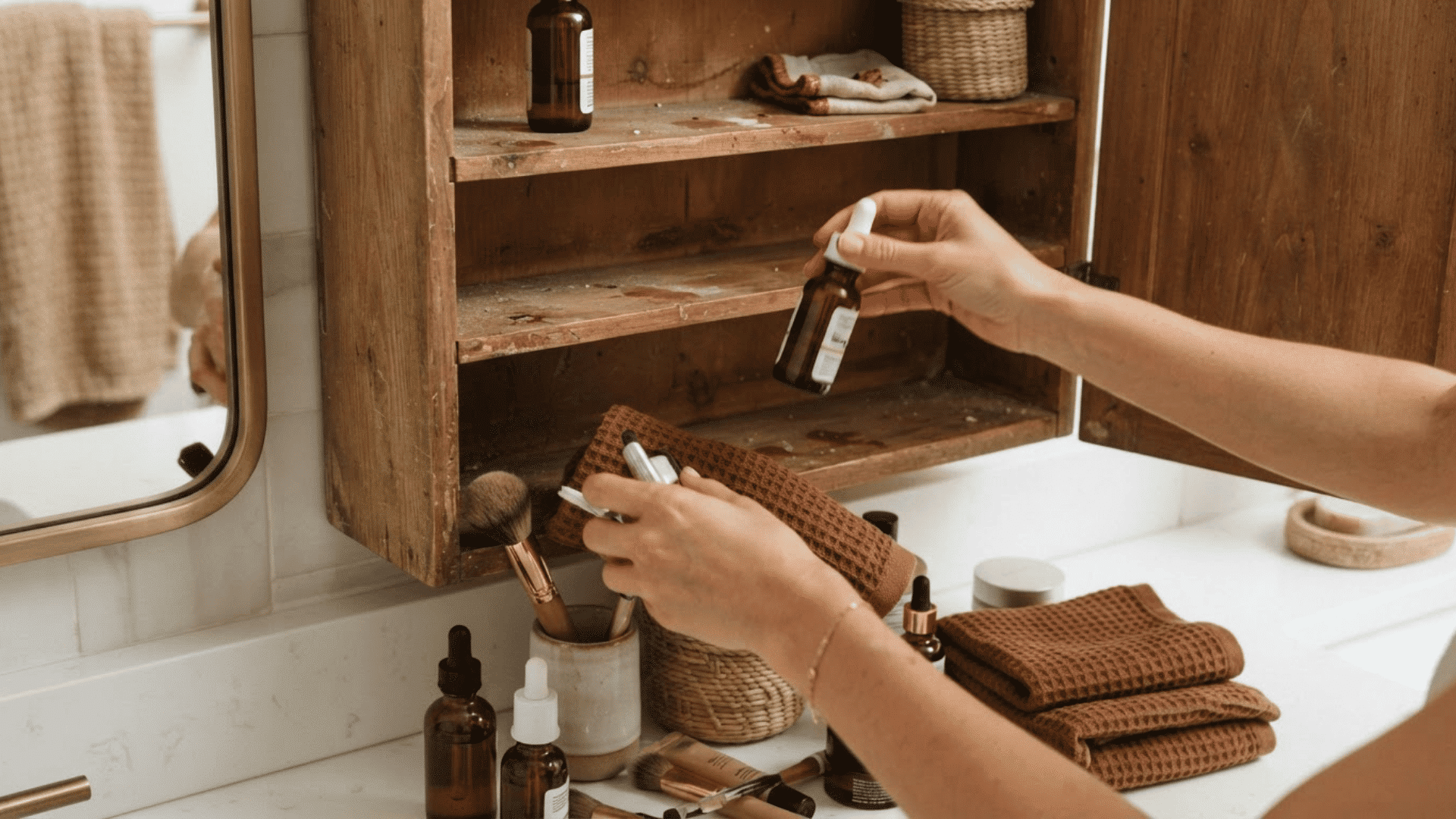
Take every item out so the full cabinet is visible. Place products on a clean towel or counter and keep similar items close together.
Starting with an empty cabinet makes it easier to spot wasted space, spills, damaged shelves, and forgotten products.
Wipe down the inside before putting anything back. This step also shows how much storage is actually available and prevents old clutter from being put back in.
2. Remove What is No Longer Needed
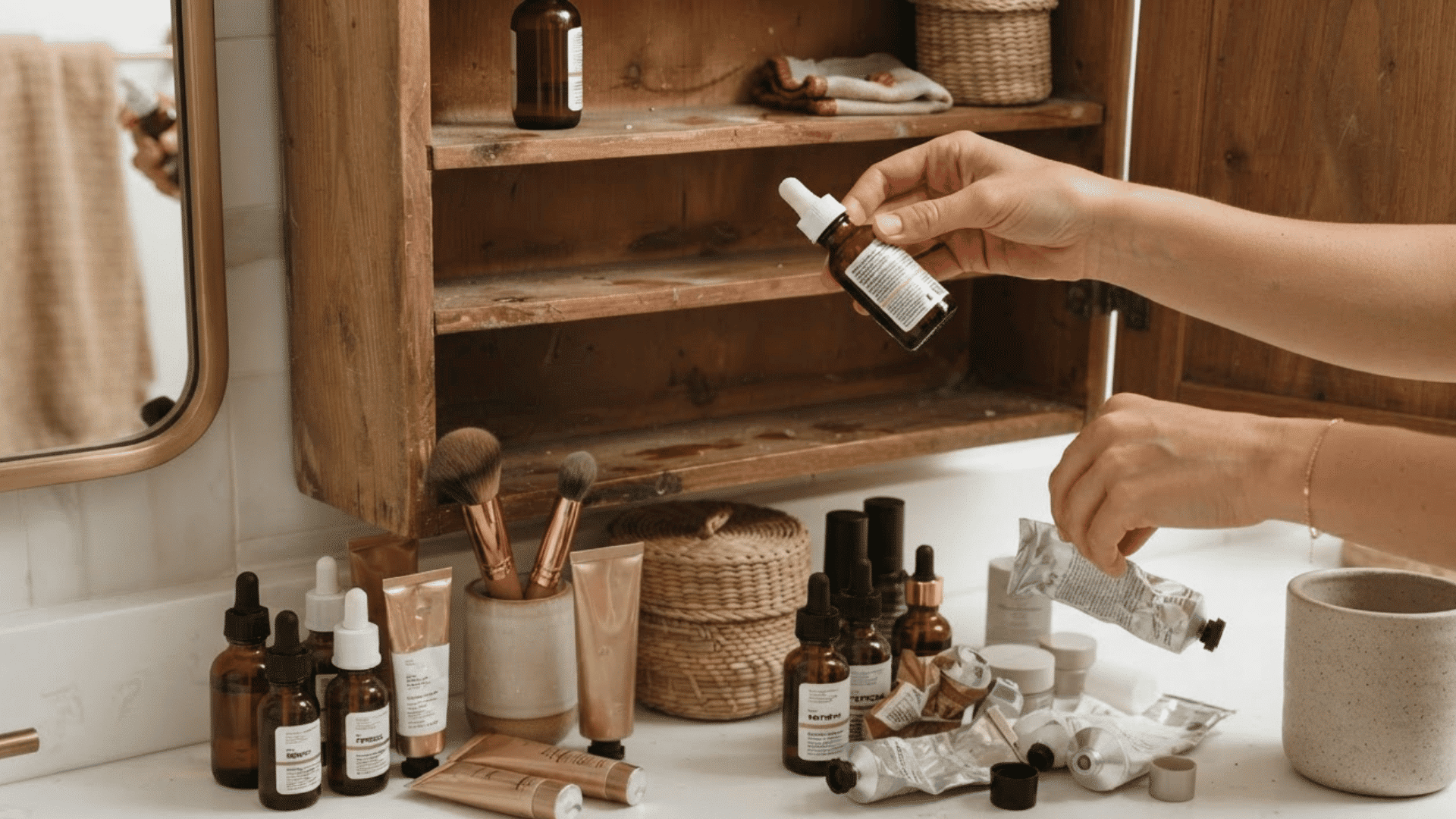
Check each bottle, tube, box, and container before it returns to the cabinet. Throw away empty packaging and products that are no longer usable.
Set aside items that belong in another room. Keep duplicates together so extra stock is easy to see.
Cutting down the number of products creates more usable space and makes the cabinet easier to manage. It also lowers the chance of buying something that is already sitting at the back.
3. Group Similar Products Together
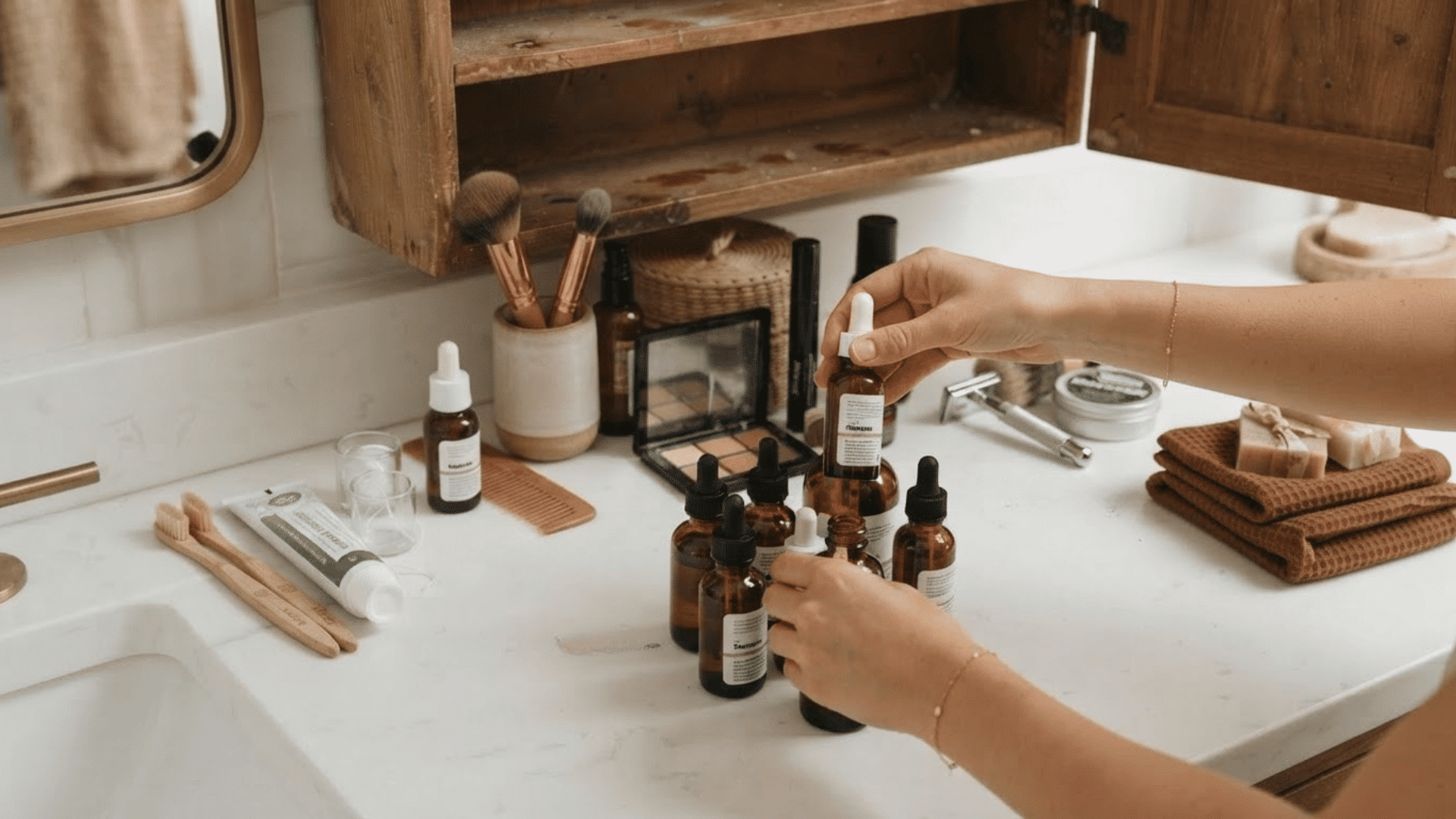
Place related items into simple categories such as skincare, hair care, dental care, makeup, shaving products, cleaning supplies, and spare toiletries.
Grouping items makes it easier to see how much space each category needs. It also stops products from spreading across several shelves or drawers.
Keep categories broad rather than making too many tiny groups. A simple system is easier to remember, which means family members are more likely to put products back in the correct place.
4. Add Organizers that Fit The Space
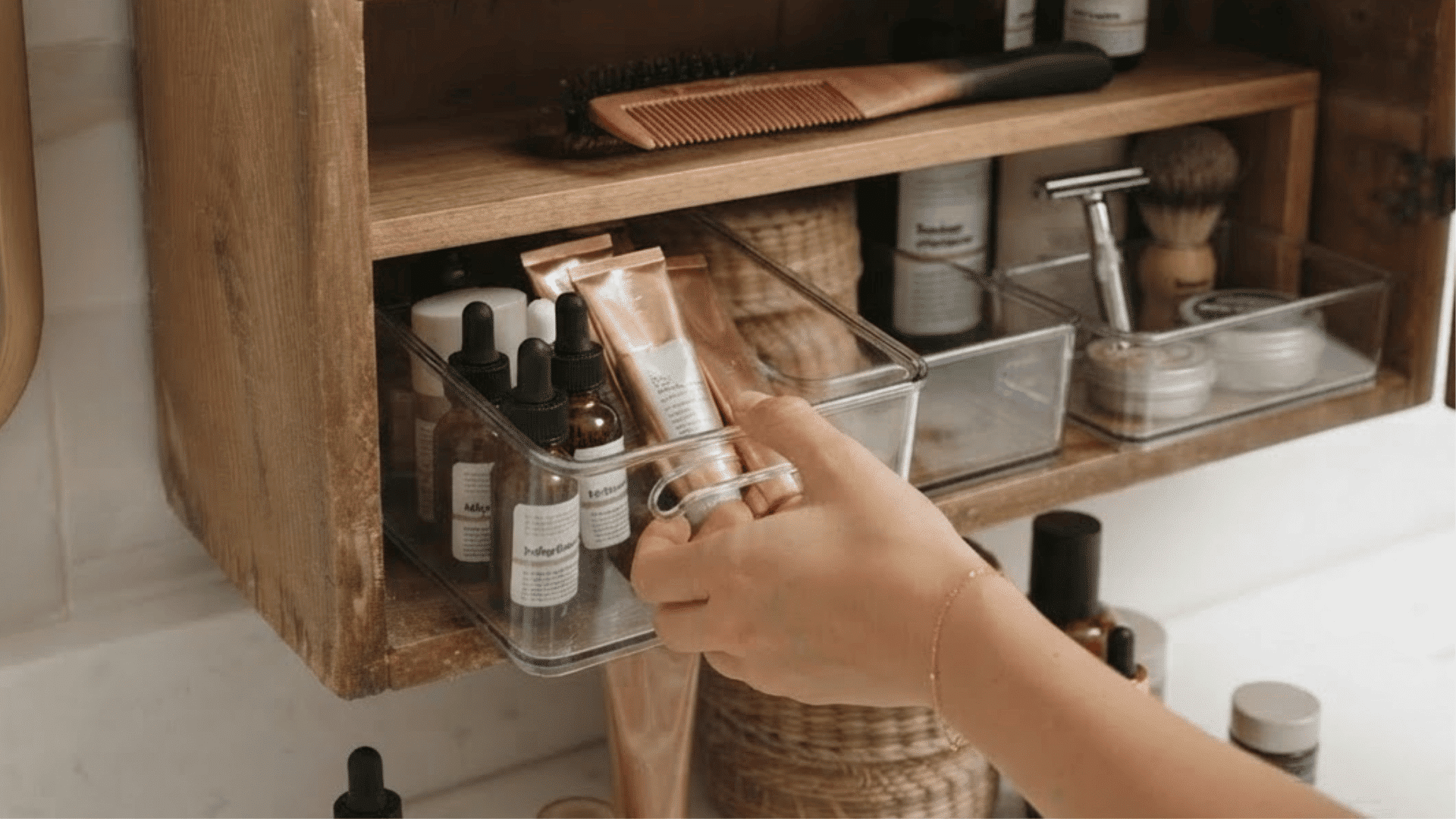
Measure the cabinet before choosing bins, drawers, trays, or shelf risers. Small clear containers work well for products that need to stay visible.
Pull-out bins help with deep cabinets, while shelf risers make use of empty height. Drawer dividers can control smaller items. Avoid filling every inch with storage products.
Leave enough room to move things comfortably. The goal is to make products easier to reach, not to create another layer of containers that adds clutter.
5. Give Every Item a Fixed Home
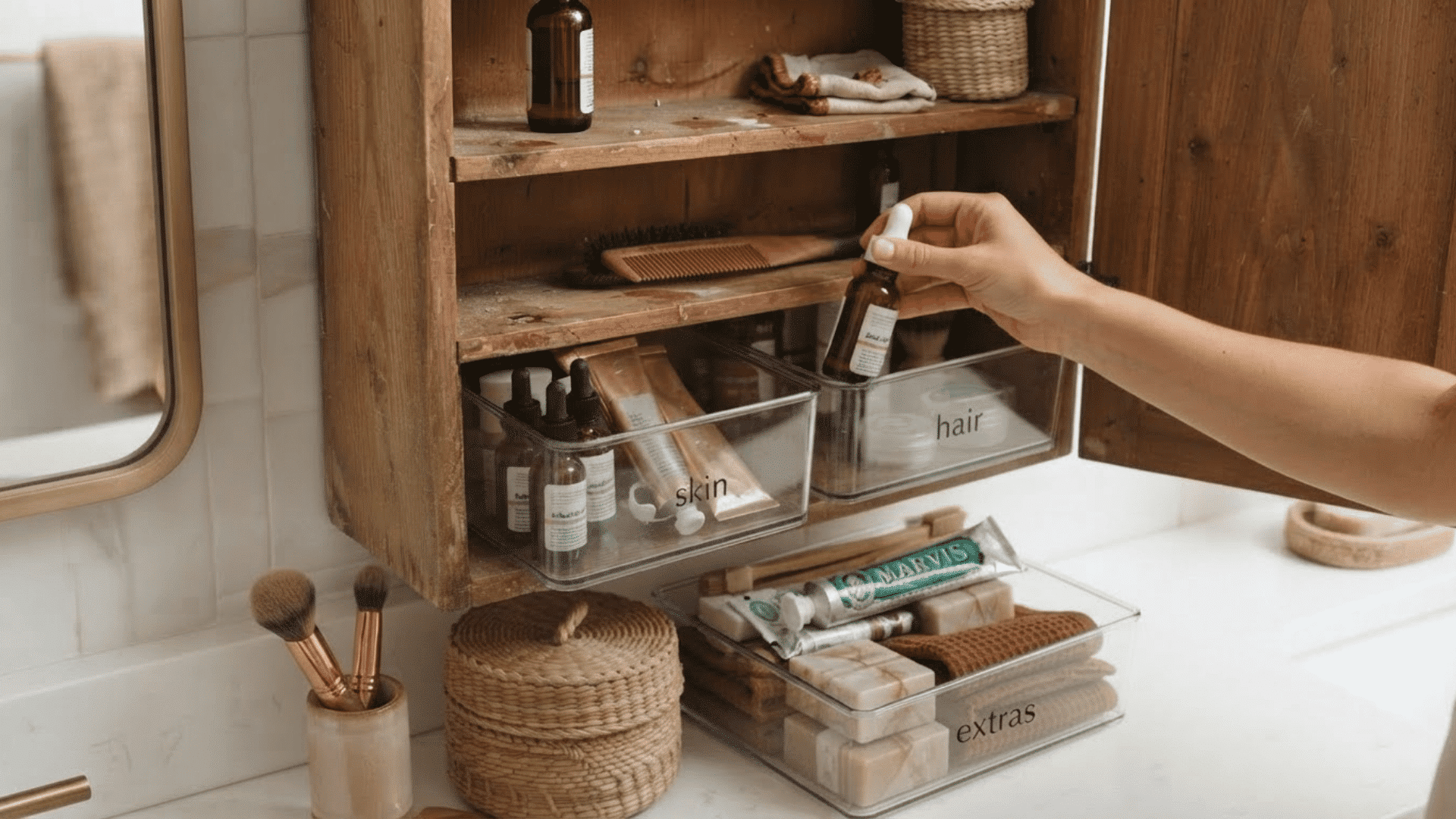
Finish by placing each category in one set location. Keep daily items near the front and backup stock farther away.
Labels can help in shared bathrooms, especially when several people use the same cabinet. Simple labels such as “hair,” “skin,” or “extras” are enough.
Once each product has a fixed home, putting it away takes less effort. A clear system also makes future cleanups faster because misplaced items are easier to spot and return to their proper place.
Bathroom Cabinet Storage Ideas by Product Type
Different products need different storage spots. Matching the container to the item helps save space and keeps daily products easy to reach.
| Product Type | Storage Idea | Best Location |
|---|---|---|
| Skincare | Small tray or clear bin | Front shelf |
| Hair products | Tall basket or pull-out bin | Lower shelf |
| Makeup | Drawer divider | Vanity drawer |
| Dental items | Small divided tray | Easy-reach shelf |
| Hair tools | Heat-safe holder after cooling | Deep drawer or cabinet |
| Extra toiletries | Stackable container | Back or lower shelf |
| Cotton pads | Covered container | Upper shelf |
| Cleaning supplies | Separate handled bin | Lower cabinet |
DIY Bathroom Cabinet Organization Ideas
Bathroom storage upgrades can improve without expensive products. A few basic items already at home can create useful storage zones.
- Reuse Small Containers: Clean jars, boxes, or food containers can hold cotton pads, hair ties, clips, or travel-size products. Matching sizes can also make shelves look less crowded.
- Make Simple Drawer Dividers: Cut sturdy cardboard or thin plastic into strips and fit them inside drawers. Dividers keep makeup, toothbrush supplies, grooming tools, and other small products separated.
- Add an Extra Shelf: A small removable shelf can create another storage level inside a tall cabinet. Use the lower section for larger bottles and the upper area for smaller items.
- Use the Cabinet Door: Attach lightweight adhesive hooks or small holders inside the door for brushes, hair ties, or cleaning cloths. Keep items slim enough for the door to close fully.
- Create Labeled Product Bins: Reuse small baskets or boxes and label each one by category. This low-cost setup makes shared bathrooms easier to manage and helps products return to the same spot.
Bathroom Cabinet Organization Mistakes to Avoid
One common mistake is buying bins before measuring the cabinet. A container that looks useful may waste space or stop the door from closing.
Another problem is keeping too many backup products beside daily items. This makes simple routines harder.
Avoid placing every product into a separate container. Too many small boxes can create more work instead of less.
Deep cabinets also become messy when items are pushed behind one another without pull-out storage.
Another mistake is ignoring empty vertical space. Shelf risers or stackable bins can often create more room.
A clear system should stay easy to use. If organizing takes extra effort every day, the setup is too complicated. Keep categories simple and leave some free space for future products.
Conclusion
A bathroom cabinet should help the morning move along, not turn into a daily search mission. A simple setup keeps everyday items within reach and cuts down on unnecessary clutter.
Learning how to organize bathroom cabinet space comes down to creating simple places for the products used most often.
Even one drawer or shelf can feel much better after a small reset. Start with the messiest section today instead of waiting for a full bathroom makeover.
Use one idea from this post, set up the space, and see how much easier tomorrow morning feels. Share the storage idea that worked best in the comments.
Frequently Asked Questions
How Often Should a Bathroom Cabinet be Cleaned?
A quick reset every few weeks helps stop clutter from building up. A deeper clean can be done every few months.
Should Bathroom Cabinet Shelves be Lined?
Shelf liners can help protect surfaces from spills and moisture. Choose a washable liner that can be removed easily.
What is The Best Way to Store Towels in a Cabinet?
Fold towels to match the shelf depth and stack them by size. Keep the most-used towels at the front.