


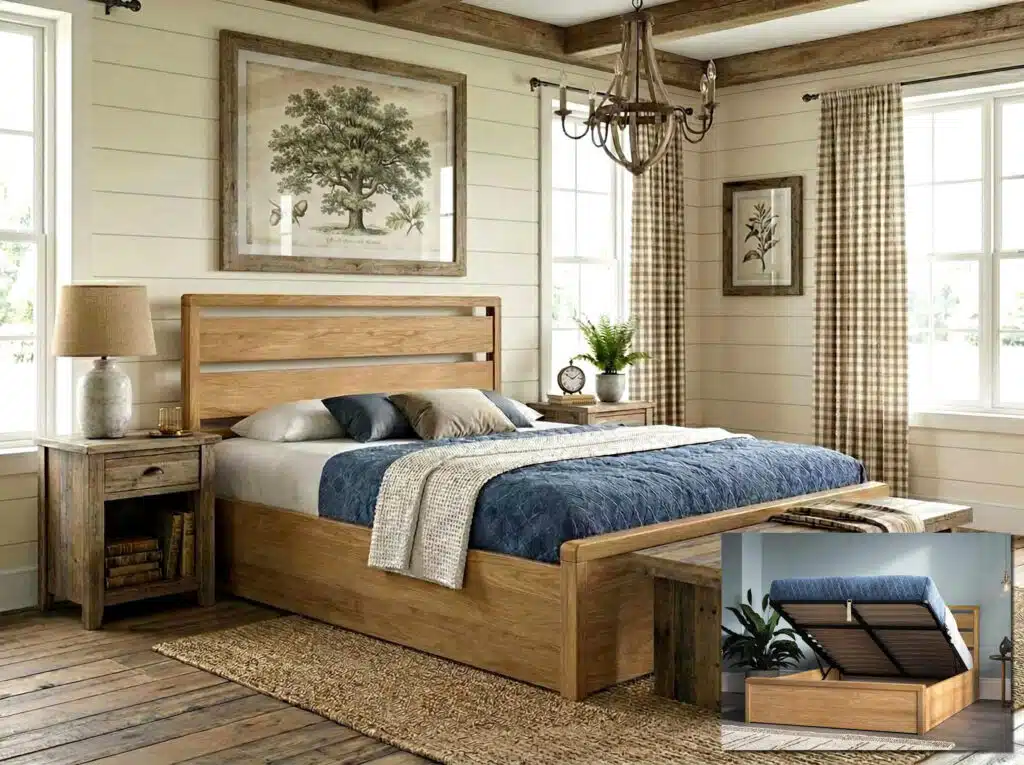
Your bedroom should be your own personal sanctuary—a space where you can escape from the outside world. So why not make it an eco-conscious retreat that nurtures both you and the planet?
Creating a sustainable bedroom doesn’t mean sacrificing style or comfort. Whether you want to reduce your environmental impact or simply sleep surrounded by natural, breathable materials, there are endless possibilities to explore. The best part? You can transform your space whilst making choices that benefit your wellbeing and your wallet.
From organic bedding that regulates your body temperature to energy-efficient lighting that reduces your bills, sustainable bedroom design offers practical solutions that work. You’ll discover how to choose eco-friendly materials, explore colour ideas using low-VOC paints, and learn interior design ideas that combine durability with environmental responsibility.
Ready to create your sustainable sleep sanctuary? Let’s get started.
How Sustainable Design Promotes Better Sleep and Boosts Your Mood
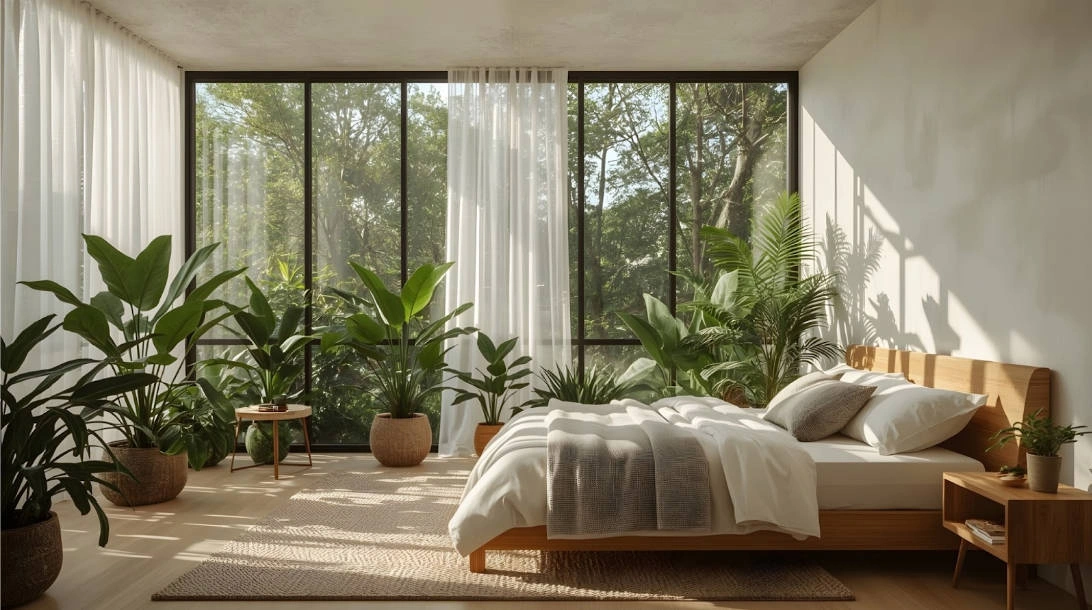
Image credit: Bedstar
Before diving into the “how,” it is important to understand the “why.” Designing an eco-friendly bedroom is not just about lowering your carbon footprint; it has a profound, scientifically backed impact on your daily mood and the quality of your rest.
By embracing biophilic design—the practice of intentionally connecting your indoor environment to the natural world—you create a space that actively works to lower stress. Surrounding yourself with natural textures, earthy tones, and organic materials has been shown to reduce heart rates and lower cortisol levels, preparing your mind and body for restorative sleep.
Furthermore, a sustainable bedroom directly improves your physical sleep environment in two critical ways:
- Superior Temperature Regulation: Synthetic materials trap heat and sweat. Natural, organic fibres like wool, cotton, and bamboo are naturally breathable and moisture-wicking. They help regulate your core body temperature throughout the night, significantly reducing the micro-awakenings caused by overheating.
- Cleaner Air Quality: Standard bedroom furniture, synthetic mattresses, and conventional paints often emit volatile organic compounds (VOCs). By choosing low-VOC finishes and natural mattresses, you eliminate these airborne toxins. Breathing cleaner, fresher air reduces respiratory irritation and encourages deeper, uninterrupted sleep cycles, ensuring you wake up feeling genuinely refreshed and in a better mood.
Getting Started with Your Transformation
Hold on before you start browsing for eco-friendly bed frames or organic cotton sheets! Good planning prevents wasteful purchases and helps you make choices that work for years to come.
Evaluating Your Current Setup
Grab a notebook and measure your bedroom dimensions carefully, noting where doors, windows, and radiators sit. This prevents the common mistake of buying furniture that overcrowds your space or blocks natural light. Think about how you genuinely use this room:
- Do you need abundant, hidden storage?
- Is maximising natural light a priority?
- Does the space serve multiple purposes?
Check your utility bills from the past 12 months to identify energy consumption patterns. Look for draughts around windows, assess whether your current furniture arrangement makes sense, and note any items that aren’t serving you well. Smaller, well-designed bedrooms often need fewer resources to furnish, heat, and cool.
Identifying What to Keep, Donate, or Recycle
Sort your belongings using a systematic approach. Be honest about condition and usefulness.
Category | Action Plan |
|---|---|
Keep | Items you use regularly or have genuine sentimental value. |
Relocate | Items that are useful but belong in other rooms of the house. |
Donate | Good-condition pieces that no longer serve you (charity shops, online marketplaces). |
Recycle/Upcycle | Sand down old furniture to give it new life, or take unusable materials to processing centres. |
Trash | Broken or completely unusable items (use this option sparingly). |
Setting Your Sustainability Goals and Budget
Establish a realistic budget before falling in love with reclaimed wood furniture. Most eco-friendly bedroom solutions prove budget-friendly, but knowing your spending limit prevents impulse purchases. Quality natural materials last longer, meaning you’ll replace items less frequently whilst saving money over time.
The Foundations of Nature-Inspired Design
Building your sustainable bedroom starts with the materials closest to your body and extends outward to every surface you touch.
Natural Fibre Mattresses and Bedding
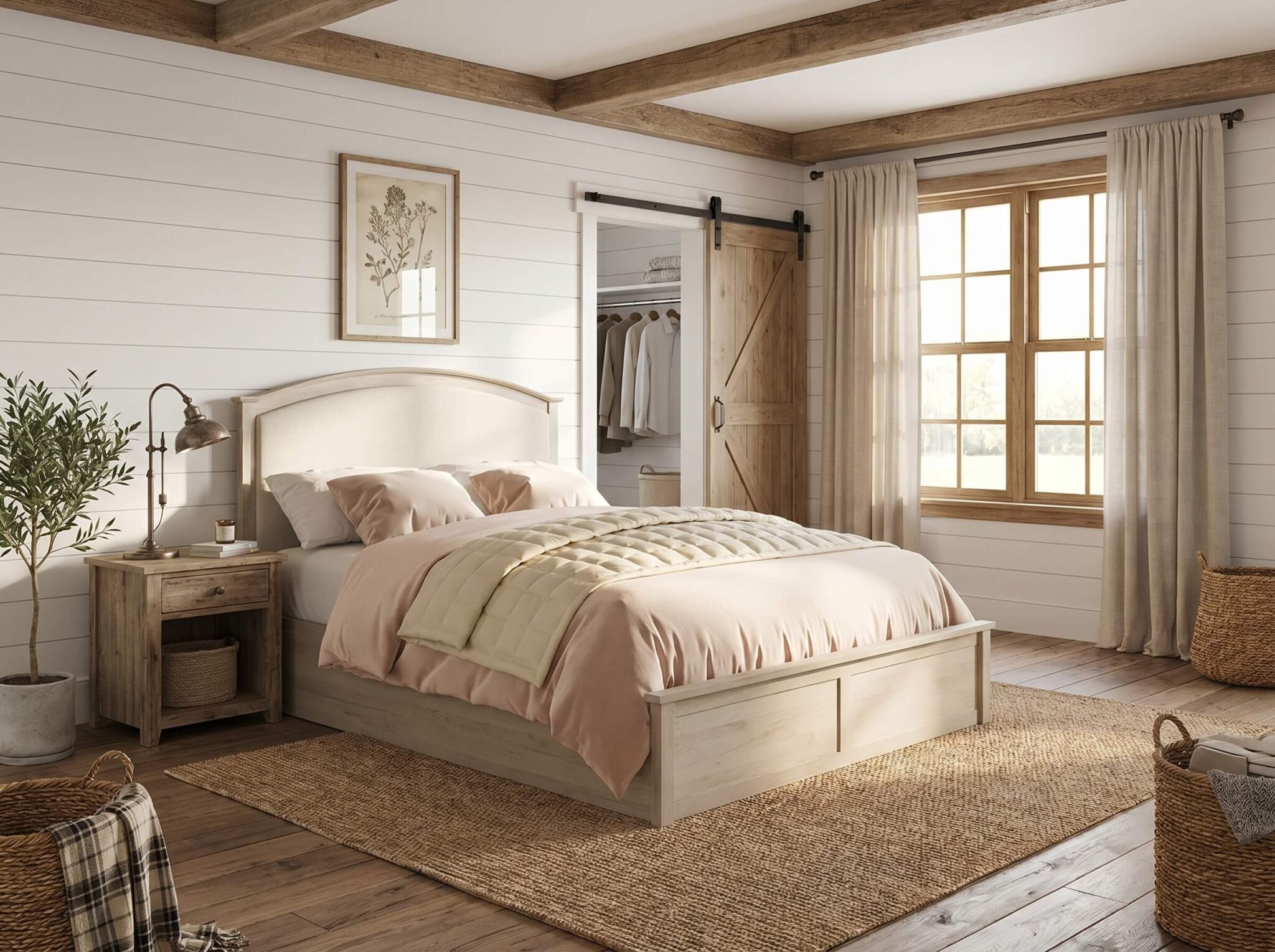
Pictured: Milan Bed Company Madrid 4FT 6 Double Ottoman Bed – Limed Oak, Available from Bedstar.
Natural fibre mattresses offer a chemical-free sleeping experience. Wool mattresses provide exceptional temperature regulation and are naturally flame-resistant without chemical treatments. Natural latex combined with organic coconut fibres is a fantastic, supportive replacement for synthetic memory foams.
Your bedding choices also make a real difference:
- Organic Cotton: Uses 71% less water and 62% less energy than conventional cotton.
- Bamboo: Requires minimal water and no pesticides, offering hypoallergenic properties.
- Linen: Made from flax plants, it uses 20 times less water than cotton and lasts over 20 years.
- Hemp: Demands 50% less water whilst generating half the greenhouse gas emissions.
Shopping Tip: Look for GOTS, OEKO-TEX, or Fair-Trade certifications to verify the authenticity of your organic bedding.
Ethical Bed Frames and Furniture
Invest in furniture that stands the test of time. Solid wooden bed frames or space-saving wooden ottoman beds crafted from FSC-certified timber ensure responsibly sourced materials with full traceability. Alternatively, reclaimed wood bed frames offer unique character whilst reducing the demand for new timber felling.
Eco-Friendly Wall Finishes
Zero-VOC paints contain 0.000% solvents, eliminating paint fumes entirely. Clay lime plaster uses a minimum of 71% recycled content whilst remaining breathable and biodegradable.
Energy Efficiency in Your Bedroom
Energy efficiency reduces your bills whilst creating year-round comfort.
LED Lighting and Smart Solutions
LED bulbs consume 80% less electricity than halogen equivalents. For bedrooms specifically, choose warm colour temperatures between 2700K–3000K to support your circadian rhythm. Smart lighting systems deliver energy savings between 35–70% through automated controls like motion sensors and dimming capabilities.
Thermal Curtains and Temperature Regulation
Thermal blackout curtains prevent up to 25% of thermal energy loss whilst blocking 99% of sunlight, reducing heat loss by up to 10% in colder months.
Takeaway Tip: Windows account for up to 40% of energy loss in poorly insulated homes. Investing in quality window treatments makes a massive difference to your heating bills.
The colours you choose for your walls also affect temperature. Lighter paint shades with a high Light Reflectance Value (LRV) reflect heat and light, keeping rooms cooler and brighter without needing extra electricity. Darker colours, conversely, absorb warmth.
The Final Touches
The right finishing touches transform your eco-conscious bedroom from simply sustainable to genuinely special. Many of these ideas cost absolutely nothing!
- Bring Nature Indoors: Houseplants purify the air by absorbing toxins like formaldehyde and benzene. Snake plants and pothos are great for beginners, whilst aloe vera thrives on sunny windowsills.
- Natural Decor: Display river stones, dried grasses, or pinecones collected from meaningful places to add character without an environmental cost.
- Clean the Natural Way: Create DIY cleaners using lemon, white vinegar, and baking soda. Switch to reusable microfiber cloths for superior dust-trapping capabilities instead of disposable wipes.
- Smart Storage: Select storage made from bamboo, glass, or metal. Repurpose what you already have—shoe boxes are perfect for organising drawers, and glass jars store small items beautifully.
Sustainable Flooring and Carpets
Wool carpets deliver unrivalled softness, resilience, and natural stain resistance. Sisal brings texture and durability, whilst jute offers supreme softness. If you prefer hard floors, bamboo flooring matures in just three to five years (compared to 25 years for hardwood), and cork regenerates every 9 to 12 years, offering two centuries of sustainable use from a single tree.
Your Sustainable Sleep Sanctuary Awaits
Creating a sustainable bedroom proves that you don’t need to choose between beautiful design and environmental responsibility. Natural materials, energy-efficient choices, and thoughtful planning create a space that nurtures both you and the planet.
Quality pieces last decades, which means you’ll spend less money replacing items whilst reducing waste. Start with what you already own, make strategic investments in eco-friendly essentials, and watch your bedroom become a truly restorative retreat. Your sustainable sleep sanctuary is within reach, and the positive impact extends far beyond your bedroom walls.