Sleep apnea treatment doesn’t always mean wearing a mask every night. For some people, an implanted therapy may offer another way to support breathing during sleep.
Inspire has become an important option for selected people with obstructive sleep apnea, especially when CPAP has not worked well enough or has been difficult to use.
Still, the treatment involves surgery, medical screening, device adjustments, and long-term follow-up, so it is important to understand what is involved before considering it.
Understanding how the system works, who may qualify, and how it compares with other treatment options can make the decision easier. Keep reading for a clear look at how Inspire therapy works.
What is Inspire Sleep Apnea Therapy?
Inspire works by sensing when you breathe in and sending a mild electrical signal to the hypoglossal nerve, which helps move the tongue and other airway muscles to keep the airway open.
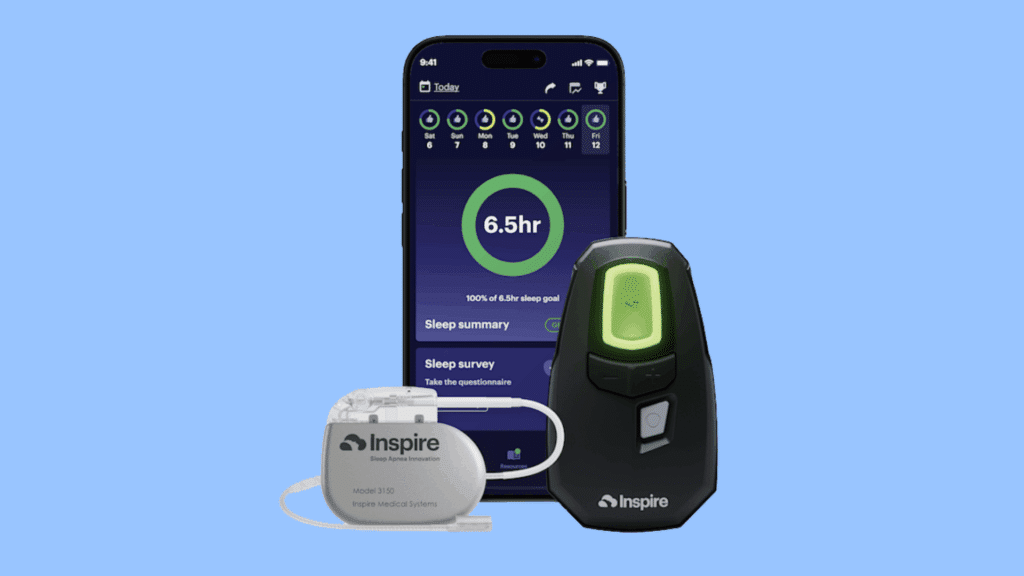
It is an implanted treatment, not a machine worn over the face. The system includes a small pulse generator placed under the skin, a lead that senses breathing, and another lead that delivers stimulation to a nerve controlling tongue movement.
The device works only when it is turned on for sleep. A handheld remote allows the patient to start or stop therapy.
Unlike CPAP, the treatment does not rely on pressurized air. It supports the airway by activating muscles that help prevent the tongue from falling backward and blocking airflow.
How Does Inspire Therapy Work?
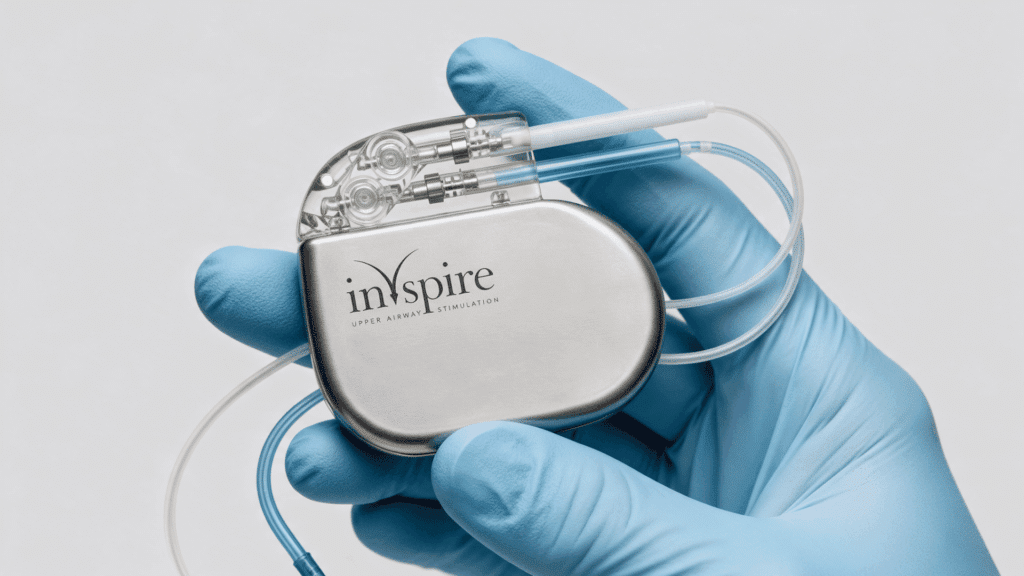
Inspire therapy uses a small implanted system that monitors breathing and gently stimulates the nerve controlling tongue movement. This helps keep the airway more open during sleep.
1. Breathing is Detected: A sensing component monitors the patient’s breathing pattern during sleep. It detects when inhalation begins and sends that information to the implanted pulse generator so it can deliver stimulation at the right time during each breathing cycle.
2. The Generator Sends a Signal: The pulse generator receives information from the breathing sensor and controls the timing of stimulation. It sends mild electrical signals through a lead connected to the hypoglossal nerve, with a trained clinician adjusting the settings.
3. The Tongue Moves Forward: Stimulation activates the hypoglossal nerve, which helps control tongue movement. The tongue and nearby airway muscles move slightly forward during inhalation, creating more space in the throat and helping reduce airway blockage during sleep.
4. A Remote-Controlled Therapy: The patient uses a handheld remote to turn therapy on before sleep and off after waking. A programmed delay gives time to fall asleep, while some settings let the patient pause treatment if needed.
How is Inspire Implanted?
Doctors implant the Inspire system under general anesthesia. Many surgeons now use a two-incision technique, placing the sensing lead directly behind the generator pocket instead of through a separate incision.
- Placing The Pulse Generator: The surgeon places a small pulse generator under the skin in the upper chest. This component powers the system and controls when it delivers stimulation.
- Positioning the Breathing-Sensing Lead: Through the same incision used for the generator, the surgeon places a sensing lead between the ribs, in the intercostal muscle, so it can detect breathing changes during sleep.
- Connecting The Stimulation Lead: A separate stimulation lead is connected to the hypoglossal nerve. It delivers mild electrical stimulation that moves the tongue forward and helps prevent airway blockage.
- Allowing Time to Heal: After surgery, the incision sites need time to heal before the implanted system can be activated for regular use.
- Activating The System: During a follow-up visit, a clinician programs the device and explains how to start and stop therapy using the remote.
- Adjusting The Settings: Stimulation levels may be increased gradually. Follow-up sleep testing can help clinicians check treatment response and adjust the settings when needed.
Who Can Consider Inspire Therapy?
Inspire may suit certain adults with moderate to severe obstructive sleep apnea who have not been able to use CPAP successfully. It is not intended for every person with sleep apnea.
A sleep specialist usually reviews the person’s sleep study, airway structure, medical history, and previous treatment experience before recommending the implant.
Inspire may be considered for people whose breathing problems are mainly caused by airway blockage rather than central sleep apnea. Doctors typically confirm this using drug-induced sleep endoscopy, a test that shows how the airway collapses during sleep.
Doctors may also consider body weight, overall health, surgical risk, and the ability to attend follow-up visits.
Patients need to be comfortable using the remote, adjusting the device, and completing later sleep testing. A full medical evaluation is the best way to determine if Inspire is a suitable treatment option.
How Inspire Differs from CPAP
Both treatments help manage obstructive sleep apnea, but they differ in how they work, how they are used, and who may benefit.
Feature | CPAP | Inspire |
|---|---|---|
How It Works | Uses steady air pressure to keep the airway open during sleep | Uses mild nerve stimulation to help move the tongue forward |
Equipment | Requires a mask, tubing, and a CPAP machine | Uses an implanted device and a handheld remote |
Surgery | No surgery is needed | Requires a surgical procedure for implantation |
Nighttime Use | The mask must be worn during sleep | The device is turned on before sleep |
Typical Role | A commonly used treatment for obstructive sleep apnea | Used for selected patients who meet the therapy’s eligibility criteria and have difficulty using PAP successfully |
Follow-Up | May require pressure or mask adjustments | Requires device programming and follow-up adjustments |
Best Suited For | Many people with obstructive sleep apnea | Selected patients who meet specific medical and airway criteria |
Possible Risks and Limits of Inspire Therapy
Inspire can help selected patients, but it also carries risks and practical limits to consider before treatment.
1. Surgical Risks: Implantation may cause pain, swelling, bleeding, infection, scarring, or temporary discomfort around the surgical areas.
2. Stimulation Discomfort: Some patients may experience tongue movement, tingling, soreness, or unusual sensations, especially during early treatment or setting changes.
3. Eligibility and Compatibility: Certain airway patterns, central sleep apnea, medical conditions, or other implanted devices may require careful assessment before treatment.
4. Follow-Up and Programming: Inspire requires activation, sleep testing, and ongoing programming. You may need additional adjustments to improve comfort and treatment response.
5. Battery and MRI Limits: The battery eventually requires surgical replacement. MRI compatibility depends on the specific Inspire system, implanted components, and device labeling.
6. Results Can Vary: Some patients experience major improvement, while others may have smaller benefits or still need additional sleep apnea treatment.
What to Know Before Choosing Inspire Therapy
Before moving forward with Inspire, patients should understand that eligibility depends on more than simply having obstructive sleep apnea. A sleep specialist usually reviews sleep study results, previous CPAP use, airway structure, and overall health.
It is also important to discuss surgical risks, recovery time, follow-up visits, and how the device will be adjusted after activation.
Patients should ask what results may be realistic based on their specific apnea pattern rather than expecting the same outcome as someone else.
Medical advice is especially important when sleep apnea symptoms remain uncontrolled, CPAP is difficult to tolerate, or daytime sleepiness continues despite treatment.
A doctor can also explain whether another CPAP setup, an oral appliance, weight management, positional therapy, or a different procedure should be considered before deciding on an implant.
Note: This is general information and does not replace medical advice, diagnosis or treatment from a qualified healthcare professional. Eligibility for Inspire must be determined through an individual medical evaluation.
Closing Thoughts
Inspire may be an option for certain people with obstructive sleep apnea, particularly when standard PAP therapy has been difficult to use. Understanding how it works can help clarify what the treatment involves.
The right choice depends on individual health factors and the way the airway becomes blocked during sleep. A sleep specialist can determine if Inspire fits those needs.
Learning how the therapy works also makes it easier to discuss alternatives and realistic expectations during a medical appointment. It can help turn a general interest in Inspire into a more informed conversation.
Considering Inspire for yourself or someone you care about? Share your questions or experience in the comments below.
Frequently Asked Questions
Does Inspire Make Noise While Working?
Inspire operates inside the body and does not produce the machine noise commonly associated with external breathing equipment.
How Long Does Inspire Battery Last?
Battery life can vary, but implanted generators are designed to last for years before replacement is needed.
Can Someone Travel with Inspire Safely?
Most people can travel with the implant, but carrying device identification can be helpful during security screening.