

Waking up with a sore hip or stiff lower back can make you question your sleeping position. For many side sleepers, a simple pillow placed between the knees can make the night feel more comfortable.
Sleeping with a pillow between the legs may help keep the hips and pelvis in a more natural position while reducing pressure between the knees. But the way you use the pillow matters.
A pillow that is too thick, too firm, or poorly placed can leave you feeling more uncomfortable by morning. From choosing the right pillow to finding the best position, a few small adjustments can make side sleeping easier.
Why Do People Sleep with a Pillow Between Their Legs?
Most people put a pillow between their legs to balance their sleeping on the side. The lack of support leads to the upper leg dropping to the bed, taking the top hip along with it and causing the pelvis to turn.
It can lead to a twisting of the lower part of the back and even tension in the hip area, which is why many side sleepers look for ways to ease hip pain at night.
A pillow placed between the legs makes it possible to balance the knees, hips, and pelvis. Some use it for warmth, stability, or the secure feeling of holding a body pillow during sleep.
Some sleepers prefer the soft cushioning provided by the pillow that prevents their knees from coming into contact with each other.
How to Choose the Right Pillow for Between the Legs
The right pillow should support the upper leg without pushing the hips too far apart or restricting natural movement.
- Firmness: Medium firmness usually provides stable support while allowing enough compression for comfortable movement.
- Shape: Contoured pillows fit between the knees while longer pillows support the knees, calves, and ankles.
- Material: Memory foam offers structured support, latex feels responsive, and down alternatives provide softer cushioning.
- Thickness: The pillow should fill the space between the legs without lifting the upper hip excessively.
- Cover: Choose a breathable removable cover that controls warmth and can be washed regularly.
Benefits of Sleeping with a Pillow Between Legs
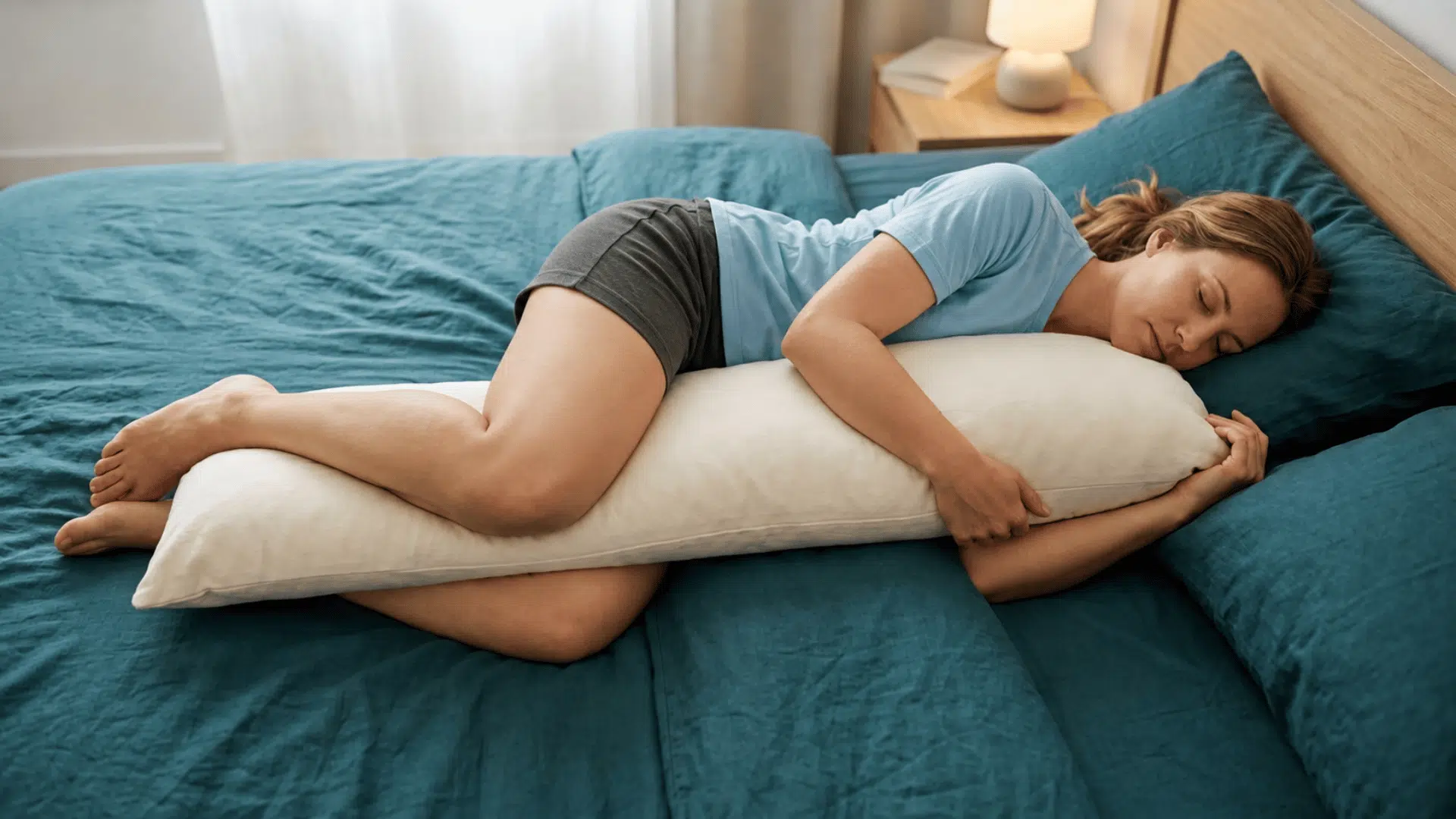
This sleeping position may provide several physical benefits, especially when the pillow fits the sleeper’s body and preferred posture.
1. Supports Spinal Alignment
Side sleeping without leg support may allow the upper leg to rotate forward, shifting the pelvis and lower spine.
A properly sized pillow holds the legs closer to a parallel position and helps keep the hips stacked, offering many side sleepers relief from sacroiliac joint pain. This support may reduce unnecessary spinal twisting during the night.
The head pillow and mattress must also provide adequate support because a knee pillow cannot align the entire spine on its own.
2. Reduces Pressure Between The Knees
The knees rest directly against each other when a person sleeps on the side with stacked legs.
This contact may feel uncomfortable for people with sensitive joints, prominent knee bones, or existing tenderness. A soft pillow creates a cushioned barrier and spreads pressure across a larger area.
It should support the knees without feeling hard, lumpy, or restrictive when the sleeper bends or straightens the legs.
3. Improves Comfort During Pregnancy
During pregnancy, added body weight and a changing center of balance can increase pressure around the hips and pelvis.
A pillow between the legs supports the upper thigh and may make side sleeping feel steadier and more comfortable. Extending support toward the ankles can also prevent the lower legs from twisting unevenly.
Pregnant sleepers should choose a comfortable thickness, learn how to use a pregnancy pillow properly, and follow any additional advice from their prenatal healthcare professional
4. Adds Stability for Restless Side Sleepers
People who move frequently may lose alignment when a small knee pillow shifts or falls out during the night.
A longer body pillow offers a larger support surface and may remain positioned more reliably between the legs. Hugging the same pillow can also support the arms and chest while keeping the torso from rolling forward.
This added stability may make it easier to return to a comfortable side-sleeping position after changing sides.
Comparing Knee Support and Full-Leg Support
The right pillow placement affects joint cushioning, leg stability, hip position, and overall alignment, so each support method suits different sleeping needs.
Support Method | Main Benefit | Possible Limitation | Suitable Pillow |
|---|---|---|---|
Between the knees | Cushions direct pressure between the knee joints | May leave the ankles and lower legs unsupported | Contoured knee pillow |
Between the knees and ankles | Supports the upper leg and keeps the lower legs more level | Requires a longer pillow that stays in place | Long, contoured knee-to-ankle pillow |
Along most of the legs | Provides broader support for the hips, knees, and ankles | May take up more space in the bed | Long body pillow |
Conditions That May Benefit from This Sleeping Position
A pillow between the legs may improve comfort for certain conditions, but it supports positioning and does not treat the underlying medical cause.
- Lower Back Pain: Better pelvic alignment may reduce twisting and ease strain around the lower back.
- Sciatica: Limiting spinal and pelvic rotation may reduce discomfort for some people with an irritated sciatic nerve.
- Herniated Disc: A neutral side-sleeping position may feel more comfortable by reducing movements that aggravate symptoms.
- Hip or Knee Pain: Cushioning reduces direct joint pressure and supports a more balanced leg position.
- Sacroiliac Joint Pain: Keeping the hips stacked may reduce uneven pressure and strain around the pelvis during side sleeping.
What About Back and Stomach Sleepers?
Back sleepers should place a pillow beneath both knees instead of between them. Slight elevation can relax the lower back and support its natural curve.
The Veterans Affairs back-safety resource also explains supportive sleeping positions for people experiencing back discomfort.
Stomach sleepers can place a thin pillow beneath the hips or lower abdomen to reduce excessive arching. A thin head pillow may also limit neck strain.
Those who bend one leg outward can support that knee with a small pillow without twisting the pelvis. Combination sleepers may prefer an adjustable pillow that can be repositioned easily after changing positions.
Can Sleeping with a Pillow Between Your Legs Be Bad for You?
Sleeping with a pillow between your legs is usually safe, but the wrong size or position can leave you feeling worse, not better. A pillow that is too thick can push your top hip upward and leave your pelvis twisted through the night.
Firmness matters too, especially around the knees, calves, and ankles. If the pillow feels hard, bulky, or too warm, you may spend the night shifting around instead of staying comfortable.
Pay attention to what you feel the next morning. If you notice new pain, numbness, tingling, or stiffness, try changing the pillow’s position or height, or simply stop using it.
If you have ongoing symptoms, a recent injury, or specific post-surgery instructions, check with a healthcare professional before changing your sleeping position.
Final Thoughts
A pillow between your legs may be a small change, but it can make side sleeping more comfortable. Sleeping with a pillow between your legs may help keep your hips and pelvis aligned, cushion your knees, and limit unwanted twisting while you rest.
The right height and firmness matter, so give yourself time to find a setup that feels natural.
You can also extend the pillow toward your ankles if your lower legs need more support. If you develop new or worsening pain, numbness, or tingling, stop using the pillow and consider speaking with a healthcare professional.
Have you tried this sleeping position? Share your experience or tips in the comments below.
Frequently Asked Questions
Can a Normal Bed Pillow be Used Between The Legs?
Yes, a normal pillow can work if its thickness supports the upper leg without forcing the hips too far apart.
What is The Best Sleeping Position for Seniors?
Side sleeping with a pillow between the knees often supports alignment and comfort, but health conditions may require different positioning.
Should You Sleep with Your Legs Straight or Bent?
Side sleepers should keep their legs slightly bent rather than tightly curled, which helps maintain comfort and reduce strain on the back.