


Most adults sleep best in a cool room. The National Sleep Foundation recommends keeping the bedroom between 60 and 67°F, and many sleep specialists treat 65°F as a sensible starting point. That range surprises people who leave the thermostat at 70 all winter, yet it matches how the body prepares for sleep.
Picking the number is the easy part. Holding it through a winter night takes a heating system that cycles evenly. When the bedroom drifts cold by 2 a.m. or turns stuffy toward dawn, an extra blanket only hides the symptom, and the cause is often a fault that calls for home heating repair.
Below is what sleep research says about temperature, how to set a thermostat for the night, and how to tell a settings problem from a heating problem.
What Sleep Research Says About Bedroom Temperature
Temperature is one of the few sleep factors you can change tonight, which is why sleep organizations pay so much attention to it.
Why a Cooler Room Helps You Fall Asleep
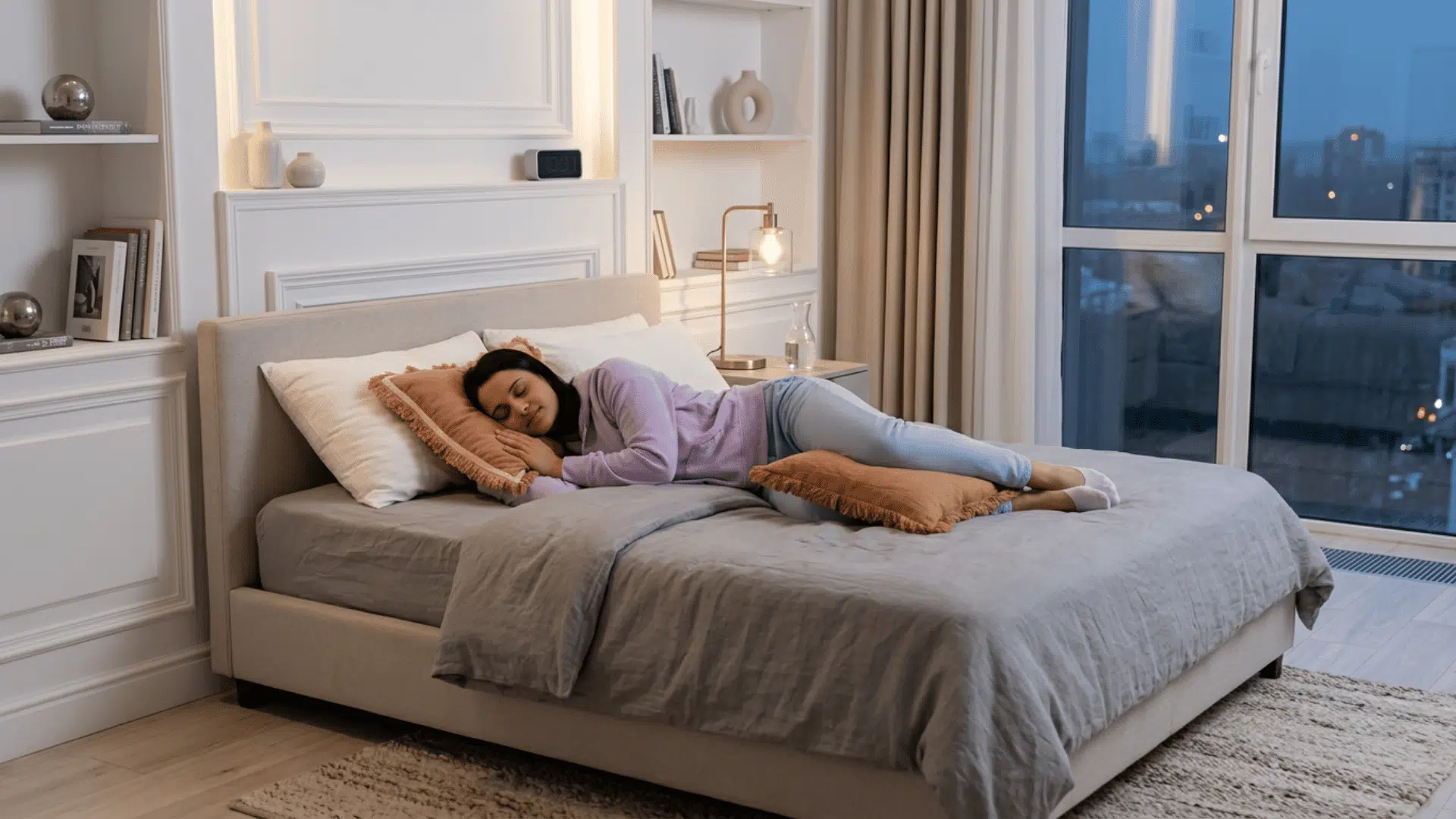
As bedtime approaches, your core body temperature naturally dips, and that drop is part of the body’s signal that it’s time to sleep. A cool room helps the process along. A warm one works against it, and sleeping hot is linked to more tossing, turning and waking. Going too far the other way doesn’t help either. A room that’s genuinely cold keeps the body tense and makes deep sleep harder to reach.
Different Sleepers, Different Numbers
The 60 to 67°F range is a guideline for healthy adults. Babies and toddlers do better slightly warmer, and the National Sleep Foundation suggests 65 to 70°F for them. Older adults may need more warmth too. A 2023 study that tracked about 11,000 nights of sleep among 50 adults aged 65 and over found they slept most efficiently between roughly 68 and 77°F.
Couples rarely agree on one number, and bedding changes the math. A heavy down comforter at 62°F can feel warmer than a light quilt at 67°F. Start at 65°F, keep a week of notes on how you sleep, and adjust a degree or two at a time.
How to Set Up the Thermostat for Sleep
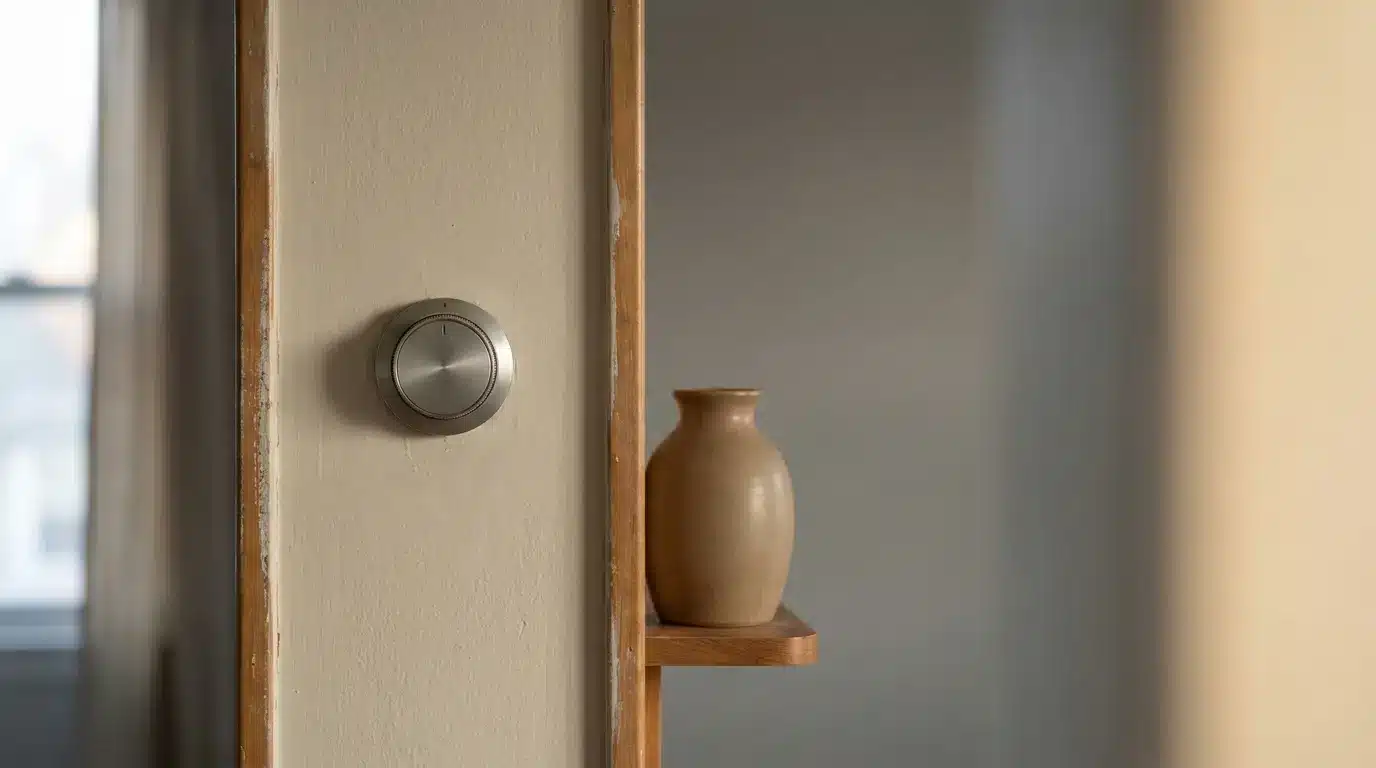
A programmable or smart thermostat does most of the work. Set the night temperature to begin about an hour before bed, so the room has already cooled when you lie down, and schedule the warm-up for half an hour before your alarm.
Location matters more than most people expect. Many thermostats hang in a hallway, which can run several degrees off from a bedroom at the far end of the house. If the hallway reads 66°F while the bedroom sits at 61°F, the system is doing exactly what it was told. Some smart thermostats accept a wireless sensor that can go in the bedroom and take priority at night.
Heat pump owners should keep overnight setbacks modest. A big drop means a long recovery in the morning, and many systems switch on electric backup heat to catch up, which costs considerably more to run. A setback of a few degrees is usually the better trade.
Why Your Heat Won’t Hold the Bedroom Temperature at Night
If the schedule is right and the bedroom still swings, the cause usually falls into one of four groups.
Short Cycling
A system that fires for a few minutes, shuts off and starts again leaves the room drifting between warm and cool. A dirty filter can restrict airflow until the furnace overheats and a safety switch shuts it down. A failing flame sensor causes similar stop-and-start behavior, and so does equipment that’s too large for the house.
Thermostat Problems
A thermostat near a sunny window, a supply register or a drafty door reads the wrong temperature and runs the system on bad information. Weak batteries, loose wiring and a sensor that has drifted out of calibration lead to the same result.
Weak Airflow to the Bedroom
Bedrooms at the end of a long duct run often get the least air. Leaky or crushed ducts in an attic or crawl space make that worse, and a wearing blower motor moves less air everywhere. The bedroom door matters too. In homes with a single central return, a closed door traps supply air in the room and slows the flow.
A System That Can’t Keep Up on the Coldest Nights
Some systems hold temperature fine in November and fall behind in January. The equipment may be undersized for the house, a heat pump may depend on backup heat that has stopped working, or a hot-water boiler may have air in the lines or a weak circulator pump.
What you notice at night | Likely cause | What you can check yourself |
Room warms, cools and warms again every few minutes | Short cycling from overheating or a flame sensor fault | Replace the filter, then watch a few cycles |
Thermostat shows the setting, bedroom feels colder | Thermostat placement or calibration | Compare with a separate thermometer in the bedroom |
Bedroom colder than every other room | Weak airflow, duct leaks, closed door with no return path | Open registers, test a night with the door open |
House falls behind only on the coldest nights | Undersized system or failed backup heat | Note the outdoor temperature when it happens |
Radiators cold at the top, warm at the bottom | Air trapped in a hot-water system | Bleed the radiator |
Quick Checks Before You Call a Technician
Several of the causes above take only minutes to rule out, so start with these.
- Put in a new filter and write down the date.
- Make sure bedroom registers are open and clear of furniture and rugs.
- Sleep one night with the bedroom door open, or confirm air has a path back to the return.
- Replace the thermostat batteries and review the night schedule.
- Clear snow and debris from around an outdoor heat pump unit.
- Check the heating breaker and the service switch near the furnace.
When the Problem Needs a Technician
Some signs point past settings and filters. Short cycling that continues with a clean filter, a burning or electrical smell, rooms that never reach the set temperature, new banging or squealing, or a heat pump coated in ice that won’t clear all call for a professional. A carbon monoxide alarm calls for one too, after everyone has left the house.
When you call, describe the pattern: what time the bedroom gets cold, how long the system runs between shutoffs and which checks you already did. A technician who hears “it shuts off every four minutes after midnight” can start in the right place. Local contractors such as Region Home Services, a family-run HVAC company in Bucks County, Pennsylvania, begin these calls with a full diagnosis and give a written estimate before any repair starts, so the fix targets the actual cause of those cold nights.