
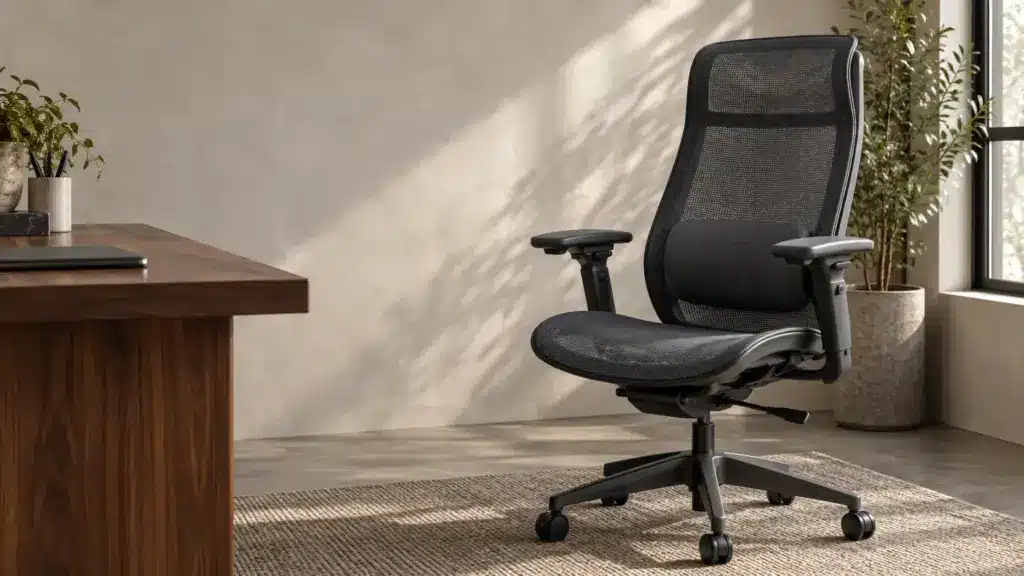
An executive office chair needs to do more than look impressive behind a large desk. It should provide enough support for long work sessions while fitting the user’s body and the workspace around it. Premium options such as Herman Miller refurbished chairs can offer advanced ergonomic features without always requiring the cost of a brand-new model. Still, the right choice depends on factors such as seat dimensions, back support, adjustment range, materials, and how many hours the chair will be used each day.
Office Logix Shop is one example of a supplier working with established commercial office chair models, including refurbished seating from well-known manufacturers. Refurbished furniture can be worth considering when a business wants durable construction at a lower price, but buyers should look closely at the chair’s condition, warranty, components, and adjustment mechanisms rather than focusing only on the brand name.
What Makes an Executive Office Chair Different?
Executive chairs traditionally have a larger frame, a higher back, and a more substantial appearance than basic task chairs. They are often placed in private offices, management rooms, boardrooms, and other spaces where people spend several hours working at a desk.
However, appearance isn’t enough. A large chair can still be uncomfortable if the seat is too deep, the lumbar support is poorly positioned, or the armrests cannot be adjusted to match the desk.
A good executive chair should balance three things:
- Support, especially around the lower and upper back
- Adjustability, so the chair can fit different body proportions
- Durability, because daily use puts considerable stress on the frame and mechanisms
The best combination depends on the user. Someone who spends eight hours writing and typing may need different features from someone who spends most of the day in meetings.
Important Features to Check Before Buying
Before looking at specific models, it’s useful to understand which technical features actually affect everyday comfort.
Backrest and Lumbar Support
A high back can support more of the upper body, but height alone doesn’t make a chair ergonomic. The backrest should follow the user’s movements and provide appropriate support around the lower spine.
Some premium chairs use flexible back structures that move as the user changes position. Others use adjustable lumbar pads or built-in lumbar systems.
The ability to change lumbar support is particularly useful when a chair is used for long work sessions because the ideal position can vary from person to person.
Seat Height and Depth
Seat height determines how comfortably your feet rest on the floor and how your knees line up with the desk.
Seat depth is just as important. If the seat is too deep, shorter users may struggle to sit against the backrest while keeping their feet comfortably on the floor. If it’s too shallow, taller users may not receive enough thigh support.
| Adjustment | Why It Matters |
| Seat height | Helps position feet and knees correctly |
| Seat depth | Supports the thighs without excessive pressure |
| Lumbar height | Places lower-back support where it is needed |
| Armrest height | Helps position elbows comfortably |
| Recline tension | Controls how much resistance the backrest provides |
| Tilt lock | Controls available reclining positions |
Armrests
Executive chairs often have wider armrests than simple task chairs. That’s not automatically better, though.
The armrests should allow the shoulders to stay relaxed while the elbows remain close to the body. Four-direction armrests are particularly useful because they can usually be adjusted in height, width, depth, and angle.
If the armrests are too high, the shoulders may stay raised. If they’re too low, the arms may lose useful support.
Recline and Tilt
A chair that allows reclining gives the user another way to change position during a long day.
Different mechanisms work in different ways. Some provide several fixed locking points, while others allow the user to stop at almost any point within a certain range. Tension controls can also change how much force is needed to recline.
This is especially important in executive seating because people often alternate between active desk work and reading, phone calls, or meetings.
Herman Miller Executive-Style Seating
Herman Miller is best known for ergonomic chairs such as the Aeron, Embody, and Mirra 2. Although these models have a more task-oriented design than traditional leather executive chairs, their adjustment systems make them suitable for private offices as well.
Herman Miller Aeron
The Aeron uses a suspension mesh system rather than traditional thick foam. The seat and back are made with Pellicle material, which allows airflow and helps distribute pressure.
The Aeron Remastered uses 8Z Pellicle, with eight zones of tension across the seat and back. It also offers adjustable lumbar support, adjustable arms, tilt control, and recline tension.
The chair is available in three sizes:
| Size | General User Range |
| Size A | Smaller users, generally under 5’4″ and 150 lb |
| Size B | Most average-size users |
| Size C | Larger users and those above approximately 250 lb |
The three-size approach is useful for businesses because users can be matched to a chair rather than expecting one fixed size to fit everyone.
Herman Miller Embody
The Embody takes a different approach to back support. Its flexible pixelated matrix is designed to respond to movement while supporting the spine.
The chair has a seat height range of approximately 16 to 20.5 inches, dimensions of about 42 to 43.5 inches high, 29.5 inches wide, and 29 inches deep, and a tested weight capacity of 300 pounds.
The BackFit adjustment allows users to change the shape of the back support to better match their spine. The chair also uses a breathable seat material and a flexible support structure rather than relying solely on thick foam.
Steelcase Options for Executive Workspaces
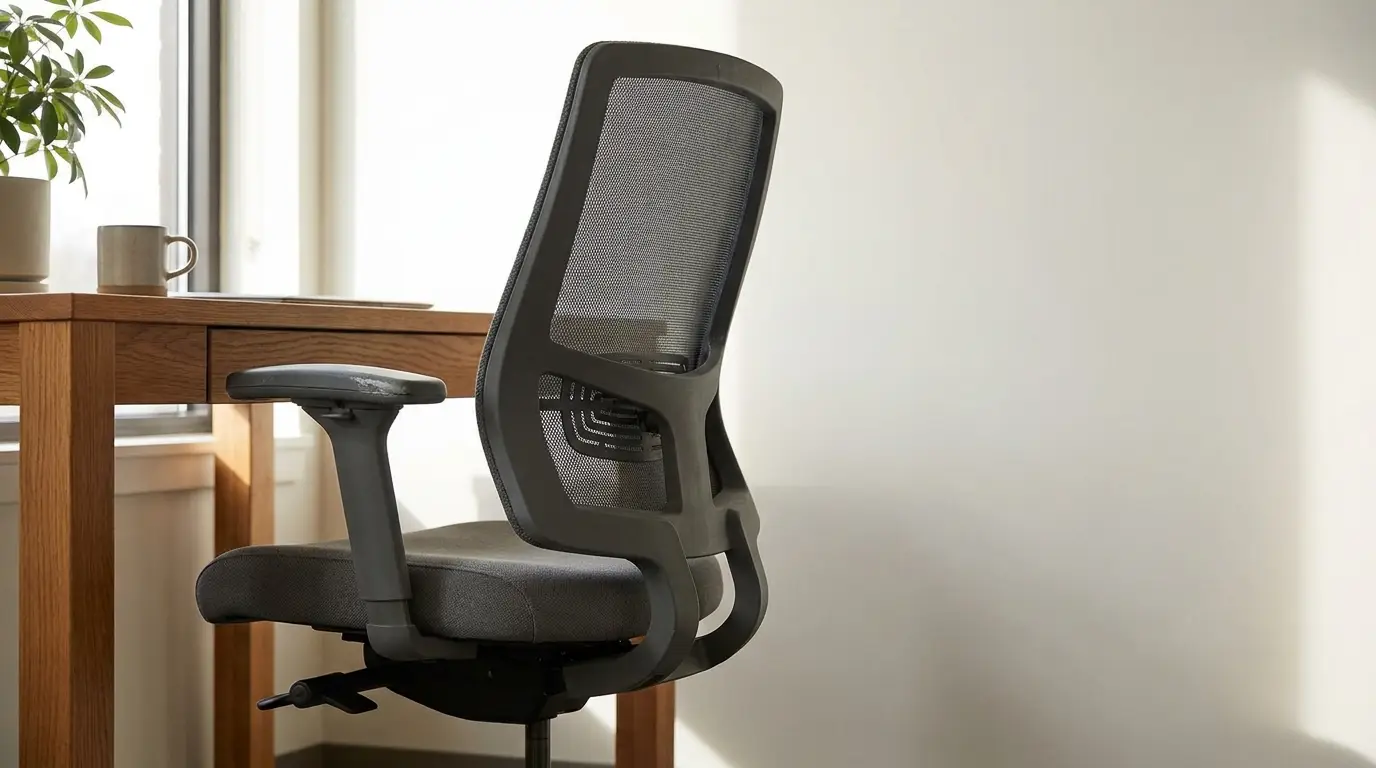
Steelcase is another major name in commercial office furniture. Its chairs often focus heavily on adjustment and movement.
Steelcase Leap V2
The Leap V2 is designed around the LiveBack system, which changes shape as the user moves. It provides adjustment for seat depth, lumbar height and depth, arm position, and recline tension.
The chair can accommodate users from approximately 5 feet to 6 feet 4 inches and has a weight capacity of up to 400 pounds.
A refurbished version may include new upholstery, additional high-density foam, a BIFMA-certified pneumatic cylinder, five soft casters, and replacement arm pads, depending on the configuration.
Steelcase Amia
The Amia uses LiveLumbar, which allows the backrest to flex with the user’s movements. Its seat depth can be adjusted, while the flexible seat edge helps reduce pressure behind the knees.
The listed seat height range is 16 to 21 inches. Overall dimensions are approximately 37.25 to 42.5 inches high, 26.625 inches wide, and 21.75 to 24.75 inches deep.
The chair can work well in a private office when the user wants a more understated appearance without giving up ergonomic adjustment.
Haworth Chairs for Long Work Sessions
Haworth is another established office furniture manufacturer with several ergonomic models suitable for executive or private office environments.
Haworth Zody
The Zody is particularly known for its asymmetric lumbar support. The left and right sides can be adjusted independently, allowing users to create a more personalized lower-back position.
It also has 4D armrests, adjustable seat depth, tilt tension control, a multi-position recline lock, and a breathable mesh back.
The refurbished specification in the source lists a height range of 38 to 43 inches, a width of 29 inches, a depth of 29 inches, and a seat height range of 16 to 21 inches.
Haworth Very
The Very combines a flexible mesh back with adjustable lumbar support, multi-position arms, synchronized tilt, and seat-depth adjustment.
The refurbished version described in the source uses light gray fabric, supports up to 325 pounds, and includes a 2-year mechanical and component warranty.
Its relatively compact dimensions can make it useful when an executive office needs ergonomic seating without the footprint of a large traditional executive chair.
Leather or Mesh: Which Material Makes More Sense?
Material selection is another major difference between executive chairs.
Leather provides a traditional executive appearance and is relatively simple to wipe clean. It can work well in formal offices and boardrooms.
Mesh offers better airflow and can feel cooler during long work sessions. It is common in modern ergonomic chairs such as the Aeron.
Fabric provides another middle ground. Commercial-grade upholstery can offer a softer feel than mesh while remaining durable enough for daily office use.
Material | Main Advantage | Possible Drawback |
| Leather | Formal appearance and easy cleaning | Can retain heat |
| Mesh | Airflow and flexible support | Different feel from padded seating |
| Fabric | Softer feel and many finishes | May require more cleaning |
What Should You Know About Refurbished Executive Chairs?
A refurbished chair shouldn’t simply mean that someone wiped it down and put it back for sale.
A proper refurbishment can involve disassembly, deep cleaning, inspection of the frame and mechanisms, replacement of worn parts, new casters or cylinders, upholstery work, and mechanical testing.
When comparing refurbished models, check exactly what was replaced and whether the supplier provides a warranty.
The main advantages can include:
- Lower purchase cost
- Access to discontinued premium models
- Replacement of worn components
- Professional cleaning
- Mechanical inspection
- Reduced demand for new furniture materials
However, condition can vary considerably between sellers, so the refurbishment process matters as much as the chair’s original manufacturer.
How Much Should You Spend on an Executive Chair?
There isn’t one correct price for every office.
A budget chair may be suitable for occasional use, while a person who works at a desk for eight or more hours every day may benefit from investing in a more durable commercial model.
Premium new chairs can cost well over $1,000, with some configurations reaching $1,500 to $2,000 or more. Refurbished versions of established models can sometimes reduce the purchase price considerably.
When comparing costs, look beyond the initial number. A chair that lasts many years and has replaceable components may have a lower long-term cost than several inexpensive chairs that need frequent replacement.
How Can You Choose the Right Executive Chair for Your Office?
Start with the user rather than the chair.
Consider height, weight, working hours, preferred sitting position, desk height, and whether the person frequently reclines. Then check whether the chair’s adjustment range can accommodate those requirements.
A simple comparison can help:
| Priority | Features to Look For |
| Long working hours | Adjustable lumbar, recline, breathable materials |
| Larger users | High weight capacity, wider seat, strong frame |
| Smaller users | Lower minimum seat height, adjustable depth |
| Formal office | Leather or premium upholstery, high back |
| Warm workspace | Mesh or breathable materials |
| Frequent movement | Flexible back, smooth recline, quality casters |
| Budget control | Refurbished commercial models |
It’s also worth testing a chair whenever possible. Specifications tell you what a chair can adjust, but they can’t tell you whether the seat actually feels right for your body.
Final Thoughts
An executive office chair should support the way you work rather than simply fill the space behind a desk. Back support, seat dimensions, armrest movement, recline, materials, weight capacity, and durability all play a role in the final choice.
Herman Miller, Steelcase, and Haworth each approach ergonomic seating differently. Some models emphasize flexible mesh, while others use adaptive back systems, adjustable lumbar mechanisms, or traditional upholstered construction.
Refurbished seating can also be a practical alternative when the goal is to access established commercial models at a lower cost. The important thing is to look beyond appearance and brand recognition. Check the technical specifications, adjustment range, condition, warranty, and expected use before making the final decision.
A well-matched chair doesn’t need to be the biggest or most expensive model in the room. It simply needs to provide the right combination of support, adjustability, durability, and comfort for the person who will actually sit in it.