Your mattress cover handles sweat, spills, dust, and wear, so it eventually needs a wash.
Can you wash a mattress cover? Most separate protectors are washable, but built-in covers, waterproof layers, and padded styles may need different care.
A zipper does not always mean the fabric should come off. The care label, material, washer setting, and drying method all matter.
You will learn how to identify your cover, choose safe cleaning steps, resolve conflicting instructions, and avoid costly mistakes. Keep reading before washing again.
Can You Wash a Mattress Cover?
Yes, most separate mattress protectors can be washed in a household machine. Check the care tag first because water temperature, cycle, and drying rules differ by material.
Fitted protectors and removable encasements are often washed on a gentle cycle with mild detergent.
Waterproof styles usually need cold or warm water and low heat to protect their backing. Quilted pads, down-filled layers, and topper covers may require separate instructions.
A zipper does not always prove that the fabric is washable, so confirm whether it is an added protector or part of the mattress before removing it from the bed for cleaning at home.
Read the Label Before the Fabric Gets Wet
The care tag settles most conflicts between online advice and the instructions for your product. Look on an inside seam, near the zipper, or beneath an elastic edge.
- Find the Wash Symbol: Note whether the tag allows machine washing, hand washing, or only spot cleaning.
- Record the Temperature: Cold or warm water is common, but the printed limit should guide your choice.
- Review The Drying Directions: A square with a circle indicates tumble drying. Dots inside it show the allowed heat level.
- Read Chemical Warnings: Chlorine bleach, oxygen bleach, fabric softener, and stain products are not interchangeable.
- Check the Mattress Manual: Do this when the cover comes attached to the bed rather than as a separate purchase.
If the tag is missing, search for the brand and model instructions or contact the manufacturer. Until you receive a clear answer, clean only the outer surface with minimal moisture.
How to Wash a Removable Mattress Protector
Once the label confirms that laundering is allowed, these steps reduce strain on the fabric, seams, elastic, and moisture-resistant layer.
1. Remove It and Check for Damage
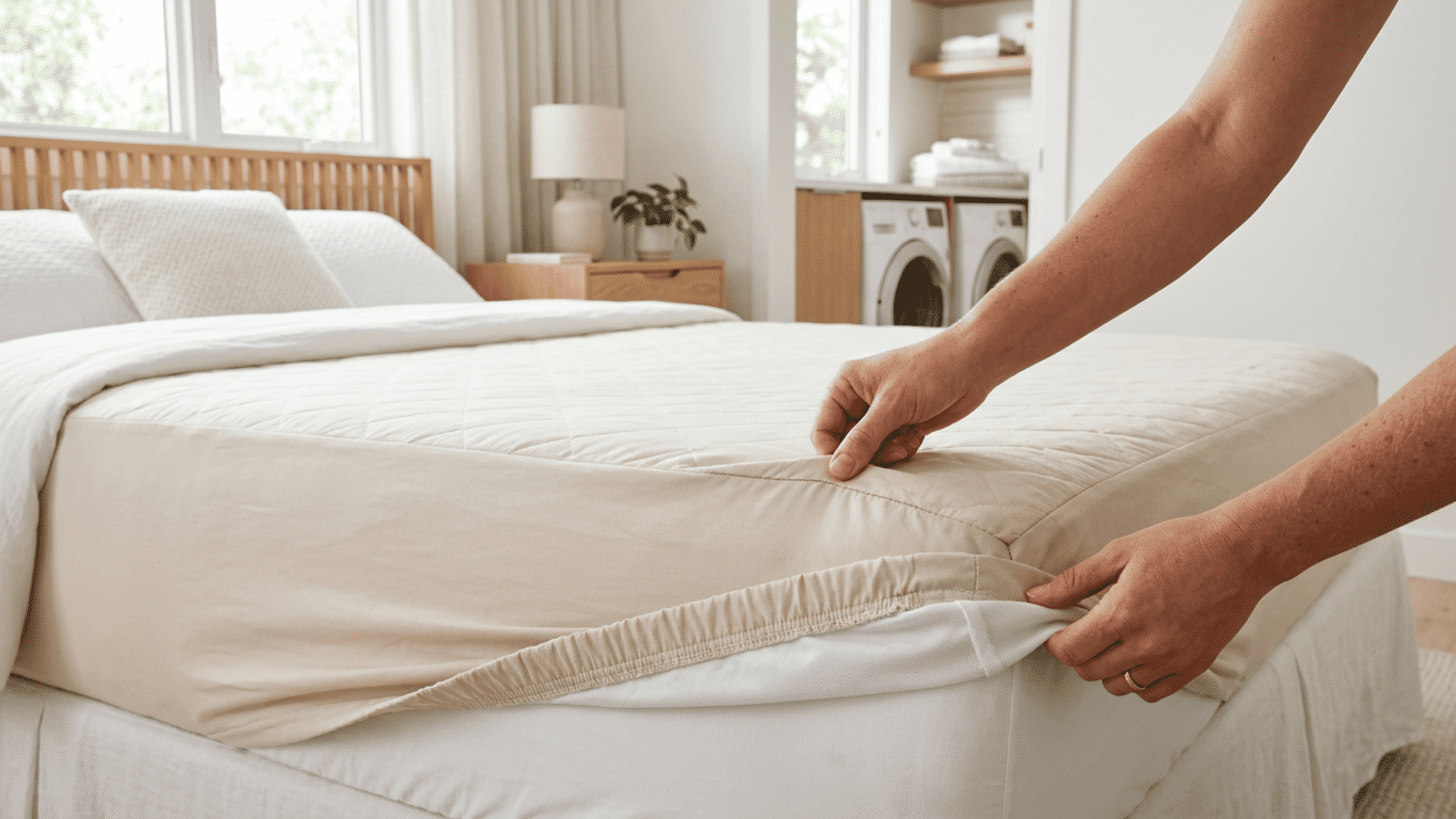
Strip the sheets, then lift the protector without pulling hard on the elastic. Inspect both sides under good light.
Look for torn seams, peeling backing, weak corners, or a damaged zipper. Washing can make existing damage worse.
Brush away hair and crumbs before placing the item in the machine. If the protector is wet from a spill, blot the extra liquid with a clean towel first.
2. Treat Marks Before Washing
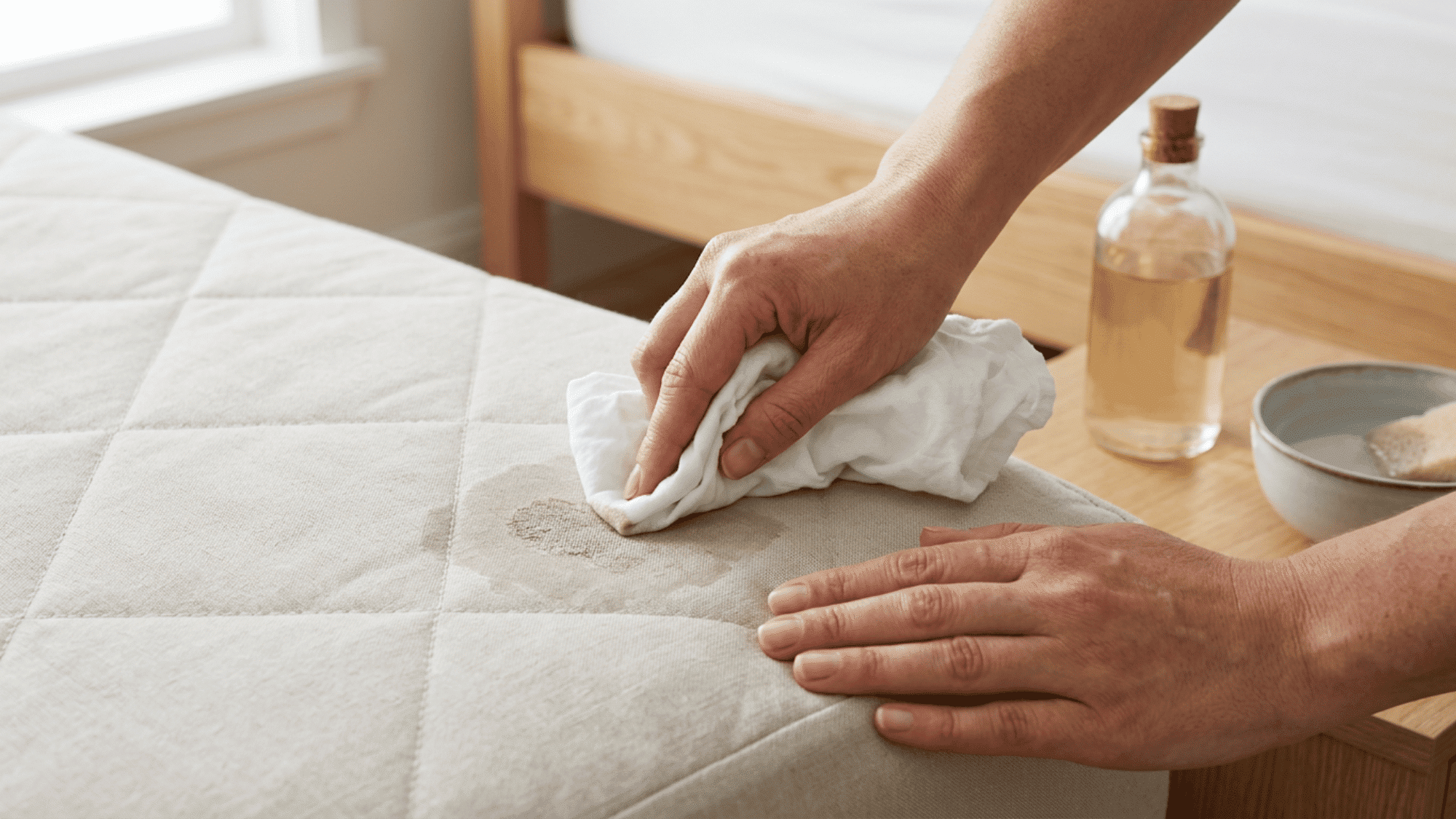
Blot each mark with a product approved for that the. Cold water suits fresh blood because heat can set protein-based stains.
An enzyme cleaner may help with urine or pet accidents when the fabric instructions allow it.
Work from the outer edge toward the center and avoid hard scrubbing.
Let the treatment sit only for the stated time, as prolonged soaking may affect coatings, fillings, or adhesive bonds.
3. Load the Washer Without Packing It Tight
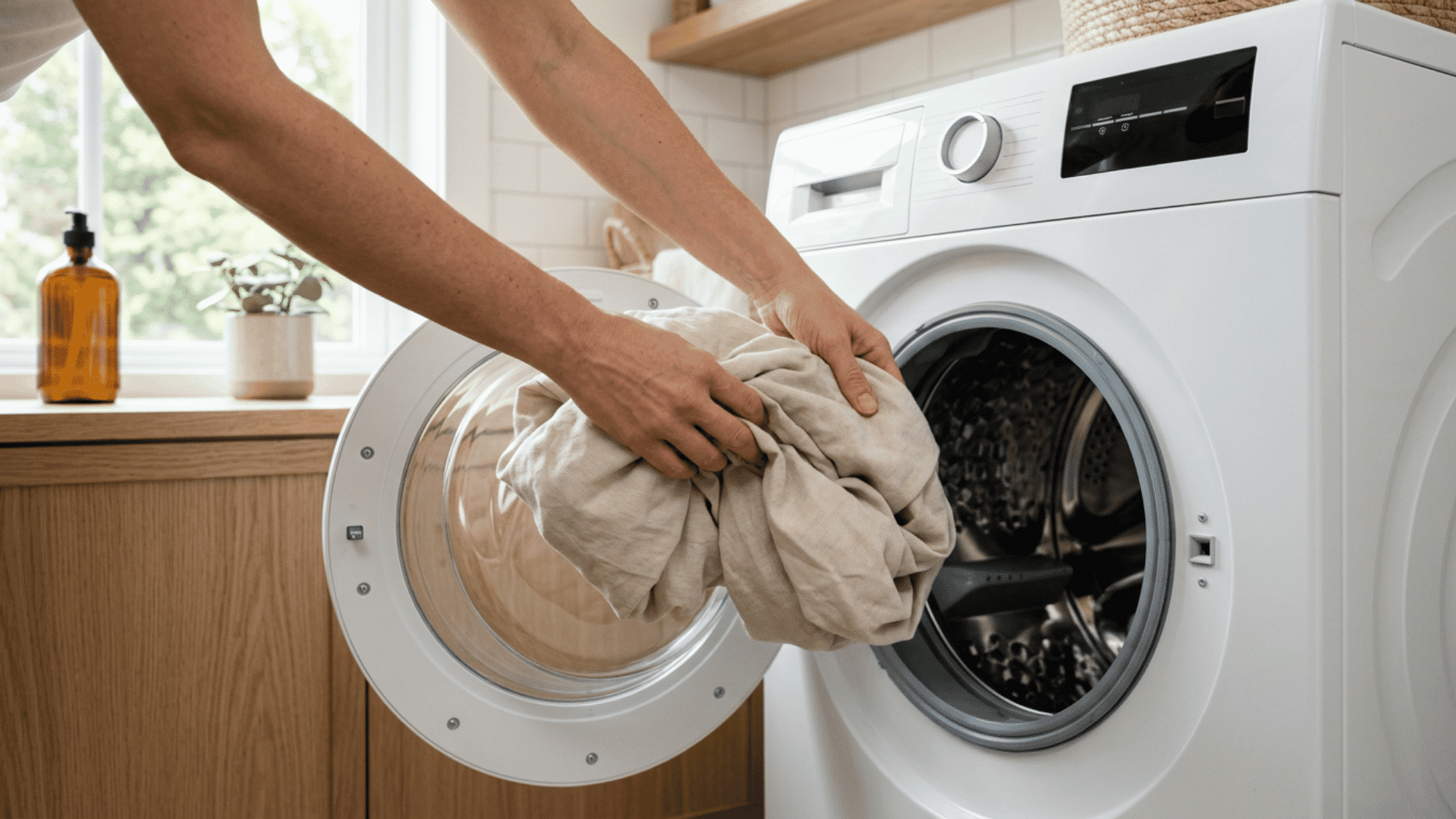
Place the protector loosely in the drum. A bulky queen or king pad needs room to move, rinse, and spin.
If it fills the drum when dry, take it to a large-capacity machine rather than forcing it into a small washer.
Close a separate encasement zipper when its label calls for it, and tuck away loose fasteners.
Do not add rough garments, items with hooks, or heavy towels.
4. Pick a Mild Cycle and Detergent
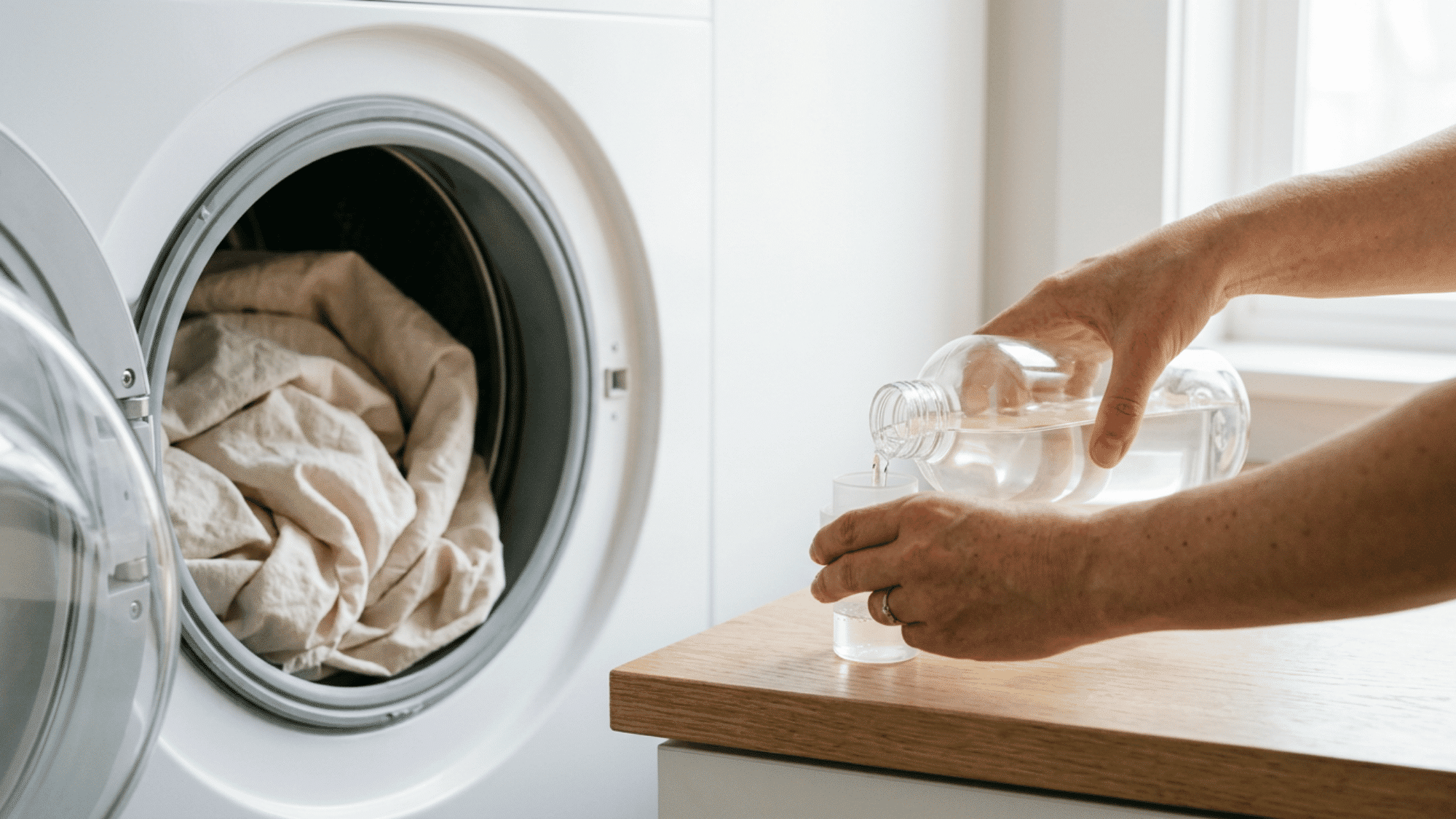
Select the label-approved temperature and cycle. Cold or warm water with a gentle setting suits many fitted and waterproof protectors.
Add a small amount of mild liquid detergent so residue does not collect in thick fabric.
Skip fabric softener on a waterproof membrane, as it may leave a coating that compromises performance.
Use chlorine or oxygen bleach only when the tag clearly permits that product.
5. Rinse Away Remaining Soap
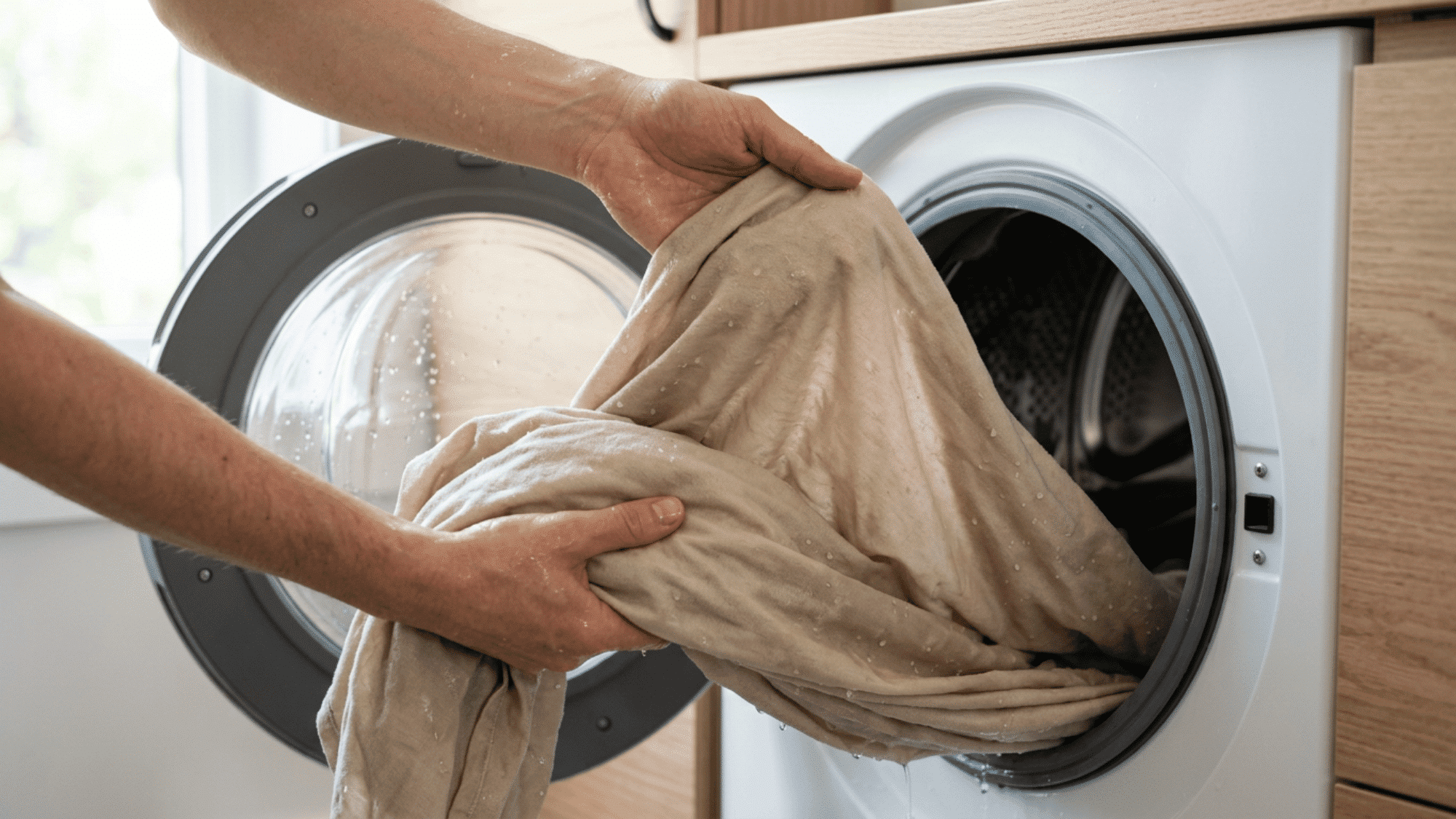
Check the surface after the cycle. Slippery fabric, white streaks, or a strong detergent scent may indicate soap residue.
Run an extra rinse when the label and washer permit it. Lift a wet padded item with both hands because its added weight can stretch seams.
Do not twist or wring a waterproof layer, as sharp folds and force may damage the backing.
6. Dry It at the Lowest Allowed Heat
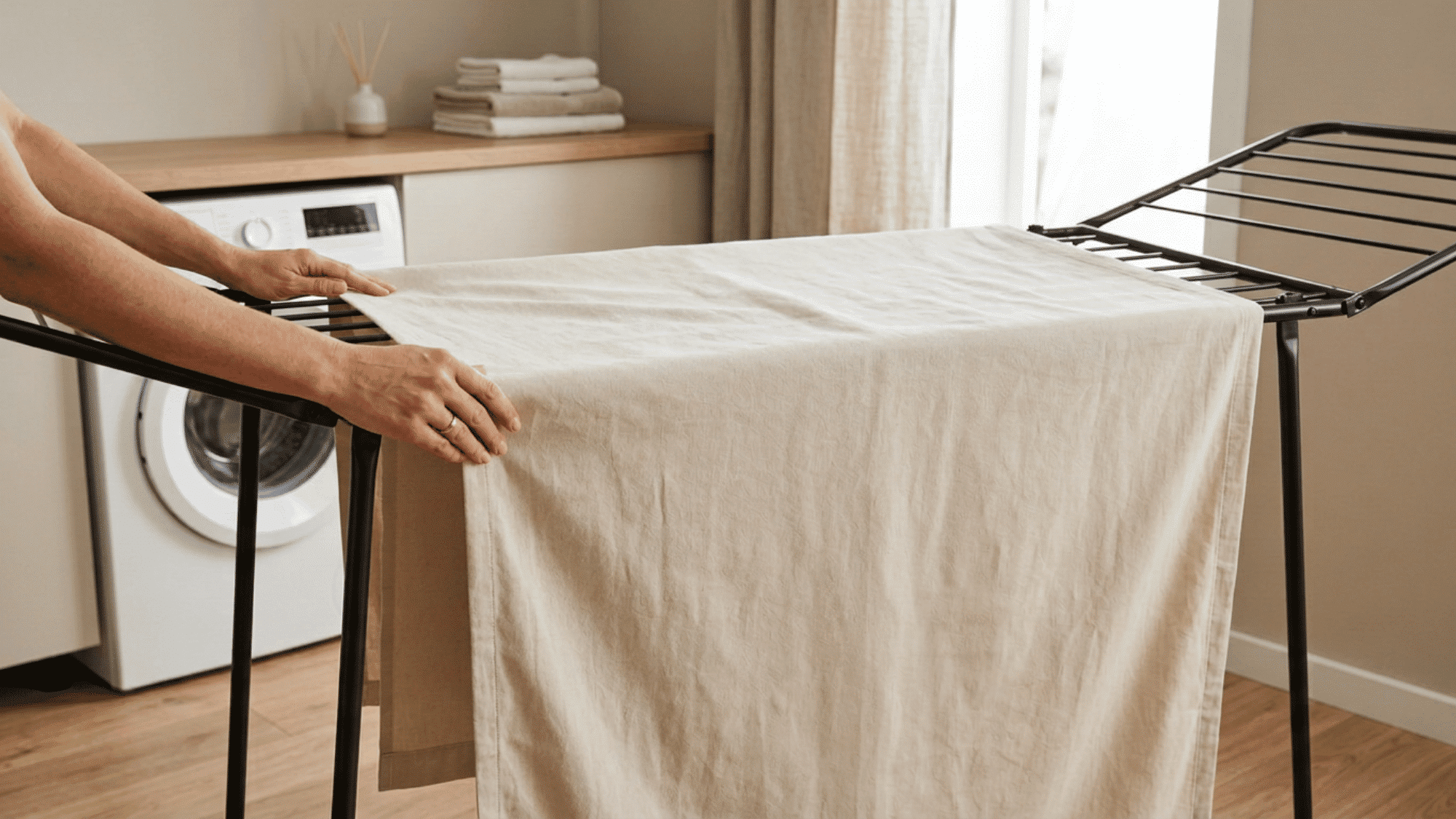
Air-drying is a low-risk choice for many waterproof styles. Hang the protector evenly across several lines or lay it flat where air can reach both sides.
Keep it away from radiators and strong direct heat. If tumble drying is allowed, select low heat or an air-only setting.
Wait until every seam, corner, and padded section feels dry before putting it back on the mattress.
Washing and Drying Settings by Material
Material names can narrow the options, though the stitched tag still takes priority.
| Cover Type | Can It Be Washed? | Care Method |
|---|---|---|
| Fitted protector | Usually | Gentle machine wash |
| Waterproof protector | Usually | Low heat or air-dry |
| Mattress encasement | Check label | Protect the zipper |
| Mattress pad | Varies | Follow the filling instructions |
| Topper cover | Often | Wash cover only |
| Built-in cover | Usually not | Spot-clean in place |
Is it Safe to Remove and Clean Mattress Covers?
Removing and cleaning a mattress cover is safe only when the manufacturer allows it. A zipper does not always mean the fabric should come off.
Some factory covers protect inner foam and fire-barrier materials.
Taking one off against the care instructions could release glass fibers if the inner layers contain them.
Check the label for terms such as “machine wash,” “spot clean only,” or “do not remove.” Separate protectors and encasements are often washable.
Inspect the seams, zipper, elastic, and waterproof backing before cleaning. If the printed directions seem unclear, contact the mattress company before removing anything from the bed.
How to Clean a Cover That Must Stay on the Mattress
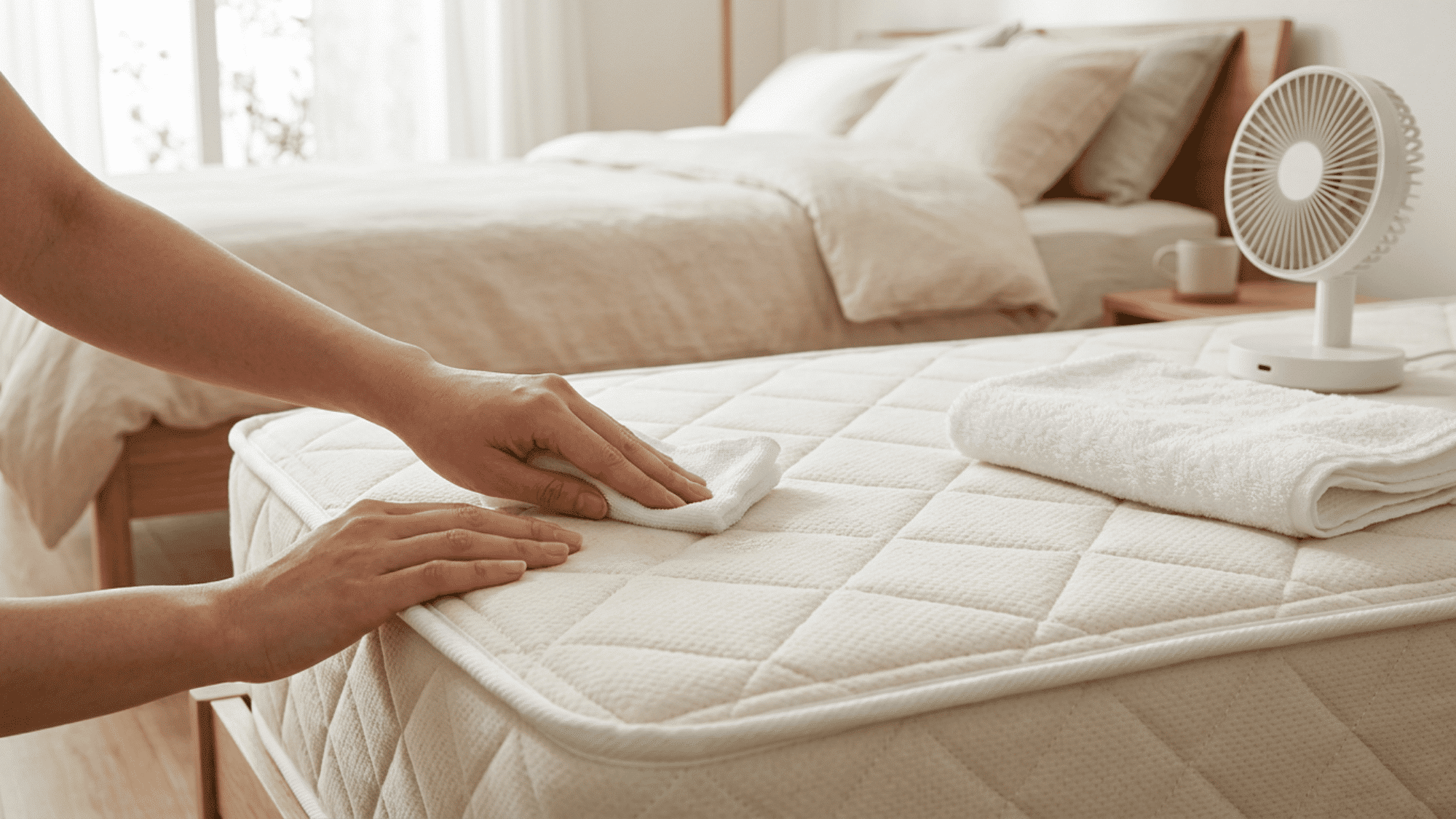
A factory shell marked “do not remove” needs surface care. Keep liquids light so moisture does not reach foam or internal padding.
- Remove the bedding and vacuum the top, sides, seams, and piping with a clean upholstery tool.
- Test the approved cleaner on a hidden spot and wait for the area to dry.
- Dab the mark with a barely damp white cloth. Work slowly and avoid pouring liquid onto the bed.
- Blot again with a second cloth lightly dampened with plain water if rinsing is allowed.
- Press a dry towel over the spot, then run a fan and open nearby windows.
- Replace the bedding only when the mattress feels fully dry and no cool, damp patch remains.
How Often Should it Be Washed?
Many households can launder a separate protector every 1 to 2 months, provided its label allows routine washing. Your own schedule may need to change with use.
Clean it as soon as possible after a spill, illness, pet accident, or a period of heavy sweating. Homes with pets or allergy concerns may also prefer shorter gaps.
Do not wait for a strong odor or visible discoloration. At the same time, repeated hot cycles can wear elastic and waterproof coatings faster.
Keeping a spare protector lets you remake the bed while the first one dries fully. Record the wash date on your phone if the timing is easy to forget.
When is it Time for a Replacement?
Cleaning cannot repair a failed barrier or a poorly fitted garment. Replace the protector when you notice:
- Cracked, sticky, blistered, or peeling backing
- Liquid passing through the mattress
- Torn seams that continue to open
- Elastic that slips off the corners
- A broken zipper on a full encasement
- Odor that remains after proper washing and complete drying
- Shrinking that leaves part of the mattress exposed
A protector damaged during its warranty period may qualify for help from the manufacturer.
Keep the receipt and follow the care instructions listed, as improper laundering can affect warranty coverage.
The Fiberglass Warning Nobody Talks About
Certain budget mattresses, especially mattress-in-a-box models sold online, use fiberglass as a fire barrier right under the cover.
Removing or washing that cover can release tiny glass particles into your bedroom.
Once loose, they irritate skin, eyes, and lungs and are very hard to clean up.
Before you pull off any mattress cover for the first time, check the label for the words “glass fiber” or “fiberglass.”
If either appears, leave the cover on and spot clean it in place. If the cover is too soiled for spot cleaning, replacing the entire mattress is a safer option than risking exposure to fiberglass.
Mistakes That Can Damage the Cover or Mattress
Small choices during laundry can shorten the product’s life or create a larger cleanup problem.
- Removing the mattress’s original shell because it has a zipper
- Ignoring “spot clean only” or “do not remove” wording
- Using hot water without label approval
- Pouring detergent directly onto a dry waterproof membrane
- Adding chlorine bleach, oxygen bleach, or softener without permission
- Cramming a bulky pad into a small drum
- Mixing it with garments that have hooks or sharp fasteners
- Wringing, ironing, or drying a coated layer on high heat
- Returning a damp protector to the mattress
The Bottom Line
So, can you wash a mattress cover? Yes, and it only takes a few minutes of prep to get it right.
Match the cycle and water temperature to your cover type, skip the fabric softener on waterproof models, and air dry whenever possible.
Doing this every month or two keeps your sleep surface fresh and adds years to the mattress underneath.
If the backing is cracking or the elastic has lost its grip, a replacement is a better move than another wash.
Still have a question about your specific cover? Drop it in the comments, and we will help you out.
Frequently Asked Questions
Should a New Protector Be Washed Before its First Use?
Wash it first only if the care label recommends it. An initial wash can remove packaging dust, but the item must dry completely.
Can a Protector Be Washed with Bedsheets?
Yes, if both items allow the same temperature and cycle. Leave enough drum space for movement, rinsing, and a balanced spin.
Can it Be Dry-Cleaned?
Dry-clean it only when the label allows this method. Cleaning solvents may harm waterproof coatings, elastic, foam, or adhesive used between layers.