You wake up, reach for your phone and look at a number. Eighty-two. Or sixty-four. Either way, something in your bed or on your finger has decided how you slept before you have even had coffee.
The question worth asking is not which score is higher. It is what these devices are physically capable of measuring, how close they get to the clinical standard, and whether adding a second one to your bedroom tells you anything the first one missed.
Key Takeaways
- No consumer tracker measures brain activity. They infer sleep stages from movement, heart rhythm and breathing, which is why stage data is the least reliable part of any report.
- Research consistently shows the same pattern. Devices are very good at telling sleep from wake and much weaker at splitting sleep into light, deep and REM.
- Form factor changes how a device fails, not whether it fails. Studies have found wearables and bed-based sensors skew different measurements.
- Bed-based sensors capture data on nights you forget to charge or wear something, which is their real advantage.
- Two devices will disagree, sometimes substantially. Trends over weeks are more useful than any single night from either.
Why People Track Sleep in the First Place
Almost nobody buys a tracker to admire their REM percentage. They buy it because they want to feel better during the day and they suspect their nights are the reason.
That puts sleep data in the same bucket as everything else people do to managesleep and recovery, from training load to evening routines. The number only earns its place if it changes a decision.
Keep that test in mind while comparing devices. A more precise reading you never act on is worth less than a rough one that gets you to bed earlier.
What Each Type of Device Is Actually Measuring
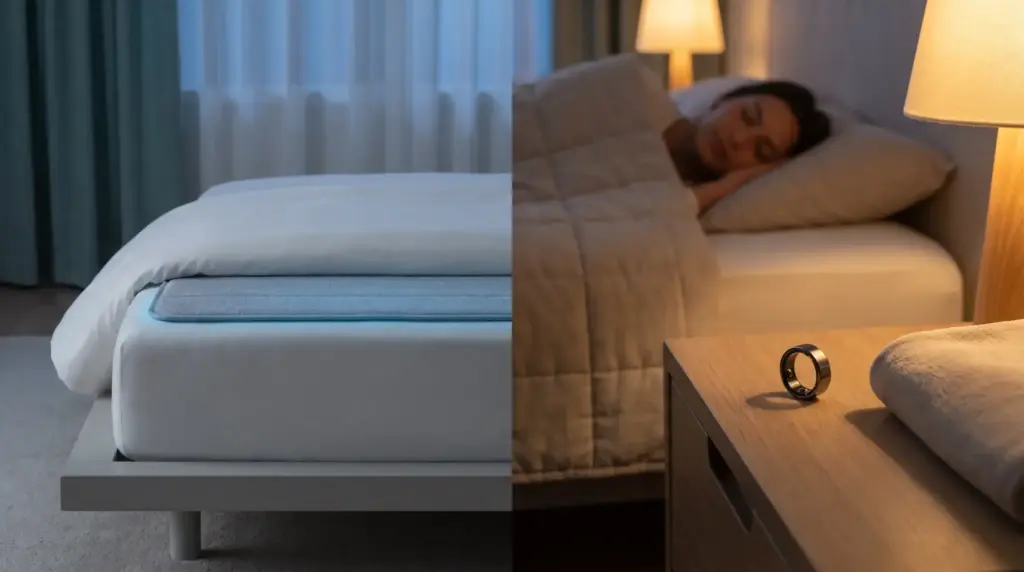
A ring or watch works mostly from your wrist or finger. It combines an accelerometer for movement with optical sensors that read blood flow through the skin, which gives heart rate and heart rate variability, and usually a skin temperature sensor.
Bed-based systems work from underneath you. Sensors in a cover or mat pick up the tiny mechanical forces your body produces, primarily the pulse of blood being pumped and the rise and fall of your chest, an approach known as ballistocardiography.
Neither approach measures what a sleep lab measures. Polysomnography records brain activity, eye movement and muscle tone directly, and that is the only way to see sleep stages rather than estimate them.
Everything else is inference. A device notices your heart rate has dropped, your breathing has steadied and you have stopped moving, then an algorithm decides that pattern looks like deep sleep.
How Accurate Are They, Really
This is where published research is more useful than marketing. A 2024 study at Brigham and Women’s Hospital put 35 adults through a night of polysomnography while they wore an Oura Ring Gen3, a Fitbit Sense 2 and an Apple Watch Series 8.
For simply detecting sleep versus wake, all three hit sensitivity of 95% or higher. For sorting that sleep into stages, sensitivity fell to a range of roughly 50% to 86% depending on the device and the stage.
The size of individual errors is worth knowing. In that study the Apple Watch underestimated deep sleep by about 43 minutes and overestimated light sleep by about 45 minutes across the night, while the Oura Ring did not differ significantly from polysomnography on any of the four stages. The study was funded by Oura but designed and run independently by the hospital’s researchers.
A separate 2025 validation of six wrist-worn devices found the same shape of problem. All of them caught more than 90% of sleep epochs, but specificity for wake sat between roughly 29% and 52%, meaning they tend to record you as asleep when you are lying there awake.
If you are tracking mainly to understand recovery, that distinction matters more than the headline score. Heart rate and HRV trends hold up better over time than stage percentages do.
Where Bed-Based Tracking Fits
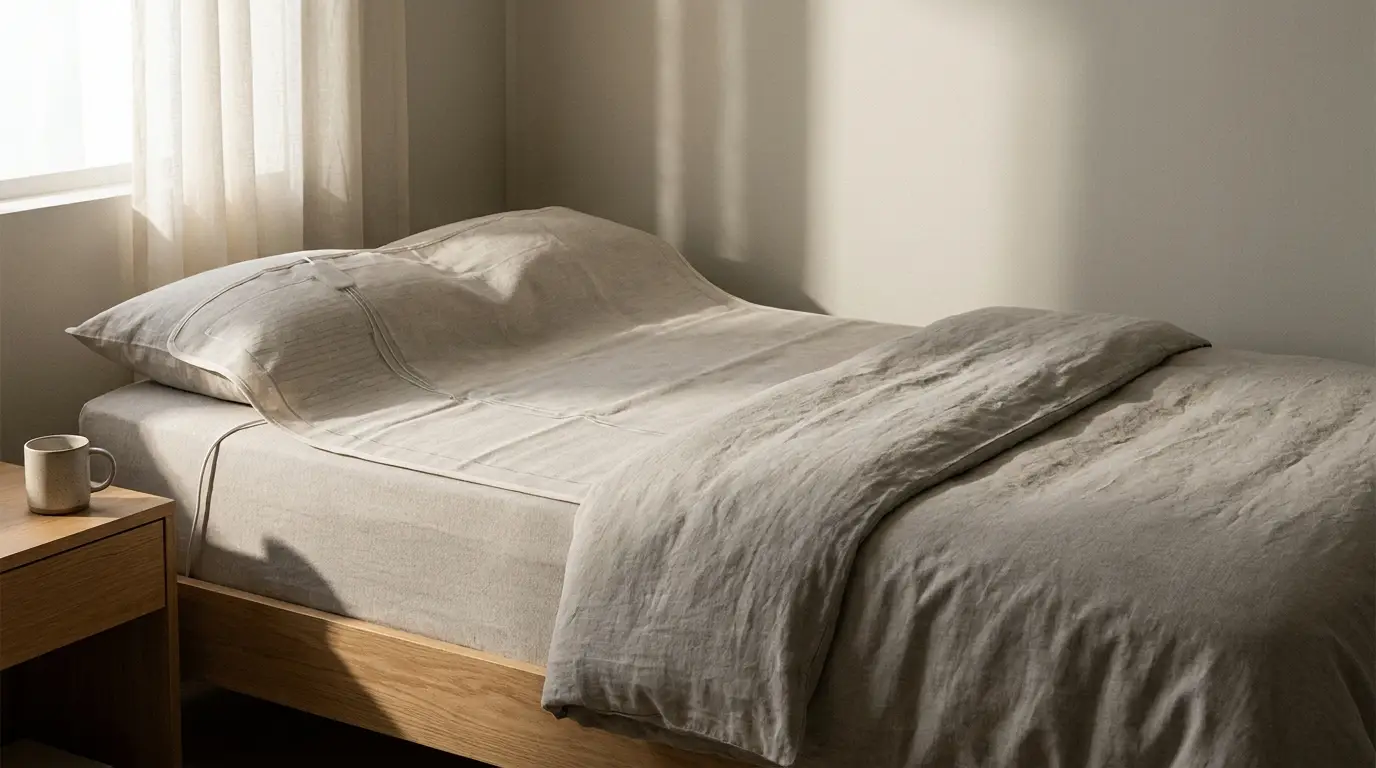
The clearest argument for a bed sensor is not accuracy. It is that you cannot forget to wear it, it never needs charging on your finger and it does not press against anything while you sleep.
The best known option here is the Pod fromEight Sleep, a cover that sits on top of an existing mattress and tracks heart rate, heart rate variability, sleep phases and snoring every night without anything worn on the body. It also handles temperature, cooling to 55°F or heating to 110°F with each side of the bed controlled separately.
That dual purpose is part of the appeal, since the same layer that measures your night is also actively changing it. Pricing reflects that scope: the Pod 5 is listed at $2,799 at the time of writing, and an Autopilot plan is required for the first 12 months, covering two users per bed.
On the measurement question specifically, be realistic. Independent laboratory validation of bed-based sensors is thinner than it is for rings and watches, and no published polysomnography study of this particular system was available when this article was written.
What the broader literature says about the underlying technique is mixed. A clinical validation of one ballistocardiographic sleep tracker against polysomnography in 62 sleep-lab patients found good agreement on sleep onset latency and average heart rate, and significant disagreement on other sleep outcomes.
Do You Need Both?
If you already own a ring or a watch you are getting reasonable sleep-versus-wake data, solid heart rate trends and stage estimates that should be read loosely. Adding a bed sensor will not upgrade the science.
What it does change is coverage and comfort. A bed sensor records the nights your ring is on the charger, and some people simply sleep better without hardware on their hand.
There is also a genuine finding that argues against assuming two devices will agree. A 2023 multicentre study in Korea compared 11 consumer trackers against polysomnography across nearly 350,000 epochs and found that wearables and bed-based nearables carried different biases, with wearables skewing sleep efficiency and nearables skewing sleep latency.
So running both will not give you a consensus. It will give you two plausible numbers that diverge, and you will have to decide which to trust.
The honest answer for most people is that one well-chosen device is enough for tracking. A second device makes sense when it is doing a second job, such as temperature control, and the tracking comes along with it.
How to Choose Between Them
Start with what you actually want to change. If the goal is spotting a pattern, such as alcohol wrecking your resting heart rate, almost any device will show you that within a few weeks.
If you want the data with zero friction, or you dislike sleeping in jewellery, a bed-based system wins on compliance alone. Data you actually collect beats better data you skip.
If budget is the deciding factor, the gap is enormous. A ring or a watch sits in the low hundreds while a full bed system runs into the thousands, so the tracking is rarely what justifies the difference.
And if you suspect something clinical, such as sleep apnoea, neither category is a diagnostic tool. Consumer trackers are not designed or approved to diagnose sleep disorders, and a doctor is the right next step.
The Bottom Line
Both approaches are estimating, and both are decent at the broad question of whether you slept and poor at the fine detail of how. Choosing between them is less about accuracy than about which one you will keep using.
Read the trend line, ignore the nightly score, and treat any single number as a rough signal rather than a verdict on your health.
Frequently Asked Questions
Are sleep stages from a tracker trustworthy?
Treat them as estimates. In lab testing, consumer devices detect sleep versus wake very reliably but drop to roughly 50% to 86% sensitivity when splitting sleep into stages, and individual nights can be off by more than half an hour on a given stage.
Is a bed sensor more accurate than a ring?
Not demonstrably. Published comparisons show both categories land in a similar fair-to-moderate range against polysomnography, and they tend to distort different measurements rather than one being cleanly better.
Why do my two trackers disagree?
Because they measure different signals and run different algorithms. Research comparing device types found systematically different biases, so disagreement is expected rather than a sign one device is broken.
Can any of these detect sleep apnoea?
No consumer tracker replaces a diagnostic sleep study. Some flag snoring or breathing disturbances as a prompt to seek advice, which is useful, but it is a prompt and not a diagnosis.
What should I actually look at each morning?
Total sleep time and your resting heart rate trend over a couple of weeks. Those are the measures devices handle best, and they respond visibly to changes in alcohol, late meals, training load and stress.