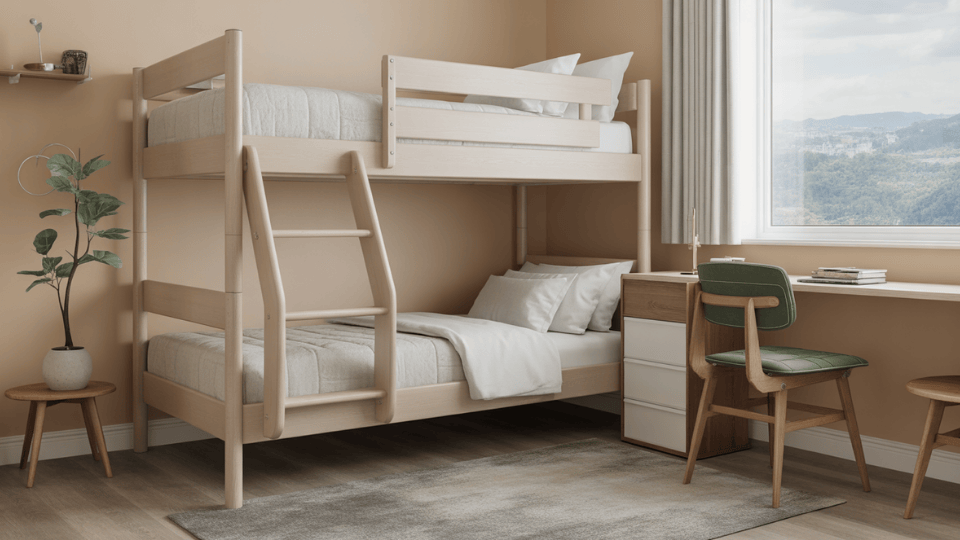
When I’m picking a bunk bed, size is everything. You want it to fit perfectly in your room while still offering the comfort you need.
Whether you’re furnishing a kid’s room, a guest bedroom, or a shared space in a small apartment, choosing the right bunk bed dimensions ensures it fits in your room while leaving enough space for movement.
I’ve learned that the right size helps with room layout planning, making sure everyone can sleep comfortably without feeling cramped. But choosing the wrong size can be frustrating, wasting space or making the room feel overcrowded.
Let’s go over the most common bunk bed sizes and some tips on how to pick the perfect one for your space and layout.
Understanding Why Bunk Bed Dimensions Matter
Choosing the right bunk bed dimensions is crucial to making the most of your space.
Understanding the size of the bed helps you plan your room layout effectively, especially in smaller rooms or shared bedrooms.
By selecting a bunk bed that fits well, you ensure there’s enough space for movement, storage, and comfort. It’s important to consider both the floor space the bed will occupy and the clearance height, as these factors affect safety and usability.
The right bunk bed size can transform a cramped room into a functional, cozy space, allowing you to make the most of every inch of floor space while providing a comfortable sleeping area for everyone.
Standard Bunk Bed Sizes
Standard bunk beds come in various configurations, offering a balance of space-saving design and comfort.
1. Twin Over Twin
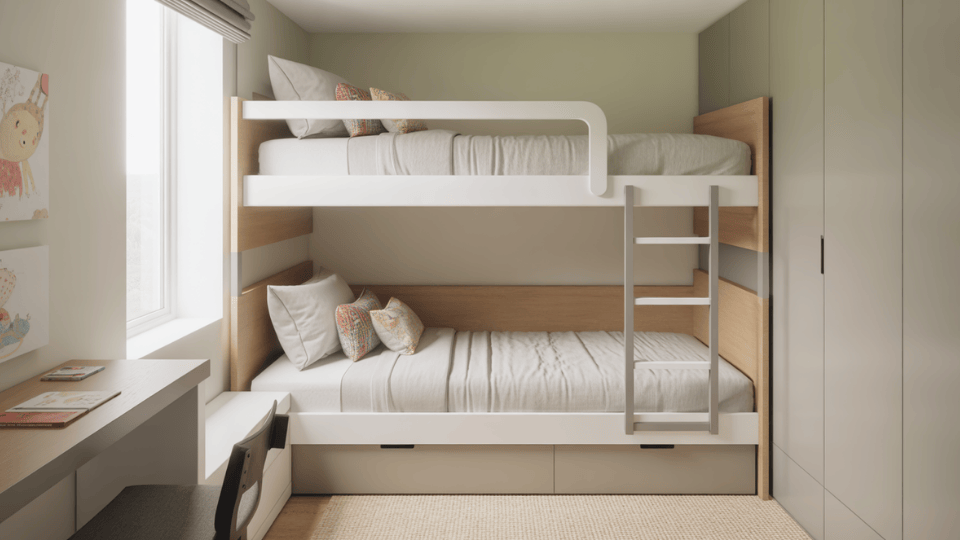
The Twin Over Twin is the most common bunk bed configuration, where two twin mattresses are stacked on top of each other.
Dimensions: 38” x 75” per mattress.
Ideal For: This size is perfect for kids’ rooms, smaller bedrooms, or shared spaces where saving floor space is essential.
If you’re working with limited space, the Twin Over Twin configuration is the best option for optimizing both sleeping arrangements and the room layout.
2. Twin Over Full
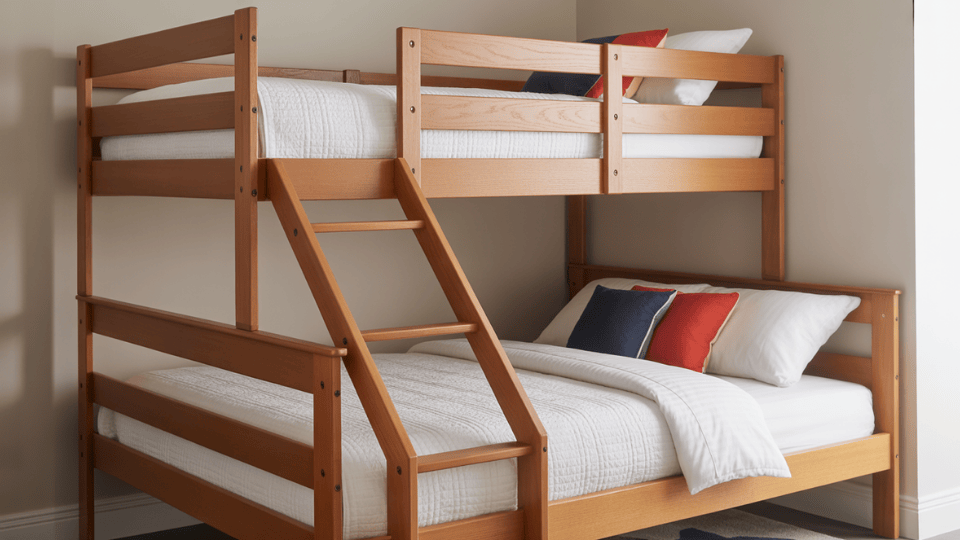
The Twin Over Full configuration features a twin mattress on top and a full mattress on the bottom, offering more space on the lower bunk.
Dimensions: 38” x 75” for the twin and 54” x 75” for the full.
Ideal For: This size is ideal for growing children, siblings sharing a room, or for accommodating guests who may need extra comfort on the lower bunk.
It gives more sleeping room on the bottom bunk, which is especially helpful for older kids or adults.
3. Full Over Full
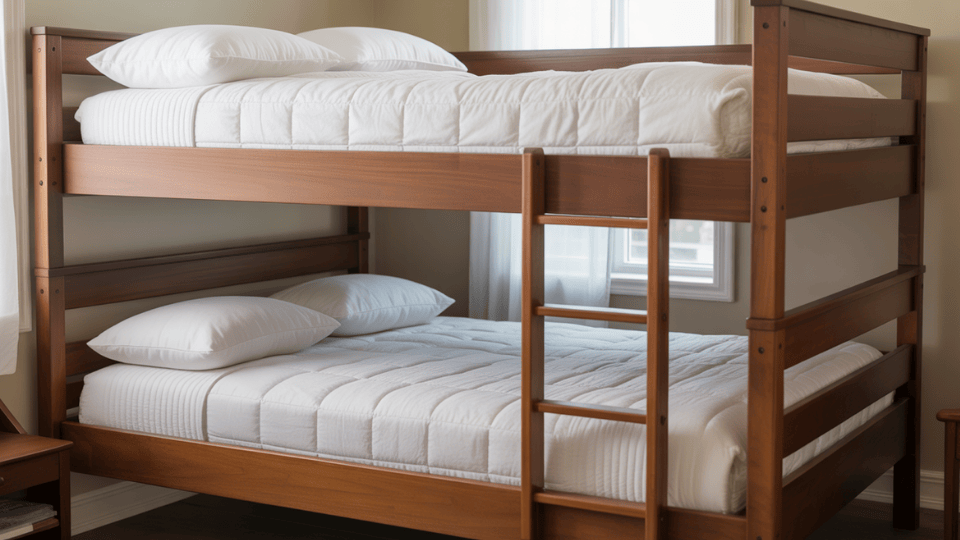
The Full Over Full features two full-size mattresses stacked on top of each other, providing ample sleeping space.
Dimensions: 54” x 75” for each mattress.
Ideal For: The Full Over Full is great for older kids, teens, or even adults who need more sleeping space. It’s perfect for larger rooms where multiple people might need extra space to sleep comfortably.
If you’re looking for more versatility and comfort, this configuration works well for families with older children or for those needing two full-sized sleeping areas in one room.
4. Bunk Beds with Queen or King Size Mattresses
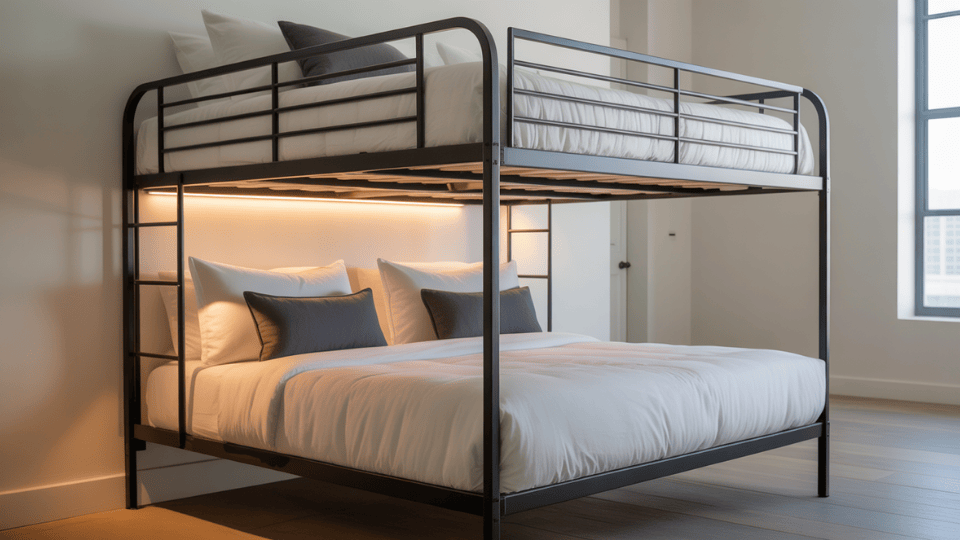
These larger bunk beds are designed to fit queen or king-size mattresses, offering plenty of space for adults or those needing extra comfort.
Dimensions: Queen – 60” x 80”; King – 76” x 80”.
Ideal for: Master bedrooms, guest rooms, or larger spaces that need an additional sleeping area.
This configuration is perfect for families with older children or for those who frequently host guests, providing ample sleeping space without sacrificing functionality.
Lofted vs. Traditional Bunk Bed
Choosing between lofted and traditional bunk beds depends on your space needs. Let’s break down the differences to help you decide.
| Feature | Lofted Bunk Beds | Traditional Bunk Beds |
|---|---|---|
| Description | No bottom bunk, creating extra space beneath | Classic design with both top and bottom bunks |
| Dimensions | Varies, offers more headroom underneath | Varies by size, typically includes ladder/stairs |
| Ideal For | Small rooms needing storage or workspace | Shared bedrooms or extra sleeping space |
Whether you choose a lofted or traditional bunk bed, understanding the dimensions ensures you make the best choice for your room.
Measuring Your Space for a Bunk Bed
When measuring your space for a bunk bed, consider the following factors to ensure a comfortable and safe fit.
- Room Size Considerations: Ensure there’s enough clearance for safety, easy access to the top bunk, and enough space to move around the bed.
- Ceiling Height: Measure the ceiling height to ensure the top bunk won’t be too close to the ceiling, allowing for comfort and safety.
- Available Floor Space: Make sure there’s sufficient space for the bed’s footprint and additional room for movement, furniture, or storage.
- Clearance Around the Bed: Leave enough space on all sides to ensure accessibility, ventilation, and safety, especially near the ladder or stairs.
- Height of the Bunk Bed: Check the height of the bed’s lower bunk and clearance between the top and bottom bunks for comfort.
Choosing the Right Bunk Bed for Your Space
Selecting the right bunk bed depends on several factors, such as room size, the number of people using it, and the space available. Start by measuring your room to ensure you have enough floor space and clearance for safety.
Consider ceiling height, as taller bunk beds may not fit comfortably in lower-ceiling rooms. Choose a standard twin-over-twin for small rooms or younger children, or a twin-over-full if you need more space on the lower bunk.
If you have limited floor space, a lofted bunk may be ideal to free up room for storage or a desk underneath. Make sure to factor in additional needs, such as ladder access and clearance, to ensure easy movement.
Bottom Line
Understanding bunk bed dimensions and sizes is crucial for finding the best fit for your room. Accurate measurements ensure that the bed fits comfortably, leaving enough space for movement, safety, and accessibility.
Choosing the right size also helps maximize room efficiency, especially in smaller spaces or shared bedrooms. Even if you opt for a twin-over-twin, twin-over-full, or a lofted bed, the key is selecting the size that matches your room layout and accommodates the sleepers’ needs.
Measure your space carefully before making a choice to ensure the bunk bed you pick is the perfect fit for your room and lifestyle!