

Waking up with itchy red bumps can make you check your sheets twice. You may start asking, do bed bug bites itch, or could those marks come from mosquitoes, fleas, or a skin rash?
Bed bug bites can cause itching, redness, swelling, and raised bumps, but they do not look the same on everyone.
Some people notice clear marks, while others have little or no visible reaction. The timing, location, pattern, and changes in the skin can offer useful clues.
Knowing what bed bug bites may look and feel like can help you compare them with other common bites and skin reactions.
What Bed Bug Bites Look and Feel Like
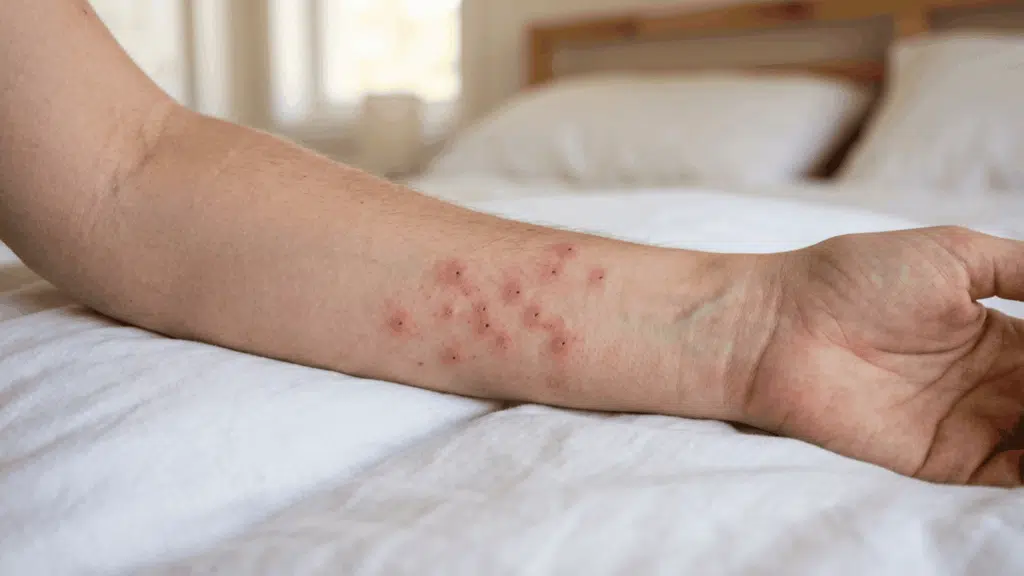
Bed bug bites commonly appear as small red or swollen bumps. Their appearance can vary by person and skin tone.
Several marks may develop close together in a line or cluster. Common locations include exposed areas such as the arms, hands, neck, face, shoulders, and legs.
Itching may begin soon after exposure or develop later, depending on the individual’s reaction. Some bites become raised or welt-like while others remain barely noticeable.
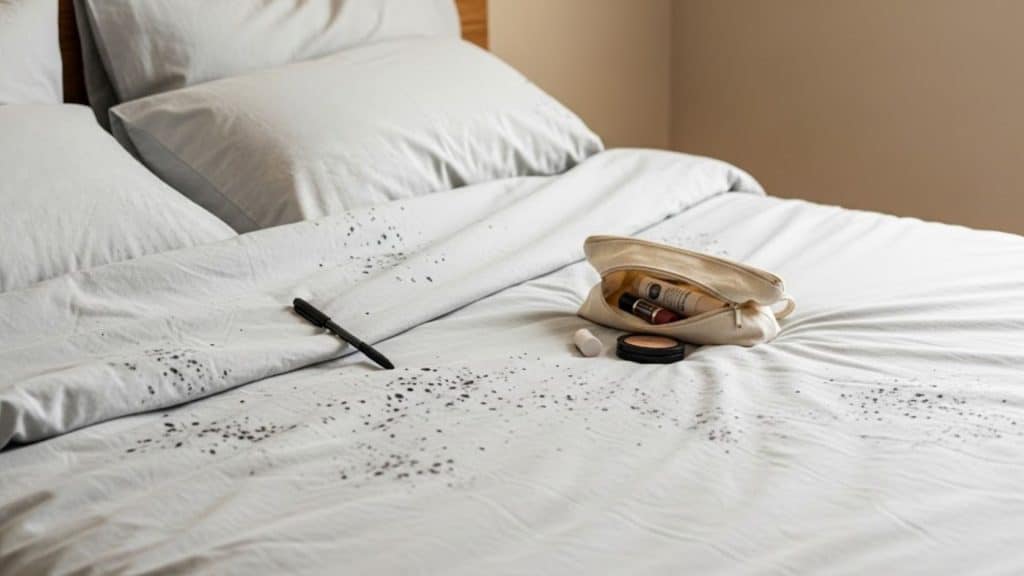
These characteristics can raise suspicion because appearance and sensitivity vary from person to person. Bites alone cannot confirm an infestation, so check for other signs of bed bugs around the mattress and sleeping area.
However, bites alone cannot confirm the presence of bed bugs without additional evidence from the sleeping area.
Do Bed Bug Bites Itch?
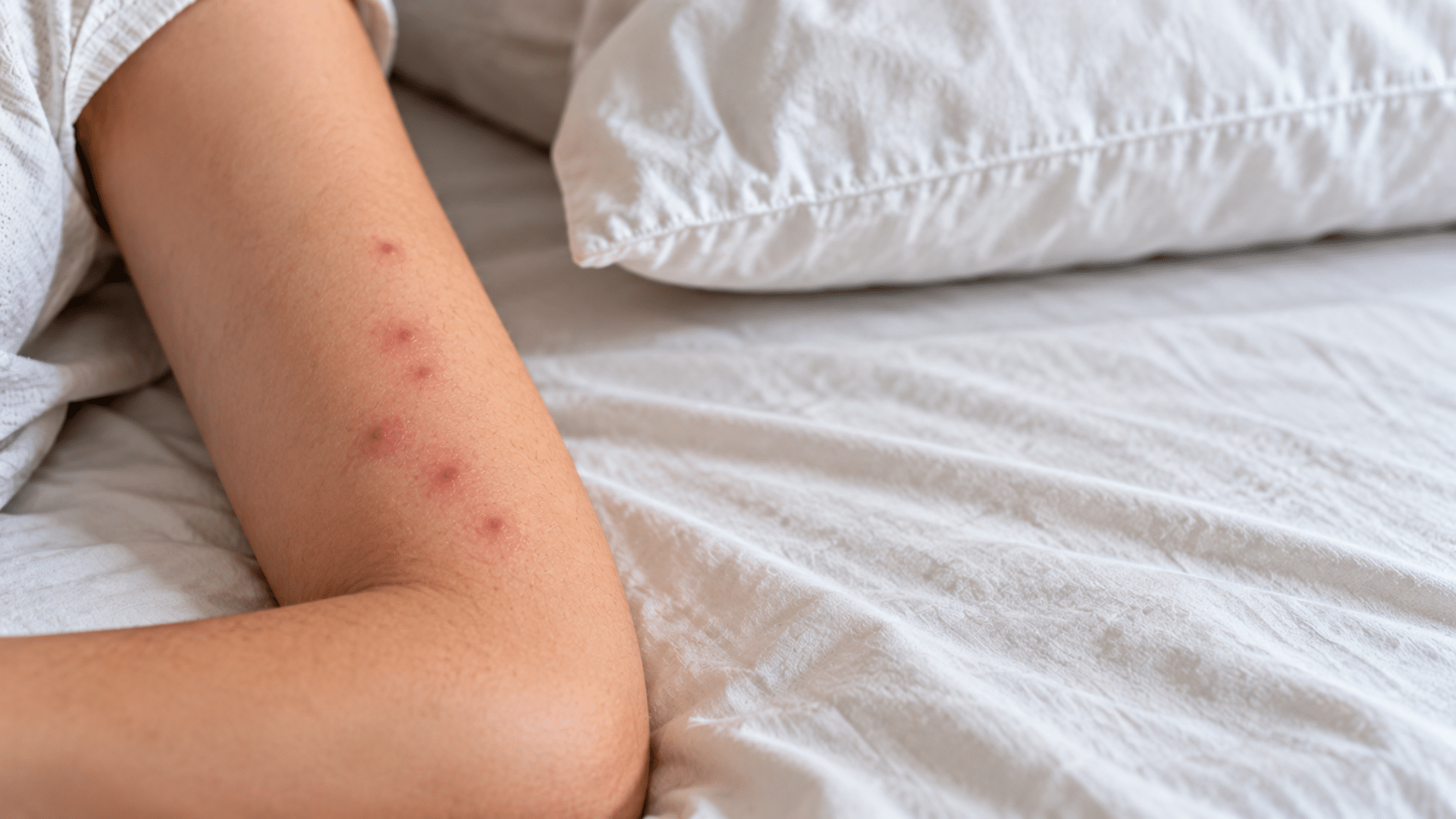
Alt text: Small red itchy bumps clustered along a person’s arm while resting on white bedding.
Yes, bed bug bites can itch, although the intensity varies considerably between individuals.
This happens because the immune system responds to substances in bed bug saliva introduced during feeding. A person usually does not notice the feeding itself, and symptoms may develop afterward.
Some people experience prominent itchy bumps, while others develop mild marks or no noticeable skin reaction. This difference means one person may have obvious symptoms while another person sleeping nearby appears unaffected.
Itching alone cannot identify the cause because many insect bites and skin conditions produce similar reactions.
Bed Bug Bites vs. Other Insect Bites
Several insects can leave itchy red marks, so appearance alone rarely provides a definite answer. Comparing common tendencies can help narrow down possible causes.
Trait | Bed Bugs | Mosquitoes | Fleas | Spiders |
|---|---|---|---|---|
Typical Pattern | Groups, lines, or scattered bites | Usually scattered | Small groups or clusters | Often isolated |
Common Areas | Exposed skin during sleep | Exposed skin | Ankles and lower legs | Varies |
Main Sensation | Often itchy | Usually itchy | Often intensely itchy | Varies by species |
Exposure Clue | Sleeping area | Outdoor or indoor mosquito activity | Pets or flea activity | Possible spider exposure |
Tip: People who notice bites mainly overnight may also want to compare the signs of nighttime mosquito bites before assuming bed bugs are responsible.
Differences Between Bed Bug Bites and Skin Rashes
Bed bug bites and skin rashes can both cause redness, itching, and raised areas, making them difficult to distinguish by appearance alone.
Bed bug reactions often appear as separate bumps or grouped marks, particularly on skin exposed during sleep. Rashes may cover broader patches of skin and can develop from allergies, irritation, eczema, infections, or other causes.
However, these differences aren’t reliable enough for self-diagnosis because reactions vary widely from person to person.
If unexplained marks persist, spread, or appear without evidence of bed bugs, a healthcare professional can help determine whether another skin condition is responsible.
How to Get Relief from Itchy Bed Bug Bites
Most bed bug bite reactions improve with simple care focused on reducing itching, swelling, and skin irritation.
1. Clean The Skin: Gently wash the affected area with soap and water, then pat it dry without rubbing.
2. Use a Cool Compress: Apply a cool, damp cloth to irritated areas to help soothe itching and reduce swelling.
3. Avoid Scratching: Keep fingernails short and resist scratching, since broken skin increases the risk of a secondary infection.
4. Consider Itch Relief: A pharmacist or healthcare professional can recommend an appropriate over-the-counter treatment for persistent itching.
5. Watch for Warning Signs: Seek medical advice for severe swelling, worsening pain, spreading redness, pus, fever, or other concerning symptoms.
How Bed Bug Bite Reactions Change Over Time
Bed bug bite reactions can change from the first noticeable mark until the skin eventually settles. Early reactions may begin with mild redness before becoming itchier, raised, or more swollen.
The intensity and duration vary because people respond differently to bed bug saliva. Some marks remain minor, while stronger reactions may stay noticeable for longer.
As the reaction improves, swelling and itching should gradually decrease rather than worsen.
Scratching can interrupt this process by irritating or breaking the skin. Persistent worsening, increasing pain, spreading redness, or signs of infection deserve medical attention rather than continued home treatment.
Factors that Affect Bed Bug Bite Reactions
Several factors can influence how strongly a person reacts to bed bug bites. Identifying the source is only part of the problem, since appropriate prevention methods can reduce the risk of repeated exposure.
- Immune Response: Individual immune reactions can affect the amount of itching, redness, and swelling that develops after a bite.
- Previous Exposure: Reactions may change after repeated exposure because the body can respond differently to later bites.
- Skin Sensitivity: People with more sensitive skin may develop noticeable irritation, swelling, or raised welts around affected areas.
- Number of Bites: Multiple bites may create more widespread discomfort, although bite counts alone cannot indicate the severity of an infestation.
- Individual Variation: Two people exposed in the same room can react very differently, making environmental evidence important when identifying bed bugs.
That’s a Wrap
So, do bed bug bites itch? Yes, they commonly do, but the reaction can vary from person to person.
Small red bumps, swelling, itching, and grouped or lined marks may point toward bed bug bites, but these signs can also occur with other insect bites and skin conditions.
Since bites alone cannot confirm an infestation, check the mattress, bedding, and nearby areas for other signs. Simple skin care can help ease itching while the reaction settles. If redness spreads, pain worsens, or signs of infection appear, seek medical advice.
Have you dealt with suspected bed bug bites? Share your experience in the comments below.
Frequently Asked Questions
Can Bed Bug Bites Spread Across The Body?
Bed bug bites do not spread from one area to another, although additional bites or skin reactions may appear at different times.
Can Bed Bug Bites Look Like Pimples?
Yes. Some reactions may resemble small pimples or other raised skin bumps, so visual identification alone can be unreliable.
Why Do Some People Get Bed Bug Bites and Others Do Not?
People can react differently to bites. One person may develop obvious marks while another may have little or no noticeable reaction.