

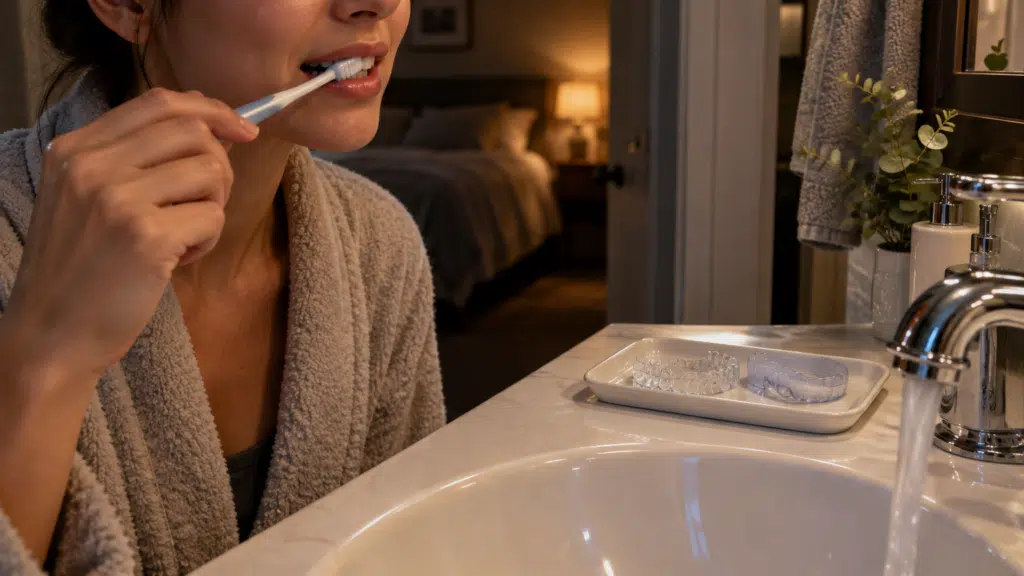
Most people have a familiar bedtime routine. They might wash their face, change into their pajamas, brush their teeth, and spend a few minutes relaxing before turning out the lights. But while brushing is an established part of looking after our teeth, there are other dental habits that deserve just as much attention.
What happens in your mouth overnight matters. Saliva production naturally decreases during sleep, leaving less moisture available to wash away food particles and neutralize acids. This makes good oral hygiene before bed especially important.
A few simple changes to your evening routine can help protect your teeth, gums, and dental appliances.
Don’t Rush Your Evening Brushing
When you’re tired, it’s tempting to give your teeth a quick brush and head straight to bed. However, brushing properly takes time, and rushing can mean missing areas where plaque builds up.
Dentists generally recommend brushing for two minutes, twice a day, using fluoride toothpaste. Pay attention to the gumline and the back teeth, where food particles can be difficult to reach.
Cleaning between your teeth with floss or interdental brushes is also important. These areas aren’t easily reached by an ordinary toothbrush, allowing plaque to accumulate if they’re regularly neglected.
Give Retainers and Night Guards Proper Attention
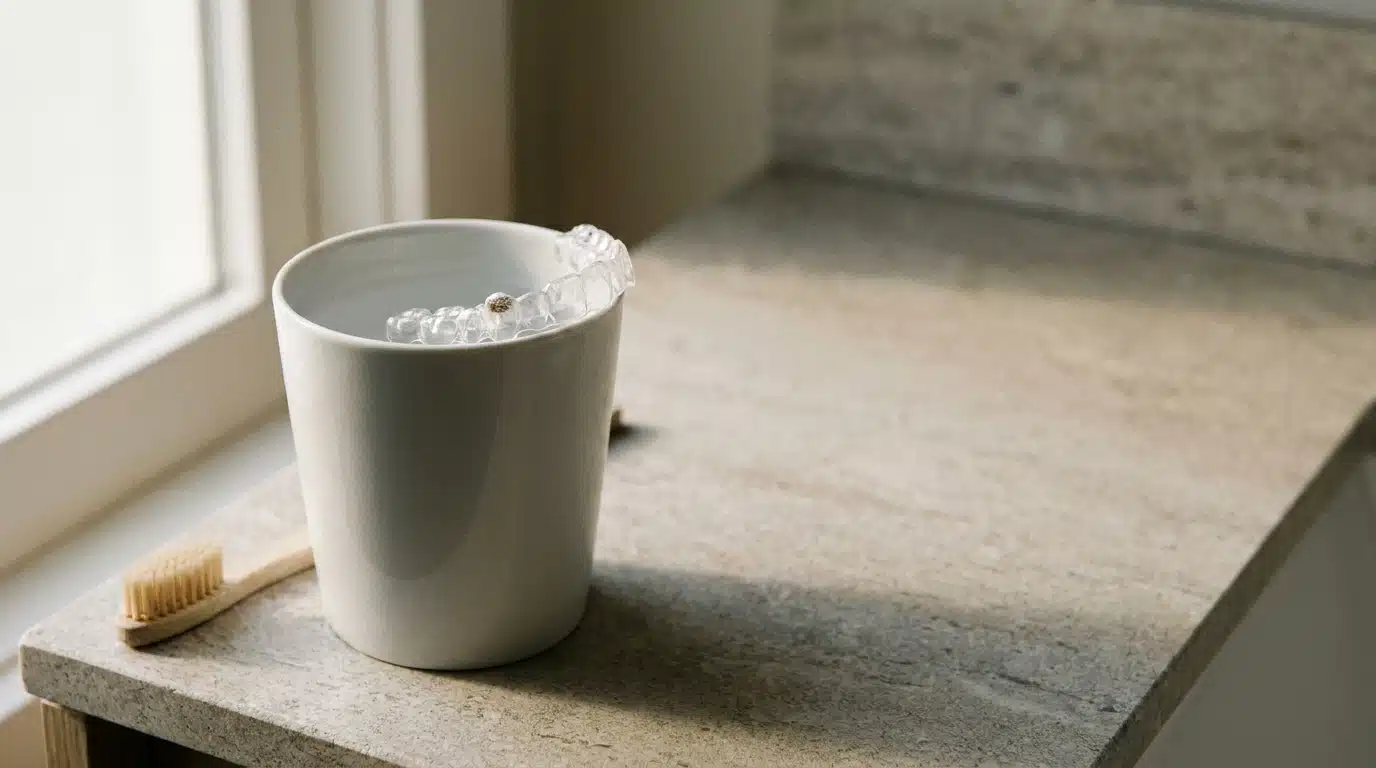
People who wear retainers or night guards have an additional responsibility when it comes to their evening dental routine.
These appliances sit against the teeth for extended periods, making regular cleaning essential. Putting a dirty retainer or night guard into your mouth can reintroduce bacteria and leave unpleasant odors.
Using suitable retainer care products can help keep removable dental appliances clean and fresh. Always follow the manufacturer’s instructions, as some materials can be damaged by hot water, abrasive toothpaste, or unsuitable cleaning solutions.
It’s also worth inspecting appliances regularly for cracks, rough edges, or changes in fit. If something feels uncomfortable, arrange a dental appointment rather than attempting to adjust it yourself.
Be Mindful of Late-Night Snacks
Enjoying a snack while watching television might seem harmless, but eating sugary foods shortly before bed can affect your oral health.
Bacteria in the mouth feed on sugars and produce acids that contribute to tooth decay. Going to sleep without cleaning your teeth afterward allows these conditions to persist overnight.
Try to finish eating before your final brushing session. If you’re thirsty afterward, plain water is generally the best option.
Pay Attention to Teeth Grinding
Some people grind or clench their teeth during sleep without realizing it. Others notice symptoms such as morning jaw discomfort, headaches, or increased tooth sensitivity.
Occasional grinding may not cause problems, but persistent bruxism can gradually wear down tooth surfaces and strain the jaw muscles.
A dentist can assess signs of grinding and recommend appropriate treatment. For some people, this may include a custom-fitted night guard to protect their teeth.
Make Oral Care Part of Your Wind-Down Routine
Looking after your teeth doesn’t need to become a complicated bedtime ritual. The most important thing is consistency.
Setting aside a few minutes to brush thoroughly, clean between your teeth, and care for any dental appliances can help prevent avoidable problems.
These habits might seem small, but they’re worth maintaining. A good night’s rest is important for your general well-being, and taking care of your oral health before bed is another valuable part of looking after yourself.