


Clear aligners have transformed the way people achieve straighter, healthier smiles. Whether you’re just starting your orthodontic journey or are midway through treatment, maintaining excellent oral hygiene while wearing aligners is absolutely essential.
For residents exploring clear aligners Newport Beach providers offer, understanding how to care for your teeth during treatment can make the difference between a smooth experience and one filled with setbacks. This guide covers everything you need to know to keep your teeth and aligners in top condition throughout your treatment.
Why Oral Hygiene Is Even More Important With Clear Aligners
Clear aligners fit snugly over your teeth, which means any food particles, plaque, or bacteria trapped between your teeth and the aligner trays can create a breeding ground for decay and gum disease. Unlike traditional braces, aligners are removable — a significant advantage — but this also means the responsibility for cleanliness falls entirely on you.
Patients pursuing clear aligners Newport Beach dental offices recommend are often surprised to learn that the risk of cavities can actually increase during aligner treatment if proper hygiene habits aren’t followed. Saliva, which naturally helps neutralize acids and rinse the mouth, is partially blocked from reaching your teeth when aligners are in place. This makes thorough brushing and flossing after every meal non-negotiable.
Daily Oral Care Routine for Aligner Wearers
Brushing: Timing and Technique Matter
With clear aligners, you should brush your teeth after every meal or snack before reinserting your trays. Using a soft-bristled toothbrush and fluoride toothpaste, brush gently in circular motions for at least two minutes. Pay special attention to the gum line and the surfaces where the aligner edges rest against your teeth — these areas are particularly prone to plaque buildup.
If you’re away from home and can’t brush immediately, at minimum rinse your mouth thoroughly with water before putting your aligners back in. Carry a travel toothbrush so you’re never caught unprepared.
Flossing: Don’t Skip This Step
Flossing becomes even more critical when you’re wearing aligners. Food debris and bacteria love to hide between teeth, and no amount of brushing will fully address that. Floss at least once a day — ideally after each meal. Floss picks or a water flosser can make the process faster and more convenient, especially if you’re on the go.
Rinsing With Mouthwash
An antibacterial, fluoride mouthwash adds an extra layer of protection. Swishing for 30 to 60 seconds after brushing can help eliminate residual bacteria and strengthen enamel. Look for alcohol-free formulas, as alcohol-based rinses can dry out the oral tissues over time.
Caring for Your Clear Aligners
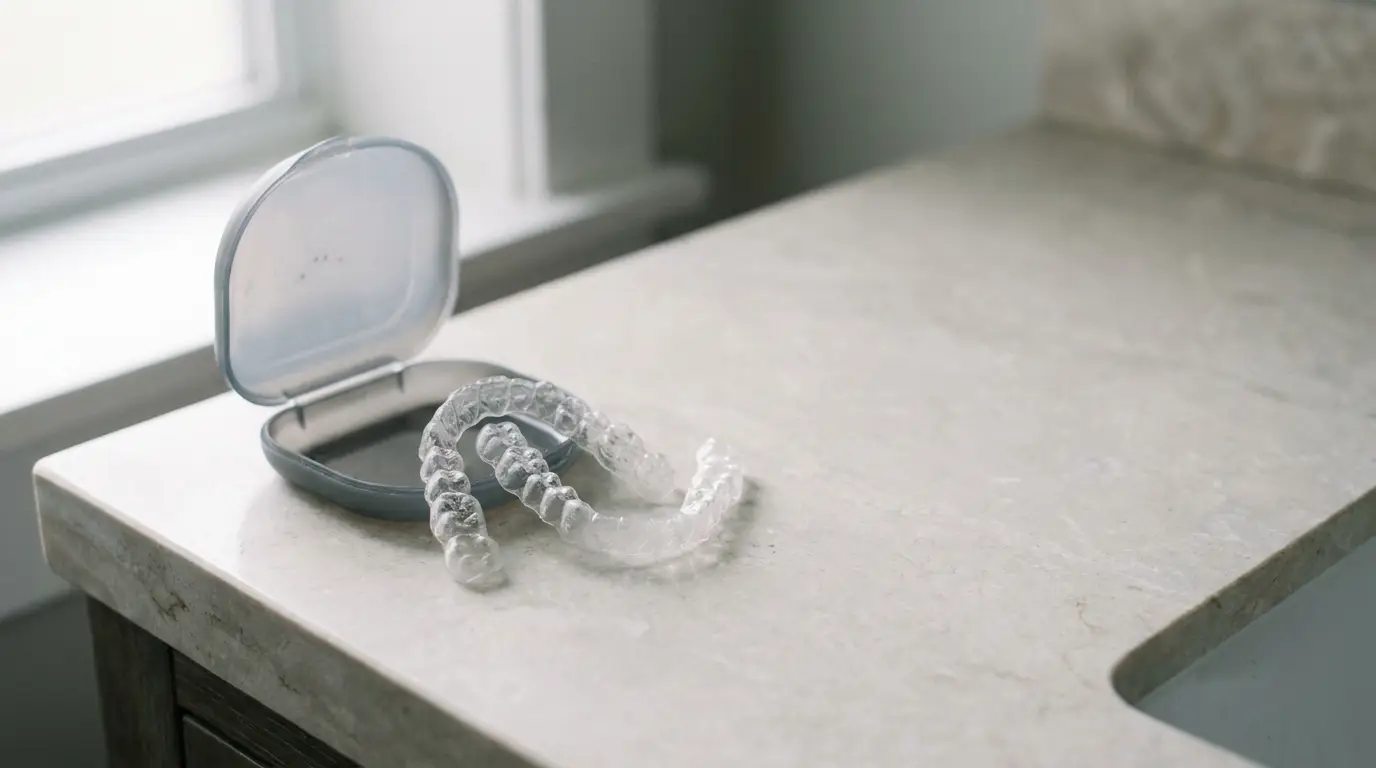
Your aligners need just as much care as your teeth. Neglecting your trays can lead to bacterial buildup, discoloration, and unpleasant odors — none of which you want near your mouth for 20 to 22 hours a day.
Cleaning Your Trays
- Rinse every time you remove them: Always rinse your aligners with lukewarm water when you take them out. This prevents dried saliva and plaque from hardening on the surface.
- Brush gently: Use a soft toothbrush and a small amount of clear, unscented soap to gently clean the trays. Avoid toothpaste, as it can be abrasive and scratch the plastic, making it cloudy and harder to see.
- Use aligner cleaning crystals or tablets: Products like Invisalign cleaning crystals or denture-cleaning tablets (used per the manufacturer’s instructions) are effective at deep-cleaning your trays and keeping them fresh.
- Never use hot water: Heat can warp the plastic, compromising the fit and effectiveness of your aligners.
Storing Your Aligners Safely
When your aligners aren’t in your mouth, store them in their protective case. Never wrap them in a napkin or leave them on countertops — they can easily be thrown away or damaged. Keep them away from pets, as animals are notoriously attracted to the scent of saliva on plastic trays.
Dietary Considerations During Aligner Treatment
One of the most appealing aspects of clear aligners is that you can eat whatever you like — you simply remove them before meals. However, a few dietary habits can still impact your treatment success.
Foods and Drinks to Be Mindful Of
- Coffee, tea, and red wine: These beverages stain teeth and can discolor your aligners if you drink them while wearing the trays. Always remove aligners before consuming these drinks.
- Sugary and acidic foods: Frequent snacking on sugary or acidic items increases the risk of enamel erosion and cavities, especially if you’re not brushing before reinserting your trays.
- Water is always safe: Plain water is the only beverage you should drink while wearing your aligners. It won’t stain the trays and won’t harm your teeth.
Regular Dental Checkups Are Essential
Even while undergoing orthodontic treatment, regular dental cleanings and checkups remain essential. Professional cleanings remove tartar buildup that brushing and flossing can’t address, and your dentist can monitor your progress and catch any issues early — whether that’s early-stage cavities, gum inflammation, or a tray that isn’t fitting correctly.
For those considering clear aligners Newport Beach dental practices provide, choosing a provider who offers comprehensive care — including routine checkups during your aligner treatment — ensures that your journey to a straighter smile is also a healthier one. Many practices that specialize in teeth straightening with clear aligners incorporate these follow-up appointments as part of a holistic treatment plan designed for optimal results.
Common Mistakes to Avoid
Even the most diligent patients can fall into habits that undermine their aligner treatment. Here are some pitfalls to steer clear of:
- Not wearing aligners long enough: Aligners must be worn 20 to 22 hours per day to move teeth effectively. Skipping wear time extends treatment and compromises results.
- Eating or drinking (anything other than water) with aligners in: This can stain trays, damage them, and trap harmful substances against your teeth.
- Using abrasive cleaners on trays: Whitening toothpaste and harsh cleaning agents can scratch and cloud your aligners.
- Forgetting to brush before reinserting: Putting aligners over unclean teeth is one of the fastest ways to develop cavities during treatment.
- Skipping dental appointments: Regular checkups keep your oral health on track and ensure your treatment is progressing as planned.
Tips for a Comfortable and Successful Treatment
Beyond hygiene, there are a few additional strategies that can make your aligner experience more comfortable and effective:
- Use aligner removal tools (chewies or seaters) to help seat trays properly and reduce discomfort when switching to a new set.
- Switch to new trays at night so any initial soreness subsides while you sleep.
- Keep a travel hygiene kit — toothbrush, toothpaste, floss, and your aligner case — in your bag at all times.
- Document your progress with photos; it can be incredibly motivating to see how far you’ve come.
Conclusion
Clear aligner treatment is one of the most convenient and aesthetically pleasing ways to achieve a beautifully aligned smile, but it does require a committed oral hygiene routine and consistent wear habits.
By brushing and flossing after every meal, cleaning your trays regularly, attending your scheduled dental visits, and avoiding common mistakes, you set yourself up for a successful outcome.
For anyone exploring clear aligners Newport Beach has to offer, taking a proactive approach to dental care during treatment isn’t just beneficial — it’s essential. With the right habits and the right dental team behind you, a healthier, straighter smile is well within reach.