

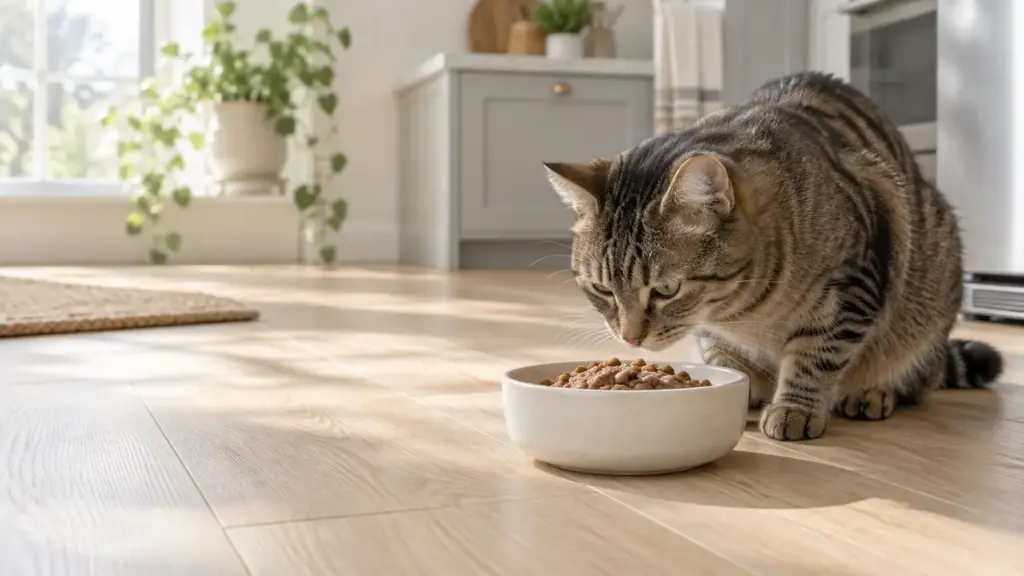
Cats can be surprisingly particular about what goes into their food bowl. Even if you have found a new food that seems healthier, more nutritious, or better suited to your cat’s needs, there is no guarantee they will happily dive into it on day one.
Changing your cat’s diet is usually best done gradually. A slower transition can make the new food feel more familiar while also giving your cat’s digestive system time to adjust. Here is what you should know before making the switch.
Make the Change Gradually
One of the biggest mistakes you can make is replacing your cat’s usual food overnight. A sudden change in diet may cause digestive upset, while some cats may simply refuse to eat something unfamiliar.
Instead, begin by mixing a small amount of the new food with their regular meal. Over several days, gradually increase the proportion of new food while reducing the amount of their previous diet.
For example, you might begin with around 25% new food and 75% old food before slowly working toward a completely new meal.
Give Your Cat Time to Adjust
Some cats are naturally more adventurous eaters than others. One cat might happily accept a different meal immediately, while another could need considerably more encouragement.
Try not to assume your cat dislikes the food simply because they hesitate the first time you serve it. Cats often become accustomed to familiar smells, textures, and flavors, so something different can initially seem suspicious.
Patience is especially important if you are changing from one style of food to another, such as moving from dry kibble toward wet, fresh, or natural cat food. The difference in texture and aroma may take some getting used to.
Pay Attention to Portion Sizes
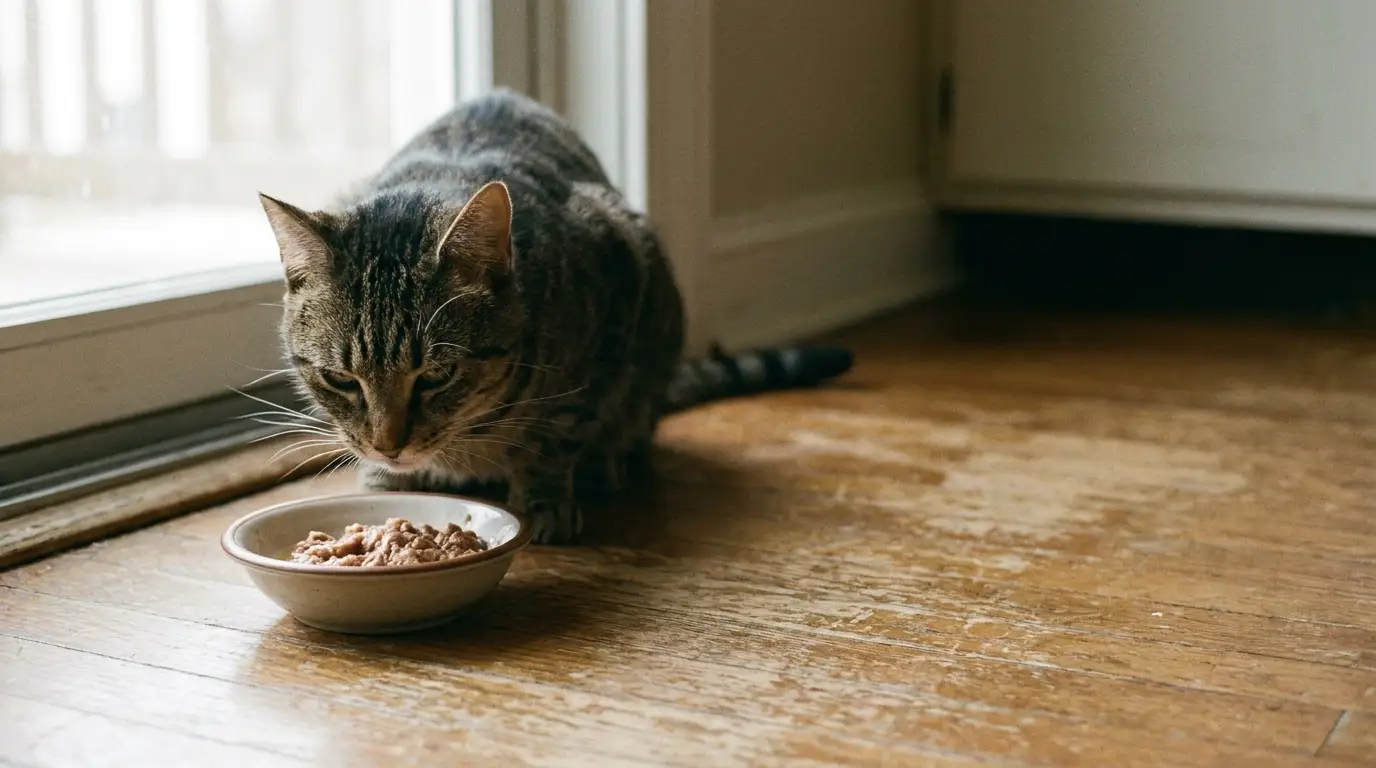
Whenever you introduce a different food, check the recommended feeding guidelines rather than automatically serving the same volume as your cat’s previous meals.
Different foods can contain very different levels of calories and nutrients. The correct portion will depend on factors such as your cat’s weight, age, lifestyle, and activity level.
Measuring portions can also make it easier to monitor how much your cat is actually eating during the transition.
Keep an Eye on Their Behavior
Watch your cat closely whenever you make changes to their diet. Changes in appetite, energy levels, digestion, or bathroom habits may give you useful clues about how they are responding.
A little adjustment can sometimes be expected, but ongoing vomiting, diarrhea, refusal to eat, or other concerning symptoms should not be ignored. Contact your veterinarian if you are worried about how your cat is reacting to a new diet.
Avoid Making Mealtimes Stressful
Cats can quickly pick up on changes in their environment, so try to keep their normal feeding routine as consistent as possible.
Serve meals in the usual location and at roughly the same times each day. Avoid constantly moving the bowl around or pressuring your cat to eat. A calm, familiar setting can make a new meal feel much less intimidating.
Make the Switch at Your Cat’s Pace
Introducing your cat to a new type of food does not need to become a battle of wills. Gradual changes, consistent routines, and careful observation can make the process much easier for both you and your cat.
Every cat is different, so there is no single transition schedule that works perfectly for everyone. By giving your cat plenty of time to adjust and paying attention to how they respond, you can make their move to a new diet as smooth and stress-free as possible.