
There are more than 200 species of mosquitoes in the US alone, and waking up to the maddening itch of a fresh bite is one of the fastest ways to ruin a good night’s sleep. When these tiny pests invade your bedroom, they do more than just steal your blood, as they disrupt your sleep cycle and leave you tossing and turning for hours. Fortunately, you can reclaim your bedroom and secure a peaceful night by establishing a strategic evening defense routine.
By understanding how these insects operate and altering your sleep environment, you can stop nighttime bites before they start. A proactive approach is always more effective than dealing with the itchy aftermath.
The Evening Defense Routine for Better Sleep
Mosquitoes are highly active during the twilight hours, making the period right before you go to bed the most critical time to secure your defenses. A solid routine starts by completely blocking their entry points. Ensuring that window screens are completely intact and closing windows tightly during peak dusk hours prevents mosquitoes from hitching a ride indoors on indoor drafts.
Your clothing choices also play a major role in whether you become an easy target while resting. Wearing loose-fitting pajamas made of tightly woven fabric makes it much harder for mosquitoes to reach your skin.
If you live in areas with dense pest populations, relying on localized expertise is a great asset. Homeowners dealing with heavy seasonal activity can benefit from professional barrier treatments, such as those offered by clarkspest.com that help clear out nesting grounds before pests ever make it past your bedroom doorway. Going the extra mile when mosquitoes aren’t defeated by DIY steps is essential.
Choosing the Right Repellent Strategy

Not all bug sprays are created equal, especially when you need protection that lasts through an entire eight-hour sleep cycle. Relying on scientifically validated active ingredients is the safest way to ensure continuous defense. The federal government recommends using EPA-registered repellents containing ingredients like DEET, picaridin, or oil of lemon eucalyptus to achieve lasting protection.
Applying a light layer of these approved formulas to exposed skin before bed forms an invisible shield that confuses the sensory receptors mosquitoes use to track you down. Always review product labels to ensure the formula is rated for extended wear, and wash your hands thoroughly after application to prevent accidental transfer to your eyes or mouth during the night.
Mechanical Barriers and Airflow Dynamics
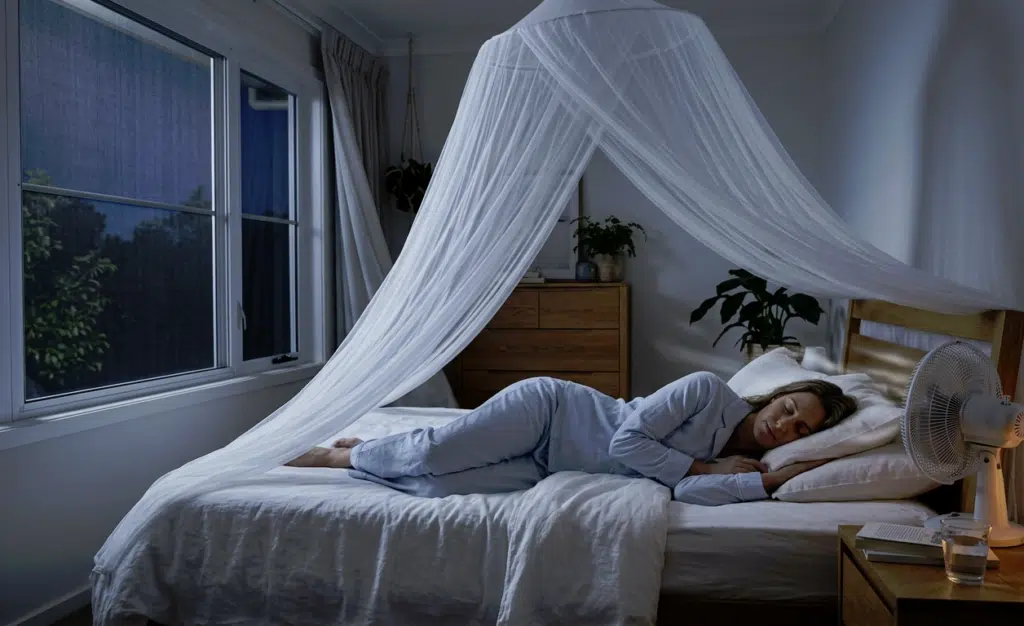
If you prefer to skip topical lotions entirely before climbing into bed, physical barriers and smart bedroom dynamics offer an incredibly reliable alternative. Hanging a fine-mesh bed canopy over your mattress creates a physical barrier that bugs simply cannot penetrate. Just make sure to tuck the edges securely under your mattress so that no stray pests can get through the gaps during the night.
An even simpler mechanical defense relies on the humble bedroom fan. Mosquitoes are notoriously weak fliers and struggle to navigate when wind speeds rise above a gentle breeze. Since 12 species can carry germs that cause illnesses in humans, this small but impactful step is well worth your time.
Positioning a directional fan to blow a steady stream of air directly across your bed creates a wind barrier that keeps mosquitoes from landing. This constant airflow also helps disperse the carbon dioxide and body heat that you naturally emit, effectively masking the primary cues these insects use to hunt for a meal while you are dead asleep. Moreover, it keeps air circulating in a way that cools your body while you sleep, so if you get hot at night, it’s doubly effective.
Soothing Nighttime Bites Instantly
Even with the best defenses in place, an occasional rogue mosquito might still manage to slip through and wake you up with an intense itch. Managing the bite quickly and correctly is the only way to save your sleep continuity.
The following steps will help soothe the irritation quickly so you can get right back to sleep:
- Wash the area gently with cold water to reduce localized inflammation
- Apply a small dab of hydrocortisone cream or calamine lotion directly to the bump
- Place a cold compress over the spot for ten minutes to numb the nerve endings
Resist the urge to scratch at all costs. Scratching breaks the skin, increases the risk of a secondary infection, and actually triggers the release of more histamine, which makes the itching sensation significantly worse.
Creating a Long-Term Pest-Free Sanctuary

Consistently applying these bedtime habits will dramatically reduce your chances of middle-of-the-night disruptions. A truly insect-proof bedroom requires a mix of physical barriers, smart airflow, and reliable repellents to cover all your bases.
For more actionable advice on getting a good night’s sleep, regardless of the challenges you face, dive into our extensive library of guides on our internal blog and apply what you learn proactively.