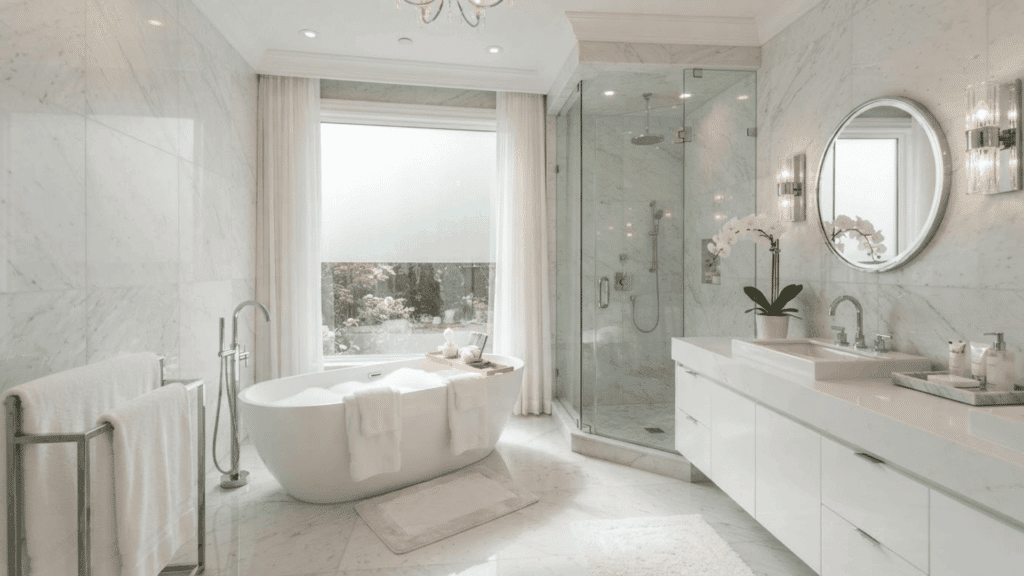
A luxury bathroom should feel calm the moment someone steps inside. Every finish, fixture and layout choice should work together without making the room feel forced or overdone.
That is the appeal of well-planned master luxury bathrooms; they combine comfort, strong design and useful features in one private space.
From statement tubs and oversized showers to warm lighting and rich stone surfaces, small choices can make a major difference.
The ideas below show how different styles can create that high-end feel. Keep reading to find the look that fits the space and personal taste.
What Makes a Master Bathroom Feel Truly Luxurious?
A luxurious master bathroom starts with a layout that makes daily routines easier and keeps the space comfortable. Good storage prevents clutter while well-planned lighting supports grooming and relaxation.
Quality fixtures can improve function without making the room feel crowded. Features such as heated floors and towel warmers add comfort during colder mornings.
Material selection also matters for both appearance and maintenance. Natural stone can create a refined look while porcelain offers a practical option for wet areas.
Strong ventilation helps manage moisture and protects finishes over time. The best bathrooms combine useful features with a layout that feels comfortable every day.
Master Luxury Bathroom Ideas for a High-End Look
A high-end bathroom can take many forms, from warm and spa-like to bold and modern. These ideas focus on different layouts, materials, finishes and comfort features.
1. Create a Spa-Like Bathroom Setting
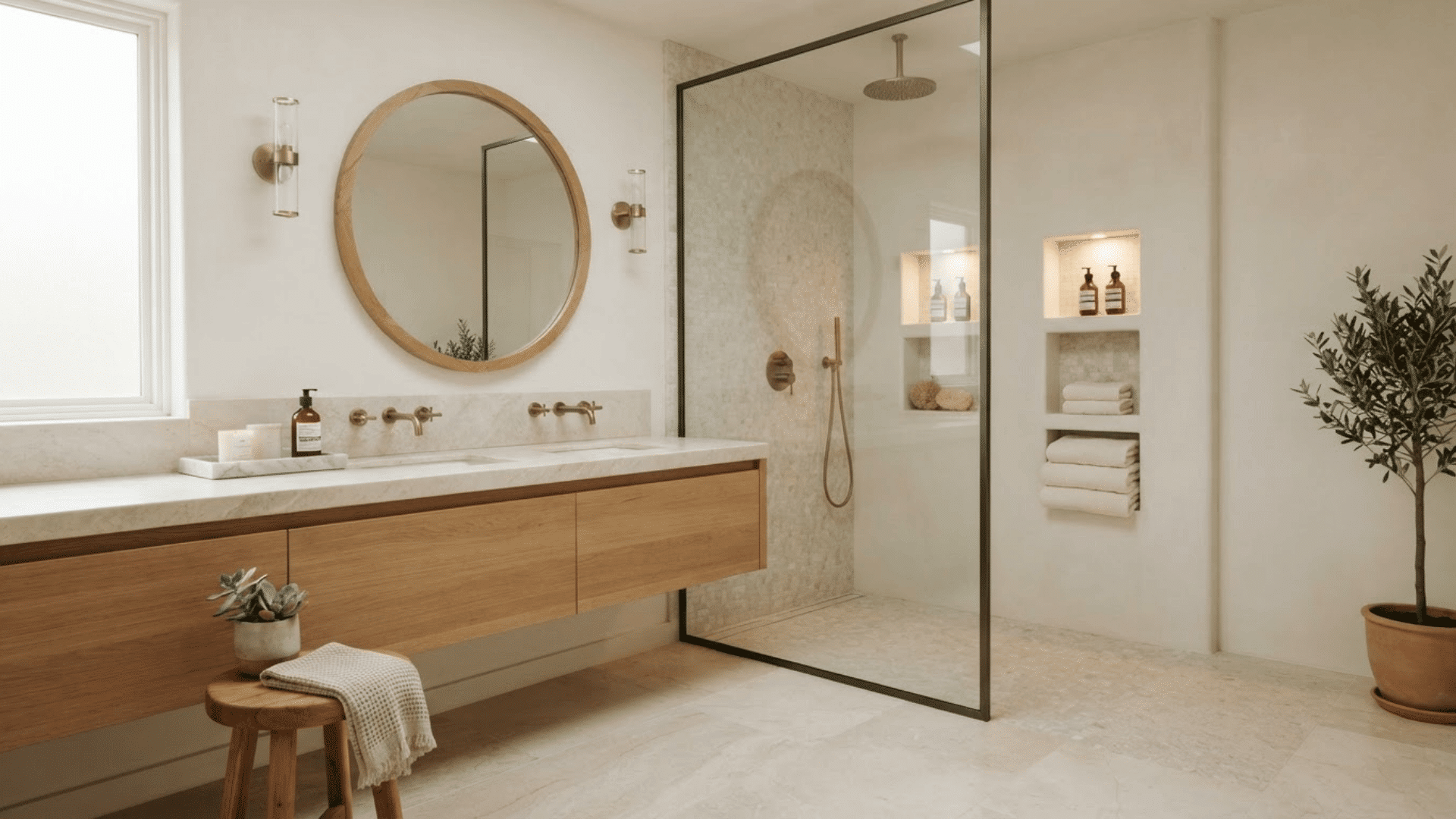
A spa-like bathroom works best with soft colors, clean surfaces, and calming materials. Warm whites, soft beige tones, pale stone, and natural wood can keep the room relaxed.
A large walk-in shower with a rainfall head adds comfort, while built-in niches keep products organized. Soft towels, a wooden stool, and simple accessories can complete the look.
Avoid filling every surface with decor. Open space helps the room feel calm and gives each feature room to stand out.
2. Make a Freestanding Tub The Main Feature
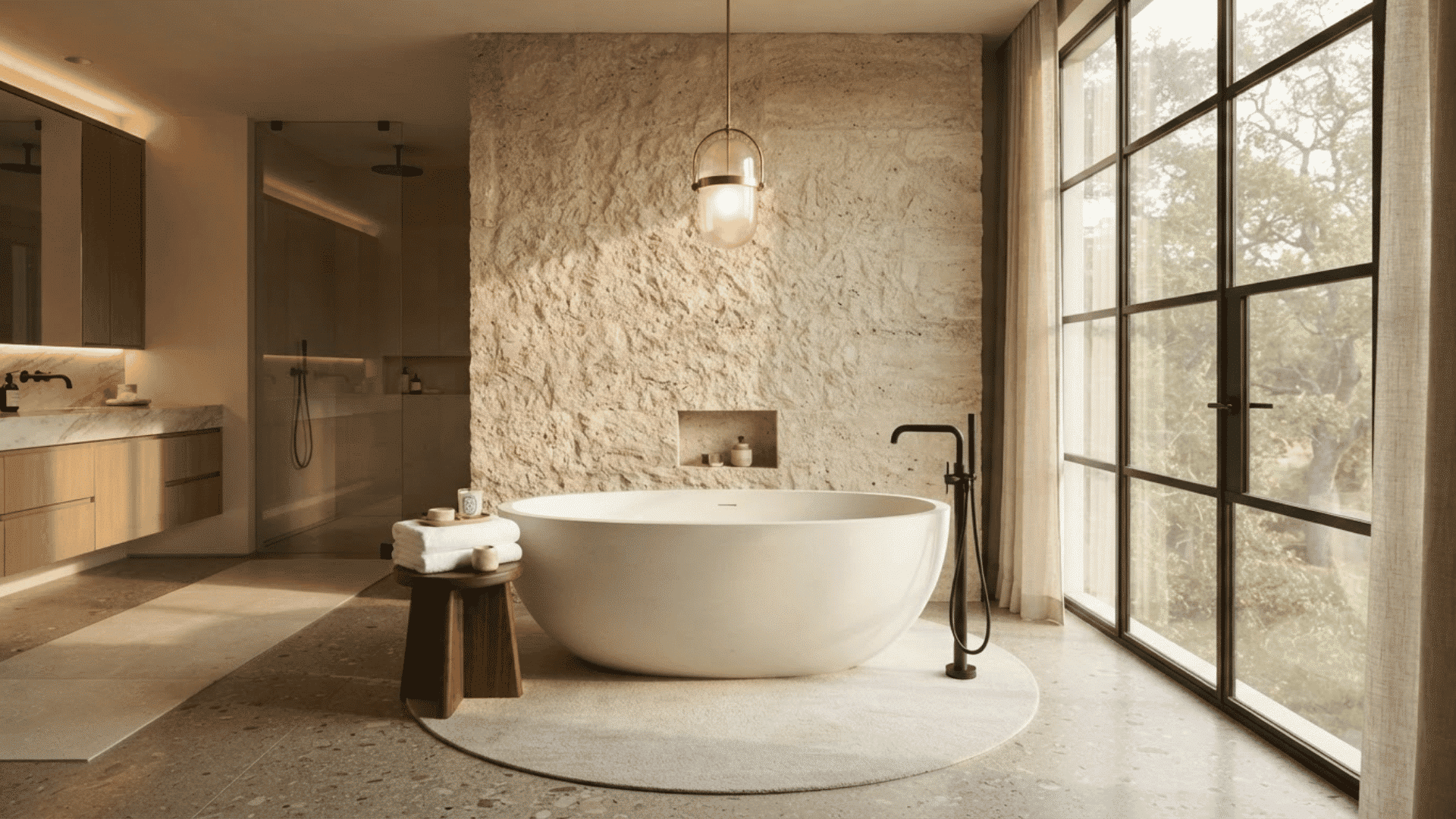
A freestanding tub can become the visual center of the bathroom when placed in the right spot. Position it near a large window, under a pendant light, or against a stone feature wall.
Curved tubs work well in softer interiors, while straight-edged tubs suit modern spaces. Leave enough space around the tub so it feels intentional, not squeezed in.
A slim, floor-mounted faucet can add a polished finish without drawing attention away from the shape.
3. Build an Oversized Walk-In Shower
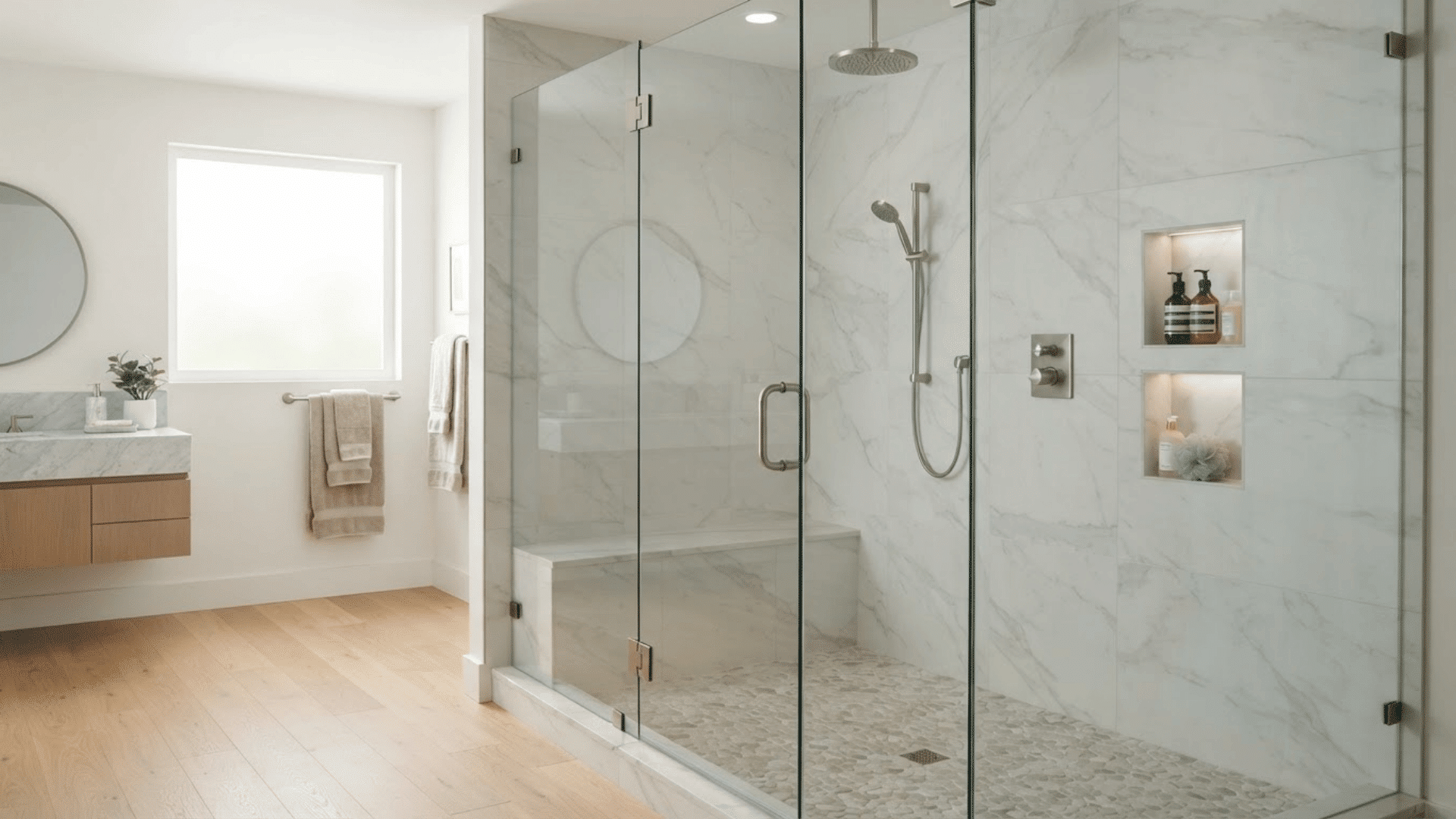
A large walk-in shower can make a master bathroom feel more open and comfortable. Frameless glass keeps sight lines clear, while large wall tiles can reduce visual clutter.
Add a rainfall showerhead, handheld sprayer and recessed niches for daily products. A built-in bench gives extra comfort and can also hold towels or toiletries.
Use slip-resistant flooring inside the shower for safer footing. Keeping the hardware finish consistent helps the shower feel connected to the rest of the room.
4. Use a Wet Room Layout
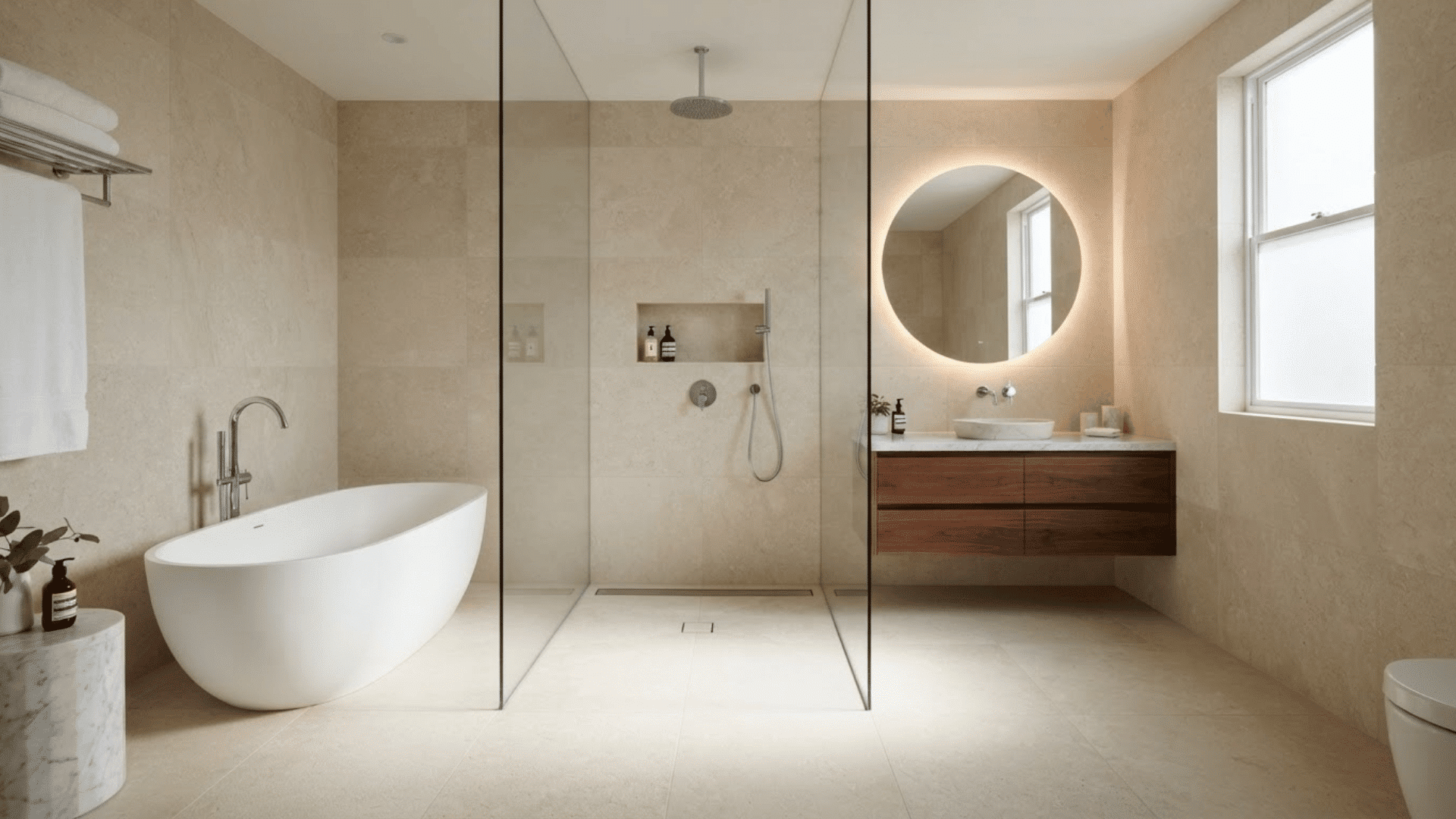
A wet room places the shower and tub inside one waterproof area, which can make the bathroom feel larger and more open.
This layout works especially well in spacious rooms where the tub and shower can sit side by side. Glass panels can control water without closing off the space.
Proper floor slope and drainage are important for comfort and safety. Large-format tile can create a clean surface, while a wall niche keeps bath products close without adding bulky shelving.
5. Cover Key Surfaces in Marble
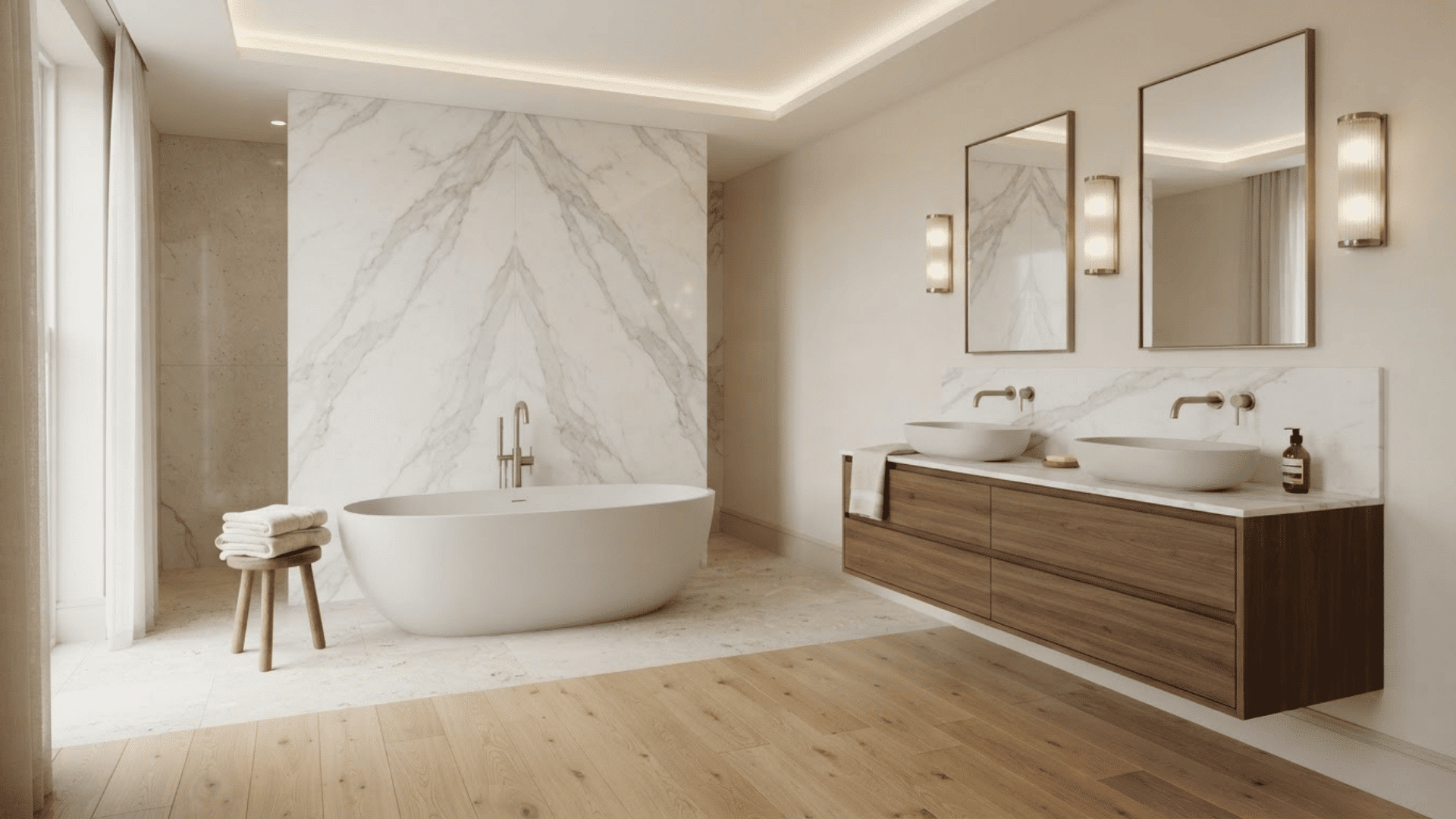
Marble can add a rich look when used carefully. Instead of covering every wall, use it on one strong feature such as the vanity wall, shower surround, or tub backdrop.
Large slabs create fewer joints and let the natural pattern the center stage. Light marble can brighten the room, while darker stone adds more contrast.
Since natural marble can stain and etch, proper sealing and maintenance matter. A marble-look porcelain tile can offer a similar appearance with easier upkeep.
6. Pair Natural Stone with Warm Wood
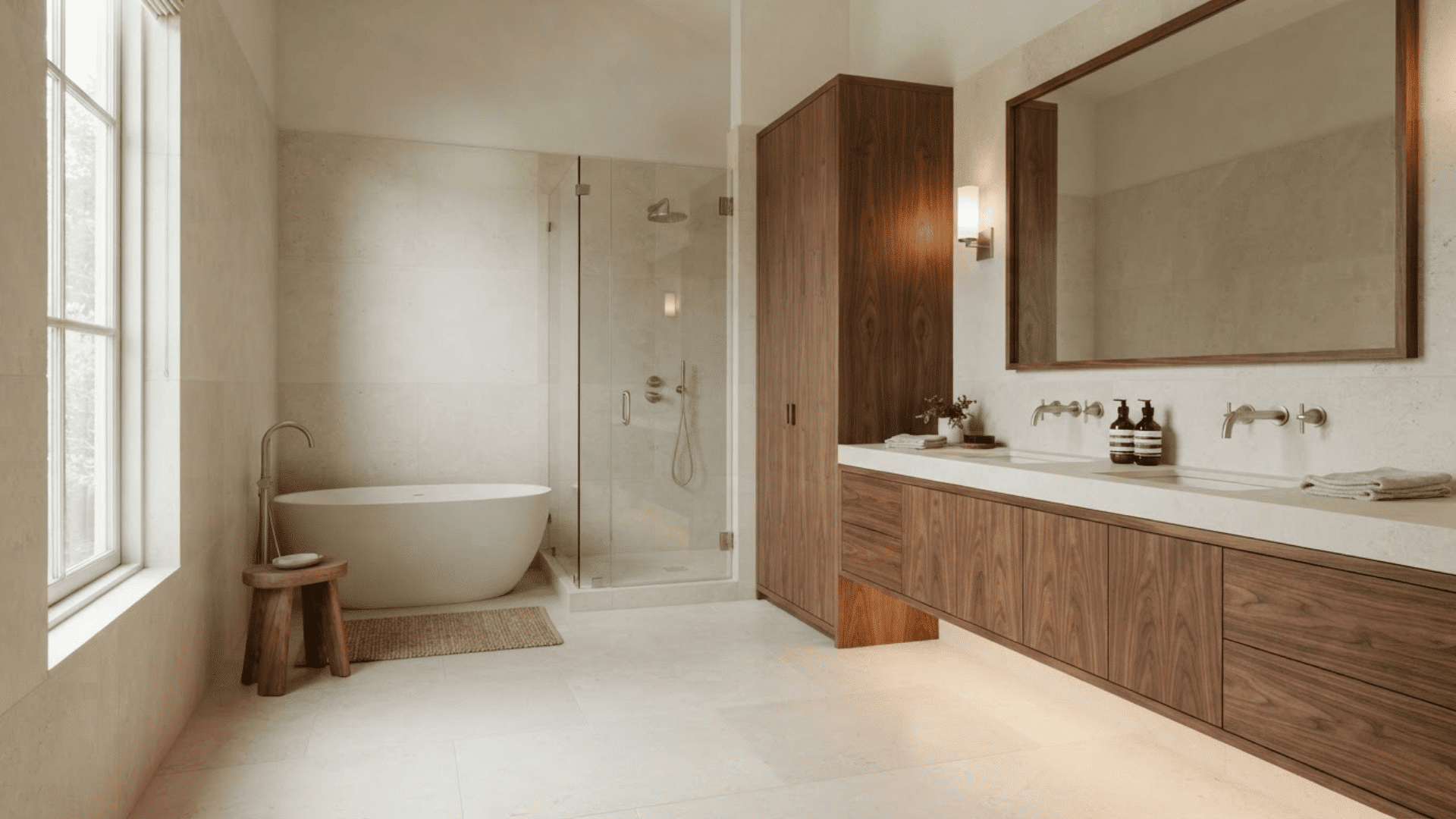
Stone can sometimes feel cool on its own, so pairing it with wood creates better balance. A walnut vanity, oak cabinet, or wood-look ceiling panel can soften stone walls and floors.
Choose moisture-suitable finishes for any real wood used near wet areas. Keep the color palette simple so both materials can stand out without competing.
Warm lighting can also bring out the grain in the wood and the texture in the stone, giving the room a more comfortable, lived-in feel.
7. Add a Double Vanity with Smart Storage
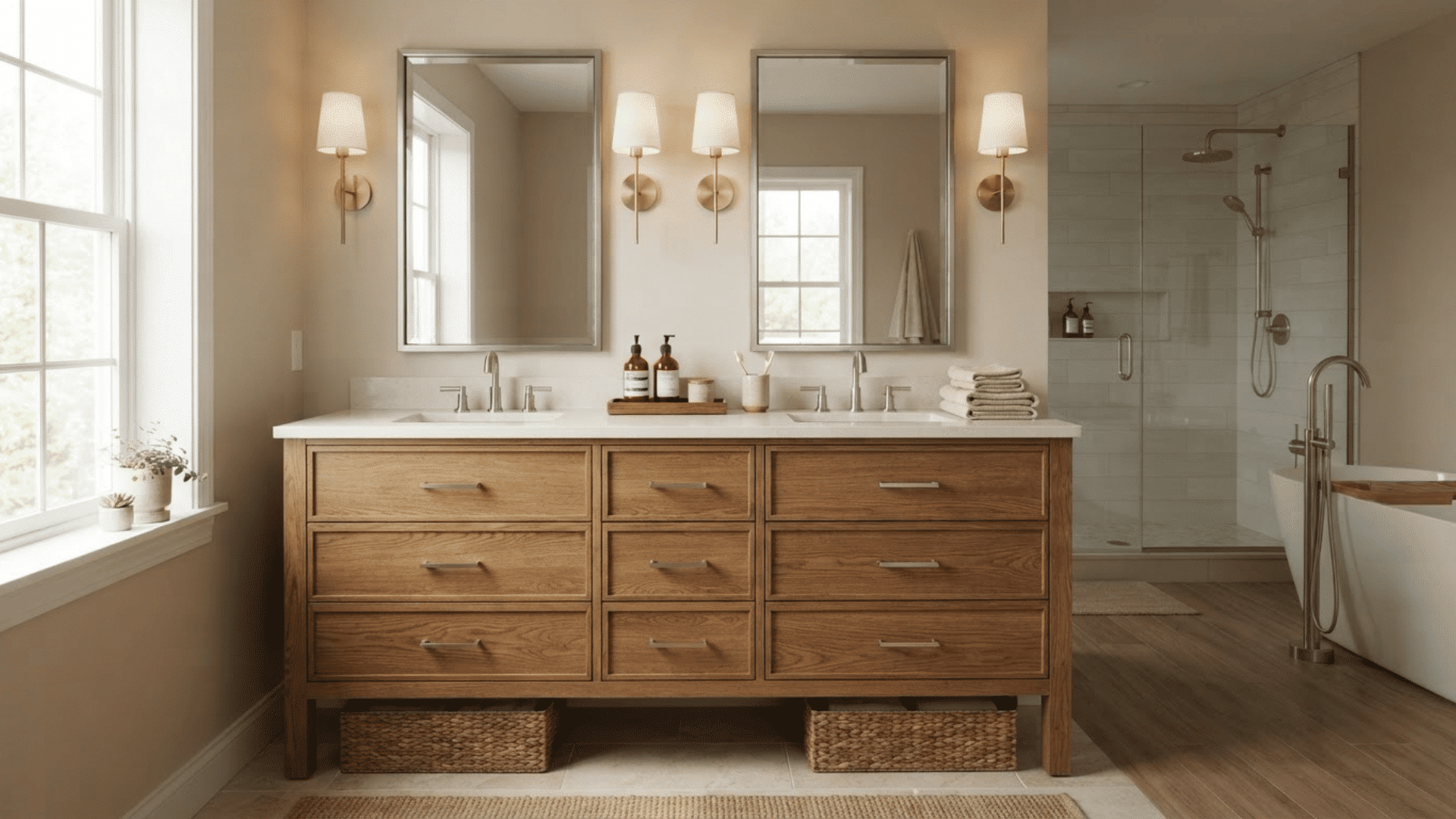
A double vanity gives two people separate space while keeping the room organized. Choose deep drawers for larger items and shallow drawers for smaller daily products.
Dividers can prevent clutter from building up over time. Two mirrors can create a balanced look, while one wide mirror can make the vanity wall feel larger.
Leave enough countertop room between the sinks for shared items. Wall-mounted sconces beside the mirrors can provide even lighting and make the space easier to use each morning.
8. Choose a Floating Vanity
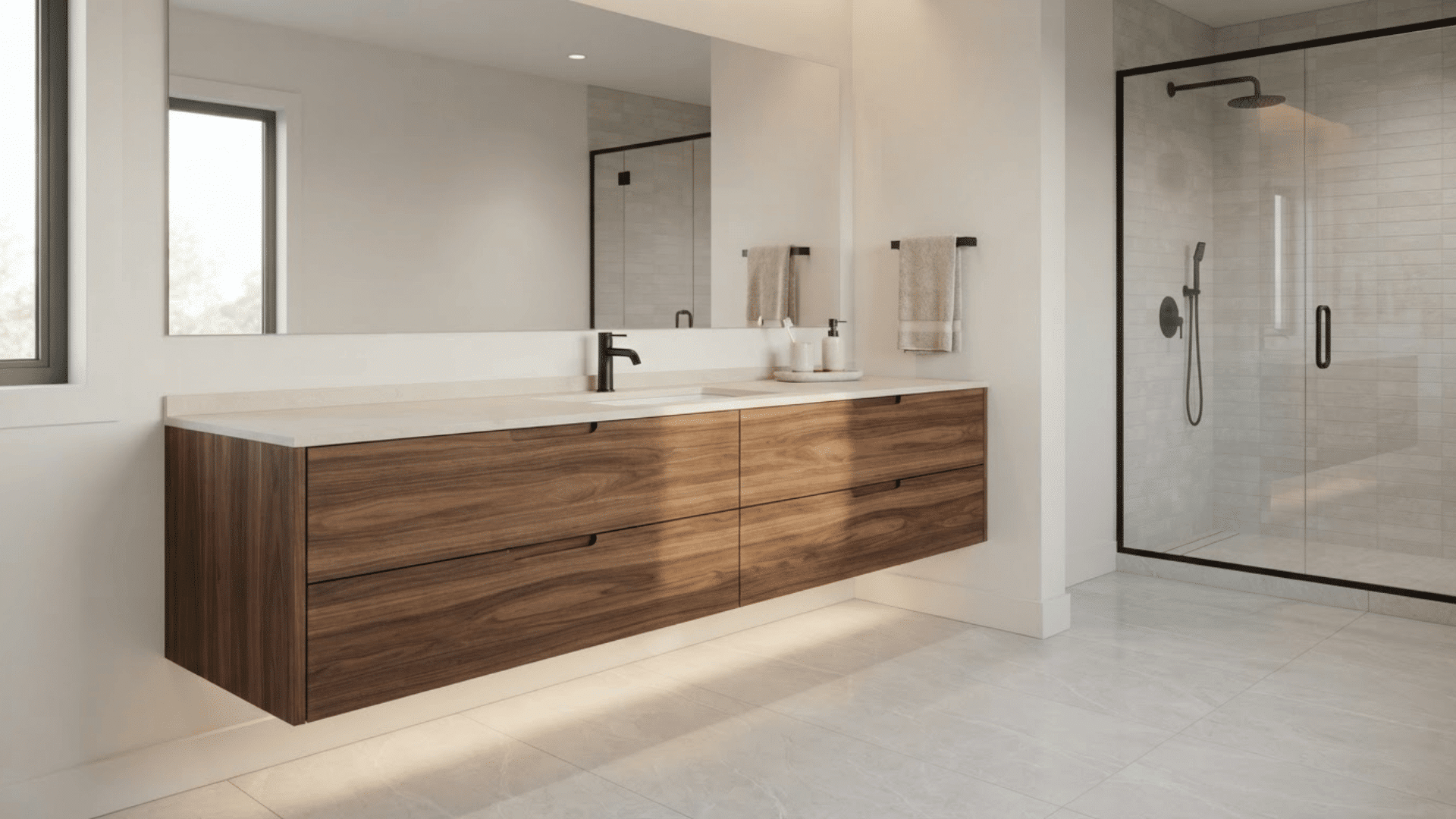
A floating vanity can make the bathroom feel lighter by leaving more floor visible. It works especially well in modern spaces with clean lines and simple finishes.
The open area underneath can also make cleaning easier. Choose wide drawers rather than open shelving if hidden storage is a priority.
A slim stone countertop keeps the vanity from feeling heavy. Adding soft lighting beneath the cabinet can create a gentle evening glow and make the vanity appear to float above the floor.
9. Bring in a Hotel-Inspired Look
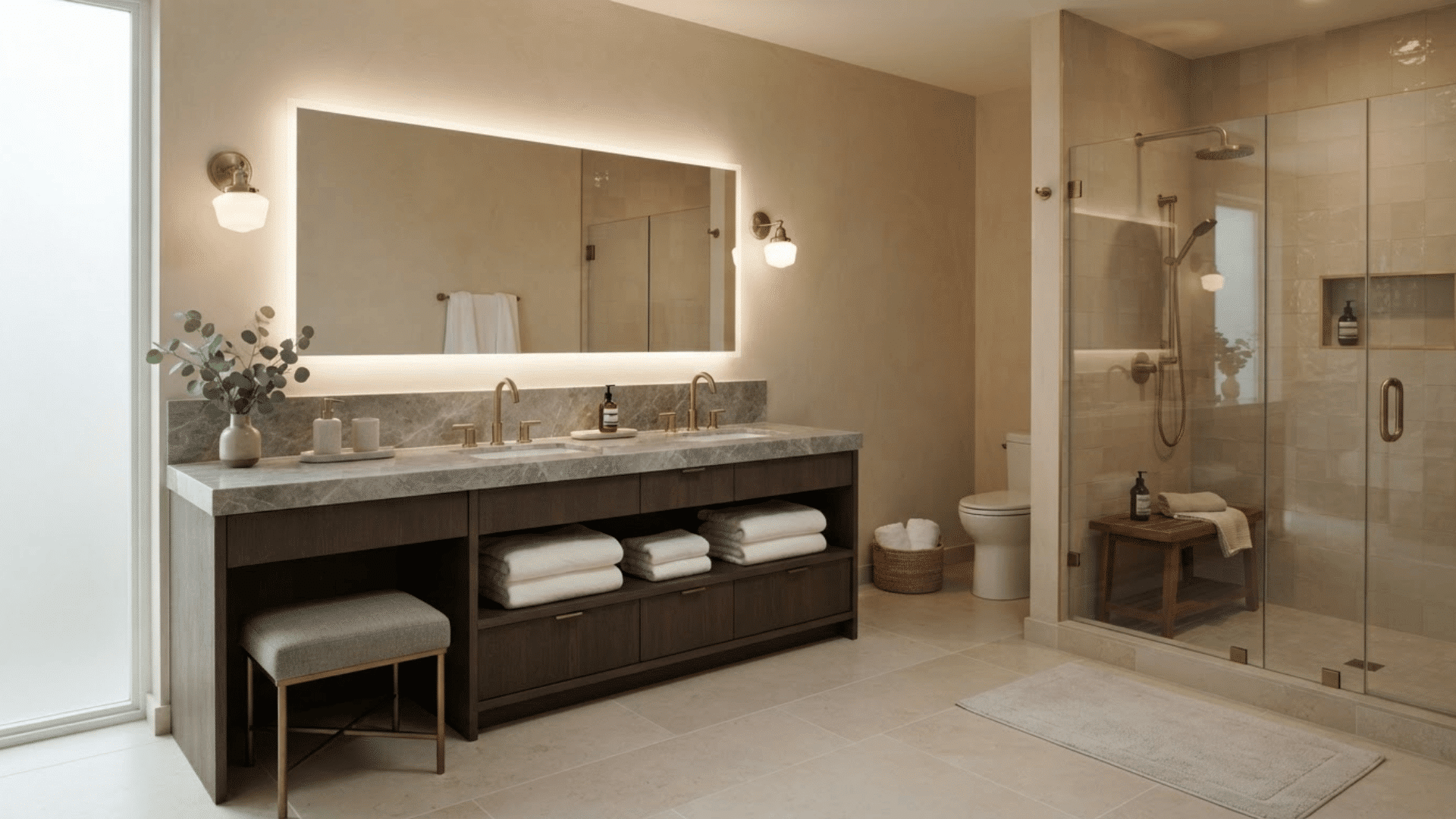
Hotel-style bathrooms often feel calm because the design is consistent from one area to another.
Use matching metal finishes, large mirrors, soft lighting, and neatly stored towels to create a similar effect at home. A stone vanity top and oversized shower can add a polished feel. Keep accessories limited and use matching containers for items left on display.
Thick towels, a simple bench, and soft bath mats can add comfort without making the room feel crowded or overly styled.
10. Work with Warm Neutral Colors
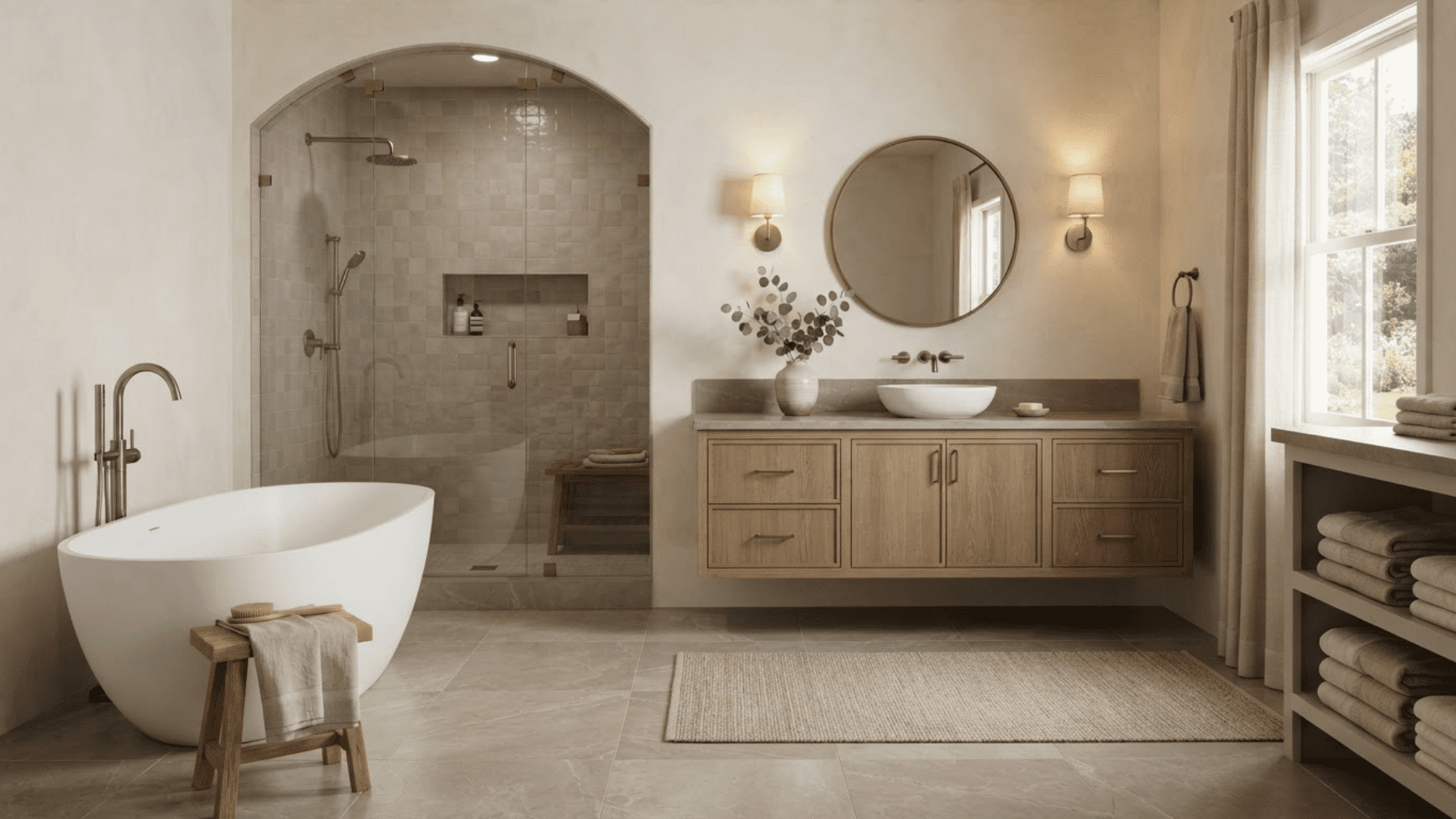
Warm neutral shades can create a softer luxury look than bright white alone. Cream, taupe, soft brown, warm gray, and muted beige work well across walls, tile, and cabinetry.
Use slight tone changes to add depth rather than relying on strong color contrast. Natural stone and wood fit easily into this palette. Black or brushed metal fixtures can add definition.
Warm neutrals also give the room a calm background, allowing the tub, vanity, lighting, or stonework to become the main visual feature.
11. Try a Dark Bathroom Palette
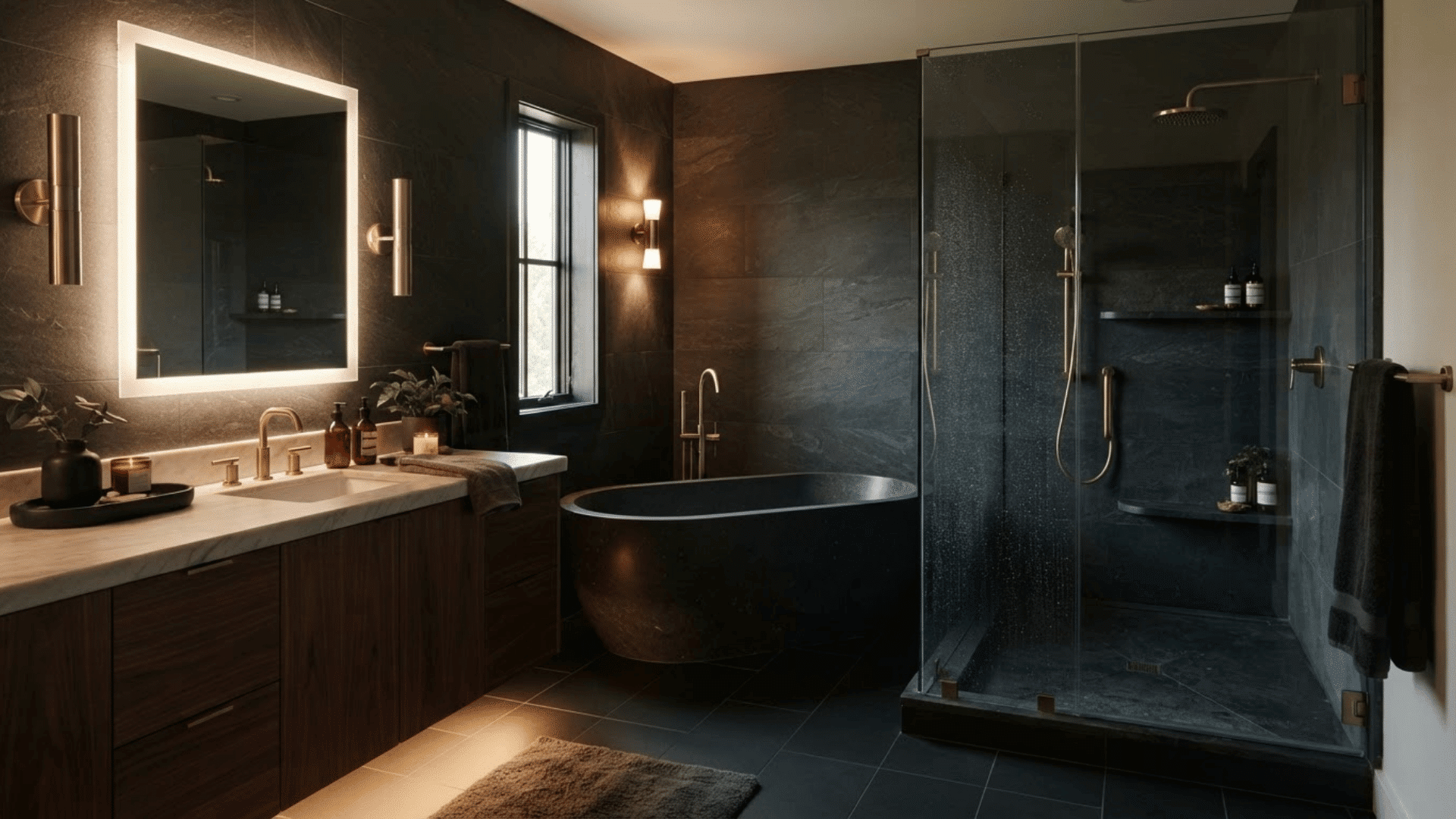
Dark bathrooms can feel rich and dramatic when the lighting is planned well. Charcoal tile, deep brown wood, black stone, or dark gray walls can create a strong base.
Add warm metal fixtures or lighter countertops to keep the room from feeling flat. Large mirrors can reflect light and help the room feel less closed in.
Use layered lighting instead of a single ceiling fixture. Wall lights, mirror lighting, and hidden LEDs can keep darker surfaces visible while maintaining the mood of the space.
12. Add Statement Bathroom Lighting
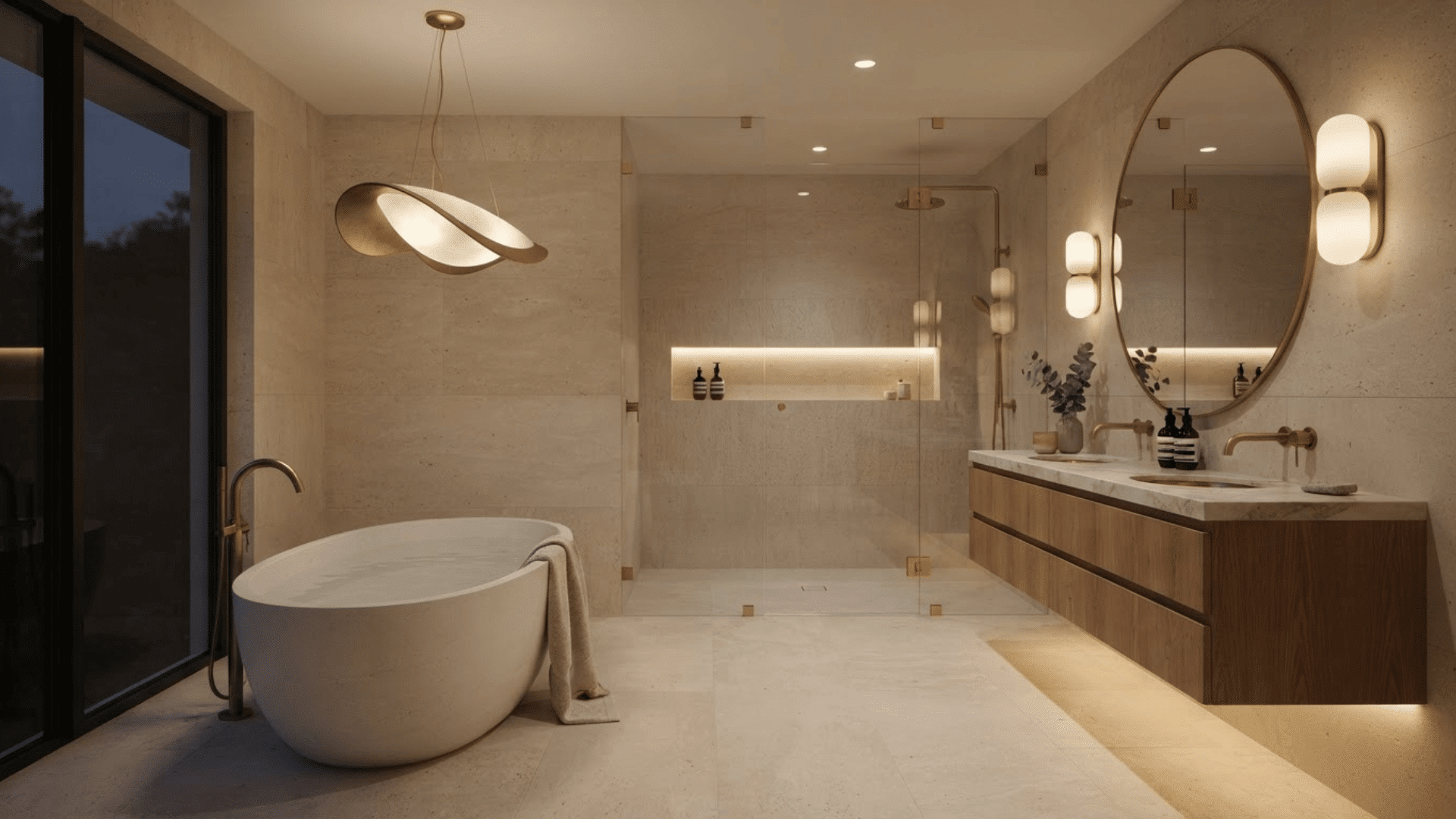
Lighting can change how every material in the bathroom looks. A pendant above a tub, wall sconces beside the mirror, or a sculptural ceiling fixture can give the room a stronger focal point.
Keep decorative lighting away from wet zones unless the fixture is rated for that location. Pair feature lights with practical task lighting so the room remains easy to use.
Soft LED strips under vanities or inside niches can add gentle light at night without making the bathroom feel too bright.
13. Pair Brass Fixtures with Stone
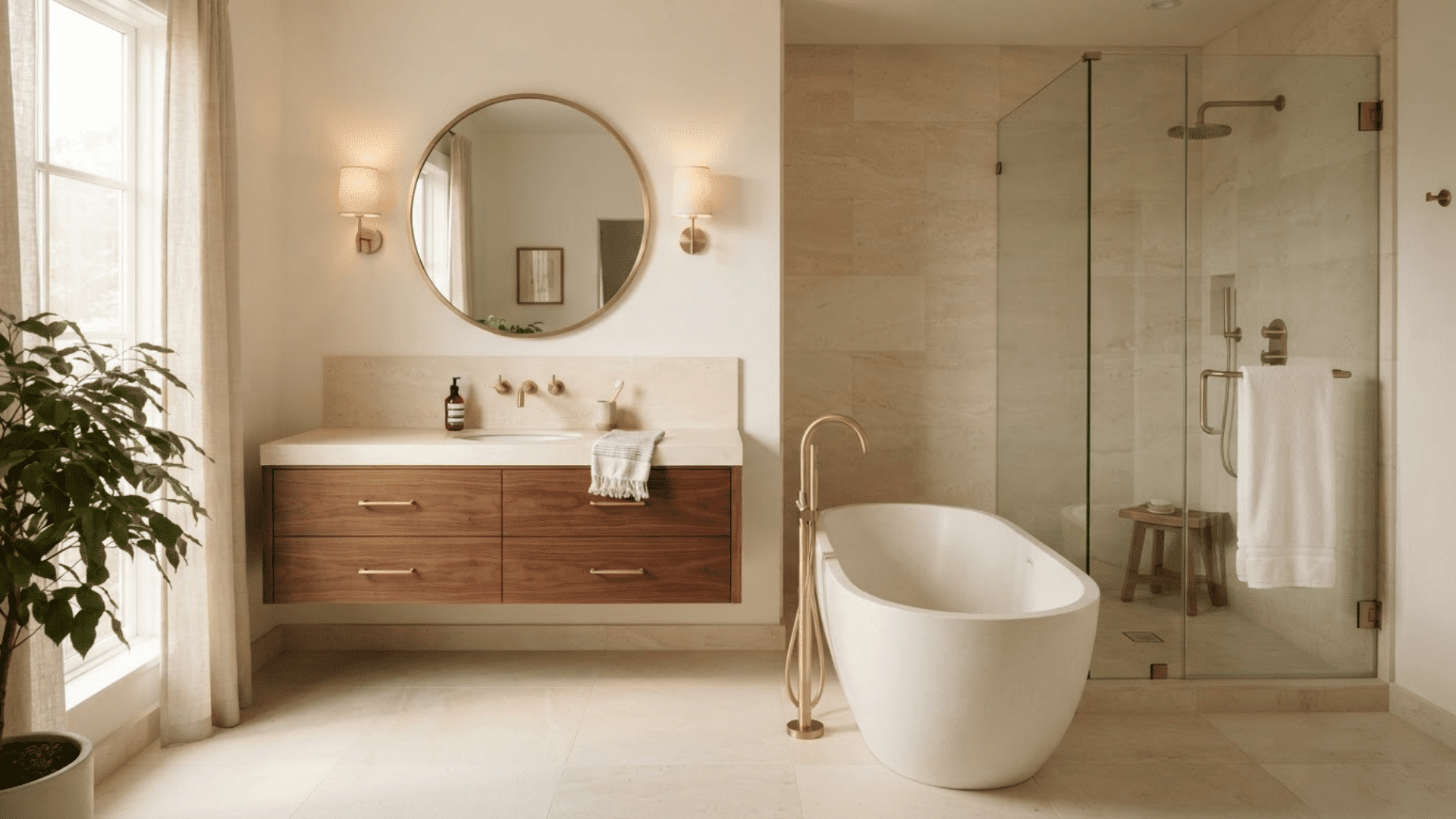
Brass can add warmth to stone-heavy bathrooms, especially when paired with marble, limestone, or pale porcelain.
Brushed or aged brass often feels softer than highly polished finishes. Use the same finish across faucets, shower controls, handles, and towel bars to create consistency. Avoid mixing too many metal finishes in one room unless there is a clear plan.
Brass works particularly well against warm white, beige, green, and dark stone surfaces, giving the bathroom a strong but balanced visual contrast.
14. Install Heated Bathroom Floors
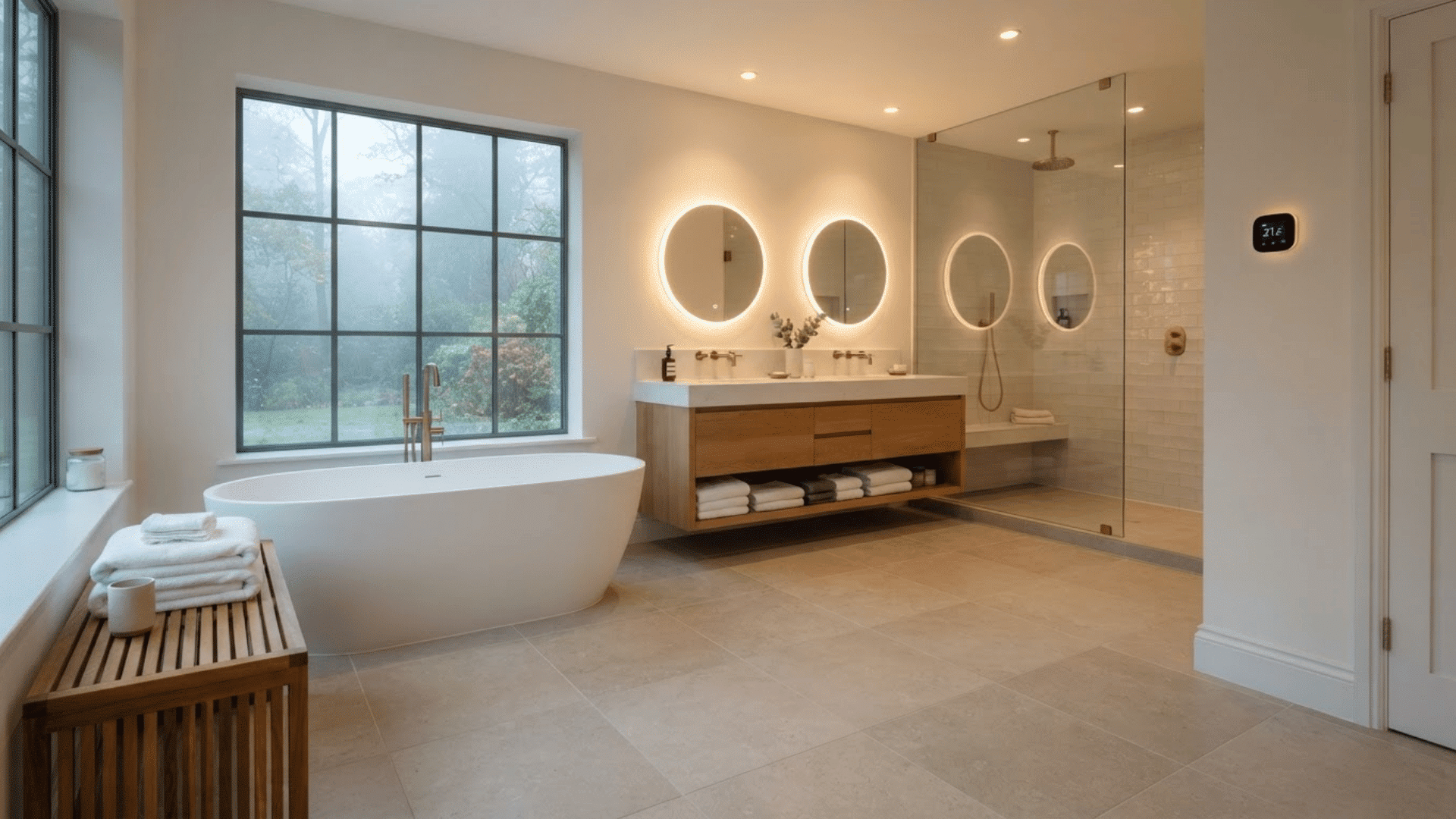
Heated floors can make cold tile more comfortable, especially during early mornings or cooler months. Electric systems are often used in smaller renovation areas, while hydronic systems may suit larger projects depending on the home.
The heating system should be planned before the finished floor is installed. Porcelain and stone usually work well with radiant heat because they conduct warmth effectively.
A thermostat allows better control and can help keep the floor comfortable without heating the entire room more than necessary.
15. Bring in More Natural Light
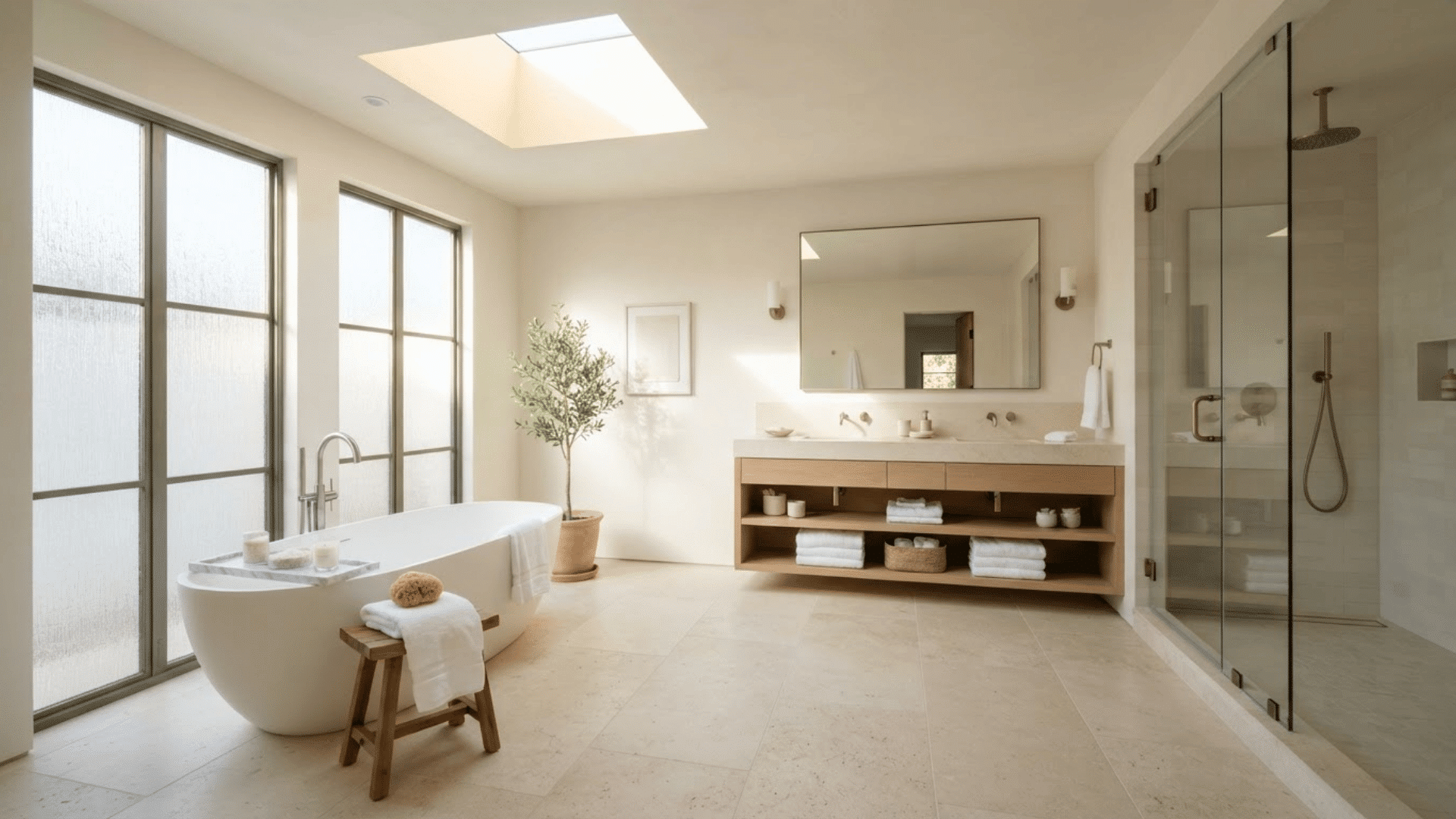
Natural light can make a bathroom feel larger and bring out the true color of stone, tile, and wood. Large windows work well when privacy allows, while frosted glass or higher window placement can offer more coverage.
Skylights can be useful in bathrooms with limited wall space. Place mirrors where they can reflect daylight deeper into the room.
Avoid blocking windows with tall cabinets. A bright room can often feel more open and relaxed without needing extra decoration or strong color.
16. Create an Indoor-Outdoor Feel
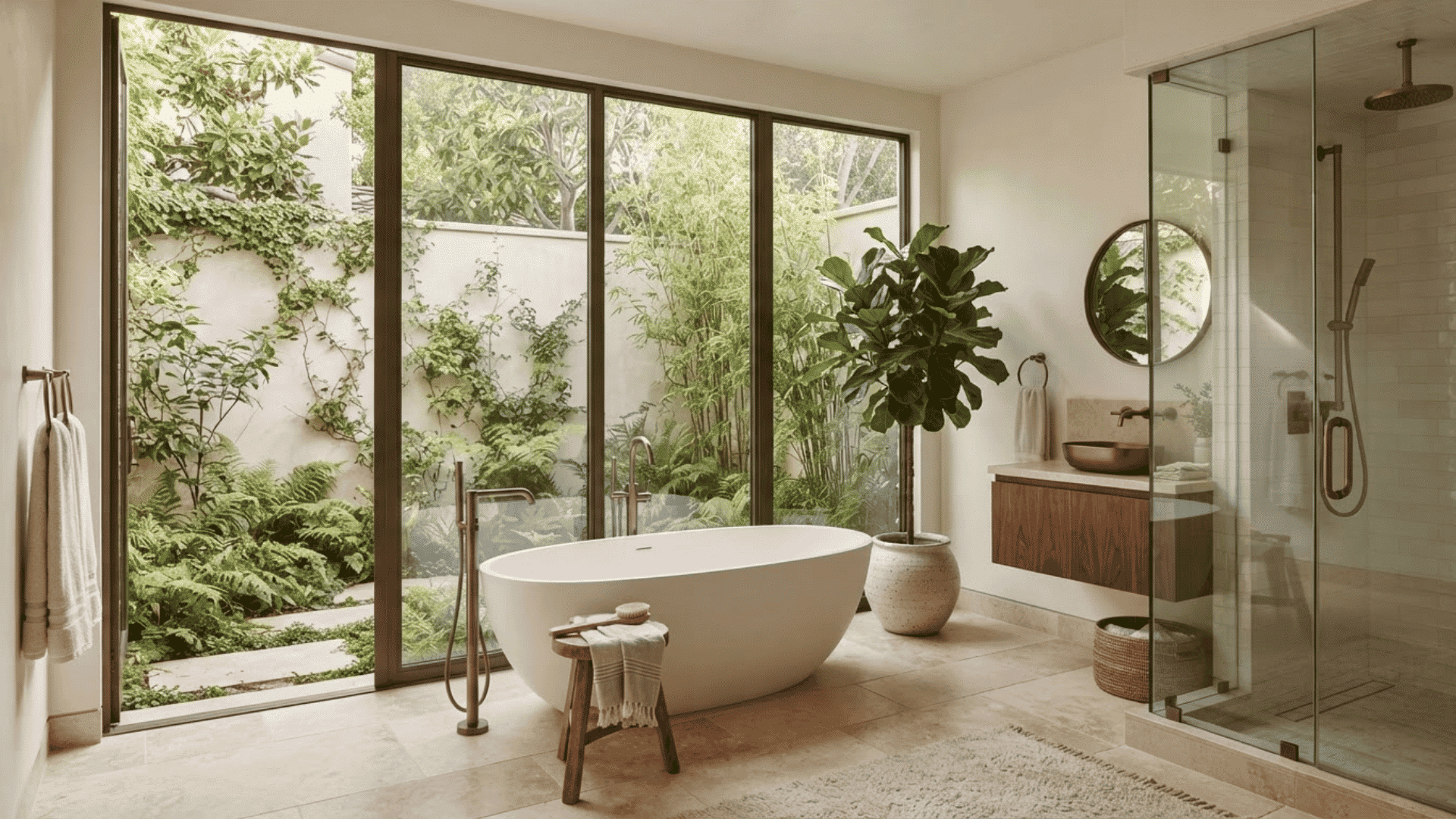
A bathroom can feel more connected to nature through garden views, large windows, natural materials, and plenty of daylight.
A tub facing a private courtyard can create a calm focal point, while plants can soften stone and tile. Sliding glass doors may work in homes with protected outdoor areas. Always consider privacy before adding large openings.
Using similar materials inside and outside, such as matching stone tones, can visually connect both spaces and make the bathroom feel more open.
17. Add Multiple Shower Functions
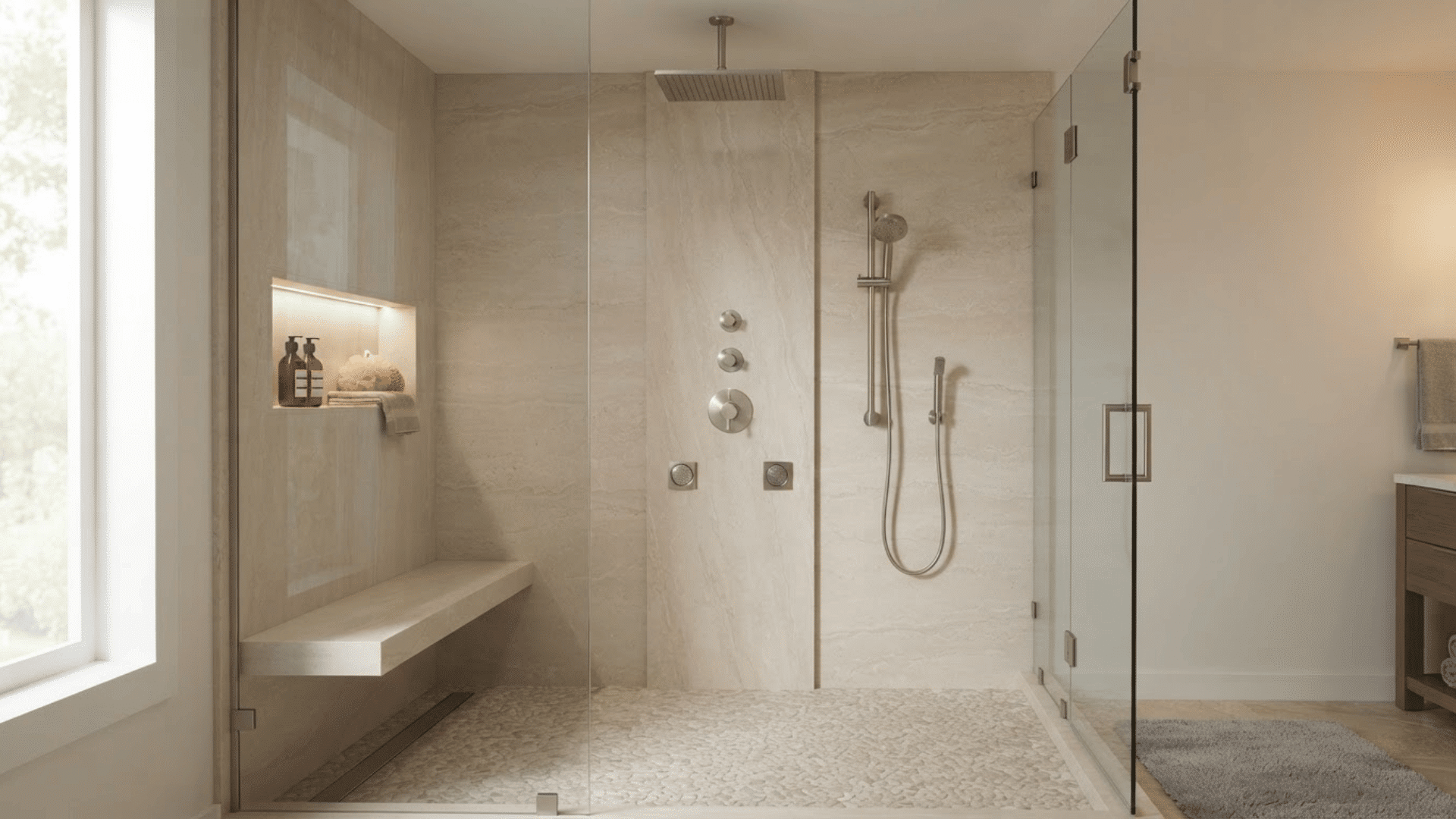
A high-end shower can include more than one water source for added comfort. A ceiling-mounted rainfall head, handheld sprayer, and wall-mounted showerhead give users different options.
Thermostatic controls can help keep water temperature steady. You can also add body sprays, but the plumbing system needs enough water pressure and supply capacity.
Controls should be easy to reach without standing directly under the water. Keeping the fixture layout simple prevents the shower wall from looking overly busy.
18. Add a Built-In Shower Bench
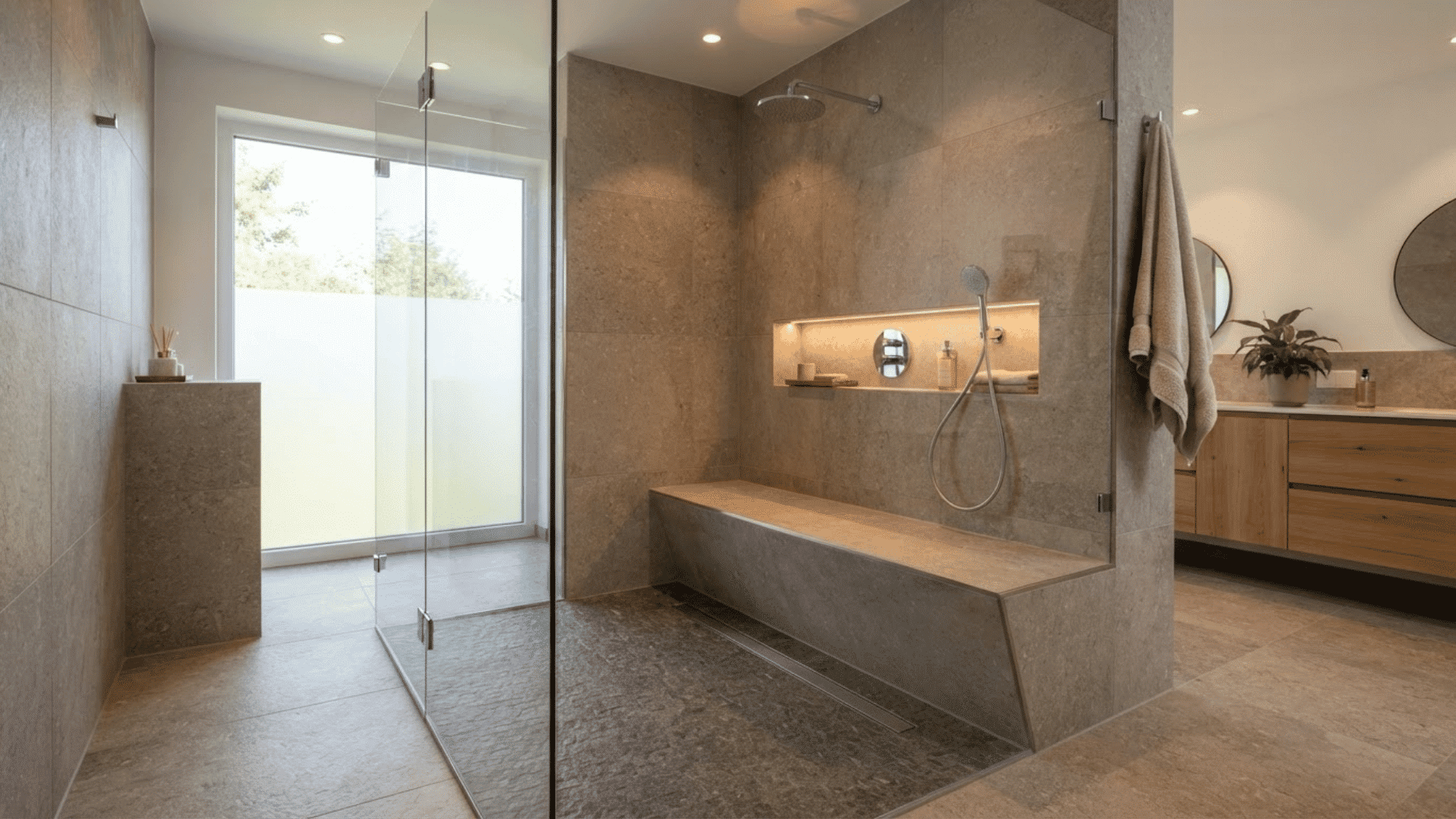
A built-in bench adds comfort and can make a large shower more useful. It provides a place to sit, hold products, or support tasks such as shaving.
The bench should slope slightly toward the drain so water does not collect on the surface. Cover it in the same tile as the shower for a quiet look, or use stone to create a small contrast.
Position it away from the main water stream when possible so the seating area stays more comfortable during use.
19. Use Large-Format Tile
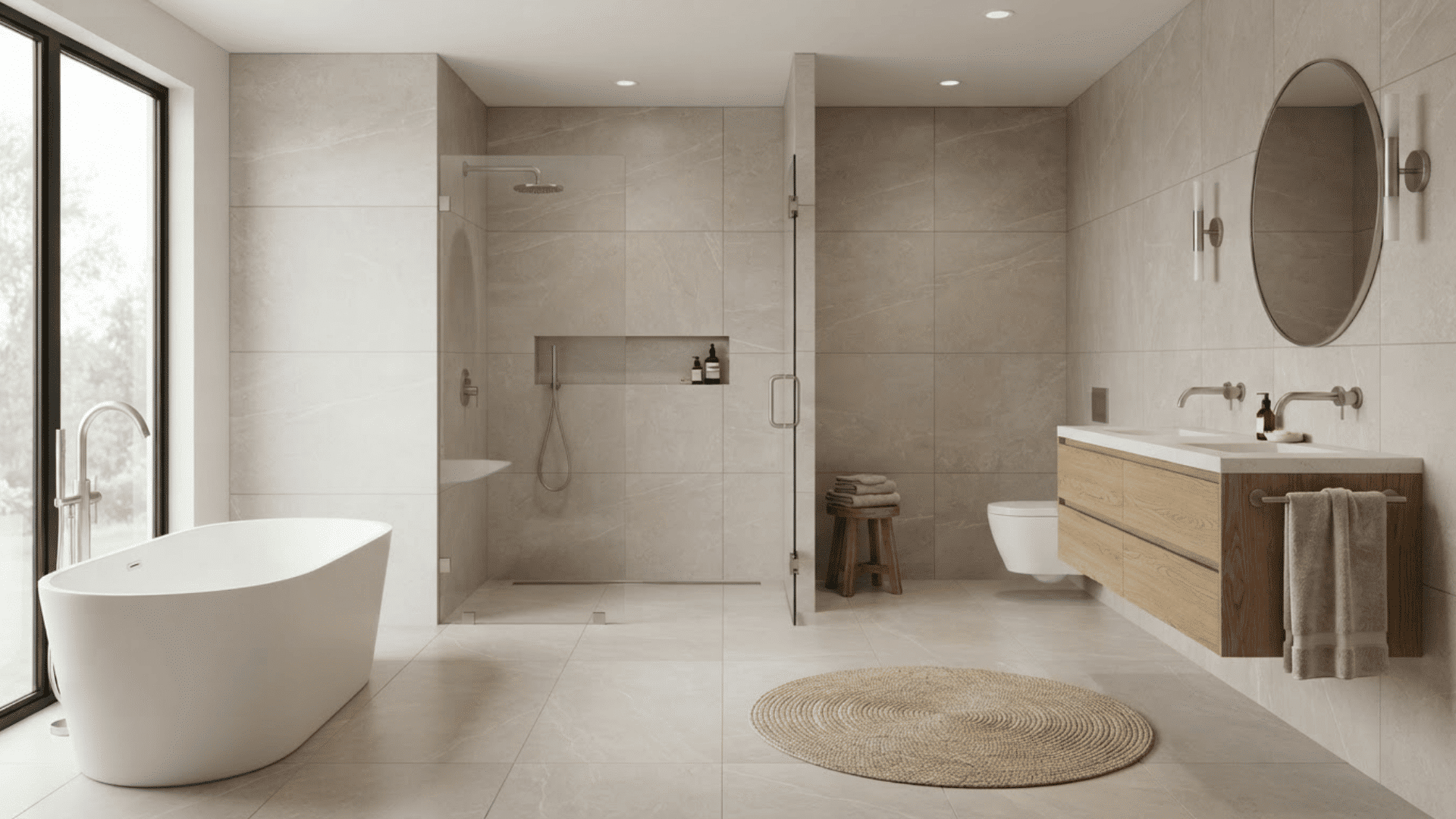
Large-format tile can make walls and floors feel cleaner because there are fewer grout lines. It works well in both small and large bathrooms when the tile size suits the room proportions.
Stone-look porcelain can create a rich appearance while offering easier care than some natural materials. Careful installation is important because large tiles need a flat surface underneath.
Use grout that closely matches the tile for a quieter finish, or choose a slight contrast if the layout itself is part of the design.
20. Add a Statement Stone Wall
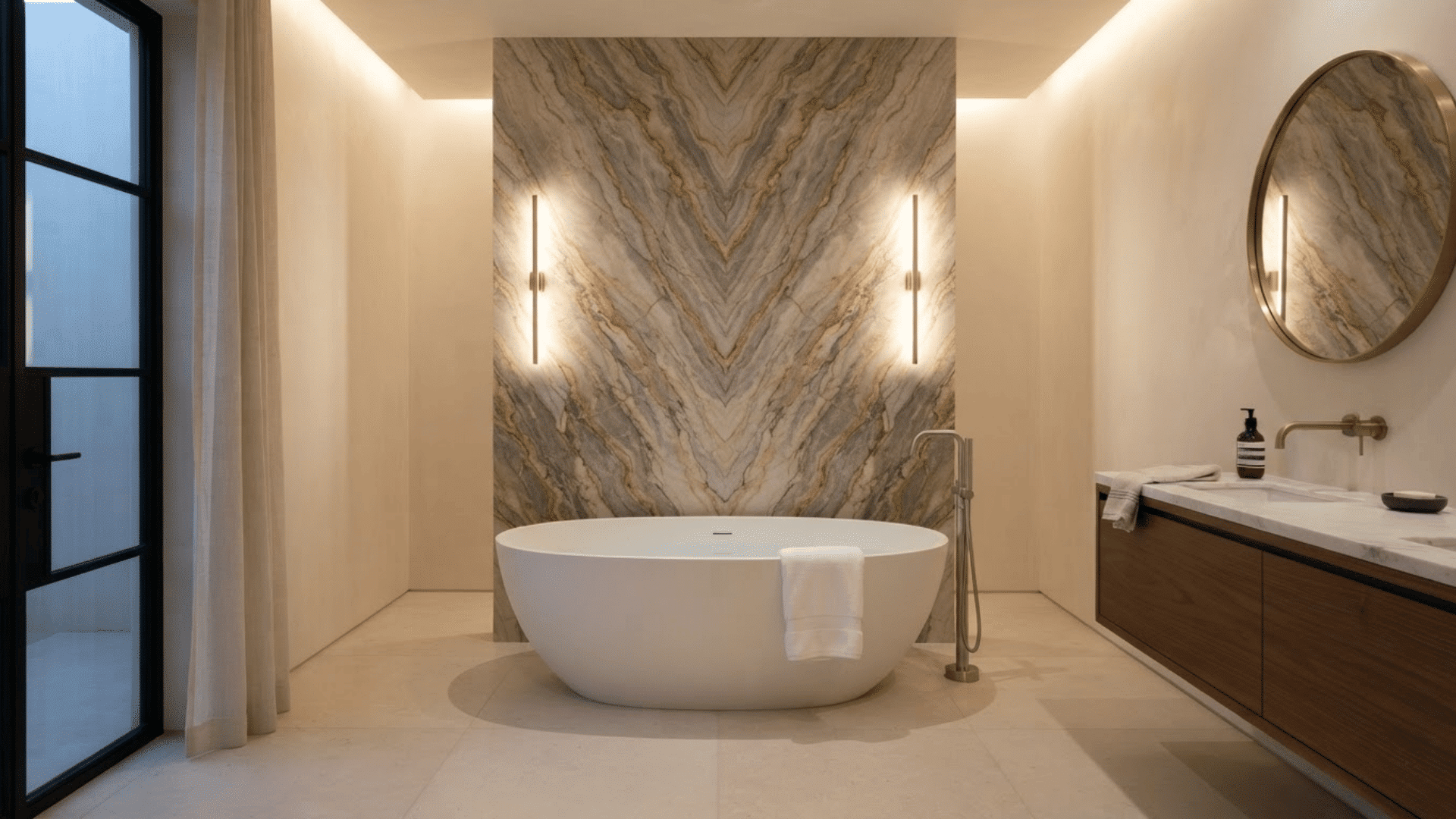
A stone feature wall can give the bathroom one strong visual focus without covering every surface. Place it behind the tub, vanity, or shower for the biggest effect.
Quartzite, limestone, travertine, marble, and stone-look porcelain can all create different moods. Let the natural pattern or texture lead the design, then keep nearby finishes simpler.
Wall lighting can bring out the surface detail at night. Proper sealing may be needed when using porous natural stone in areas exposed to moisture.
21. Keep Bathroom Storage Hidden
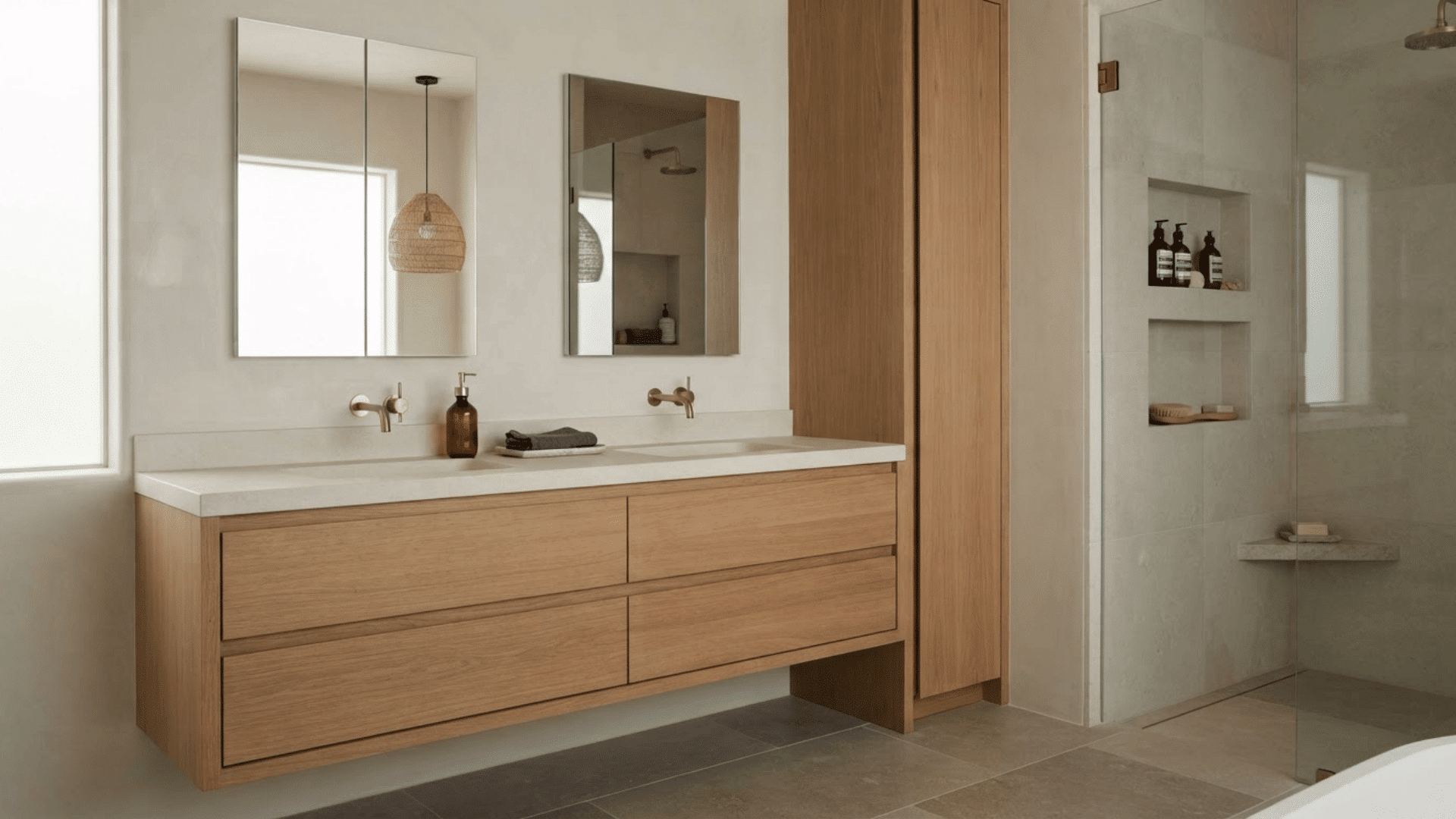
Hidden storage helps a bathroom look calmer and keeps daily items out of sight. Recessed medicine cabinets can sit behind mirrors, while deep vanity drawers can hold hair tools, skincare, and toiletries. Tall cabinets work well for towels and larger supplies.
Built-in niches can handle shower products without bulky racks. Plan storage around real daily habits rather than adding cabinets at random.
When everything has a place, countertops stay clearer, and the design feels more controlled without needing constant tidying.
22. Add Smart Bathroom Features
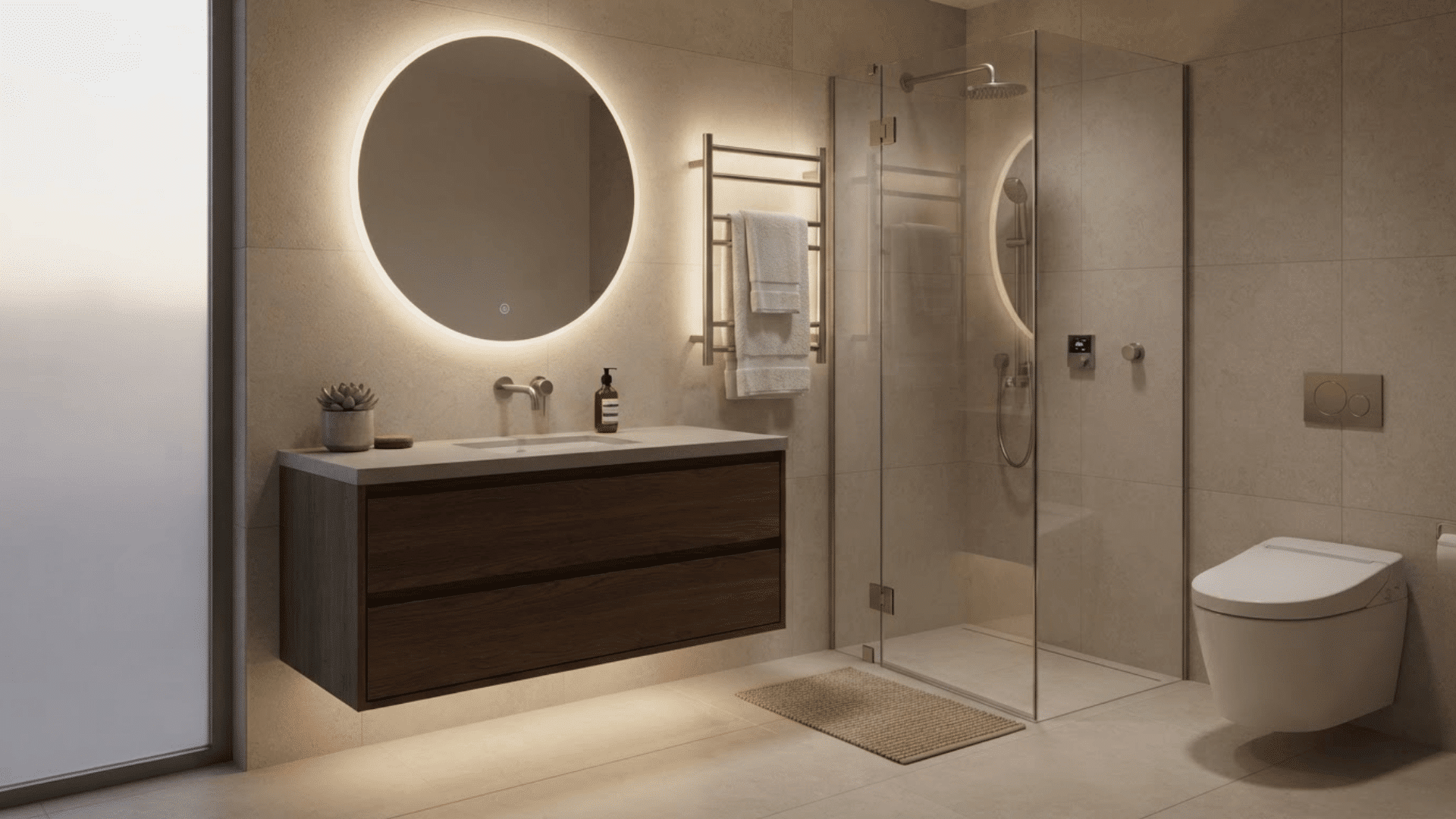
Smart features can make daily routines more convenient when chosen for real use. Digital shower controls can save preferred temperatures, while smart mirrors may include lighting, demisting, or built-in displays.
Motion lighting can help during late-night visits. Heated towel rails with timers add comfort without running all day.
Smart toilets may offer heated seats, bidet functions, and automatic flushing. Choose systems that are easy to maintain and still work well if connected features or apps are unavailable.
23. Keep Fixture Finishes Consistent
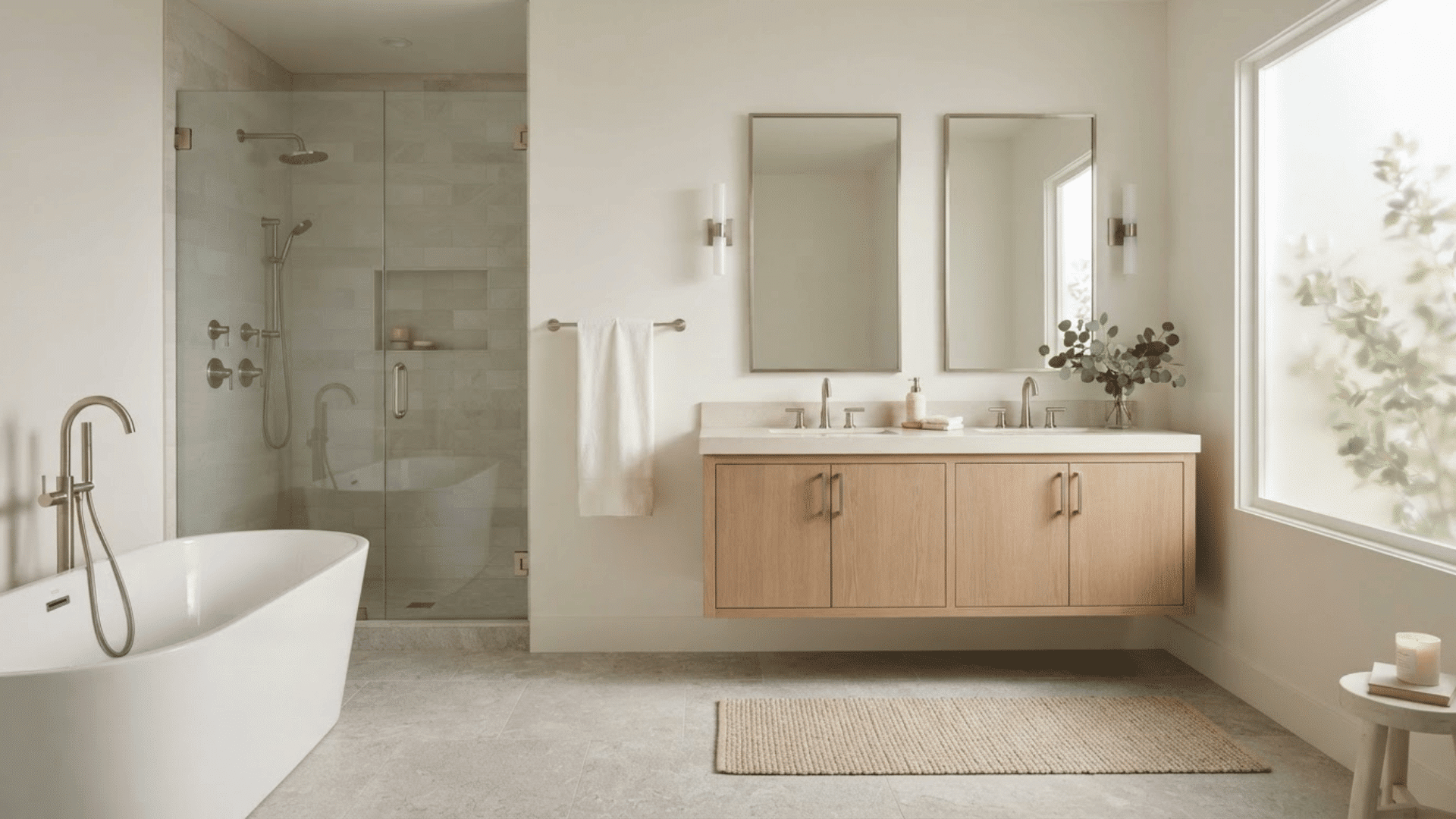
Matching fixture finishes can make the bathroom feel more organized. Choose one main metal for faucets, shower controls, towel bars, handles, and visible drains.
Brushed nickel can feel soft and neutral, while matte black adds stronger contrast. Brass brings warmth, and chrome can keep the room bright.
Mixing metals can work, but limit it to two finishes with a clear pattern. Repeating the same finish across several areas helps tie the tub, vanity, and shower together.
24. Add Comfortable Bathroom Seating
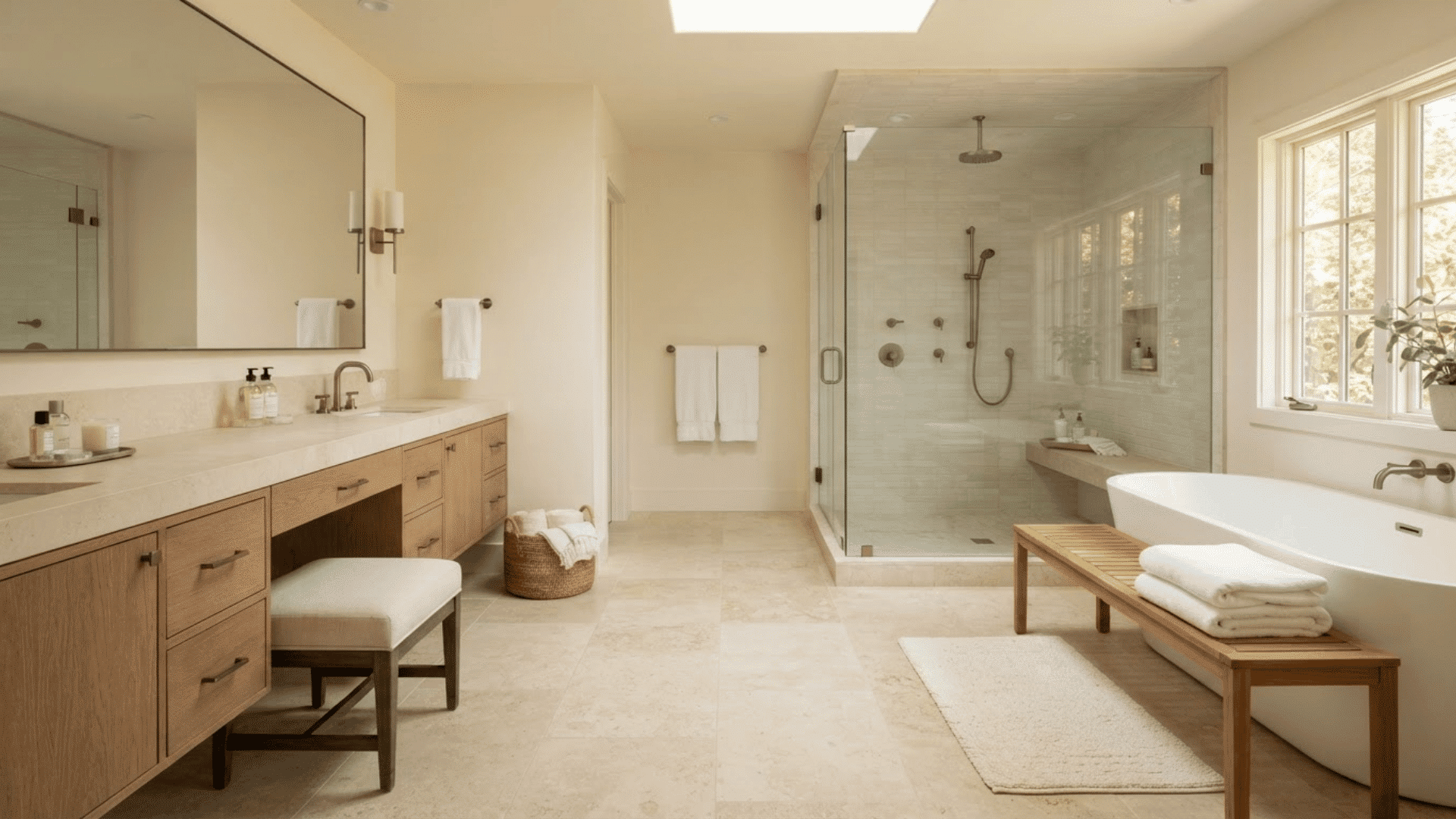
A large master bathroom can benefit from a small seating area if space allows. A padded stool near the vanity can help with grooming, while a wooden bench beside the tub offers a place for towels or clothing.
A built-in ledge can provide seating without adding another piece of furniture. Choose materials that handle humidity well.
Keep the seat out of the main walking path so it does not interrupt movement. One practical piece is usually enough to make the space feel more comfortable.
25. Connect The Bathroom with a Dressing Area
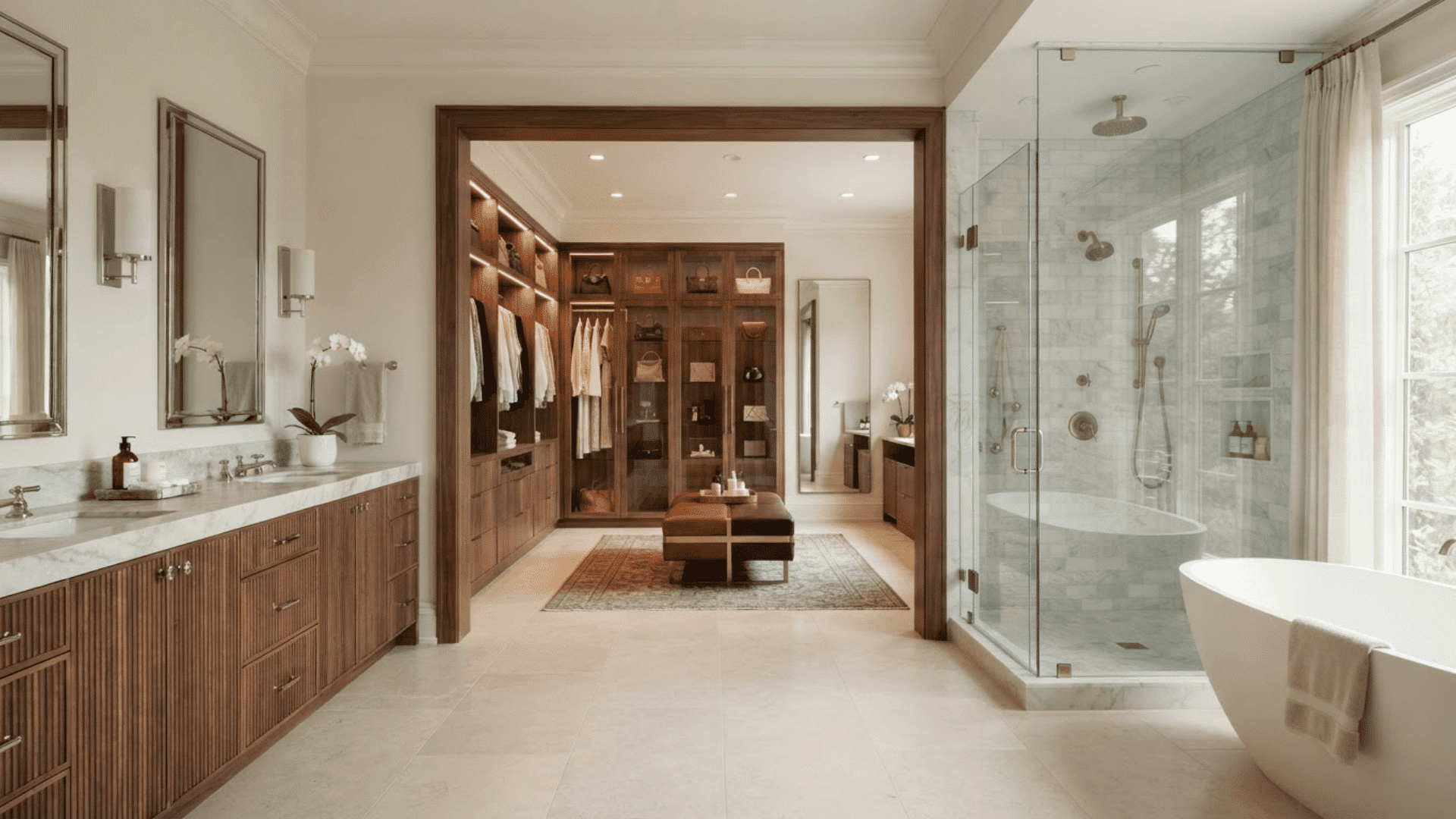
Connecting the bathroom to a dressing area can make the primary suite feel more organized. The two spaces can share finishes, cabinetry, or flooring so they feel related without looking identical.
Place the vanity, wardrobe, and storage areas where morning routines flow naturally from one task to the next.
Good ventilation is important so moisture does not move into clothing storage. A doorway, partial wall, or short passage can provide separation while keeping both spaces easy to reach.
Best Materials for Master Luxury Bathrooms
Material choice affects appearance, upkeep, comfort, and long-term use. The table below compares common options for different areas of the bathroom.
| Material | Best Use | Main Benefit | Care Level |
|---|---|---|---|
| Marble | Vanity tops, feature walls, tub surrounds | Natural pattern and rich finish | High |
| Quartzite | Counters and feature walls | Strong natural stone with striking movement | Medium |
| Porcelain Tile | Floors, showers, walls | Water-resistant and easy to clean | Low |
| Travertine | Floors and wall surfaces | Warm, textured stone appearance | Medium to high |
| Quartz | Vanity countertops | Nonporous surface with simple upkeep | Low |
| Glass | Shower enclosures and partitions | Keeps the room open and bright | Medium |
| Teak | Benches and selected accents | Handles humid settings better than many woods | Medium |
| Engineered Wood | Vanity cabinetry | Adds warmth with better moisture stability | Medium |
Common Mistakes to Avoid in a Luxury Master Bathroom
A high-end look can quickly lose its impact when you ignore practical details. These common mistakes can affect comfort, safety, and long-term use.
- Using Too Many Finishes: Mixing several stone patterns, tile styles, metals and colors can make the room feel busy. Limit the main finishes and repeat them with purpose.
- Ignoring Storage Needs: Beautiful countertops lose their impact when covered with products. Plan drawers, cabinets, niches, and towel storage around items used every day.
- Choosing Slippery Flooring: Polished surfaces can become unsafe when wet. Use flooring rated for bathroom use and consider textured finishes in shower and high-moisture areas.
- Relying on One Light Source: A single ceiling light rarely works well for grooming, bathing and evening use. Combine task, general, and softer accent lighting.
- Skipping Ventilation Planning: Steam and moisture can affect paint, cabinets, grout and mirrors. Use properly sized ventilation and place it where it can remove moisture effectively.
Conclusion
A luxury master bathroom should balance comfort, function and visual appeal without relying on excessive features. Thoughtful planning helps each element serve a clear purpose.
Start with the layout and consider movement, storage, lighting and fixture placement. Then choose materials and finishes that suit the room and its maintenance needs.
From freestanding tubs and spacious showers to heated floors and smart features, the right additions depend on how the bathroom will be used.
Start with the idea that fits the space best, then build the remaining choices around it. Which luxury bathroom idea would you add to your space? Share your choice in the comments below.
Frequently Asked Questions
How Much Space Should be Left Around a Freestanding Tub?
Many tubs need comfortable clearance for cleaning and movement. The exact space depends on the tub size, faucet position, and room layout.
Are Wall-Mounted Faucets Practical in Master Bathrooms?
Yes. They can free up counter space and create a clean vanity area, but you need to plan plumbing placement before the wall is finished.
How Can Bathroom Mirrors Reduce Fog?
A mirror with a built-in demister pad can keep part of the glass clear by gently warming the surface behind it.