

Many people schedule a wellness visit expecting a routine physical exam, only to discover that the appointment focuses on preventive care instead.
This common misunderstanding often creates confusion about what the visit includes and why it matters.
A wellness visit assesses health risks, reviews preventive care needs, and supports long-term wellbeing before problems develop.
Understanding how it works helps set the right expectations and ensures every appointment delivers greater value.
Read on to learn exactly what happens during a wellness visit and how to prepare for one.
What is a Wellness Visit?
A wellness visit is a preventive healthcare appointment that focuses on helping you stay healthy rather than treating a current illness or injury.
During the visit, your healthcare provider reviews your medical history, medications, family health history, lifestyle habits, and any risk factors that could affect your future health.
While many people associate wellness visits with the Medicare Annual Wellness Visit for older adults, they are not limited to seniors.
Many health plans offer similar preventive visits for adults of different ages.
The main goal is to identify potential health risks early, recommend appropriate screenings and vaccinations, and create a personalized plan to support your long-term health rather than diagnose or treat medical conditions.
What to Expect During a Wellness Visit
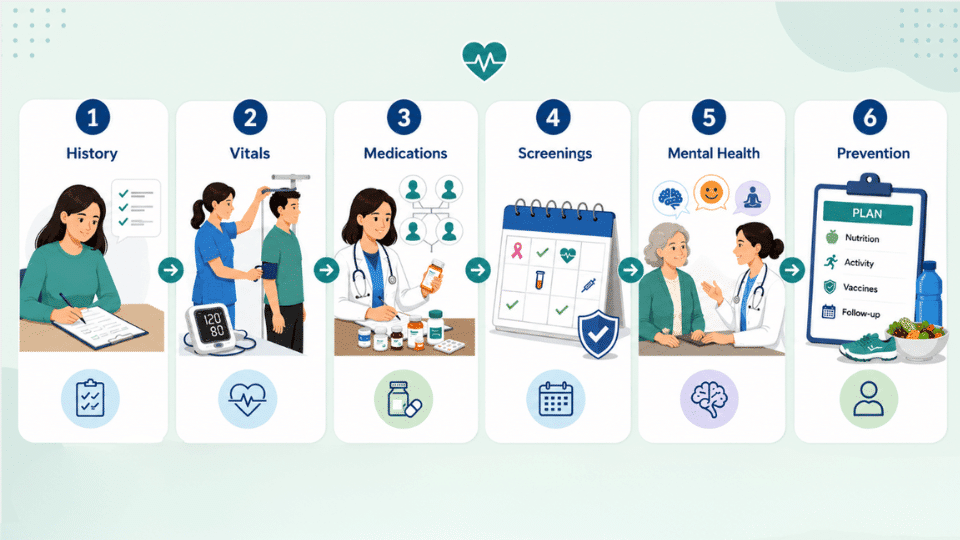
A wellness visit follows a structured preventive approach that helps your healthcare provider understand your overall health and plan future care.
Complete a Health History and Risk Assessment
Your wellness visit usually begins with questions about your personal health history, past illnesses, surgeries, allergies, lifestyle habits, and family medical history.
You may also complete a health risk assessment questionnaire covering diet, exercise, tobacco or alcohol use, sleep, and daily activities.
This information helps identify potential risks before symptoms appear and guides recommendations for preventive care tailored to your health needs.
Record Your Vital Signs
Most wellness visits include routine measurements such as your height, weight, blood pressure, and sometimes body mass index (BMI).
Depending on your provider or insurance plan, they may also take additional basic measurements.
These numbers establish a health baseline, track trends over time, and help determine whether further screenings or lifestyle changes should be recommended during future preventive visits.
Review Medications and Family History
Your healthcare provider will go over all prescription medications, over-the-counter medicines, vitamins, and supplements you take.
They’ll also update your family medical history to identify inherited risks for conditions such as heart disease, diabetes, or certain cancers.
Keeping this information accurate helps prevent medication issues, supports better healthcare decisions, and ensures recommended screenings match your personal risk profile.
Plan Your Screening Schedule
Rather than performing extensive medical tests during the appointment, your provider reviews which preventive screenings, vaccinations, or laboratory tests you are due for now and which ones should be scheduled later.
This may include cancer screenings, cholesterol checks, diabetes testing, bone density scans, or immunizations.
Planning these services ahead helps detect health problems earlier and keeps preventive care on schedule.
Discuss Cognitive and Mental Health
Your provider may ask simple questions about memory, mood, stress, anxiety, sleep quality, or emotional well-being.
For older adults, brief cognitive assessments can help identify early signs of memory changes or other concerns.
These conversations are not meant to diagnose mental health conditions but to recognize potential issues early and determine whether additional evaluation or support would be beneficial.
Receive a Personalized Prevention Plan
At the end of your wellness visit, your provider creates a personalized prevention plan based on your health history, current risk factors, and recommended screenings.
This plan may include lifestyle goals, vaccination reminders, follow-up appointments, and guidance on nutrition, physical activity, or other healthy habits.
Keep in mind that a wellness visit usually does not include a hands-on physical examination unless a separate physical has been scheduled.
Wellness Visit vs. Physical Exam
This comparison highlights the key differences between wellness visits and physical exams at a glance.
| Feature | Wellness Visit | Physical Exam |
|---|---|---|
| Purpose | Focuses on prevention and future health planning | Evaluates your current physical health |
| What’s Included | Health history, risk assessment, medication review, preventive screenings, and personalized care plan | Medical history, vital signs, hands-on examination, and evaluation of symptoms or concerns |
| Hands-On Exam | Usually no | Yes |
| How Often | Typically once a year, depending on your health plan | As recommended by your healthcare provider |
| Typical Cost | Often covered as preventive care, depending on your insurance | Coverage varies by insurance plan and services provided |
| Who It’s For | People seeking preventive care and long-term health planning | Anyone needing a routine checkup or assessment of current health concerns |
Always confirm the appointment type and insurance coverage beforehand to avoid unexpected services, costs, or confusion.
Why People Often Confuse The Two
The confusion usually comes from how appointments are scheduled and described, not from what actually happens during the visit.
- Both are Called Annual Checkups: Many clinics use similar terms, making wellness visits and physical exams sound interchangeable.
- Insurance Wording Varies: Health plans and providers often define preventive services differently, adding to the misunderstanding.
- Appointment Names Can be Unclear: Online booking systems may not explain what each visit includes.
- Expectations Don’t Match Reality: Many patients arrive expecting a hands-on physical exam but instead spend most of the visit discussing health history, medications, and future screenings.
- Providers Don’t Always Explain The Difference: Without a clear explanation beforehand, it’s easy to leave confused about what the appointment was actually for.
Who Needs a Wellness Visit and How Often

Most adults can benefit from a wellness visit once a year, as it helps track health changes, update preventive care, and identify potential risks before they become serious.
For Medicare beneficiaries, the schedule is slightly different. During the first year of Medicare Part B coverage, you may qualify for the Welcome to Medicare preventive visit.
After that, you’re generally eligible for a Medicare Annual Wellness Visit every 12 months, which plays a real role in how older adults maintain their health and independence.
Many private insurance plans also cover yearly preventive wellness visits, although the services and eligibility can vary by insurer.
How to Prepare for Your Wellness Visit
A little preparation helps your healthcare provider make the most of your wellness visit and preventive care.
1. Bring an Updated Medication List: Include prescription drugs, over-the-counter medicines, vitamins, and supplements with their dosages.
2. Know Your Family Health History: Be ready to discuss conditions such as heart disease, diabetes, cancer, or other inherited illnesses.
3. Write down Your Questions: Note any concerns about screenings, vaccines, lifestyle changes, or preventive care so nothing is overlooked.
4. Carry Recent Test Results: Bring reports from blood work, imaging, or screenings completed outside your healthcare provider’s office.
5. Review Your Health Changes: Make a note of new symptoms, recent surgeries, hospital visits, allergies, or major lifestyle changes since your last appointment.
What if Something Comes Up During The Visit?
A wellness visit is designed for preventive care, but it may uncover concerns that need further attention.
If your healthcare provider identifies abnormal findings, new symptoms, or potential health risks, they will usually recommend a separate follow-up appointment for evaluation or treatment.
Additional tests, referrals to specialists, or diagnostic procedures may also be scheduled if needed.
Knowing this beforehand helps set realistic expectations and explains why your wellness visit may not include diagnosis or treatment, even if a health concern is identified during the appointment.
Conclusion
A wellness visit is one of the simplest ways to stay proactive about your health.
Rather than treating illness, it focuses on preventing future problems through regular screenings, risk assessments, and personalized health planning.
Knowing what to expect can help you arrive prepared and get the most value from your appointment.
If you’re due for your annual wellness visit, schedule it with your healthcare provider and use this opportunity to take charge of your long-term wellbeing.
Have questions or experiences to share? Let us know in the comments below.
Frequently Asked Questions
How Long Does a Wellness Visit Usually Take?
A wellness visit typically lasts 30 to 60 minutes, depending on health history and preventive care needs.
Do Patients Need to Fast Before a Wellness Visit?
Fasting is usually unnecessary unless specific blood tests requiring fasting are scheduled during or after the appointment.
Can a Patient Discuss New Symptoms During a Wellness Visit?
Patients can mention new symptoms, but detailed evaluation or treatment may require a separate medical appointment afterward.