Your first apartment bedroom has to do more than hold a bed. It’s where you recover from work, study, errands, moving stress, and the constant noise of being newly on your own. A restful setup doesn’t require expensive furniture or a perfect floor plan. It starts with a few practical choices that make the room easier to sleep in, easier to keep tidy, and calmer to return to at night.
Start With the Bed Placement, Not the Decor
Before you buy lamps, rugs, wall art, or storage baskets, decide where the bed should go. In a first apartment, the bedroom is often small, awkwardly shaped, or shared with a desk, dresser, laundry basket, and moving boxes. If the bed lands in the wrong spot, every other decision becomes harder.
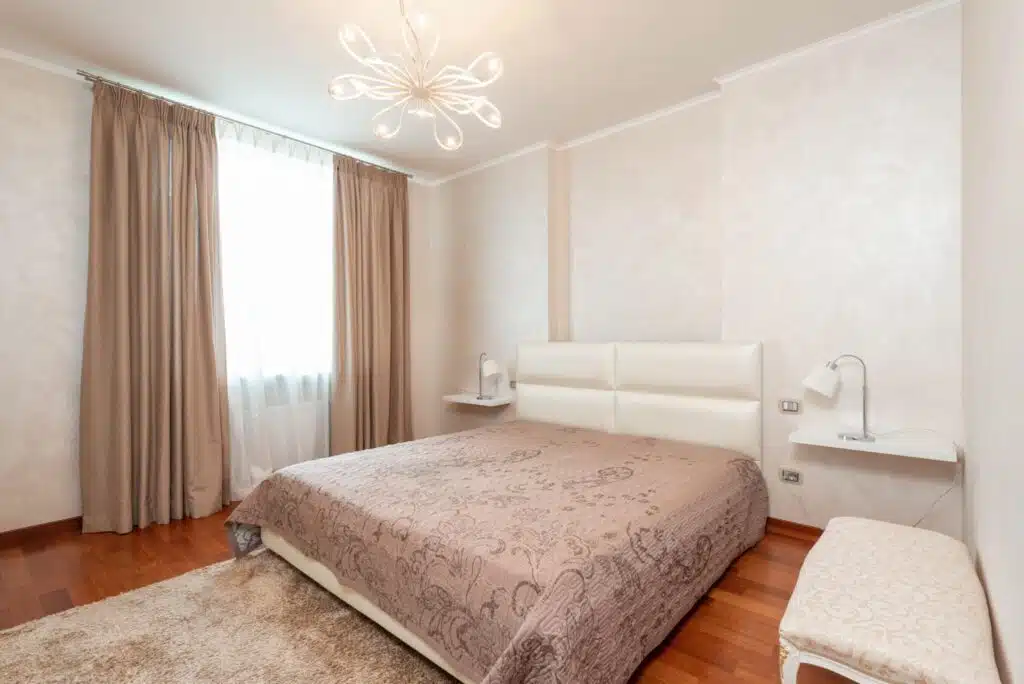
Place the bed where you can move around it without squeezing past furniture every morning. You don’t need a perfect hotel-style layout, but you should be able to get in and out of bed comfortably, open drawers, and reach an outlet for a lamp or charger. If the room is narrow, pushing the bed against one wall can make sense. If you have a little more space, leaving a walkway on both sides makes the room feel more settled.
Try not to place the bed directly beside the bedroom door if you can avoid it. That spot usually feels busy because it catches hallway light, noise, and movement. A wall opposite or diagonal from the door often feels more grounded. If the only workable spot is near the door, use a small rug, curtain, or bedside table to visually separate the sleeping area from the room’s entry point.
Think about windows, too. Morning light can help you wake naturally, but streetlights, headlights, or early sun can interrupt sleep. If your bed has to sit under or beside a window, plan for window coverings early. That one detail can make a basic apartment bedroom feel much more restful.
Build a Simple Sleep Zone Around What You Use Nightly
A restful bedroom works best when the things you need at night are easy to reach, and the things that keep you awake are harder to reach. That sounds obvious, but many first apartments become cluttered because everything lands wherever there’s space.
Start with a small bedside setup. You don’t need matching nightstands. A compact table, low shelf, crate, or slim drawer unit can work. Keep only the essentials nearby: a lamp, water, tissues, a book, lip balm, glasses, or whatever you actually use before sleeping. When the bedside surface becomes a drop zone for receipts, dishes, keys, and random chargers, the room starts to feel unfinished.
If you’re still apartment hunting or comparing layouts, pay attention to whether the bedroom can comfortably hold the bed size you already own. Some apartments in midtown Tucson may offer convenient locations, but the bedroom layout still matters if you want space for a bed, dresser, and a quiet corner without crowding the room.
Keep charging simple. Ideally, your phone should charge away from your pillow, even if it’s still in the room. A charger across the room makes late-night scrolling less automatic and helps keep the bed connected with rest instead of notifications. If you use your phone as an alarm, choose a spot close enough to hear but far enough that you have to get up to turn it off.
This is also the right time to define what does not belong in the sleep zone. Work papers, unopened packages, laundry piles, and cleaning supplies may need temporary homes while you unpack, but don’t let them settle beside the bed. Your bedroom will feel calmer when the area around the bed has one clear purpose.
Use Light, Temperature, and Sound to Make Sleep Easier
Once the layout works, focus on the conditions that shape how the room feels at night. Light, temperature, and sound are usually more important than decor, especially in a first apartment where you may be dealing with thin walls, old blinds, noisy neighbors, or bright outdoor lighting.
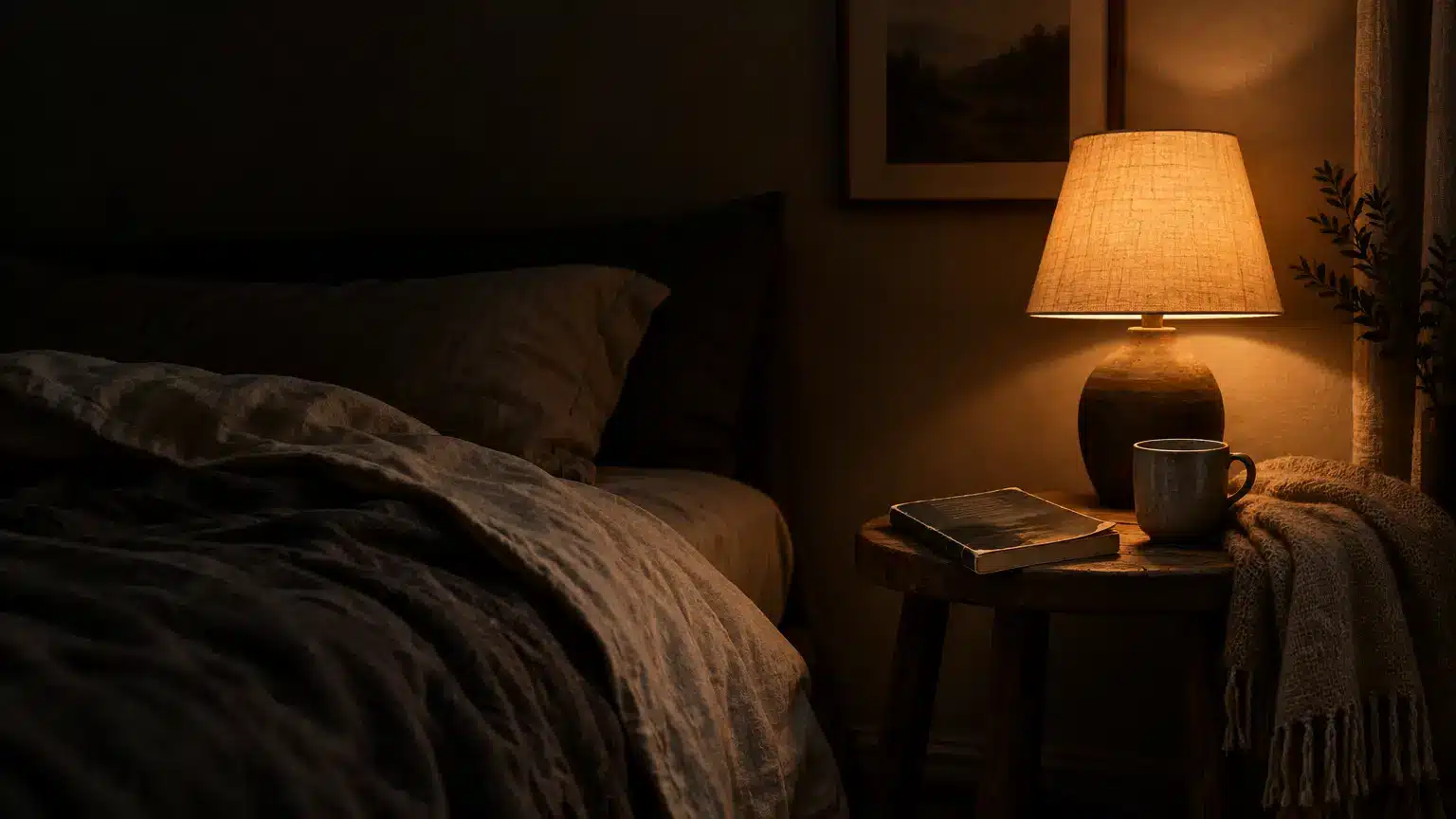
Start with lighting. Overhead lights are useful when you’re cleaning or unpacking, but they’re often too harsh before bed. Add one warm lamp near the bed or dresser so you can wind down without lighting the whole room. If you read in bed, choose a lamp bright enough for the page but soft enough that it doesn’t make the room feel like a workspace.
Window coverings are worth prioritizing. If your apartment already has blinds, you may still need curtains to soften the room and block light. Blackout curtains can be helpful if your window faces a parking lot, streetlamp, or sunrise. If you can’t drill into the wall, use renter-friendly tension rods, adhesive hooks rated for curtains, or a freestanding curtain frame.
Temperature matters as well. The CDC notes that most adults need at least seven hours of sleep per night, and your room setup should support that basic need rather than work against it: adult sleep recommendations. In a rental, you may not control the thermostat perfectly, so use layers. A breathable sheet, washable blanket, and extra throw give you more flexibility than one heavy comforter.
Sound is more personal. Some people sleep better with silence, while others need steady background noise to cover traffic, roommates, or hallway sounds. A fan, white noise machine, or simple phone-based sound app can help create consistency. If noise comes through the door, a draft stopper can soften both sound and light from the hallway.
Choose Bedding That Fits Your Real Routine
Bedding is one of the easiest places to overspend when setting up a first apartment. It’s also one of the easiest places to make practical choices that improve the room every day.
Start with sheets you can wash regularly and actually put back on the bed without frustration. If you hate wrestling with complicated bedding, skip the layered showroom look. A fitted sheet, flat sheet if you use one, comforter or duvet, and two pillows may be enough. The goal is a bed that feels good at night and is easy to reset in the morning.
Choose fabrics based on how you sleep. If you run warm, lighter cotton or moisture-friendly materials usually feel better than heavy synthetic bedding. If you get cold easily, a warmer blanket layered over breathable sheets gives you more control. Avoid buying bedding only because it looks good in photos. The texture, weight, and maintenance matter more over time.
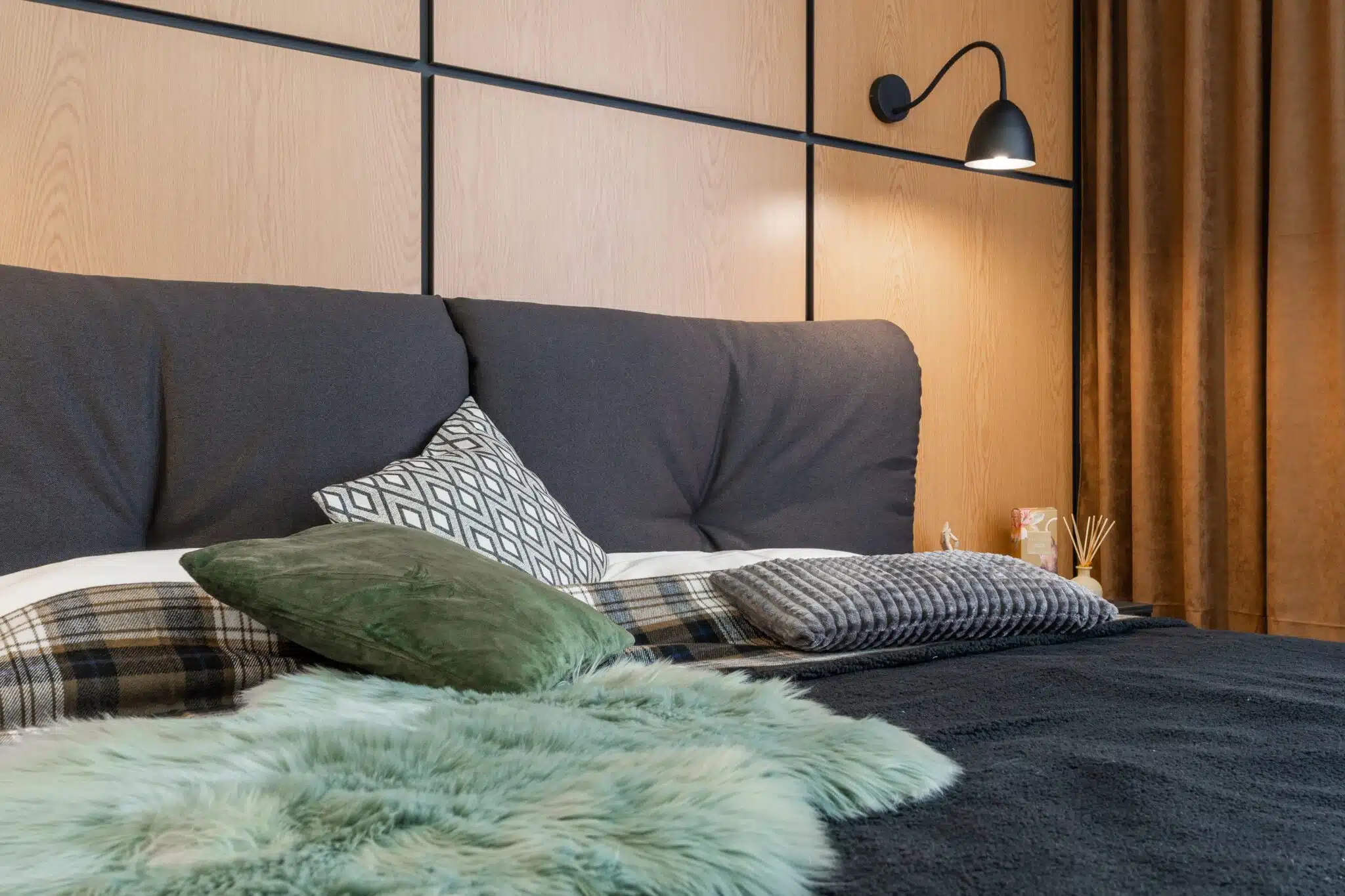
Pillows deserve attention, too. A decorative pillow arrangement can look nice, but too many pillows can become clutter if you have nowhere to put them at night. In a small apartment bedroom, two sleeping pillows and one supportive reading pillow may be more useful than a full stack of accents.
Keep a second set of sheets if your budget allows. It makes laundry easier and prevents that late-night situation where you realize your only sheet set is still damp. If you can’t buy a backup set right away, choose bedding that dries quickly and doesn’t require special care.
Create Storage That Reduces Visual Noise
A restful bedroom doesn’t have to be minimalist, but it does need a system for everyday mess. In a first apartment, storage is often limited, so the goal is not to hide everything. The goal is to give common items a predictable place to land.
Start with clothes. If you don’t have a large closet, use under-bed storage for off-season clothes, extra bedding, or shoes you don’t wear daily. Keep everyday clothes in the most accessible drawers or hanging space. When the daily routine is easy, piles are less likely to build up on the bed or chair.
Use closed storage for items that look messy even when they’re organized. Cords, toiletries, paperwork, and small accessories can make a bedroom feel busy. Boxes, baskets with lids, drawer organizers, or fabric bins can help. Open shelves are fine for books, plants, or a few objects you enjoy seeing, but they can become stressful when they hold everything.
Create a “not clean, not dirty” clothes spot. This is one of the most realistic bedroom systems you can add. A hook, small basket, or chair used intentionally can keep worn-once clothes from spreading across the floor. Without a designated spot, those clothes usually become the beginning of a larger mess.
Be careful with storage furniture that is too large for the room. A huge dresser may solve one problem while making the room feel cramped. In a first apartment, vertical storage, slim drawer units, and under-bed containers often work better than bulky pieces.
Add Personality Without Making the Room Feel Busy
A restful bedroom should still feel like yours. The trick is to add personality in a way that supports calm rather than competing for attention.
Choose a simple color direction before you buy decor. That doesn’t mean everything has to match. It just means repeating a few tones so the room feels intentional. Soft neutrals, muted greens, warm browns, dusty blues, or gentle earth tones usually work well in bedrooms because they don’t demand too much attention.
Add texture instead of clutter. A rug, knit throw, linen-style curtains, wood side table, or soft lampshade can make the room feel warmer without filling every surface. Texture is especially useful in rentals with plain white walls or basic flooring.
Wall decor can help, but leave some blank space. First apartments often collect random posters, photos, mirrors, and art quickly. Hang the pieces you genuinely like, then stop before every wall is full. A bedroom needs visual breathing room.
Plants can also make the space feel lived in, but choose realistic options. If your room has low light or you’re still learning plant care, start with one easy plant or a convincing faux option. A half-dead plant on the windowsill does not make the room feel restful.
Keep the Room Easy to Reset Each Morning
The most restful bedroom setup is one you can maintain. If your room only looks calm after a deep clean, the system is too complicated.
Create a five-minute reset that you can do most mornings. Make the bed, clear the bedside surface, put clothes in their place, and open the curtains. That small routine changes how the room feels when you come back later. It also helps prevent the bedroom from becoming the place where unfinished tasks accumulate.
Keep cleaning supplies simple and nearby, but not visible if possible. A microfiber cloth in a drawer, a small hamper, and a trash bin with a liner can prevent small messes from turning into weekend projects. The easier it is to deal with clutter immediately, the less often you’ll need a major reset.
As you live in the apartment, adjust the room based on what actually happens. If laundry always lands by the closet, put the hamper there. If books pile up beside the bed, add a small shelf. If your desk makes it hard to sleep, turn it away from the bed or use a folding screen, curtain, or plant to create separation.
A restful bedroom is not finished the day you move in. It becomes better as you notice what supports your routines and what gets in the way.
Conclusion
Setting up a restful bedroom in your first apartment is less about buying the perfect items and more about making clear choices. Place the bed well, control light and noise, choose bedding you’ll actually maintain, and give everyday clutter a home. When the room supports rest first, everything else becomes easier to adjust over time.