
Why does your room smell musty even after you clean it? A damp, stale odor often points to trapped moisture, poor airflow, wet fabrics, hidden leaks, or mold growing out of sight.
Air fresheners may cover the smell for a while, but they do not remove the cause.
The best fix is to identify where moisture is collecting, fully dry the area, improve ventilation, and safely clean any affected materials.
Checking carpets, bedding, closets, windows, walls, and air-conditioning units can help narrow it down. Keep reading to learn what causes the odor and how to prevent it from returning.
What Does a Musty Smell Mean?
A musty smell often seems damp, stale, earthy, or like wet cardboard or old cloth.
It usually forms when moisture stays in a room or soaks into absorbent materials. Slow airflow allows humid air and odors to linger longer.
Mold may also emit a musty odor, though odor alone cannot confirm its type or extent. The odor may appear before stains or visible growth.
For this reason, a lasting smell deserves attention. Finding and drying the wet area is the first step toward removing the odor.
Why Does a Room Smell Musty?
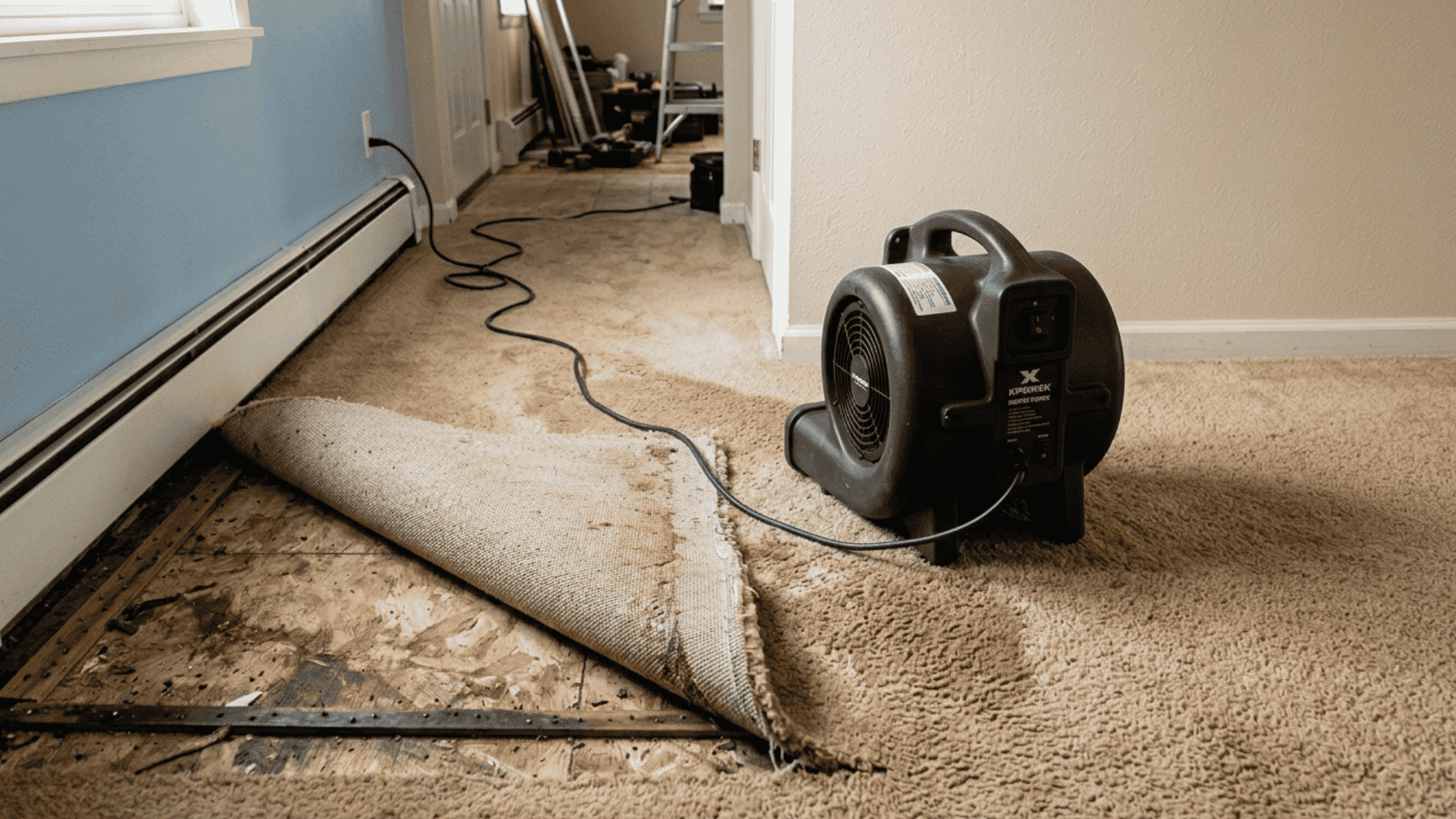
A musty room odor often comes from trapped moisture, weak airflow, damp belongings, hidden leaks, mold growth, or problems within the cooling system and vents.
High Indoor Humidity
High humidity leaves extra water vapor in the air. Walls, bedding, curtains, carpet, and furniture may absorb it and stay slightly damp.
Showers, cooking, indoor laundry, humid weather, and limited cooling can raise moisture levels.
Signs include sticky air, condensation on glass, and slow-drying towels. Use a hygrometer to check humidity. Keep levels between 30 and 50 percent when possible and below 60 percent.
Poor Ventilation and Stagnant Air
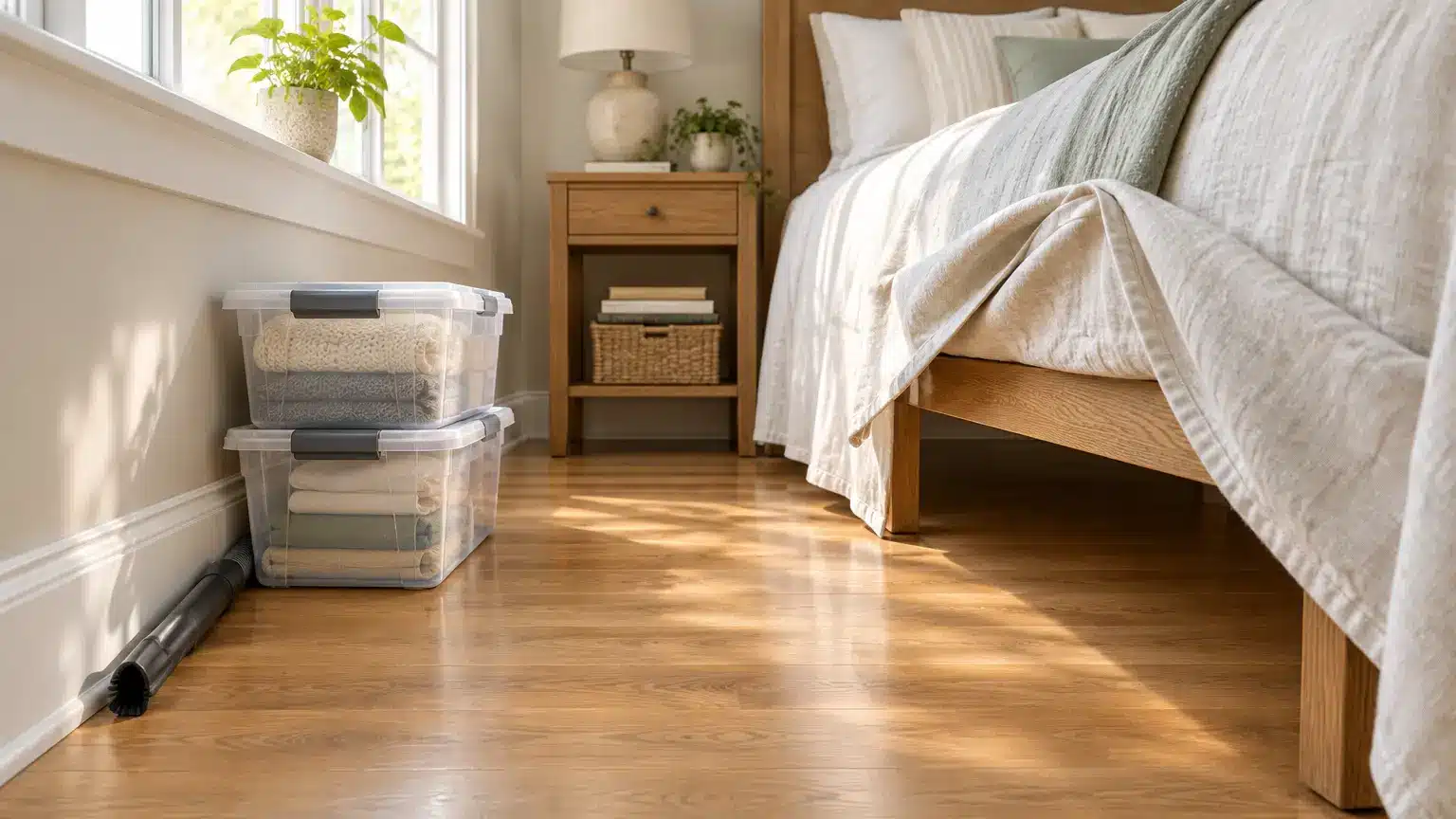
Rooms need airflow so that moisture and stale odors can leave. Closed windows, shut doors, blocked vents, and missing exhaust fans can trap damp air.
This often affects closets, bathrooms, basements, and crowded bedrooms. Furniture placed tightly against walls may also block airflow.
Open doors and windows when conditions allow. Portable fans and exhaust fans can help move humid air outside.
Hidden Mold or Mildew
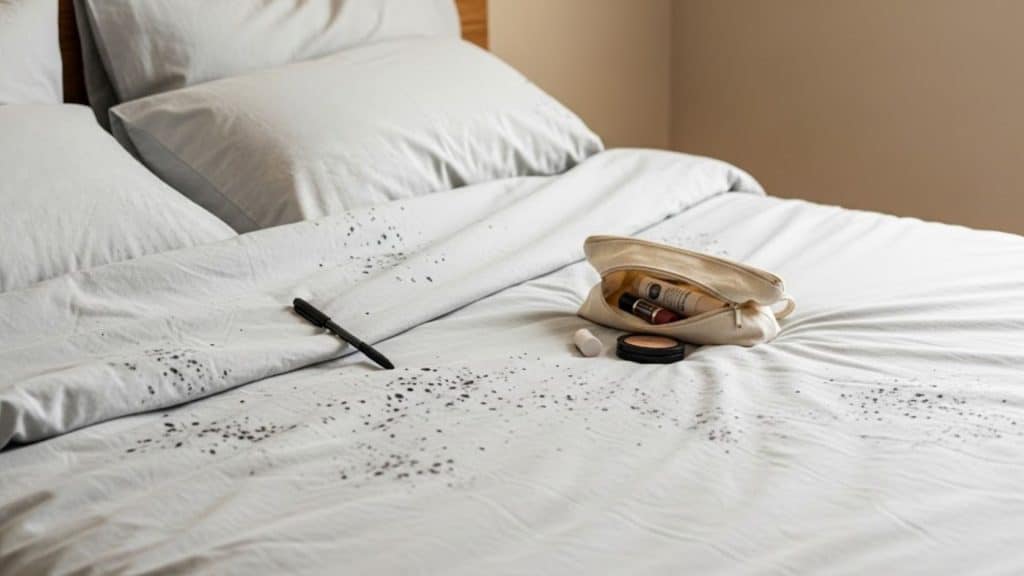
Mold may grow behind wall coverings, drywall, baseboards, wardrobes, headboards, or cabinets. It also forms under sinks, beneath floors, and inside closets. Visible patches may not appear at first.
Mold can grow on wood, paper, insulation, carpet, cloth and upholstery when moisture remains. A stronger smell near one area may help locate the source.
Leaking Pipes, Frames, or Roofing
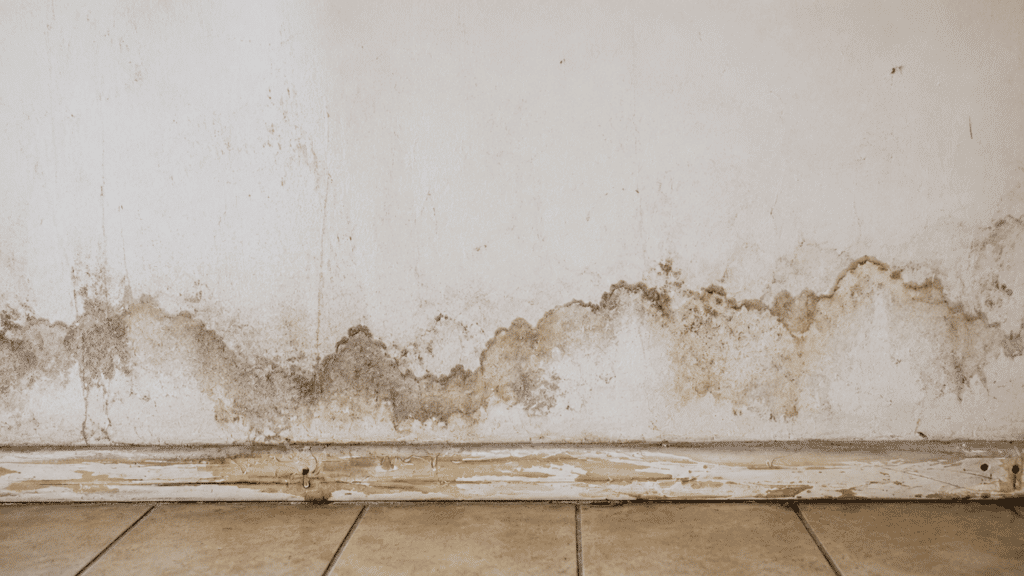
A slow leak can keep materials damp without creating a large puddle. Common sources include plumbing joints, damaged roofing, loose frame seals, radiators, appliance hoses, and dripping air conditioners.
Look for stains, peeling paint, bubbling wall coverings, swollen wood, loose flooring or soft drywall.
The odor may worsen after rain or when an appliance runs. Even a small leak can support mold growth.
Condensation on Glass and Cold Walls
Condensation forms when warm, moist air touches a colder surface. It often appears on glass panes, exterior walls, cold pipes, and room corners.
Areas behind wardrobes and beds may stay damp because air moves slowly there. Repeated condensation can wet paint, curtains, drywall and wooden frames.
Wipe away moisture, lower the humidity, and increase airflow around the affected area.
Damp Carpet, Rugs, or Flooring
Carpet may feel dry on top while the padding underneath remains wet. This can happen after spills, pet accidents, flooding, leaks or deep cleaning.
Water may also collect beneath rugs, laminate, vinyl or wooden boards. Lift loose rugs and inspect carpet edges and baseboards.
Wet padding or subfloor materials may need professional drying or replacement.
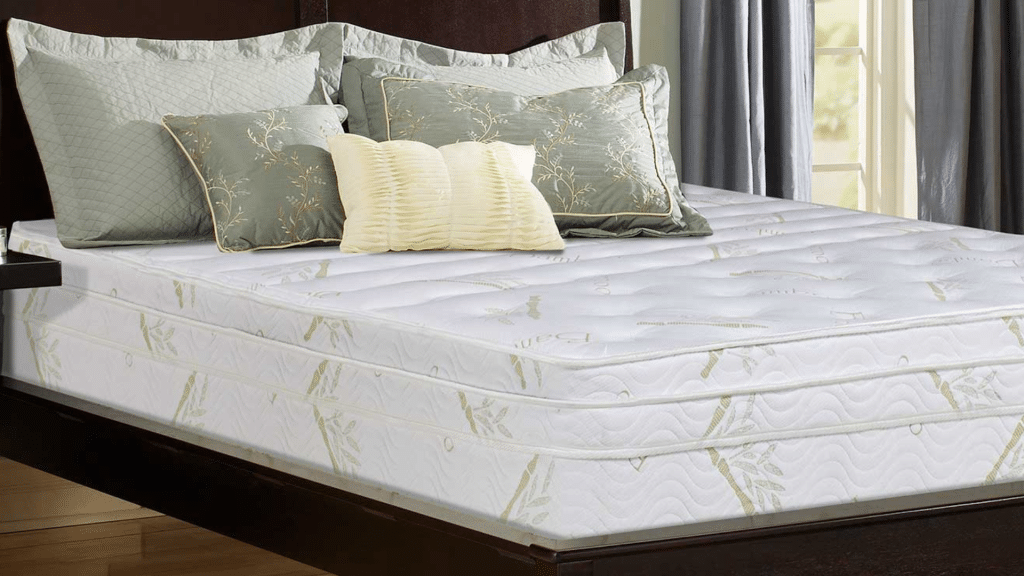
A Musty Mattress or Bedding
Mattresses and bedding absorb sweat, spills, body moisture and humid air. A damp protector, pillow, duvet, or blanket may develop a stale odor when airflow is limited.
A mattress placed directly on the floor may also trap moisture underneath.
Inspect the frame, slats, nearby wall and floor. Wash removable bedding and dry every item fully before making the bed again.
Wet Clothes, Towels, or Laundry
Damp towels, sweaty gym clothes, wet shoes and full laundry baskets can make a room smell musty.
The odor often worsens when these items remain inside a closed hamper or wardrobe. Partly dried clothes may spread the smell to drawers and shelves.
Remove wet items, wash the hamper, and check the washing machine seal, filter, drum and detergent tray for moisture or buildup.
Dirty HVAC Filters or Air-Conditioning Problems
A musty odor that appears when heating or cooling starts may come from the equipment.
Causes include dirty filters, damp coils, standing water, blocked drains or moisture inside ducts. Inspect accessible filters and clean or replace them as directed.
Check for water near the indoor unit. Arrange professional service if the smell returns whenever the system begins running.
Moisture-Trapping Furniture and Materials
Upholstered furniture, insulation, wall coverings, old wood, books, cardboard and cloth storage boxes can absorb moisture and hold odors.
Secondhand furniture may also carry smells from damp storage areas. Inspect hidden surfaces and underneath each item.
Some belongings may improve after cleaning and full drying. Items with severe water damage may need to be removed.
Houseplants and Damp Potting Soil
Problems may appear when plant soil stays soaked, drainage is poor, dead leaves collect or water remains in saucers.
Mold can form on soil that stays wet for too long. Several plants in a small room may also raise local moisture.
Empty trays, remove dead leaves, improve airflow and let the soil dry as required. Replace soil that smells sour or remains waterlogged.
How to Prevent a Musty Smell in Your Room
These simple habits reduce moisture, improve airflow, and keep your room smelling clean and fresh.
- Control Humidity: Keep indoor humidity between 30 and 50 percent.
- Improve Airflow: Open windows and use exhaust fans.
- Space Out Furniture: Leave gaps between furniture and walls.
- Dry Wet Items: Fully dry towels, clothes, rugs, and bedding.
- Check for Leaks: Inspect windows, pipes, ceilings, and AC units.
- Clean HVAC Filters: Replace filters and keep vents clear.
- Avoid Packed Closets: Leave space between stored items.
- Dry Spills Quickly: Clean and dry wet areas soon.
What the Timing of the Smell May Tell You
The time when an odor appears may narrow the search. Record when it begins, how long it lasts, and where it feels strongest.
| When the Smell Appears | Possible Cause | Where to Check |
|---|---|---|
| After rain | Roof, frame or wall leak | Ceiling, exterior walls and frames |
| When the AC starts | Damp coil, dirty filter or blocked drain | AC unit, vents and drain pan |
| In the morning | Humidity, sweat, or weak airflow | Bedding, mattress and windows |
| After carpet cleaning | Carpet or padding stayed damp | Carpet edges and underlay |
| When opening a closet | Damp shoes, packed clothes or moisture | Closet corners and back wall |
| During humid weather | High indoor humidity | Cold walls, windows and hygrometer |
| After a trip | Stale air or hidden leak | Whole room, plumbing and HVAC |
Natural Ways to Absorb Lingering Musty Odors
Use these options only after fixing leaks, drying damp items, and cleaning visible mold.
- Baking Soda: Sprinkle a thin layer on dry carpet, rugs, mattresses, or upholstery. Leave it for several hours, then vacuum. Test a hidden spot first.
- Activated Charcoal: Place charcoal bags in closets, cabinets, or small rooms. Keep loose charcoal away from fabric and painted surfaces to prevent dark marks.
- White Vinegar: Use it only on suitable washable surfaces. Test a hidden area first, and never mix vinegar with bleach or other household cleaners.
- Fresh Air and Sunlight: Air rugs, cushions, shoes, and storage items outside during dry weather. Check care labels and bring them inside before evening moisture rises.
Conclusion
A musty smell usually points to moisture, poor airflow, damp fabrics, hidden leaks, or a cooling-system issue.
Start by checking where the odor is strongest and when it appears, since timing can reveal the likely source.
Dry wet items, improve ventilation, clean filters, and fix leaks before using odor absorbers. Acting early can protect walls, flooring, bedding, furniture, and stored items from further damage.
If the smell remains or mold covers a large area, contact a qualified professional. Share where the odor is strongest in your room in the comments below.
Frequently Asked Questions
Can an Unused Drain Make a Room Smell Musty?
Yes. Water in the drain trap may dry out, allowing odors to enter. Pour water into the drain and call a plumber if the smell stays.
Can a Chimney Cause a Musty Odor in A Room?
A damp chimney may hold moisture, leaves or animal nesting material. Have it inspected if the smell becomes stronger near the fireplace.
Can a Mini Fridge Make a Bedroom Smell Musty?
Water may collect in the drip tray, the door seal or the space behind it. Unplug the fridge safely, clean these areas, and let them dry fully.