

Wondering if a comforter really needs regular washing, or if changing the sheets is enough? Many people clean their bedding often but forget that comforters gradually collect sweat, body oils, or allergens.
How often a comforter should be washed depends on factors like using a duvet cover, having pets that sleep on the bed, dealing with allergies, or experiencing frequent night sweats.
Following the right cleaning schedule helps keep bedding fresher, extends the comforter’s lifespan, and supports a healthier sleeping environment.
Read below to learn how often a comforter should be washed, what factors affect the ideal schedule, the warning signs it needs cleaning, and practical tips to keep it fresh for longer.
How Often Should You Wash a Comforter on Average
Most cleaning professionals land in the same range. Without a duvet cover, wash your comforter every one to two months. With a duvet cover protecting it, two to three times a year is plenty.
The logic is simple. A duvet cover works like a giant pillowcase. It takes the direct hit from skin oils, sweat, and dead skin cells so the comforter underneath doesn’t have to.
Without that layer, your comforter is absorbing everything your sheets would normally catch. That buildup happens faster than most people expect.
Some brands push a stricter seasonal rule of four times a year, timed to the change of seasons. Either range works. What matters more is picking a schedule and sticking to it, instead of washing only when something looks obviously dirty.
What Changes How Often You Should Wash It
The one-to two-month guideline changes depending on your lifestyle, sleeping habits, and bedroom environment. A few things push the number up.
Pets on The Bed

Pets can leave behind hair, dander, dirt, and allergens that build up in bedding over time. Washing sheets more often helps keep the sleeping environment cleaner and fresher.
- Remove Pet Hair and Dander: Fur and skin flakes collect in fabric and can trigger allergies.
- Wash Monthly: If a dog or cat regularly sleeps in the bed, wash bedding at least once a month instead of every other month.
- Maintain Better Hygiene: Regular washing reduces dirt, odors, and allergens brought in from outside.
Night Sweats
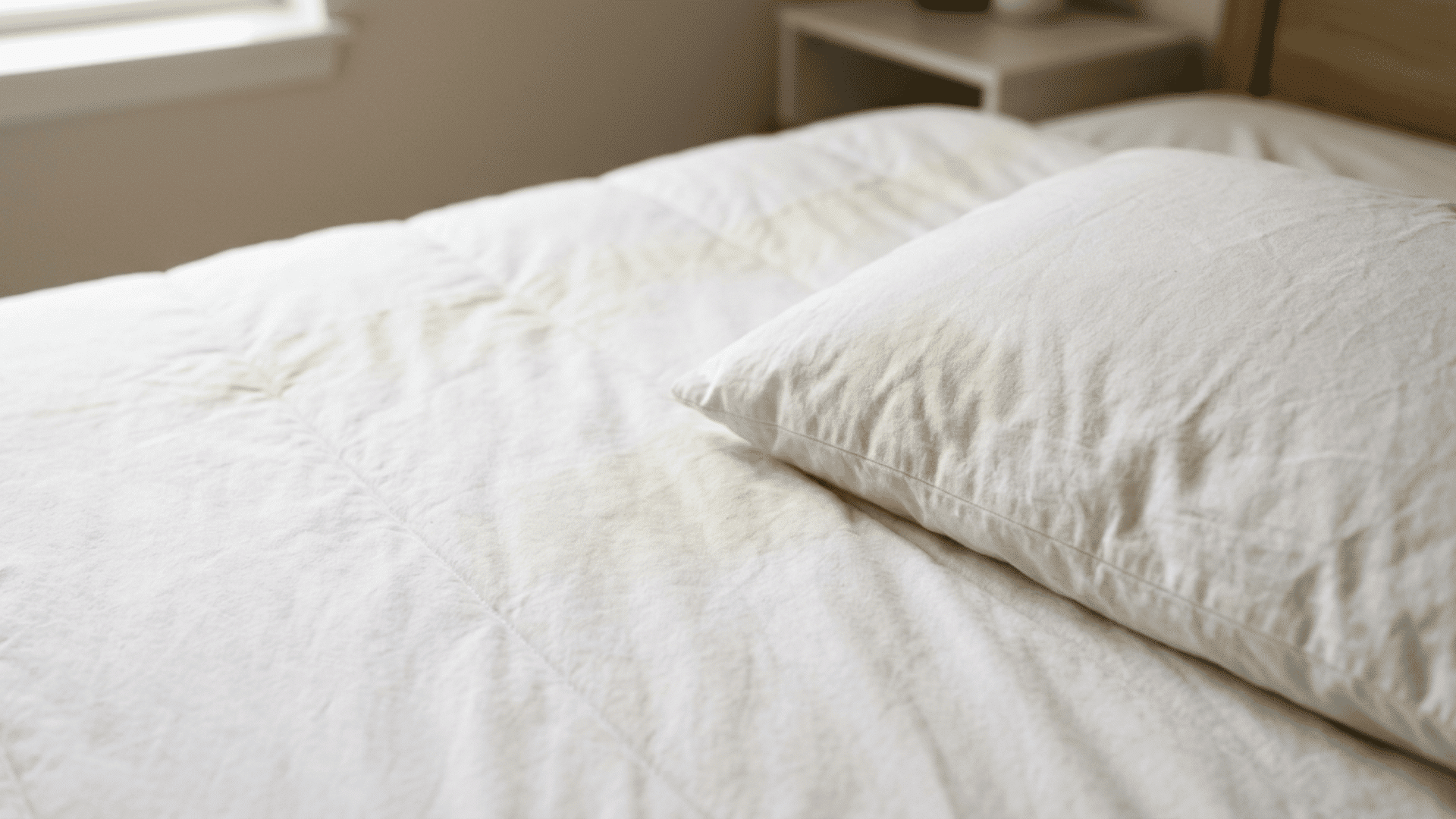
Sweat and body oils can gradually soak through sheets and reach your comforter, especially during warm nights. More frequent washing helps keep bedding fresh and hygienic.
- Wash More Often: Heavy sweaters should shorten the time between washes.
- Consider Room Temperature: Warm sleeping environments increase sweat buildup.
- Keep Bedding Fresh: Regular cleaning helps reduce odors, stains, and moisture.
Eating in Bed

Eating or drinking in bed can create more than visible stains. Regular cleaning helps prevent odors and keeps bedding fresh for longer.
- Clean up Crumbs Quickly: Food particles can settle deep into fabric.
- Wash After Spills: Drinks and food stains can lead to lingering odors.
- Prevent Buildup: Frequent washing keeps bedding cleaner and more hygienic over time.
Allergies

Dust mites and shed skin cells naturally build up in bedding over time. Washing more often can help reduce allergens and create a cleaner sleeping environment.
- Reduce Dust Mites: Regular washing helps remove skin cells that dust mites feed on.
- Support Allergy Relief: Wash bedding more frequently if anyone has allergies or asthma.
- Keep Bedding Cleaner: Frequent cleaning helps limit allergen buildup over time.
An Unused Guest Room

Even if a comforter stays folded or unused, it can collect dust over time. Occasional washing helps keep it fresh and ready to use.
- Dust Still Builds Up: Comforters collect airborne dust even when not in use.
- Wash Twice a Year: Cleaning every six months is usually enough for stored or unused comforters.
- Keep It Fresh: Regular washing helps maintain cleanliness and freshness until needed.
What People on Reddit Say About Washing Comforters
Reddit discussions show that comforter washing habits vary widely.
While some people wash theirs every month, others clean it only once or twice a year, depending on factors like using a duvet cover, having pets, or owning a down comforter.
Here are a few examples shared by Reddit users:
“i wash down comforters once a year before storing them for the summer. I wash the covers monthly or more frequently.” – Reddit
For this household, washing is based on visible signs and odor rather than following a fixed schedule.
“your comforter will last longer between washes if you slip on a duvet over it. then just wash the duvet more frequently.” – Reddit
Many commenters recommend using a duvet cover because it protects the comforter and reduces how often the insert needs to be washed.
“our bodies aren’t touching the comforter because the flat sheet is in-between so i don’t see a reason to wash so often.” – Reddit
Some people who use a top sheet feel comfortable extending the time between comforter washes since it creates an extra barrier.
Signs Your Comforter Needs Washing
A regular washing schedule helps, but certain signs can show that your comforter needs cleaning sooner than expected.
- Musty Smell: If your comforter has a musty or sour odor that remains even after airing it out, it is time for a thorough wash.
- Visible Stains: Dried sweat, body oils, food spills, or other stains are clear signs your comforter needs cleaning.
- Flattened Filling: Lumpy, flat, or matted areas often mean moisture and oils have affected the filling, reducing comfort and freshness.
- After an Illness: Wash your comforter after someone in the household has been sick to help remove lingering germs and keep bedding cleaner.
- More Allergy Symptoms: If sneezing, itching, or congestion improves after washing bedding, your comforter likely needs more frequent cleaning.
Recommended Comforter Washing Schedule
How often you should wash your comforter depends on how you use it and your sleeping environment. Here are the most common recommendations:
| Situation | Recommended Frequency |
|---|---|
| No duvet cover | Every 1–2 months |
| With duvet cover | Cover every 1–2 weeks; comforter every 3–6 months |
| Pets sleep in bed | Every 2–4 weeks |
| Heavy night sweats | Every 2–4 weeks |
| Allergies or asthma | Every 2–4 weeks |
| Guest room comforter | Every 6 months |
| Down comforter | Follow care label; typically every 1–3 years if protected by a duvet cover |
How to Make Your Comforter Stay Clean Longer
A few simple habits can help keep your comforter cleaner between washes, reducing buildup and extending its lifespan.
1. Use a Duvet Cover: A washable duvet cover protects the comforter from sweat, body oils, dust, and skin cells. Wash the cover every one to two weeks for the best results.
2. Wash Sheets Regularly: Clean your sheets every one to two weeks to reduce the transfer of dirt, allergens, and body oils to the comforter.
3. Avoid Eating or Drinking in Bed: Keeping food and drinks away from the bed helps prevent crumbs, spills, stains, and lingering odors that can make your comforter dirty faster.
4. Air Out The Comforter: Hang or spread the comforter in a well-ventilated area every few weeks to release trapped moisture and keep it smelling fresh between washes.
Conclusion
There is no single washing schedule that works for every comforter. The ideal frequency depends on factors like sleeping with pets, experiencing night sweats, using a duvet cover, or dealing with allergies.
Paying attention to these factors instead of following a fixed timeline helps keep your bedding cleaner, fresher, and in better condition for longer.
Washing your comforter when needed also helps reduce dust, odors, and everyday buildup while extending its lifespan. A simple, consistent cleaning routine is often enough to maintain a comfortable and hygienic sleeping environment throughout the year.
How often do you wash your comforter? Share your routine or favorite bedding care tip in the comments below, and don’t forget to share this article with friends or family who could use these cleaning tips.
Frequently Asked Questions
Can You Put a Comforter in a Washing Machine?
Yes, if the care label allows it. Use a large-capacity washing machine so the comforter can move freely during the wash.
Should You Dry a Comforter in The Dryer or Air Dry It?
Most comforters can be tumble dried on low heat. If air drying, make sure it’s completely dry before using or storing it.
How Long Does it Take for a Comforter to Dry Completely?
Most comforters take several hours to dry completely on a low heat setting. Thick or down-filled comforters may require extra drying time to prevent trapped moisture.