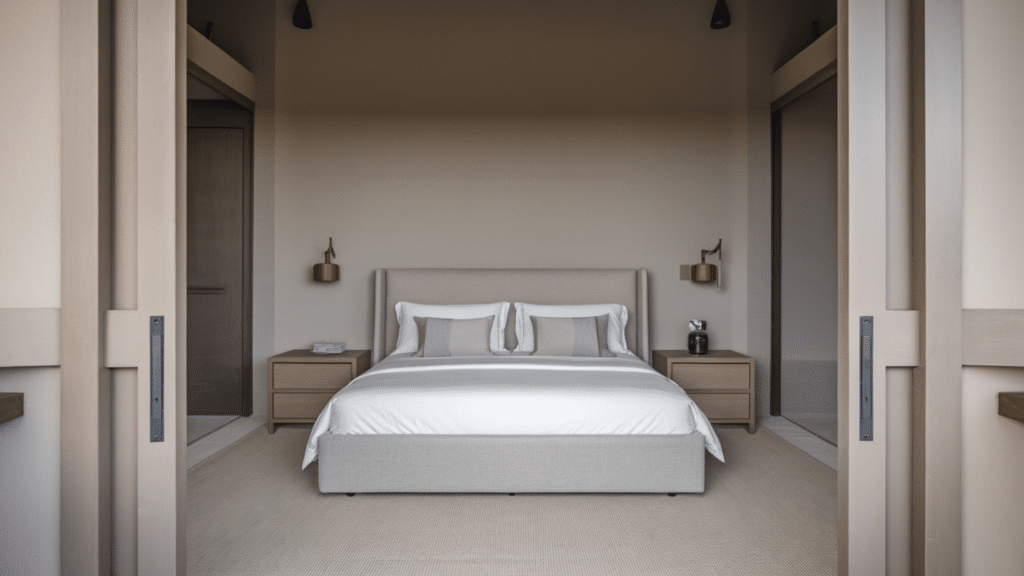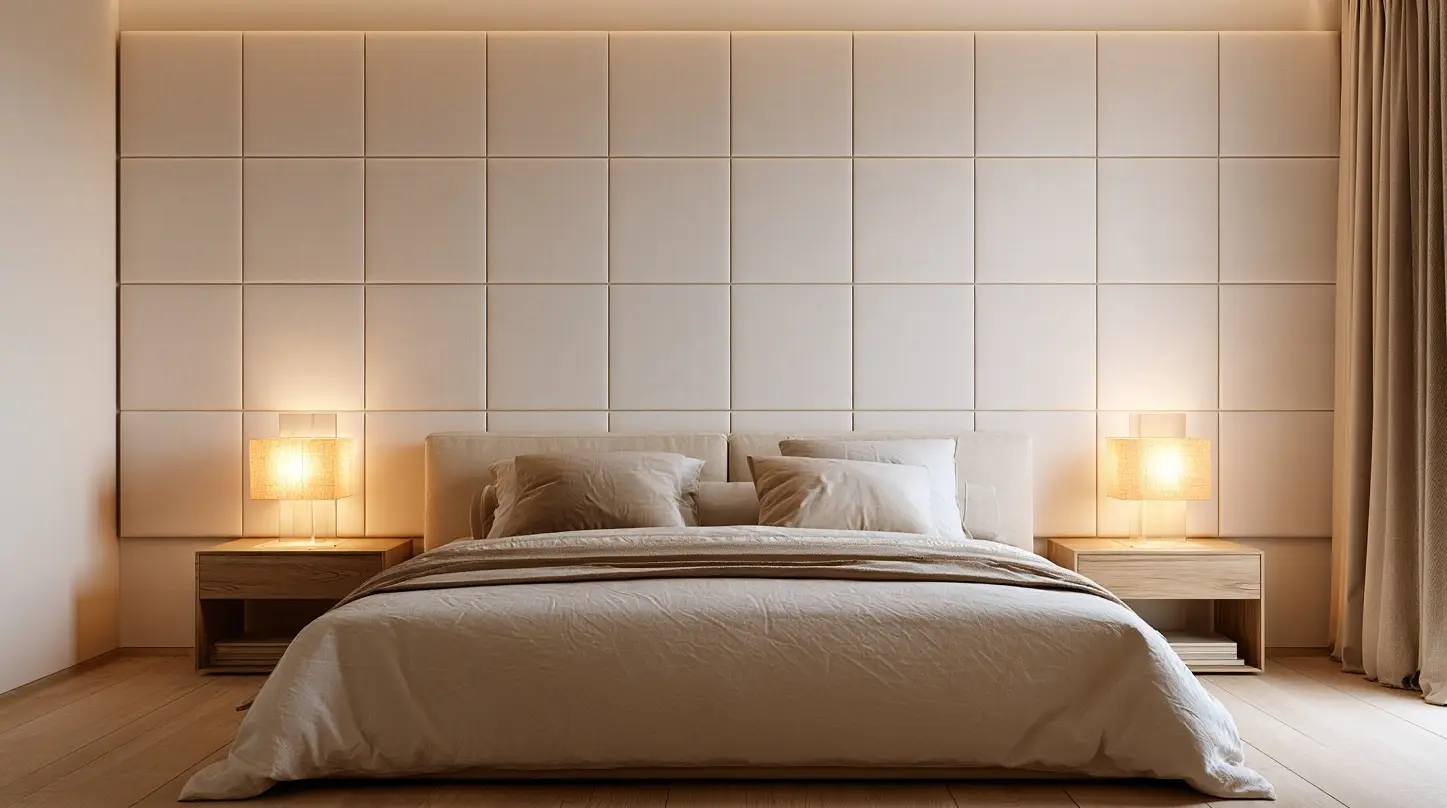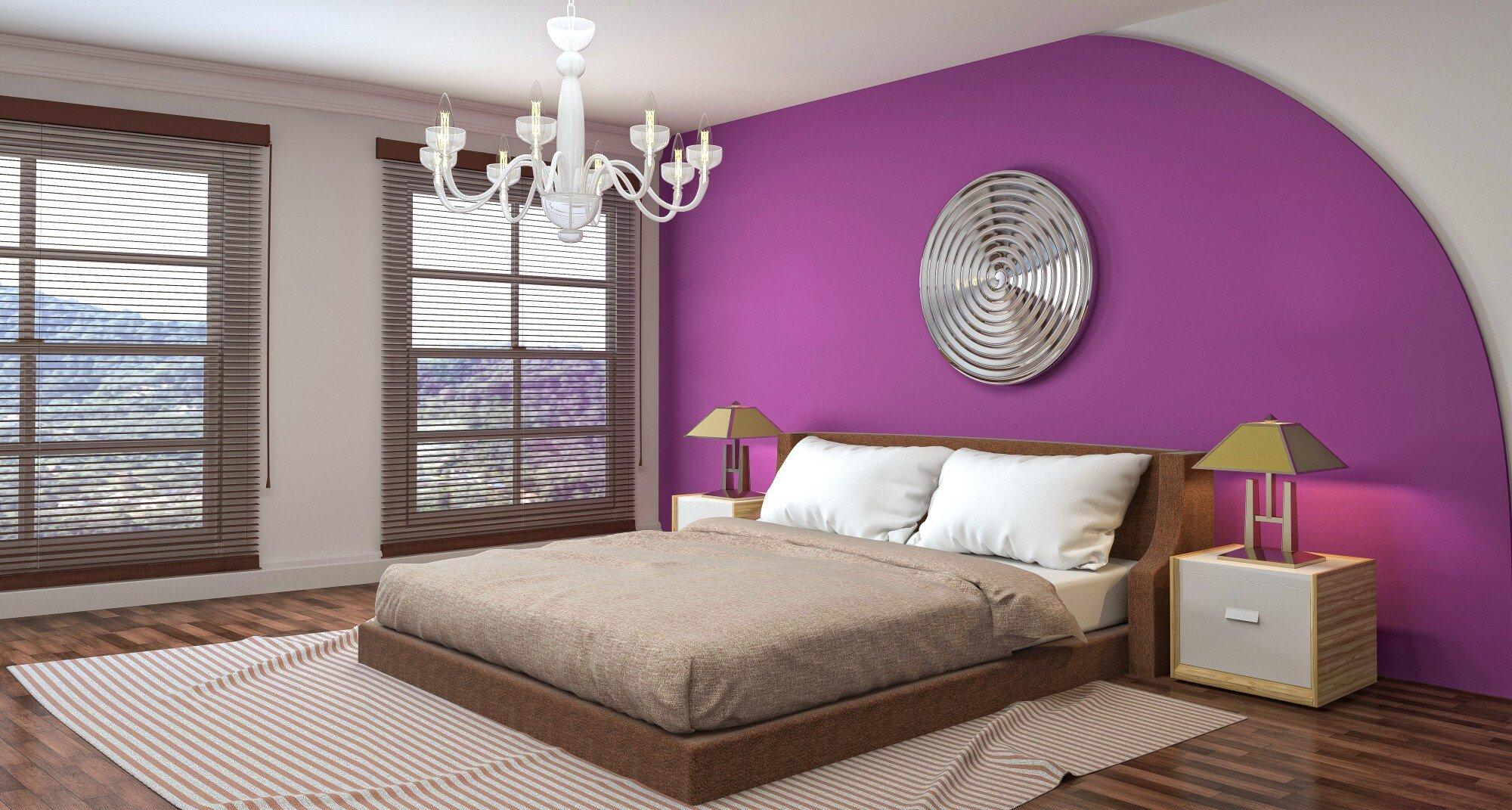

You can paint your bedroom a gentle sage green, hang beautiful art, and use your softest bedding. But if the lighting is bright and a bit bluish, the room will still feel more like an office than a relaxing place to sleep.
The color of light affects the mood of a room just as much as the paint or furniture, but most decorating tips overlook it. Two bedrooms with the same beds, rugs, and curtains can feel totally different depending on whether the lighting is warm or cool.
If your bedroom looks great in photos but doesn’t feel relaxing at night, start by looking at your lighting. Here’s the difference between warm and cool light, and how to pick the best option for a room where you want to unwind.
What Color Temperature Really Means for a Bedroom
Light color is measured using the Kelvin scale, which you’ll usually see as a number followed by a “K” on the bulb’s packaging. Lower Kelvin numbers mean the light is warmer and more golden, while higher numbers mean the light is cooler and more blue-white.
Most light bulbs for homes are usually between 2700K and 5000K. Warm white bulbs, which give off a soft, yellowish glow like candles or old incandescent lights, range from about 2700K to 3000K. Cool white and daylight bulbs are brighter and whiter, starting around 4000K and going above 5000K, similar to the light you see at noon on a sunny day.
A quick way to picture it:
- Warm light (2700K to 3000K): golden, soft, easy on the eyes. Sunset.
- Cool light (4000K to 5000K): crisp, bright, wide awake. Midday.
Neither option is wrong by itself. That bright 5000K bulb is great for places like the bathroom or kitchen, where you need good lighting to see clearly. The problem comes when you use it in the bedroom, where you want to feel relaxed, not more awake.
Warm Light vs Cool Light and How Each Feels

Switching from a cool bulb to a warm one in the same room makes an obvious difference. Warm light softens the space, making your skin look healthier, wood appears richer, and the room feels cozier.
Cool light does the opposite. It sharpens every edge and makes a space feel bigger, busier, and more switched on. That’s why offices and hospitals run cool. It keeps people alert. It also makes 10 p.m. feel like 10 a.m., which is the last thing you want when you’re trying to slow down.
There’s an underlying mood at play here. Warm, dim lighting signals to your brain that it’s time to wind down. Cool, bright lighting tells you there’s still work to be done. You might have the most stylish bedroom on the block, but if it’s lit like a grocery store, it will never feel relaxing.
For a bedroom, warm light wins almost every time.
Why Warm Light Helps You Wind Down
This is when the color of light goes from just changing how things look to actually impacting your sleep.
Your body uses the light around you to know when it’s time to feel sleepy. If you’re exposed to cooler, bluish light in the evening, it can stop your body from making melatonin, the hormone that helps you fall asleep. Warmer light doesn’t cause this problem as much, which is why most lighting guides recommend keeping bedroom lights at 2700K or lower in the hours before bedtime.
You don’t need to remember any numbers for this to work. Here’s the simple idea: if your evening light is more like a sunset, your body knows it’s time for bed. If your evening light is bright like daytime, it makes it harder for you to fall asleep.
It’s also why a single harsh ceiling bulb can quietly sabotage a good night’s sleep. It isn’t just unflattering. Every evening, it’s telling your brain to stay awake. Trading it for a warm bulb can do more for your rest than a new pillow ever will.
Brightness and Light Color Are Not the Same Thing
One point trips people up more than any other: warm does not mean dim, and cool does not mean bright.
Color temperature and brightness are two different things. Brightness is measured in lumens, not Kelvin. You can have a warm-colored bulb that’s extremely bright, or a cool-colored bulb that’s very dim. Each serves a different purpose.
For a bedroom, aim for warm and adjustable lights. A warm bulb on a dimmer, or two low lamps instead of one big ceiling light, lets you bring the brightness down as the night goes on without ever tipping into that cold daylight tone.
If you remember just one thing, let it be this: choose a warm color for your lights, then adjust how bright they are using dimmers and where you place your lamps. That’s the combination that makes a room feel calm when you want it to, instead of by luck.
How to Add Warm Light Without Flattening the Mood

A single overhead light, even a warm one, tends to fall flat. Bedrooms that truly feel restful usually rely on several smaller light sources rather than one bright overhead light. Designers call this “layering,” and it’s what separates a room that’s illuminated from one that actually feels inviting and comfortable.
A few easy warm layers to try:
- A bedside lamp with a warm bulb so that you can read comfortably without any harsh light.
- A dimmer switch on the main light so that you can lower the brightness at night.
- Add a soft accent light for a cozy vibe, like an LED strip behind the headboard or a custom neon sign in warm amber or gentle pink.
The last option has become increasingly popular in bedrooms, as a low, warm accent creates a personal focal point without making the room too bright. A single word, an initial, or a simple shape in soft neon adds character to the space while providing a gentle glow that’s easy to relax with.
Color counts as much as warmth here. The shade you choose sends its own mood signal, the same way the color psychology in neon signs explains why some tones settle you and others wake you up. Warm ambers and dusty pinks tend to calm. Bright blues and stark whites tend to energize, which is perfect for a home office and a poor fit at midnight.
Getting It Right Without Starting Over
Getting the right lighting for your bedroom isn’t about spending a lot of money. It’s about choosing lights that fit how you use the space. Since bedrooms are meant for relaxing, the lighting should help you unwind, too, think warm colors, gentle brightness, and different layers of light you can adjust as the night goes on.
Change one thing to start. Replace a cool light bulb with a warm one, or put a small warm lamp next to your bed and turn off the main light an hour before you go to sleep. Then notice how the room feels. Most people are surprised how much calmer a space gets from a single change in light color, long before they touch the paint or move a stick of furniture.