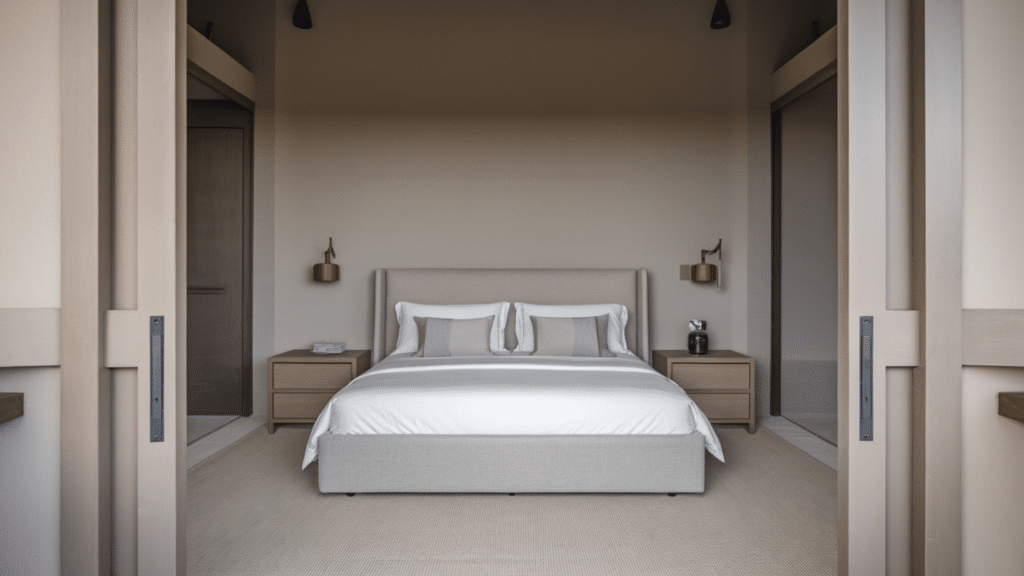



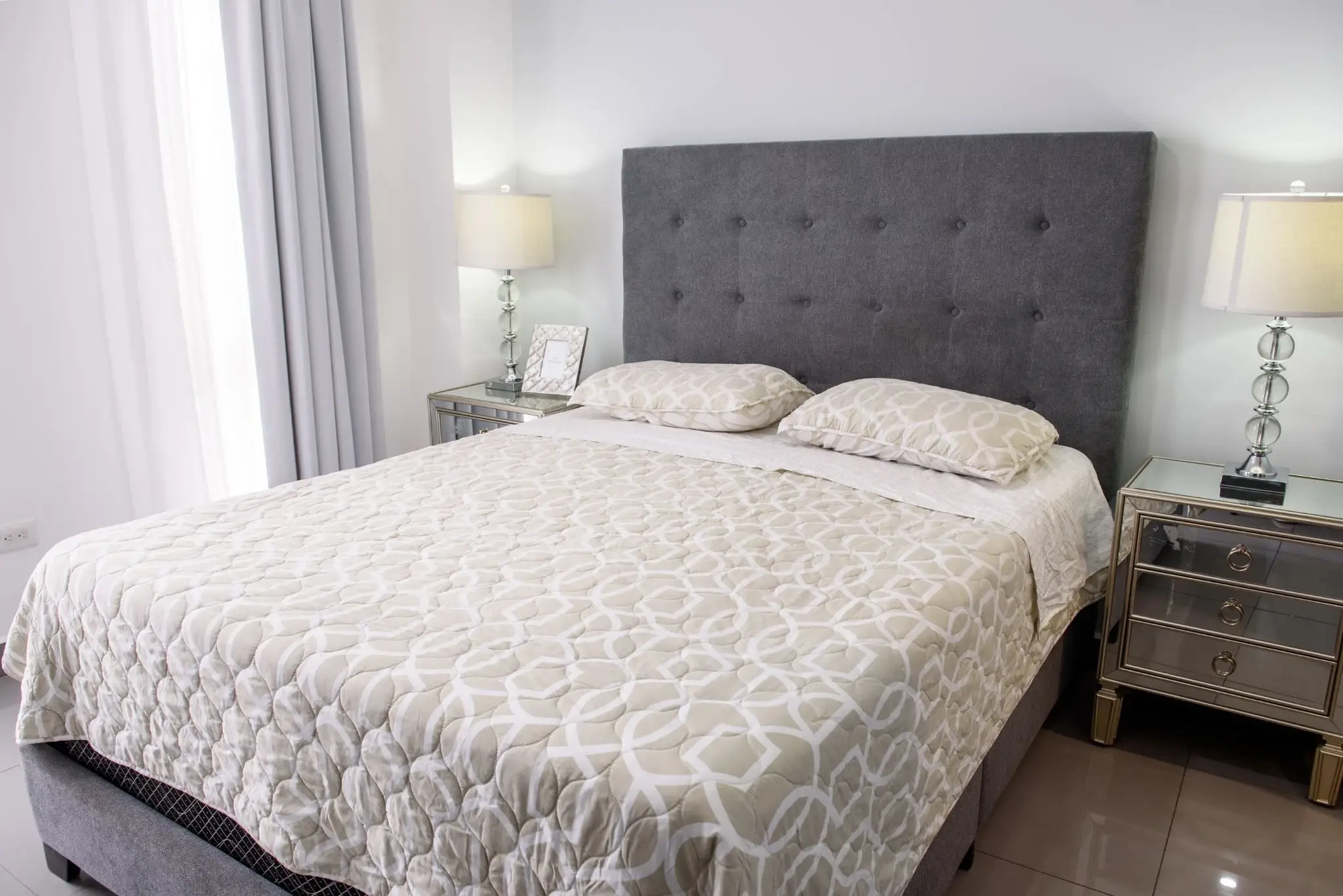
You know the photo. Crisp white bedding, warm lamp light, and behind it all a tall upholstered headboard in oatmeal linen or deep green velvet. It is the detail that makes a bedroom look finished instead of furnished. Soft, calm, a little bit like a very good hotel.
That look is easy to fall for, and plenty of people do. What those inspiration photos never mention is what happens after the headboard is actually in the room. Not the styling. The upkeep. An upholstered headboard is a large fabric surface that sits inches from your face every single night, and it quietly collects more than most people expect.
Why Upholstered Headboards Are Having a Moment
Part of the appeal is simply comfort. A padded headboard is pleasant to lean against, which matters if you read, scroll, or watch something in bed. It also softens a room full of hard edges — nightstands, frames, floors — and takes the chill off a cold wall behind your pillows.
The rest is visual. In bedroom design, the wall above the bed is the natural focal point, and a wide fabric panel fills it without art, wallpaper, or a weekend of painting. Pick a fabric and you have set the tone of the entire room in one decision. That hotel-suite feeling people are chasing is mostly this: something large, soft, and deliberate behind the bed.
How Everyday Use Affects an Upholstered Headboard
Here is the part nobody puts in the caption. Compared with a sofa, a headboard sits unusually close to your face and hair. You rest your head and shoulders against it, often for an hour at a stretch, often right after a shower or a full skincare routine.
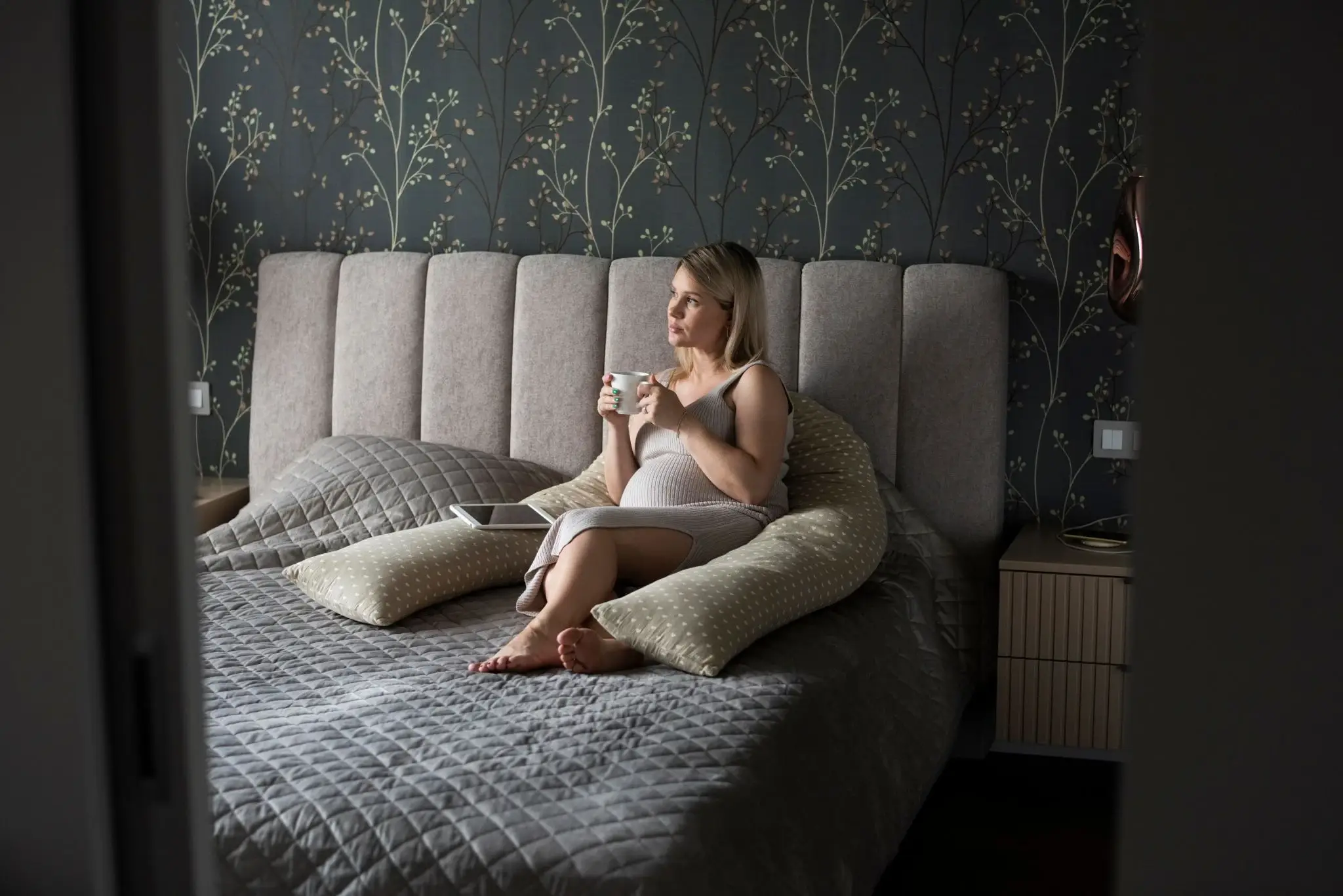
Hair oils and styling products transfer. So do face creams, sunscreen, and the natural oils your skin produces overnight. The process is gradual and invisible for months. Then one morning the light hits the fabric at an angle and you notice a slightly darker patch exactly where everyone’s head lands.
Dust settles along the top edge the way it does on any horizontal surface. If a pet is allowed on the bed, hair works into the seams and piping. Some fabrics are also more expressive than others: velvet and other pile weaves record pressure and pile direction, so a flattened spot reads like a shadow long after you have moved.
Then there is habit. Bedding gets washed weekly. Mattresses get vacuumed or flipped a few times a year. Sofas get attention when they start to look like they need it. The headboard rarely makes anyone’s list at all. And it should not be treated as a smaller sofa — construction, padding, and backing differ, so what is safe for your armchair is not automatically safe here. The right method depends on the fabric care label, not on whatever bottle is already under the sink. When buildup becomes noticeable, professional furniture cleaners may help refresh the fabric, provided the cleaning method is suitable for its material and construction.
Not All Headboard Fabrics Behave the Same Way
You do not need a textile degree, but a few general patterns are worth knowing — whether you are choosing upholstery fabric or trying to work out why yours looks the way it does.
Velvet is the most dramatic. It looks wonderful and remembers everything: a hand brushed across it, a pressed spot, the direction of the pile. Some people love that shifting, lived-in quality. Others find it distracting.
Linen and cotton weaves are flatter and far more forgiving about pressure marks, but they are absorbent, so a spill has less time to sit before it sets. Tightly woven performance fabrics usually handle daily contact best, which makes them a sensible pick for a bed that gets heavy use.
Color does as much work as material. Pale oatmeal, cream, and blush show hair product and skin oils far sooner than charcoal, navy, or rust. Texture helps too — a subtle weave or bouclé hides small marks that a smooth, solid fabric puts on display.
Simple Habits That Keep It Looking New
None of this calls for a project weekend. Five small habits cover almost everything.
- Read the care label first. Before any cleaning product touches the fabric, follow the manufacturer’s care instructions. Upholstery codes vary, and the wrong solution on the wrong material does more damage than the mark ever would.
- Vacuum gently every few weeks. Use a proper upholstery attachment and run it along the top edge, into the seams, and across the area where heads rest. Two minutes, and dust and pet hair are gone before they work their way in.
- Deal with spills right away. Blot, never scrub. Coffee, a knocked-over glass, a dropped moisturizer lid — the faster you lift it, the less chance it has to settle.
- Skip the hard rubbing. Vigorous rubbing flattens pile, fuzzes weaves, and leaves a halo more obvious than the original spot. Delicate and textured fabrics are the least forgiving of all.
- Look at it in daylight now and then. Run a hand over the fabric and check for texture changes, pressure marks, or gradual darkening in the contact zone. Catching it early is most of the job. And if you read in bed most nights, keeping a pillow between your hair and the fabric sounds fussy but does more for headboard maintenance than anything else on this list.
Worth the Extra Step
An upholstered headboard is not high maintenance. It is a soft furnishing nobody warned you about, and the fix is attention rather than effort — a vacuum pass now and then, a quick response when something spills, a glance at the fabric in good light every so often.
That is a small price for the thing you bought it for. The quiet, cozy, hotel-room calm that made you save the photo in the first place does not disappear because the headboard is fabric. It fades when nobody thinks about the fabric for a year and then wonders what happened. Think about it early instead, and the look you wanted sticks around for a long time.