

Ever bought a comforter that looked perfect online but felt too short, too bulky, or just didn’t sit right on your bed? That’s usually not a design issue; it’s a size issue.
A queen-size comforter is one of the most-searched bedding options because it sits in that “in-between” zone where small measurement differences can completely change how it looks and feels. From how it drapes over the mattress to how well it holds warmth through the night, size plays a bigger role than most people expect.
In this guide, I’ll help you understand queen-size comforter dimensions, how fit changes across different beds, and what really matters when choosing the right one. You’ll also learn how to compare sizes, pick the right fabric, and avoid common buying mistakes so you can confidently choose a comforter that actually fits your bed and sleep style.
What Defines a Queen-Size Comforter?
A queen-size comforter is made to fit standard queen beds with enough overhang for full coverage and a neat, balanced look. However, sizes can vary slightly across brands, so understanding the standard range helps avoid mismatches. If you’re also weighing choosing a queen duvet, the same overhang logic applies since both are measured for the same mattress footprint.
The dimensions of a typical queen-size comforter are:
- 88 × 88 inches (224 × 224 cm): Standard square fit with even coverage
- 90 × 90 inches (229 × 229 cm): Slightly larger for better side drape
- 92 × 96 inches (234 × 244 cm): Oversized option for a hotel-style look
Sizing is not fully standardized because brands design comforters differently; some prefer a snug fit, while others add extra fabric for a more relaxed, layered appearance.
Loft and fill also change how a comforter looks and feels. High-loft options appear fuller and more voluminous, while lighter fills sit closer to the bed for a cleaner, flatter finish.
Queen Comforter vs King Comforter
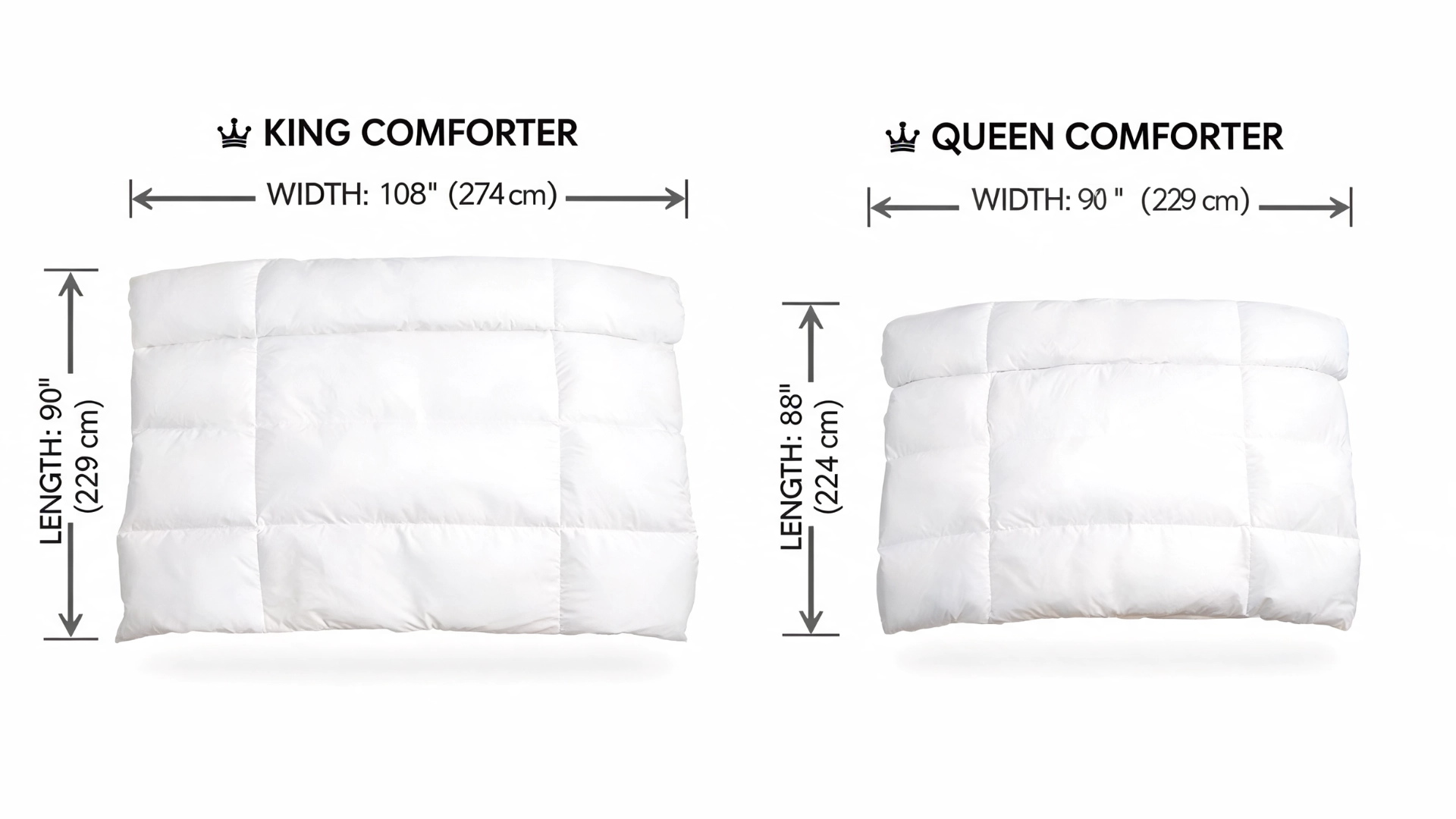
A queen comforter and a king comforter can both work on a queen bed, but they create different fits and looks. The better choice depends on whether you want a standard fit, extra coverage, or a more layered bed style.
| Feature | Queen Comforter | King Comforter |
|---|---|---|
| Coverage | Fits a queen bed with standard coverage | Gives extra-wide coverage on the sides |
| Drape Style | Creates a balanced look on both sides | Creates an oversized, layered look |
| Best Use | Best for queen mattresses and simple bedding | Best for king beds or decorative layering |
| Bed Appearance | Looks neat, fitted, and practical | Looks fuller, softer, and more hotel-like |
| Buying Mistakes to Avoid | May feel too small on thick mattresses | May hang too low on smaller bed frames |
A queen comforter is usually the safer choice for a clean, standard fit. A king comforter works better if you want extra side coverage, a fuller look, or more fabric for layering.
Since the size jump between the two mattresses is part of what drives this decision, it helps to know exactly how king and queen compare before you commit to either option.
Picking the Right Comforter Based on Sleeping Habits
The right comforter size depends on how you sleep, not just the mattress size. A comforter should give enough coverage for movement, shared sleeping, and daily use without feeling too small or oversized.
For Single or Restless Sleepers
Single sleepers may still need more coverage if they move often during the night. A slightly larger comforter can help prevent the blanket from shifting, bunching, or sliding off the bed. It is also helpful for people who toss and turn, sleep near the edge, or use a thick mattress or mattress topper.
Extra coverage can make the bed feel more comfortable without making the comforter look too large. It also gives more side drape, which helps the blanket stay in place through the night.
For Couples Sharing a Bed
Couples usually need balanced coverage so both people get enough comfort. A comforter that is too small can lead to uneven pulling, cold spots, or one person losing coverage during the night. Some couples solve this by deciding between duvet setups and comforters based on how easy each is to share and wash.
For shared beds, the comforter should be wide enough to cover both sides evenly and stay centered as both sleepers move. The right size can reduce blanket tugging and make the bed feel more comfortable for everyday use.
Choosing based on sleeping habits helps you avoid a comforter that looks fine on the bed but feels uncomfortable at night. For better comfort, match the size to how much you move, whether you share the bed, and how much coverage you prefer.
Material & Fill Types That Affect Feel and Warmth
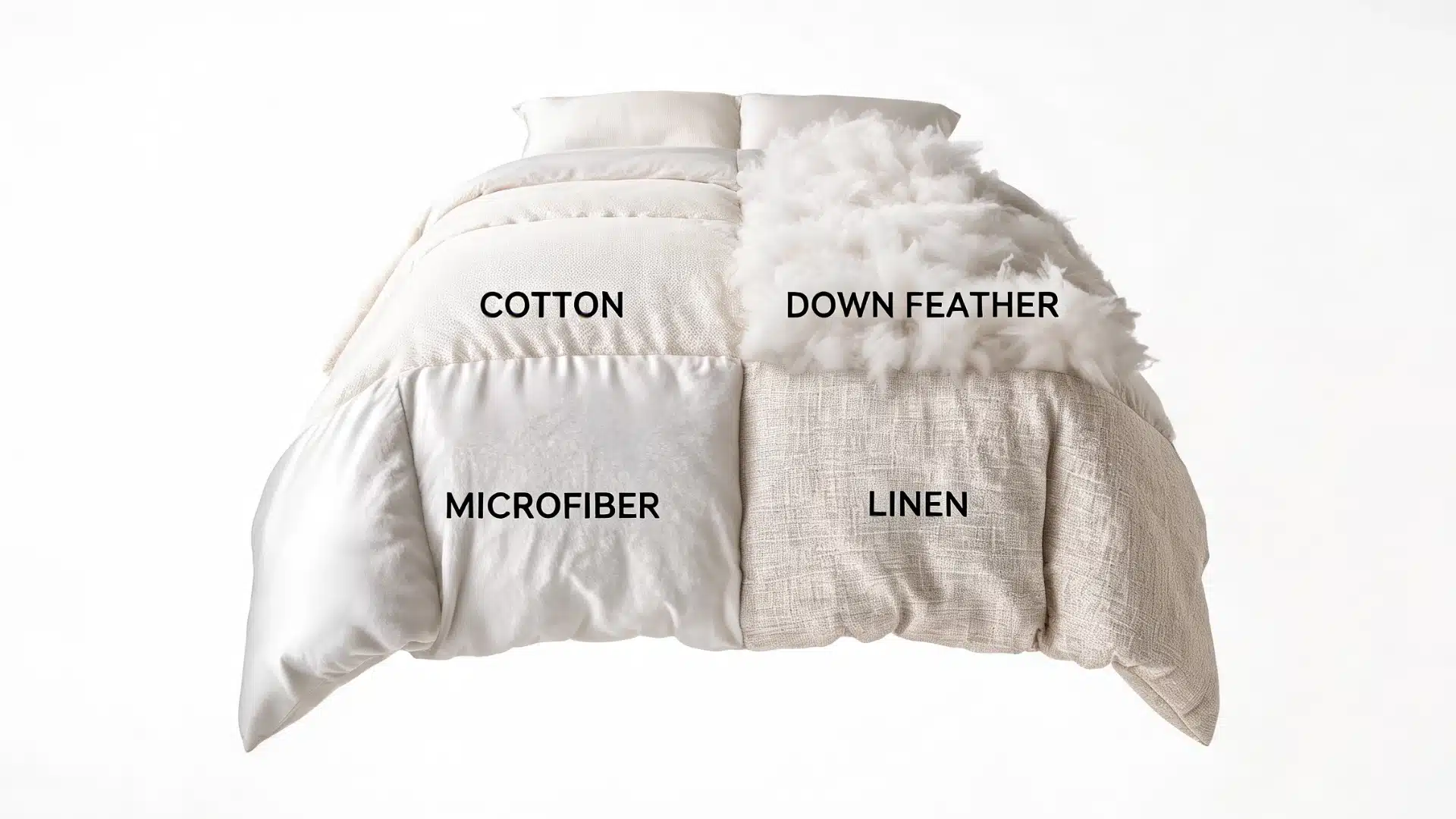
The material inside and outside a comforter changes how warm, soft, heavy, and breathable it feels. Before choosing one, compare the fill type, weight, and season of use rather than buying solely by style or price.
- Down vs Synthetic Fill: Down feels fluffy, light, and warm, but it is usually more expensive and may not suit allergy-sensitive sleepers. Synthetic fill is more affordable, easier to wash, and often better for everyday use.
- Lightweight vs Heavyweight Comforters: Lightweight comforters feel airy and work well for hot sleepers or warmer rooms. Heavyweight comforters feel thicker and warmer, but they may feel too hot in mild weather.
- Seasonal Variations: Summer comforters should feel breathable and lightweight, while winter comforters should have more fill and insulation. For year-round use, choose a medium-weight comforter that balances warmth and airflow.
The best comforter material depends on your sleep temperature, room climate, and care routine. Checking the fill and weight first helps you avoid a comforter that feels too hot, too flat, or too hard to maintain.
How to Choose a Queen Comforter Across Brands
Before comparing queen comforters, look beyond the brand name and product photo. Small details like size, fill, stitching, and fabric can change how the comforter fits, feels, and lasts.
- Why the Listed Size May Vary Slightly: Queen comforters are not always the same size. One brand may offer 88 x 88 inches, while another may offer a larger size. Check the exact measurements, especially if your mattress is thick.
- Importance of GSM /Fill Power: GSM indicates how heavy and warm the comforter is. Fill power shows how fluffy and insulating it may feel. Do not rely only on words like “lightweight” or “all-season.”
- Checking Stitching and Baffle Box Design: Good stitching keeps the fill from shifting or clumping. A baffle box design is better at keeping the comforter fluffy and evenly filled.
- Fabric Type Impact: Cotton feels breathable, microfiber is soft and budget-friendly, and bamboo can feel cooler. Choose based on your sleep temperature and fabric preference.
A comforter that looks good online may not be the best fit for your bed. Checking these details first helps you avoid poor sizing, uneven fill, and fabric that feels too hot or too thin.
How Many Comforters or Layers Do You Need on a Queen Bed?

The number of comforters or layers you use on a queen bed depends on your comfort needs, climate, and styling preference. Some setups focus on simplicity, while others prioritize warmth or a more decorative look.
A single queen comforter is usually enough for everyday use in moderate weather. It provides balanced warmth, feels lightweight, and keeps the bed easy to maintain without extra layering.
In colder months, adding a blanket along with your comforter helps improve insulation and keeps you warmer without needing to switch to a heavier comforter. This layered approach also gives you more flexibility to adjust comfort levels as needed.
For a more styled or decorative bed setup, additional layers such as throws or quilted blankets can be placed over the comforter. While they don’t significantly affect warmth, they enhance texture, depth, and the overall visual appeal of the bed.
Tips to Maintain Your Queen Comforter
Proper care can help your queen comforter stay soft, fresh, and comfortable for years. With a few simple habits, you can protect its shape, filling, and overall feel.
- Wash it only when needed: Most queen comforters do not need frequent washing. Clean yours every few months or when it looks or smells dirty.
- Check the fill type first: Down and synthetic comforters may need different care. Always follow the care label before washing.
- Store it the right way: During the off-season, keep your comforter in a breathable cotton bag or storage container. This helps prevent moisture, odors, and mildew.
- Keep it dry and airy: Avoid sealing your comforter in plastic for long periods. Good airflow helps it stay fresh and fluffy.
- Fluff it often: Shake and fluff your comforter regularly to spread out the filling and restore its volume.
- Reshape it after use: Smooth it out on the bed and gently adjust any uneven areas to keep it looking full and neat.
By following these easy care tips, your queen comforter can stay cozy, clean, and supportive through every season.
Final Thoughts
Choosing the right queen bedding is not only about trusting the label. Mattress depth, topper height, shrinkage, fabric type, and pocket size all affect how well your sheets, comforter, or duvet actually fit.
When bedding sits smoothly and stays in place, the bed feels more comfortable, supports better sleep, and looks cleaner in the room. A too-small comforter can feel tight, while oversized pieces may bunch or drag.
I’d treat size as part of the comfort decision, not a last detail. For more help, explore my related bedding guides before buying your next set.