

How Online Communities Influence Club Popularity
The use of online communities has influenced how sports teams acquire new recognition, maintain audience interest, and grow beyond their geographical boundaries. In places like Jordan, where mobile and social media are ubiquitous, people’s sports club interests go beyond wins and losses or media broadcasts.
Digital Communities as Drivers of Club Visibility
State funding for sports is generally tied to larger governmental economic plans than just competitive outcomes. The government in Jordan funds sports cities, youth facilities, and clubs with money from public investments; at the institutional level, the Ministry of Youth oversees all youth organizations and sports organizations across the country. On the user side, the mobile sports services are an extension of this same model. The MelBet application in its Arabic version (Arabic: تطبيق المراهنات), as well as its Arabic language interface, localized payment options, small footprint, and live viewing section, allows users to easily transition from one event (football, basketball, tennis, etc.) to another while having all of the real-time score updates and market information visible during each match.
Interaction plays a structural role. Comments, shares, short clips, and live discussions extend the lifespan of match events and keep clubs present in daily conversations. Instead of relying on single match results, visibility builds through repetition and constant circulation. Data from regional telecom reports shows that social media usage in Jordan exceeds 80% of the population, which explains why this continuous flow has a direct impact on how often clubs are seen.
Recent developments in sports media show how online activity affects overall exposure.
Factor | Impact on Club Popularity | Example |
Social media engagement | Expands reach beyond local audiences | Club posts shared across regions |
Short-form video | Maintains interest between matches | Mobile highlight clips |
Live data access | Sustains involvement during games | Real-time score tracking |
Fan interaction | Strengthens loyalty and identity | Comments and reactions |
Club reach now depends on continuity rather than isolated exposure.
Fan Behaviour and Real-Time Interaction
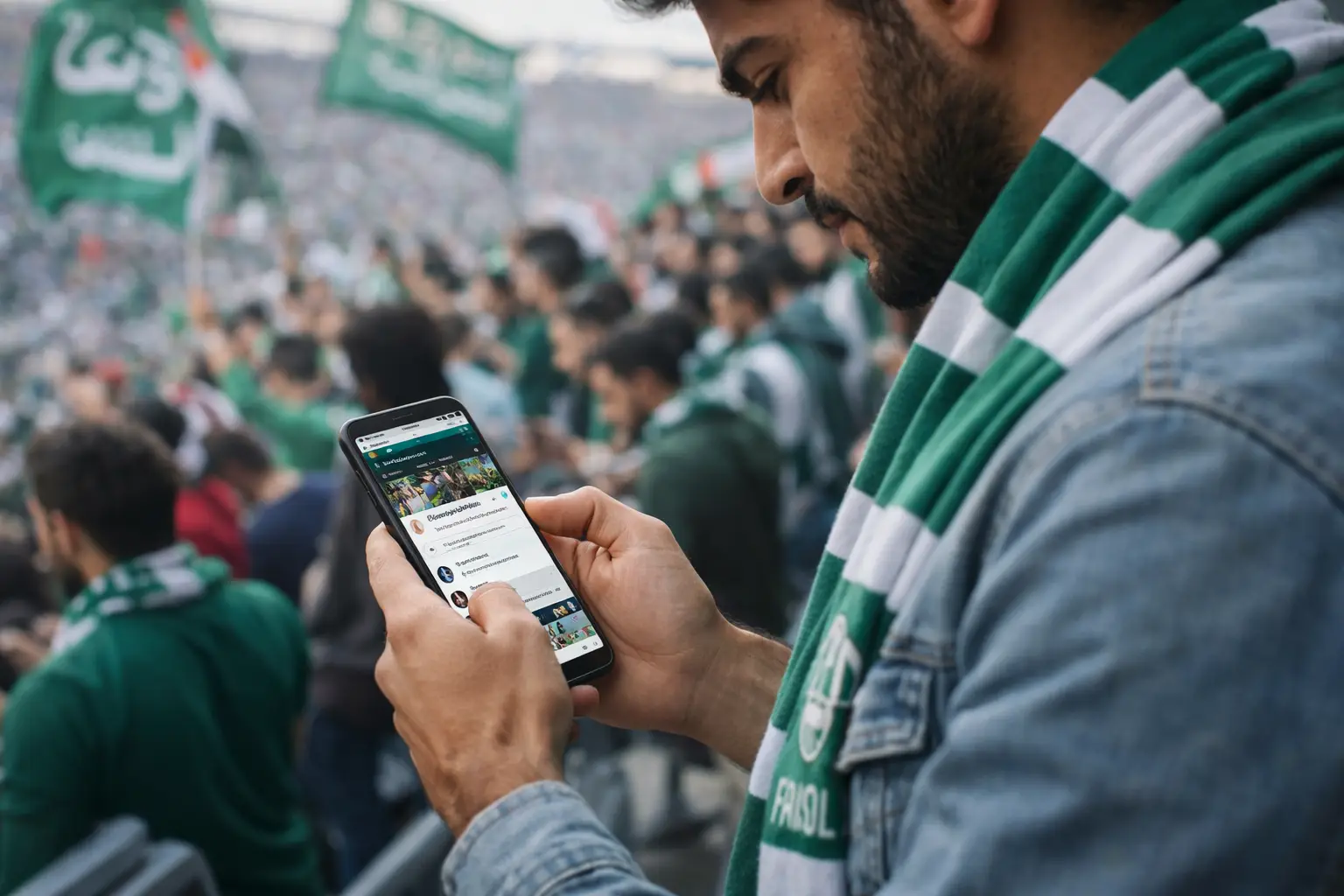
Supporter behaviour has shifted alongside these systems. Match viewing is no longer limited to full broadcasts, as many users track games through updates, clips, and parallel discussions across several platforms, and (Arabic: مراهنات) fits into that structure by grouping match previews, short updates, direct links, and event-related posts in one feed where sports activity can be followed quickly during live fixtures.
During matches, fan activity becomes immediate and collective. Reactions, short comments, and rapid sharing create a second layer of participation that runs alongside the game itself. This behaviour keeps focus on the club even when users are not watching the full broadcast. In practice, many supporters follow matches through notification updates and short clips rather than full streams, especially on mobile connections.
Key patterns in supporter behaviour include:
- live reactions during matches
- continuous updates between fixtures
- use of several platforms at once
- stronger alignment with fan groups
These habits reshape how audiences stay connected to clubs over time.
Identity Formation and Narrative Control
Digital discussion shapes how clubs are perceived. Narratives about players, tactics, and management decisions develop across fan pages, comment sections, and shared media. Positive sequences can strengthen reputation, while criticism can spread quickly and influence perception across wider audiences.
Clubs increasingly respond to this environment. Media teams monitor reactions, track trending topics, and adjust communication when necessary. This does not eliminate external narratives but helps manage how official messages enter ongoing discussions. Some clubs also schedule posts based on peak activity hours identified through platform analytics to maximize reach.
Regional overlap increases the speed of this process. Content shared in one country can circulate across the region within hours, especially when language and competitions are shared. A single incident can reshape how a club is viewed beyond its domestic league.
Financial Implications of Digital Reach
Online visibility has direct economic consequences. Clubs with strong digital followings attract sponsors and partners more easily because exposure can be measured and compared. Engagement levels, reach, and interaction rates are now used in commercial negotiations.
Revenue linked to digital reach typically includes:
- sponsorship agreements tied to exposure
- Advertising is placed within media output
- merchandise driven by online demand
- increased ticket sales after widely shared moments
These links show that digital popularity contributes directly to financial performance.
Content Systems, Algorithms, and Distribution
Content does not spread evenly. Platform systems prioritize posts that generate interaction, which means emotionally charged or widely discussed material travels further than routine updates. Both clubs and supporter groups adapt to these conditions.
Short clips, reactions, and key match moments tend to dominate because they trigger immediate responses. Over time, this shapes what audiences see and how often they encounter a particular club. Platform reports from Meta and Google consistently show that short-form video generates higher interaction rates than static posts, which explains this dominance.
Distribution is therefore influenced by platform logic as much as by media rights. Exposure depends on how the material performs inside systems that reward interaction, repetition, and timing.
Unofficial Fan Networks and Peer Circulation
A large share of club exposure now comes from unofficial channels. Fan pages, supporter groups, and repost networks on platforms such as Facebook, Telegram, and WhatsApp circulate clips, opinions, and updates at a pace that official accounts rarely match. These networks often determine which moments spread widely.
In the Middle East, shared language and strong rivalries increase this effect. Content related to transfers, refereeing decisions, or historical matches spreads quickly across supporter pages, often reaching audiences beyond official followings.
This peer-driven flow changes how popularity develops. Clubs with active supporter networks maintain relevance even during weaker results, while others may struggle to sustain attention despite strong performance.

Local Club Dynamics in Jordan
The influence of digital fan activity is visible in Jordan’s domestic football scene. Al-Faisaly and Al-Wehdat clubs have a discord which has moved to the internet, and where fans produce and disseminate matchday content, including pre- and post-match stuff. During the course of a match, and afterwards, the JFA (Jordan Football Association) covers local competitions, adds value to this further layer, because JFA content, related to clubs, i.e. videos, match lineups, and updates, becomes widely distributed on their feeds.
These rivalries sustain discussion beyond match days. Pre-match expectations, post-match reactions, and historical comparisons keep attention active throughout the season. Supporter activity reinforces club identity and maintains interest even without live fixtures. Derby matches between these clubs often trend locally on social platforms, further increasing their visibility.
Younger audiences often encounter clubs first through shared clips or posts rather than stadium attendance. This entry point changes how loyalty forms and how club popularity develops over time.
Regional Media Trends and Event Amplification
Recent events show how online circulation amplifies club exposure because of the AFC Asian Cup 2024, reactions and highlights circulated across social media and garnered attention for the teams involved and the matches, reaching audiences beyond the traditional TV broadcast.
This pattern is reinforced by investments in digital media across the region. Broadcasters and clubs consider online distribution as a primary channel, customizing content for mobile and shorter format viewing. Rights holders have to publish highlights in real-time to keep up with audience expectations.
Coordination between clubs, federations, and media partners has improved consistency. Shared release schedules and aligned messaging help maintain steady audience focus across competitions.
Governance and Community Management
Digital fan spaces require structured management. Moderation, content planning, and audience engagement are now part of regular club operations. Without oversight, discussions can become fragmented or misleading.
Part of effective management is monitoring communication channels. Responding where necessary and maintaining consistent messaging. This controls possible misinformation and keeps communication with the club’s focus. Miscommunications can cause confusion. Some clubs apply moderation standards and use automated filtering systems to manage toxic or abusive speech.
The administrative side of community management supports broader goals. Stable communication channels help clubs maintain identity, coordinate announcements, and sustain long-term engagement.
Digital communities have moved from a supporting role to a central factor in how clubs are followed and valued across modern sport. Their influence extends across reach, perception, and revenue, making them a core element of modern sports systems.