


A strong morning doesn’t need to start with an exhausting workout. It starts with a routine that feels practical enough to repeat.
A well-planned morning workout routine can help you stay active, organize your time and build healthier habits without making exercise feel overwhelming.
The key is knowing how to structure the session, prepare in advance, support recovery and adjust the plan to your schedule.
With the right approach, morning exercise can become easier to maintain and more effective over time. Read on to build a routine that fits your lifestyle and goals.
Why is Morning Workout Necessary For Your Health?
A morning workout can make regular exercise easier to fit into a busy day because you complete it before many daily responsibilities begin.
It can also create a more structured start to the morning and reduce the chance of skipping exercise because of work, errands, or unexpected plans later in the day.
Morning sessions can include strength training, mobility, walking, resistance work or conditioning, depending on personal goals.
The main benefit comes from consistency, not the time of day itself. A routine that feels realistic, manageable, and easy to repeat is more likely to support long-term fitness progress.
How to Structure a Morning Workout Routine

A well-planned session should prepare the body, build strength and endurance, then finish at a slower pace.
1. Begin with a Gentle Warm-Up
A short warm-up helps the body move gradually from rest into more active exercise. It also raises your heart rate slowly, so your muscles and joints are ready for the movements ahead.
- Start with 3–5 minutes of easy movement.
- Try marching, arm circles, shoulder rolls or slow walking.
- Add light bodyweight movements that match the workout ahead.
- Increase the pace gradually instead of starting at full effort.
- Keep the movements controlled and comfortable, especially during the first few minutes after waking.
2. Move into Strength Training
Strength work can train major muscle groups while adding useful variety to the session. This builds functional power you can rely on throughout the day, not just during your workout.
- Choose simple exercises such as squats, lunges, push-ups, rows or glute bridges.
- Use resistance bands or light weights if you have them.
- Focus on controlled movement and proper form.
- Begin with fewer sets or repetitions if you are new to strength training.
- Increase resistance, repetitions, or sets gradually as the exercises become easier.
3. Add a Cardio Segment
Cardiovascular exercise raises the heart rate and can be adjusted to match different fitness levels. Even a few minutes of steady movement can boost your energy for the rest of the day.
- Choose brisk walking, cycling, jogging, stair climbing or jumping rope.
- Maintain a steady pace rather than one that feels exhausting.
- Use the talk test to judge effort during moderate-intensity activity.
- Start with a shorter cardio block if your endurance is limited.
- Increase duration or pace gradually, rather than changing both at the same time.
4. End with a Gradual Cool-Down
A cool-down allows the body to move from active exercise back toward a resting state. It gives your heart rate and breathing a chance to settle before you move on with your day.
- Slow your walking or cycling pace during the final few minutes.
- Avoid stopping suddenly after intense movement.
- Add gentle stretches for the muscles used during the workout.
- Keep breathing relaxed and allow the heart rate to decrease naturally.
- Use the cool-down as a clear finishing point before moving into the rest of your morning.
Sample 30-Min Morning Workout Routine
This simple 30-minute routine combines mobility, strength, conditioning, and recovery for a balanced start to the day.
Time | Focus | Example Exercises |
|---|---|---|
5 minutes | Warm-Up | Marching, arm circles, hip rotations, bodyweight squats |
10 minutes | Strength | Squats, push-ups, reverse lunges, glute bridges |
8 minutes | Conditioning | Step-ups, brisk walking, mountain climbers, light jogging |
4 minutes | Core | Planks, bird dogs, dead bugs |
3 minutes | Cool-Down | Slow walking, deep breathing, gentle stretches |
How to Stay Consistent with Morning Workouts
Consistency becomes easier when the routine fits naturally into your schedule and requires little decision-making after waking up.
1. Set a Fixed Workout Time: Choose a realistic time that works with your usual morning schedule. Following the same time on most workout days can make the routine easier to remember and repeat.
2. Prepare The Night Before: Lay out workout clothes, shoes, water and equipment before bed. Preparing early removes small delays that can make skipping the session more tempting.
3. Keep Workouts Manageable: Avoid starting with long or demanding sessions. Short, practical workouts are often easier to maintain and can gradually become longer as the habit develops.
4. Track Your Progress: Mark completed workouts on a calendar or app. Simple tracking can show patterns, highlight progress, and help you stay accountable over time.
Healthy Habits That Support Morning Exercise
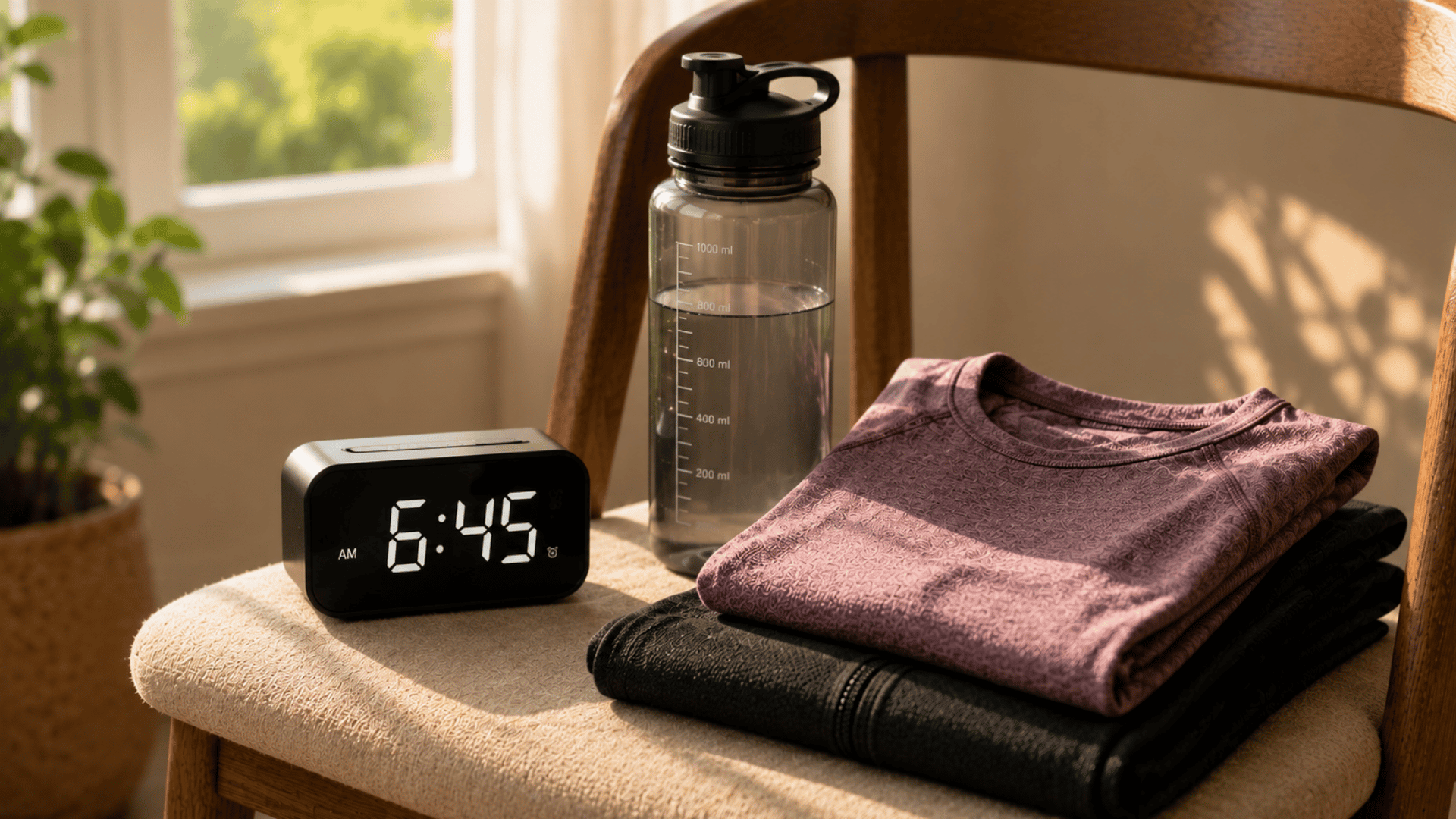
Healthy daily habits can support better energy, recovery and overall well-being alongside regular exercise. Small, consistent choices throughout the day often matter as much as the workout itself.
- Get Enough Sleep: Follow a regular sleep schedule to give the body enough time to rest and recover.
- Eat Balanced Meals: Include fruits, vegetables, whole grains, protein and healthy fats throughout the day.
- Stay Hydrated: Drink water regularly to support normal body function before and after exercise.
- Manage Stress: Use simple activities such as walking, stretching, reading or quiet time to support mental well-being.
- Stay Active During the Day: Add regular movement outside workouts through walking, stretching or other light activities.
What to Eat Before and After Morning Exercise
Food choices should support energy before exercise and recovery afterward without making the meal feel too heavy.
Timing | What to Choose | Examples |
|---|---|---|
Before Exercise | Light carbohydrates and a little protein | Banana, toast, oatmeal, yogurt |
After Exercise | Protein, carbohydrates, and fluids | Eggs with toast, yogurt with fruit |
Short Workout | A small snack or regular breakfast afterward | Fruit, smoothie, toast |
Longer Workout | A more filling meal to support energy needs | Oatmeal with milk, eggs and toast |
Hydration | Water before and after training | Plain water |
Planning Tips for a Better Morning Workout Routine
A little preparation can make morning exercise more organized, realistic, and easier to follow consistently.
1. Choose a Realistic Time
Pick a workout time that truly fits your normal morning schedule, not an idealized one. Account for sleep, commute, and other responsibilities and leave a short buffer after waking up.
2. Plan the Workout in Advance
Decide the exercises, sets, reps, rest periods and any equipment needed the night before. This avoids morning decision fatigue and lets you start moving immediately.
3. Prepare Your Gear
Lay out your clothes, shoes, water bottle, and any workout equipment together the night before. Removing small delays and searches makes it far easier to begin without hesitation or excuses.
4. Set a Clear Goal
Decide whether the session will focus on strength, mobility, endurance, or general movement. A clear focus shapes your effort and keeps each workout purposeful and on track.
5. Keep a Backup Plan
Prepare a shorter 10- to 15-minute version of your routine for busy or time-crunched mornings. This keeps the exercise habit alive even when a full workout isn’t realistic that day.
Conclusion
The best morning workout routine is one you can follow consistently without making the rest of your day harder.
A balanced plan should include proper preparation, suitable exercise intensity, recovery, supportive eating habits and realistic scheduling.
Small steps such as preparing the night before, keeping workouts manageable and having a backup option can also make regular exercise easier to maintain.
Focus on building a routine around your fitness level and daily responsibilities, not chasing a perfect schedule. Try the approach that suits you best and share your favorite morning workout habit in the comments.
Frequently Asked Questions
Can Coffee be Consumed Before Morning Exercise?
Coffee may suit some adults before exercise, but tolerance, hydration and sleep habits should guide the choice.
Are Morning Workouts Suitable for Older Adults?
They can be, when exercises match ability and health needs. Low-impact strength, balance and walking are common options.
Should Morning Workouts Include Regular Yoga Sessions?
Yes. Yoga can support mobility, balance, strength, or lighter training, depending on the practiced style.