
Your phone isn’t the villain. Not exactly.
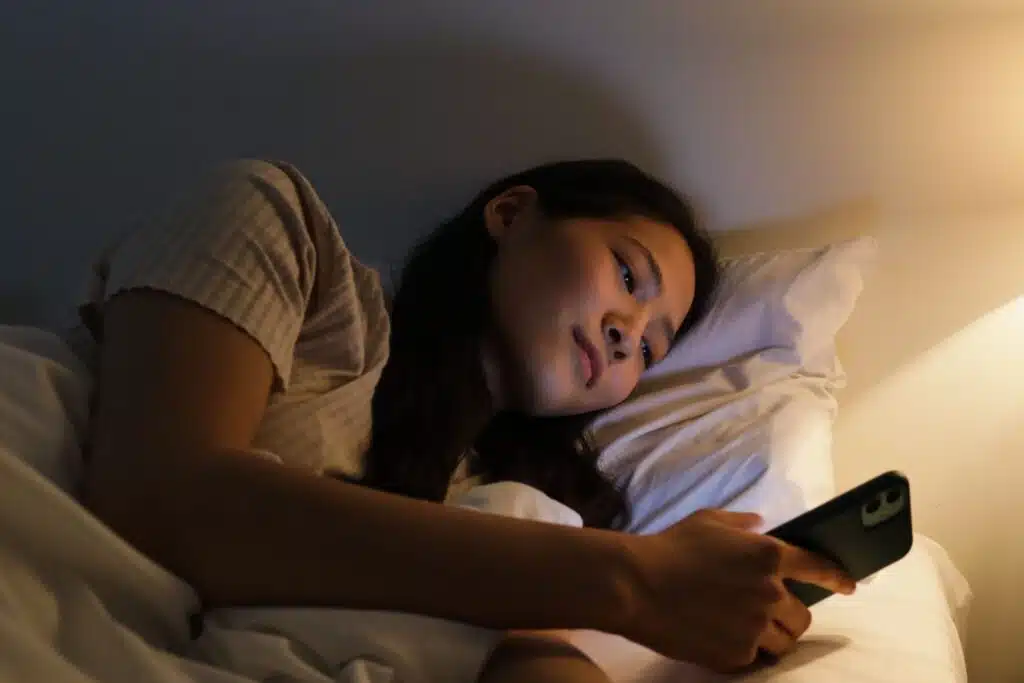
That’s the uncomfortable twist buried in the American Academy of Sleep Medicine’s 2026 sleep prioritization survey, released this year for Insomnia Awareness Night. Over 75% of adults report they always, often, or sometimes struggle to fall asleep or stay asleep. Women report it more than men. And almost everyone blames the glow of a screen.
But the AASM data, along with a growing body of research on something called orthosomnia, points somewhere more specific. It’s not the light. It’s the shape of what you’re doing on that screen. A stimulating, open-ended app at 11pm behaves nothing like a bounded, self-limiting one. One keeps your brain hunting for the next hit of novelty. The other has a stopping point built in. That difference matters more than most sleep advice admits.
The Open-Ended Trap: Why Some Apps Never Let You Stop
Doomscrolling doesn’t have an ending. That’s the whole design.
Social feeds, group chats, work email at 11:40pm, they’re built to refresh indefinitely. There’s no natural cue that says “you’re done.” You just keep going until your eyes physically give up, which is a rough way to end a day if you’re hoping to fall asleep in the next twenty minutes. A 2024 Euronews piece on doomscrolling quoted sleep researchers describing exactly this: the content, not just the light, keeps the brain in an alert, seeking state well past the point it should be winding down.
Compare that to something with a built-in ceiling. A 25-minute episode ends. A crossword ends. A structured, bounded session, one with a clear start and a clear finish, doesn’t ask your brain to keep chasing the next scroll. This is where a lot of evening entertainment choices quietly diverge, and it’s worth naming a concrete example most sleep articles skip over. Regulated online gambling sites operate on session limits, deposit caps, and time-boxed play by design, which makes them a genuinely different animal from an infinite-scroll feed. You set an amount, you play a round, you’re done. There’s a finish line built into the format itself, whether or not the player consciously notices it.
None of this means gambling belongs in anyone’s wind-down routine as a sleep aid. It doesn’t, and if it’s becoming a regular late-night habit that’s hard to stop, that’s worth taking seriously. If gambling ever starts to feel less like a bounded activity and more like a compulsion, resources like BeGambleAware are there for exactly that reason. But structurally, as an example of a self-limiting evening habit versus an open loop, the contrast holds.
Orthosomnia: When Tracking Your Sleep Ruins Your Sleep
Here’s a strange one. Some of the people most anxious about sleep are the ones trying hardest to fix it.
The Global Wellness Institute flagged this trend for 2026: orthosomnia, where obsessing over sleep tracker data creates the very insomnia symptoms the tracker was supposed to catch. You wake at 3am, check your ring, see a low score, and now you’re lying there doing math about REM cycles instead of sleeping. The device becomes the disruptor.
This is the same open-loop problem wearing a health halo. Checking a sleep score isn’t inherently bad. Checking it obsessively, refreshing an app that has no defined stopping point, mirrors the exact mechanism behind doomscrolling. It’s not the data. It’s the absence of an edge.
What Actually Wrecks Sleep vs. What Gets Blamed
Blue light gets blamed constantly, and it’s not blameless. The Sleep Foundation has documented how blue wavelengths suppress melatonin production, delaying the body’s natural signal to wind down. That’s real and measurable.
But a 2024 Advisory Board research briefing complicates the tidy story. Some studies now suggest the content on the screen, the stimulation and unpredictability of it, drives sleep disruption more than the wavelength itself. Reading a calm, familiar book on a dim tablet is not the same experience as bouncing between three group chats and a breaking news alert. Same light. Wildly different arousal level.
Harvard Health’s sleep hygiene guidance backs this up in practice. Its recommendations lean less on banning screens outright and more on structure: consistent bedtimes, winding activity down rather than up, and giving the brain a clear signal that the day has a closing chapter. That’s a format problem as much as a light problem.
Building a Wind-Down That Actually Has an Edge
A few things separate a habit that helps from one that quietly sabotages the next morning.
Time-boxed activities beat open-ended ones almost every time. Fifteen minutes of stretching has a natural end. A streaming binge often doesn’t, because the next episode autoplays before you’ve decided anything. Reading a physical book has a page count. A feed has none.
Shift workers deal with this on a compressed and brutal timeline. Medical Daily’s coverage of the SLEEP 2026 Annual Meeting noted that shift work sleep disorder affects roughly 15 to 20% of the U.S. Workforce, forcing people to wind down during daylight hours when their body clock is fighting them the whole way. For that group especially, a defined, bounded evening ritual (something with a start and a finish) matters more than what the activity technically is.
The mattress and the room matter too, obviously. But a lot of people troubleshoot the bedroom and never touch the fifteen minutes right before they get into it, which is often where the real damage happens.
Frequently Asked Questions
Does Screen Light Alone Cause Insomnia, or Is It the Content?
Both play a role, but recent research suggests content matters more than light alone. Stimulating, open-ended apps keep the brain alert regardless of brightness settings. A calm, low-stimulation screen habit disrupts sleep far less than an infinite scroll, even at the same light level.
What Is Orthosomnia and Should I Stop Tracking My Sleep?
Orthosomnia is anxiety caused by obsessing over sleep tracker data, which can itself trigger insomnia symptoms. You don’t need to ditch the tracker. Just avoid checking it mid-night, and treat the score as a rough trend, not a nightly verdict.
Are Time-Boxed Activities Really Better than Streaming Before Bed?
Generally, yes. Activities with a built-in stopping point (a set episode length, a finished chapter, a timed session) reduce the “just one more” pull that keeps the brain alert. Open-ended formats like feeds or autoplay queues remove that natural off-ramp entirely.
How Much Does Shift Work Worsen Sleep Problems?
Shift work sleep disorder affects an estimated 15 to 20% of the U.S. Workforce, according to research presented at the SLEEP 2026 Annual Meeting. It causes insomnia during attempted daytime sleep and excess sleepiness during night shifts, making consistent wind-down routines even more important.
What’s a Simple First Change to Make Tonight?
Pick one screen habit and give it a hard stop time, ideally 30 to 45 minutes before bed. It matters less which app you cut and more that whatever’s left has a clear end point rather than an infinite one.
Small structural changes beat willpower every time here. The goal isn’t zero screens. It’s screens that know when to stop, paired with a bedroom setup that actually supports the shift once you put the phone down.