

Most people buy a plant and set it on the nearest table without thinking twice. It sits there, looks fine for a week, and then either dies or fades into the background. This is not decorating; that’s just placing a pot somewhere.
A tall plant fills an empty corner. A trailing vine softens a stiff shelf. A small pot on your desk makes your workday feel calmer!
The right plant in the right spot can make a room feel bigger, calmer, and more put together. I’ve seen one single plant change the whole mood of a space that felt flat and empty for months
This blog covers more than ways to decorate with plants, room-by-room ideas, and styling steps. Let’s get your rooms looking greener and better.
Step-by-Step Plant Styling
Good plant styling starts with proper light, smart placement, and plants that suit your space!
1. Bring in More Natural Light: Place plants near bright windows or open areas where sunlight reaches for most of the day. Before buying any plant, spend a day watching how light moves through the room so you know exactly what each spot can support.
2. Choose Plants for the Available Space: Think about how each plant will grow over the next year, not just how it looks today. A monstera that fits your shelf now may outgrow it within months, so plan ahead before you place it.
3. Plan Drainage and Protect Surfaces: Use pots with drainage holes and set them on saucers or trays to catch excess water. Without drainage, roots sit in standing water and rot within weeks. Good drainage keeps both the plant and your surfaces in better shape in the long term.
4. Use Walls and Vertical Areas: Mount plants on boards, cork panels, or wall-hung frames to add green without using any floor or table space. Use wall pockets, vertical garden panels, or simple floating shelves with trailing plants to fill blank walls.
5. Support Climbing and Trailing Plants: Use moss poles, small trellises, or bamboo stakes to help vines climb upward and keep growth controlled. Monstera, pothos, and philodendron all climb naturally when given a vertical support. Without one, vines spread sideways, droop over edges, or attach themselves to walls and furniture.
Room-by-Room Plant Ideas
Every room has different light, humidity, and space, so the plants and placement should match. These ideas break down what works best in each area of the house!
1. Living Room
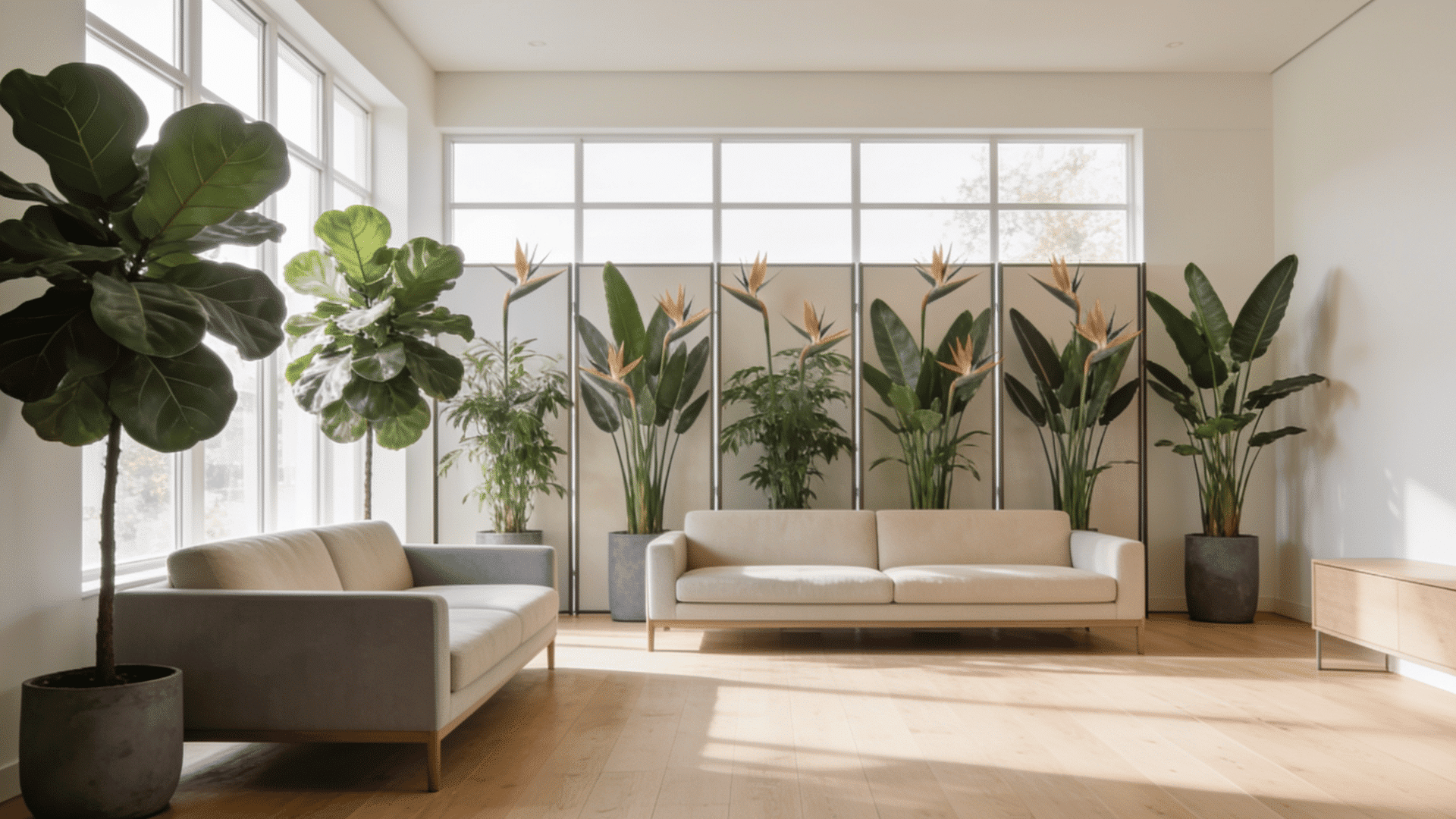
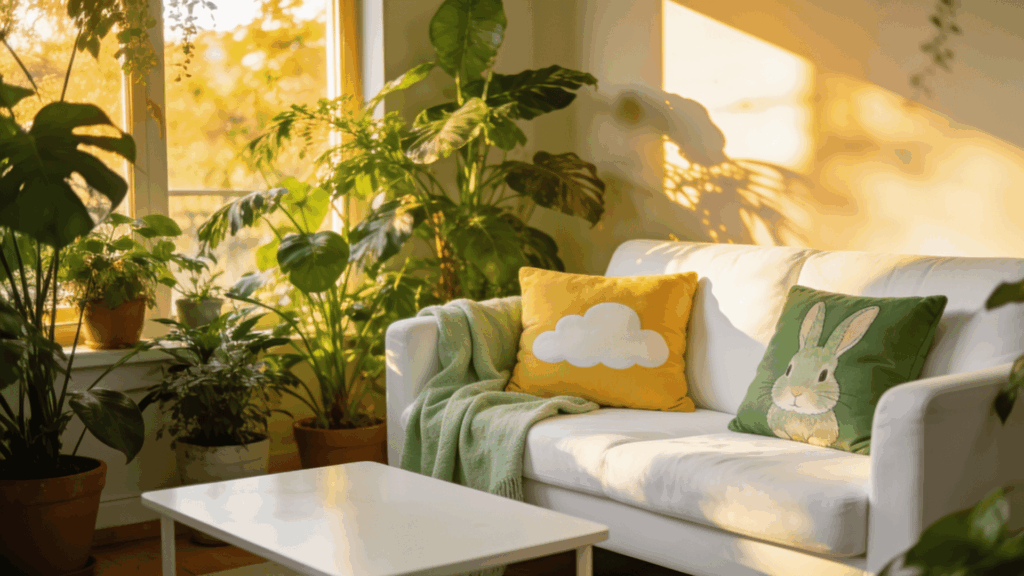
The living room gets the most eyes, so plant placement sets the style for the rest of your home.
Fill an Empty Corner With a Tall Floor Plant
A fiddle leaf fig or bird of paradise fills vertical space furniture can’t. Place it in a corner with indirect light. One tall plant does more than five small ones scattered around the room.
Use Plants as a Natural Room Divider
Line tall plants in matching pots to separate dining and seating areas in open layouts. Bird-of-paradise and majesty palm create a soft barrier without blocking light or airflow between the spaces.
2. Kitchen
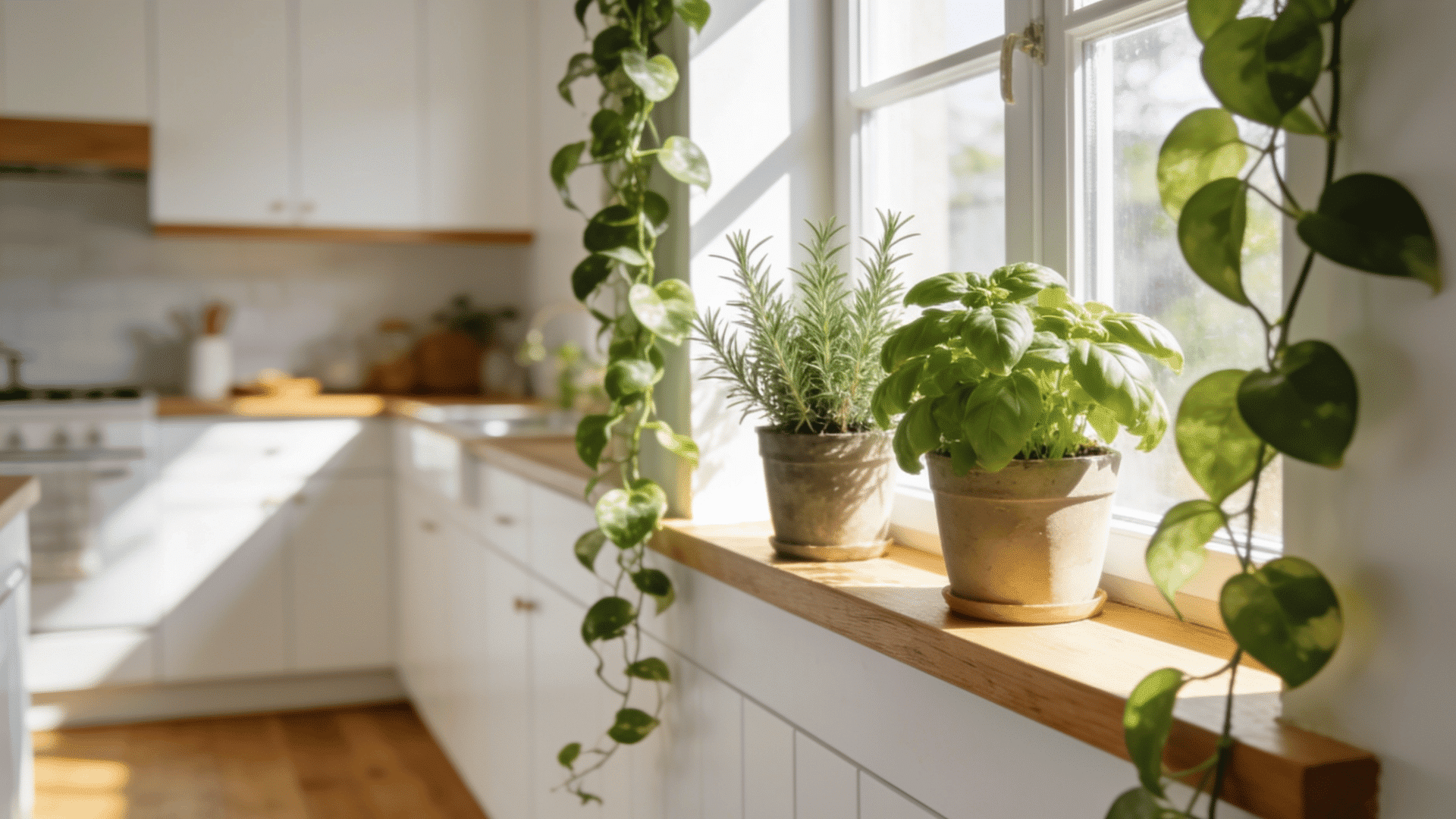
Kitchens pair well with plants that earn their spot, ones you can cook with or tuck into unused gaps.
Bring Herbs Into the Kitchen
Line basil, rosemary, and thyme in matching pots on a windowsill. Trim them often so they stay bushy. Fresh herbs double as decor and cooking ingredients, and they make the kitchen smell good every day.
Add a Trailing Plant Above Kitchen Cabinets
Fill the dead space between cabinets and the ceiling with a trailing pothos or philodendron. The vines cascade over the edge, making the kitchen feel finished without using any counter or shelf space.
3. Bedroom
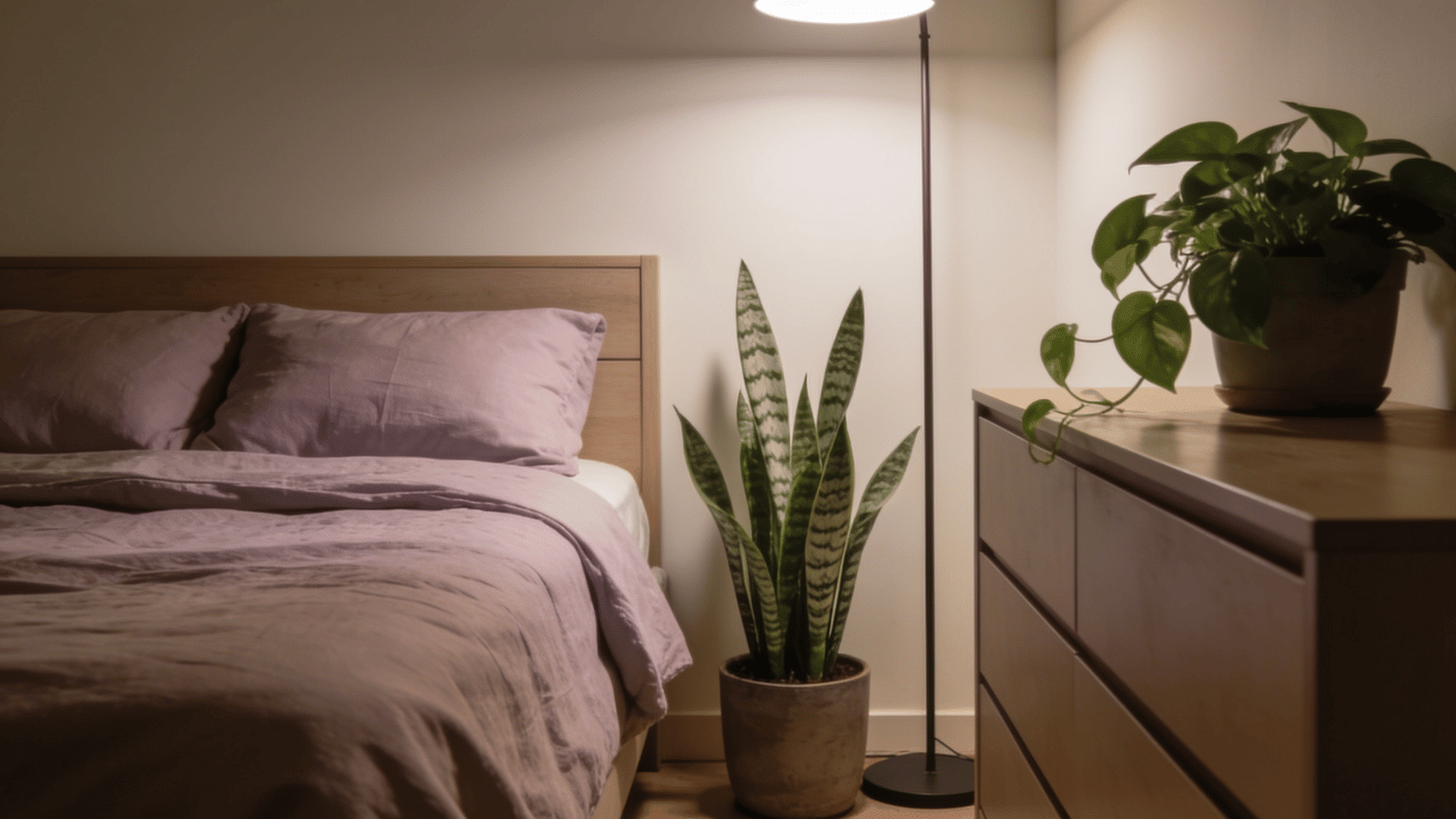
The bedroom needs calm, low-care plants that look good in low light and won’t demand attention every morning.
Place a Snake Plant Beside the Bed
Snake plants are believed to release oxygen at night and grow well in low light. Place one beside the nightstand in a matte ceramic pot. The tall upright leaves add height without taking much floor space.
Set a Tiny Plant on a Shelf or Dresser
A compact pothos or peperomia on a bedroom shelf or dresser corner adds a soft green accent. Pick a pot that matches your bedding tones. Keep it small so it doesn’t crowd your personal items.
4. Bathroom
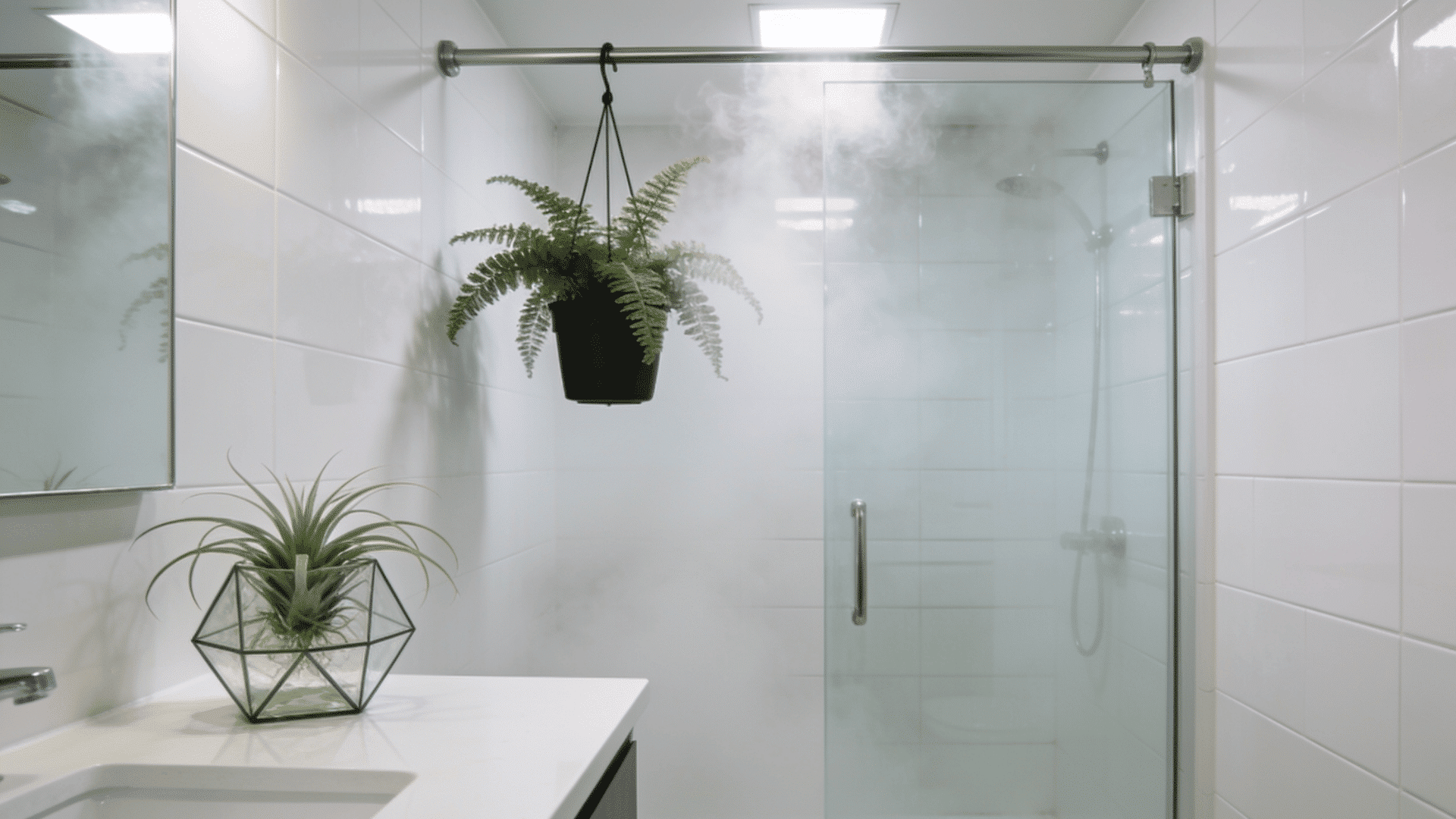
Bathrooms offer natural humidity that most tropical plants love, so this room is easier to style than you think.
Hang a Plant From the Shower Rod
A small pothos or fern in a hanging planter on the shower rod gets moisture from every shower. Use a plastic or glazed pot that can handle splashes of water. The trailing leaves soften the bathroom’s hard tile lines.
Place a Plant on the Vanity
A single air plant, small orchid, or tiny fern on the vanity adds green beside the mirror. Choose a pot that won’t tip when bumped. One small plant turns a plain bathroom counter into something that feels fresh daily.
5. Entryway
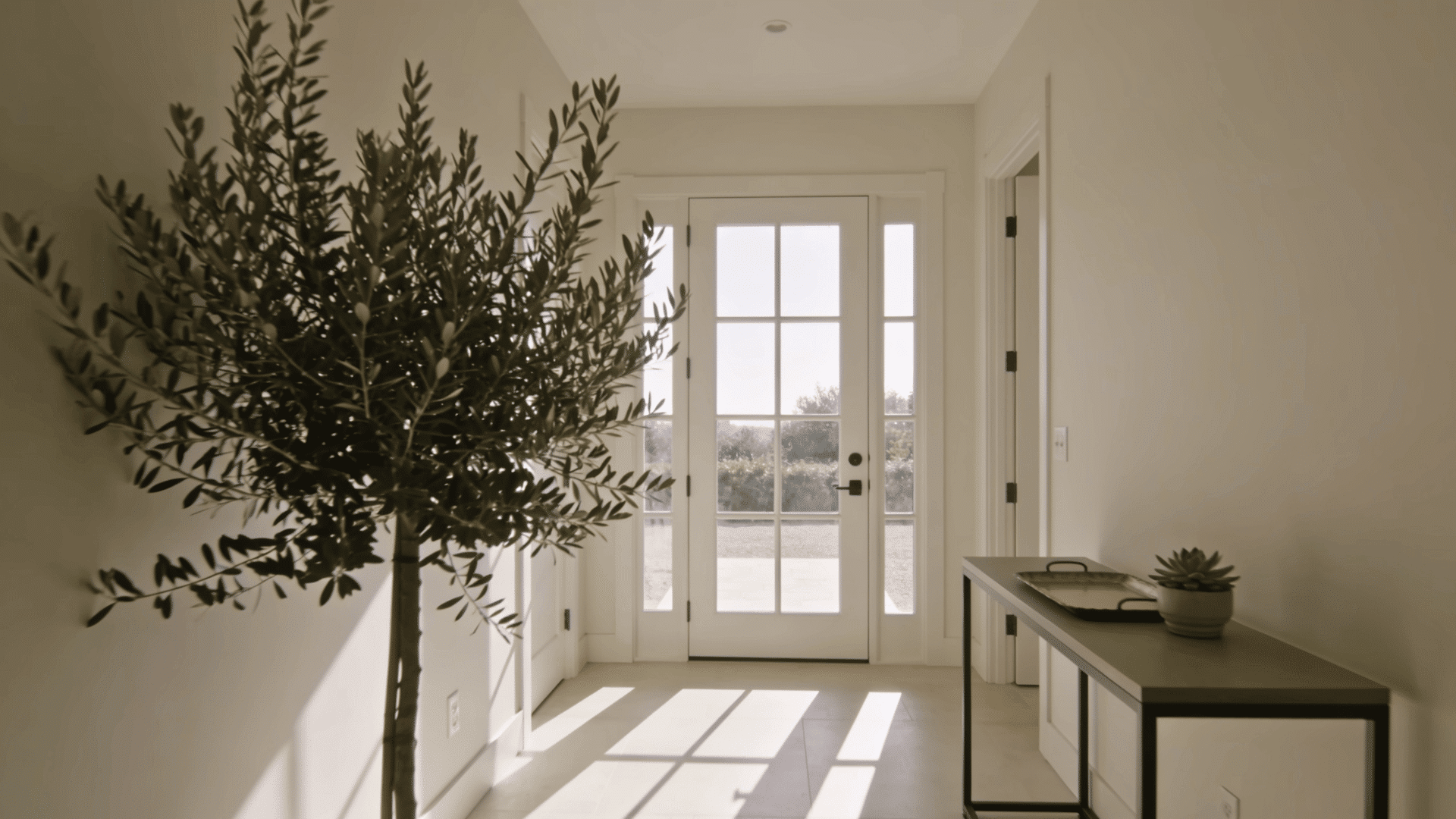
The entryway is the first thing guests see. One well-placed plant makes the whole house feel more welcoming.
Style the Entry With One Tall Plant
A snake plant, olive tree, or compact palm beside the console table sets the tone right away. Pick a planter that matches the entry’s style. Keep the surrounding area clean so the space feels open and inviting.
Add a Small Plant to the Console Table
Place a potted plant on the entryway table beside your keys or mail tray. A succulent or compact fern works well. It adds life to a surface that usually holds only everyday clutter.
6. Home Office
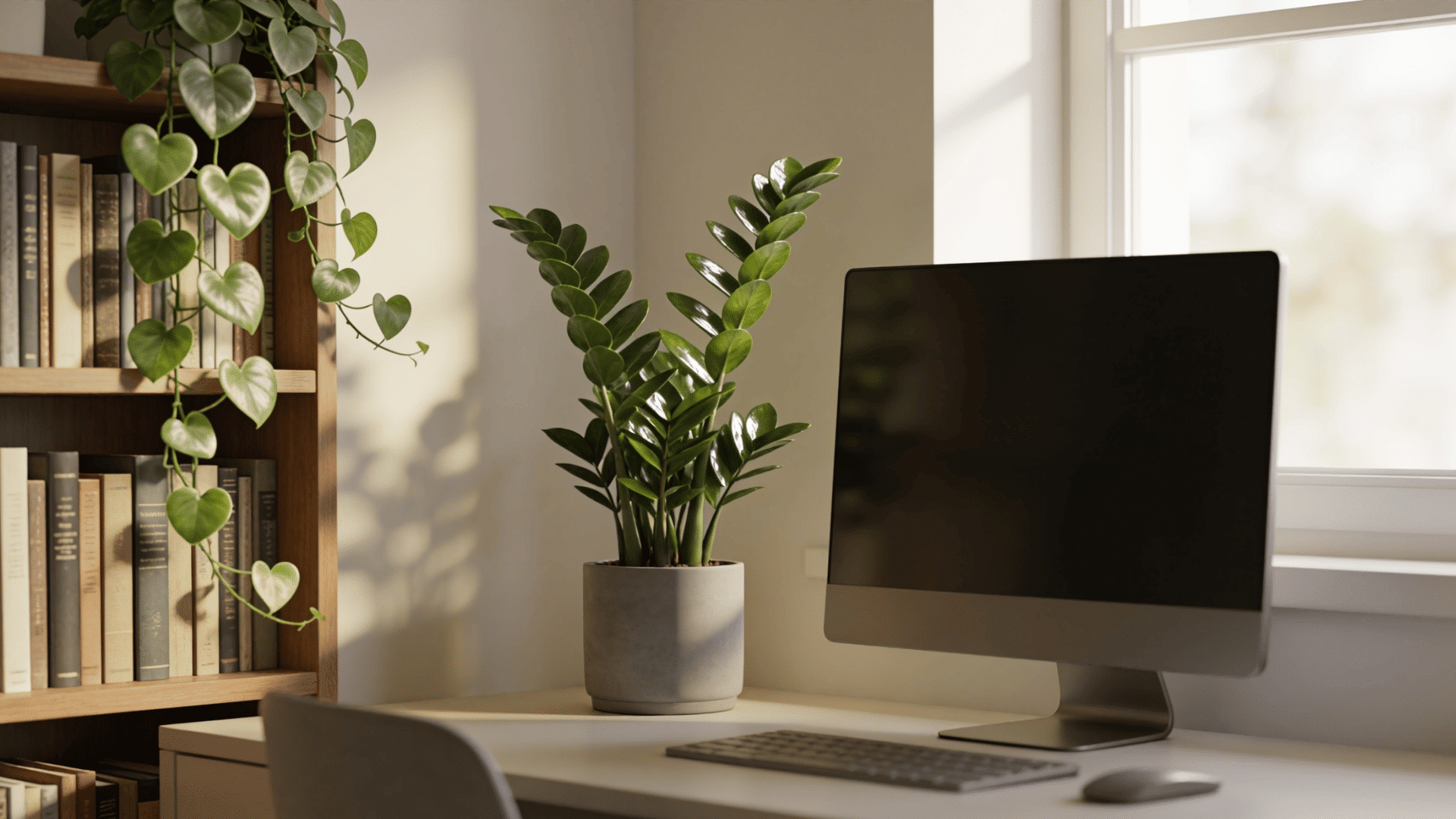
Your desk and shelves are in view more hours than any other room. Green lowers stress quietly.
Put a Plant on Your Desk
A small succulent or ZZ plant near your screen brings a touch of green into your workday without crowding the surface. Use a neutral ceramic pot. If the desk gets no natural light, a USB grow light clip solves that cheaply.
Place a Trailing Plant on the Office Shelf
A pothos or heartleaf philodendron on an office bookshelf adds life between books and folders. Let the vines trail over the shelf edge. One plant per shelf section keeps things looking styled without turning the office into a greenhouse.
Creative Ways to Display Plants Beyond the Basics
Once you’ve covered the main rooms, these ideas add green to walls, shelves, and surfaces in ways most people overlook!
1. Hang Trailing Plants From the Ceiling
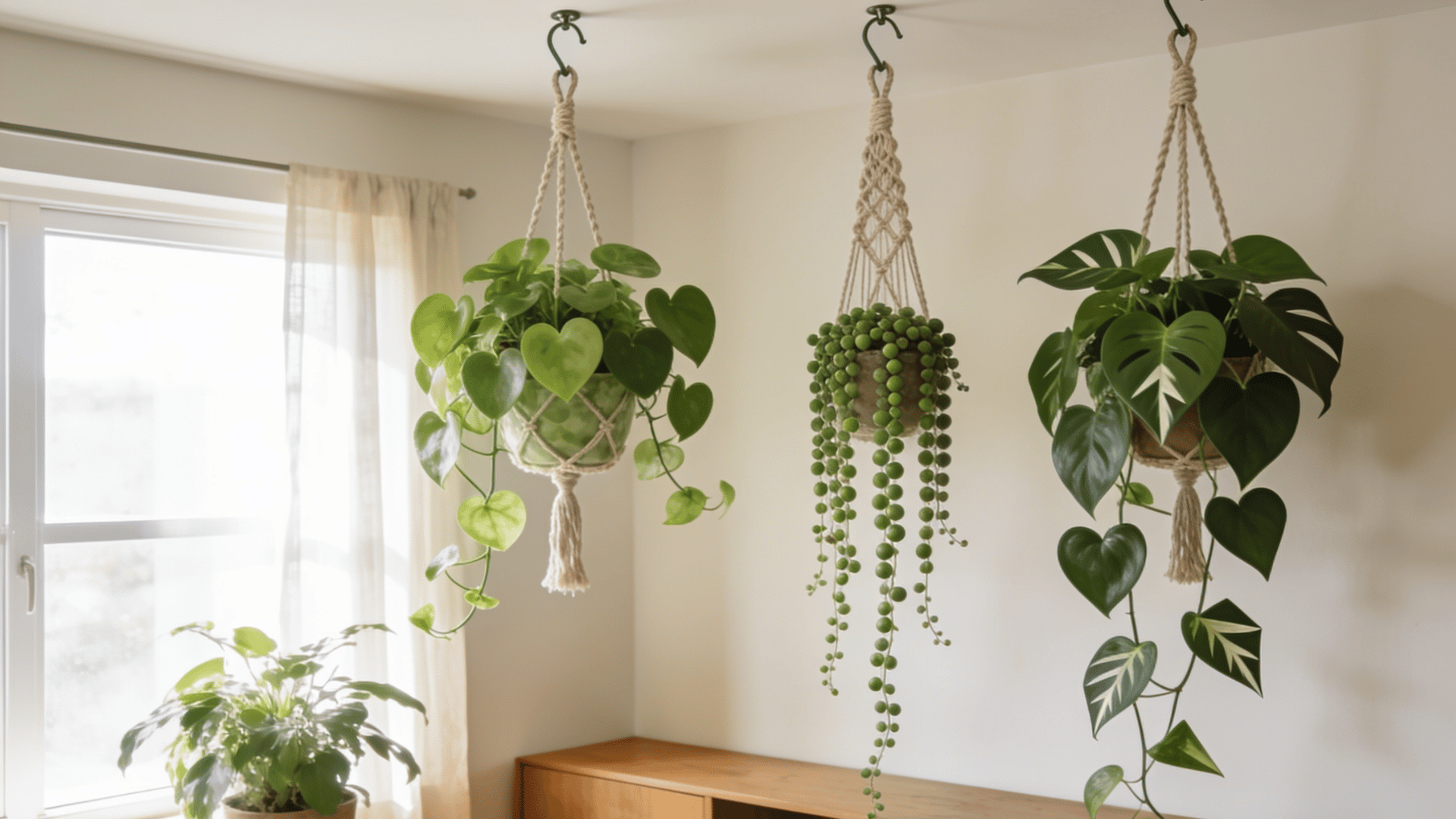
Pothos, string of pearls, and heartleaf philodendron all trail downward and look great hanging from ceiling hooks or macrame hangers.
Install the hook into a ceiling joist or use a toggle bolt for plaster and drywall. Hang the plant near a window where it gets indirect light, and at a height where the vines won’t brush your head when you walk by.
One hanging plant in a bare corner or above a reading chair adds movement and softness to a room that furniture and wall art alone can’t provide.
2. Line a Window Shelf With Small Pots
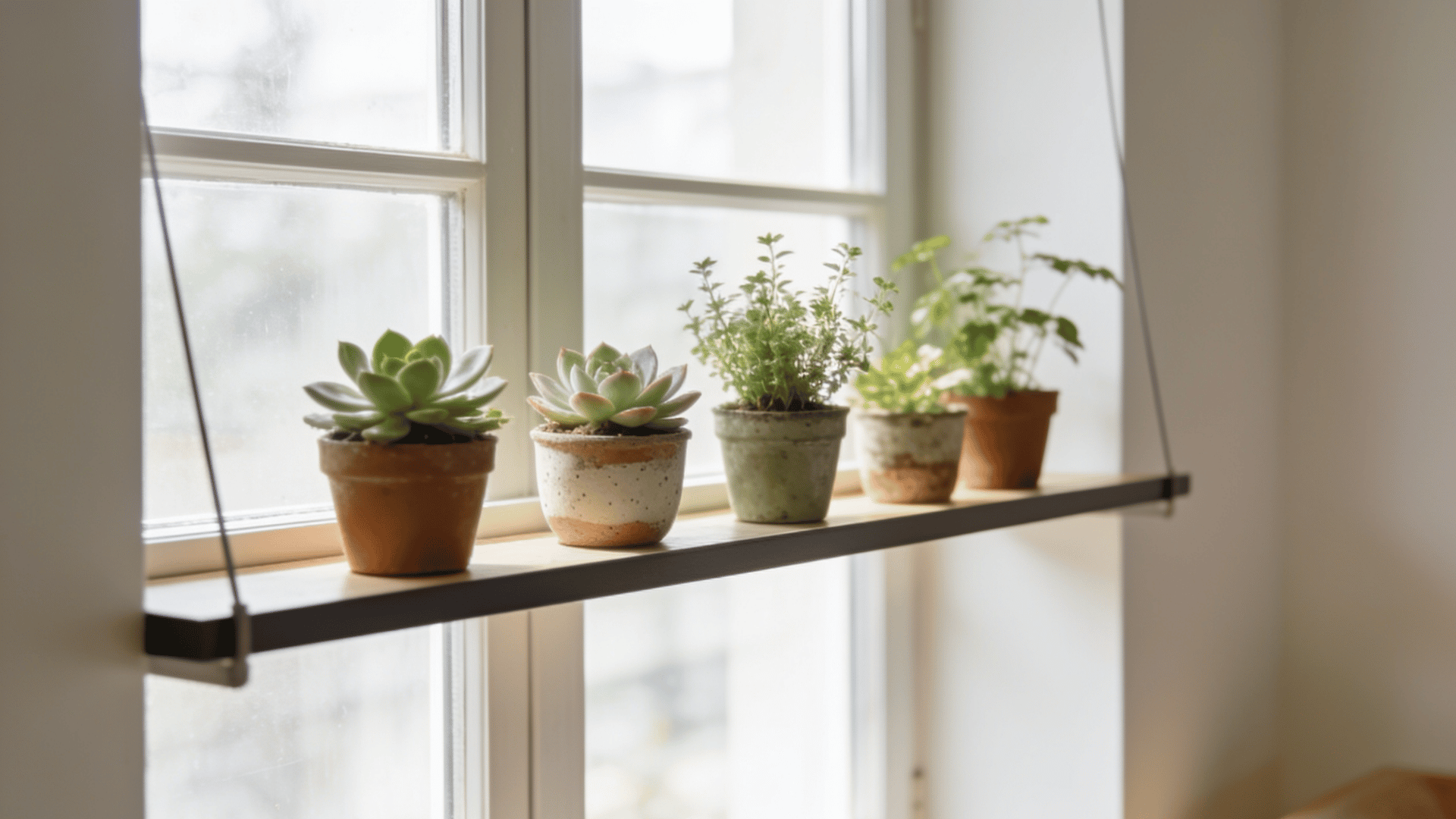
A slim shelf mounted across a window frame holds four to six small pots and makes the most of the room’s best light. Succulents, herbs, and small cacti work well because they handle direct sun.
Use matching pots for a clean look or mix shapes for a casual feel. Clear acrylic or slim wood shelves keep the window feeling open rather than blocked.
This adds a touch of green to a kitchen, bathroom, or living room without using any counter, table, or floor space at all.
3. Style Open Shelving With Plants and Books
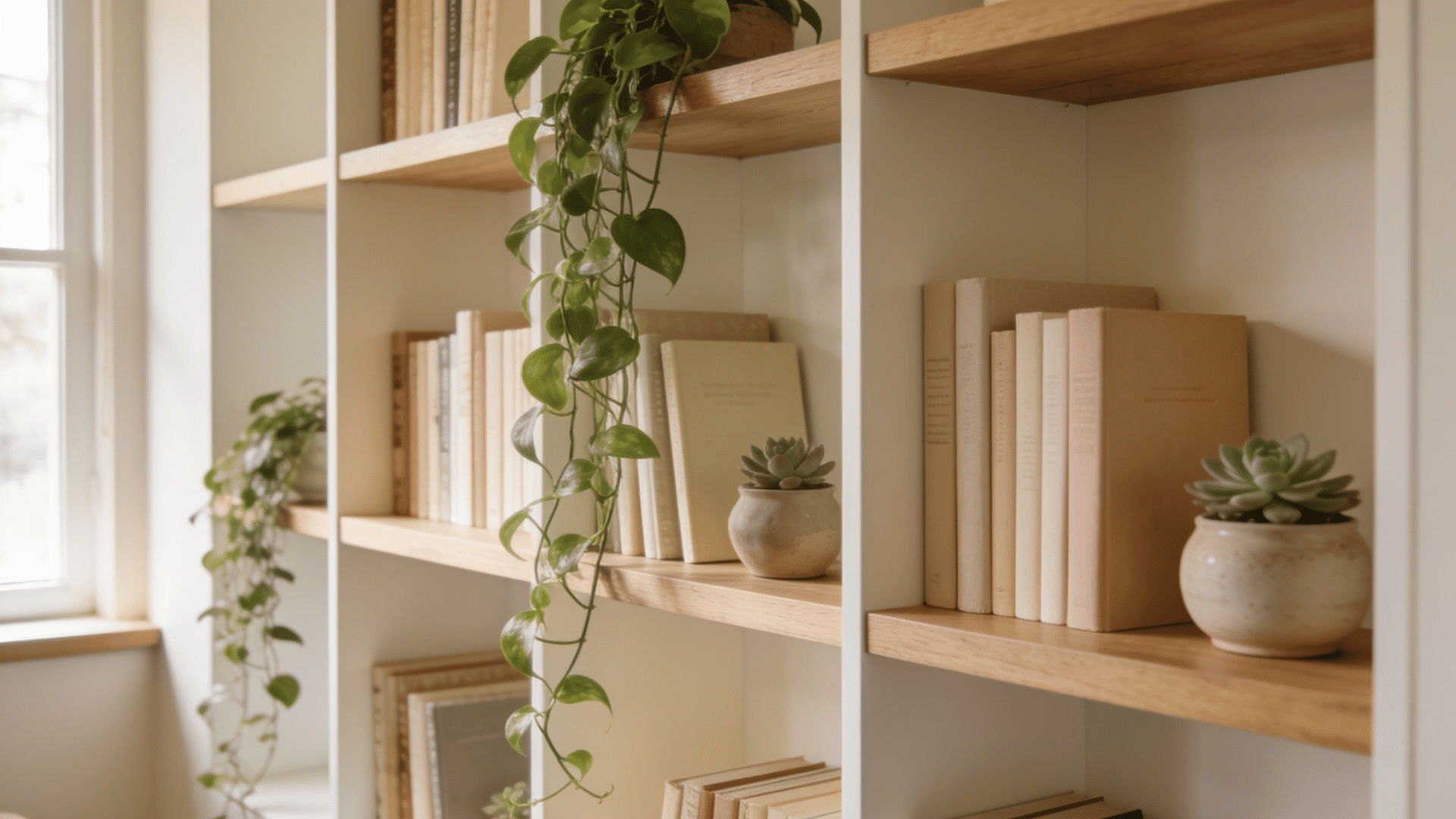
Break up rows of books on open shelves by placing a plant every two or three sections. Trailing plants like pothos work well on upper shelves where vines can hang down over the edge.
Small upright plants like succulents or peperomia fit on lower shelves between bookends and frames. Stick to one or two planter styles so the shelf looks planned and not cluttered.
Plants soften the hard lines of shelving and add color between neutral-toned objects without making the display feel busy.
4. Create a Plant Shelf Wall
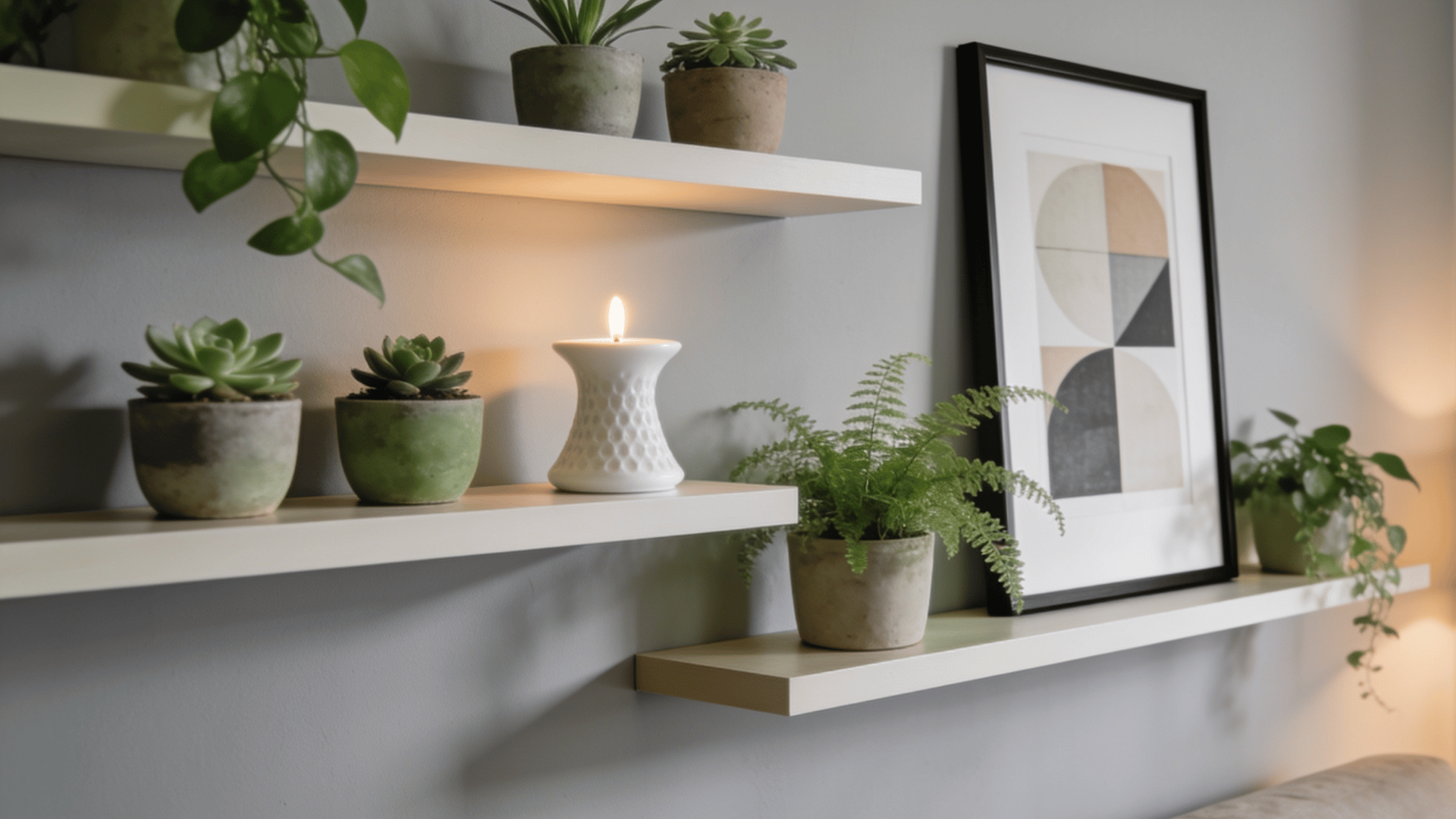
Mount two or three floating shelves at different heights on one wall and fill them with a mix of upright, trailing, and compact plants.
Stagger the shelves rather than aligning them in a straight row for a more natural, gallery-style look. Add one or two non-plant items, such as a framed print or a candle, so the display doesn’t look like a garden center shelf.
Water carefully to avoid drips on the wall below. This works well in living rooms, hallways, and bedrooms where the wall needs visual weight.
5. Turn a Bar Cart Into a Plant Stand
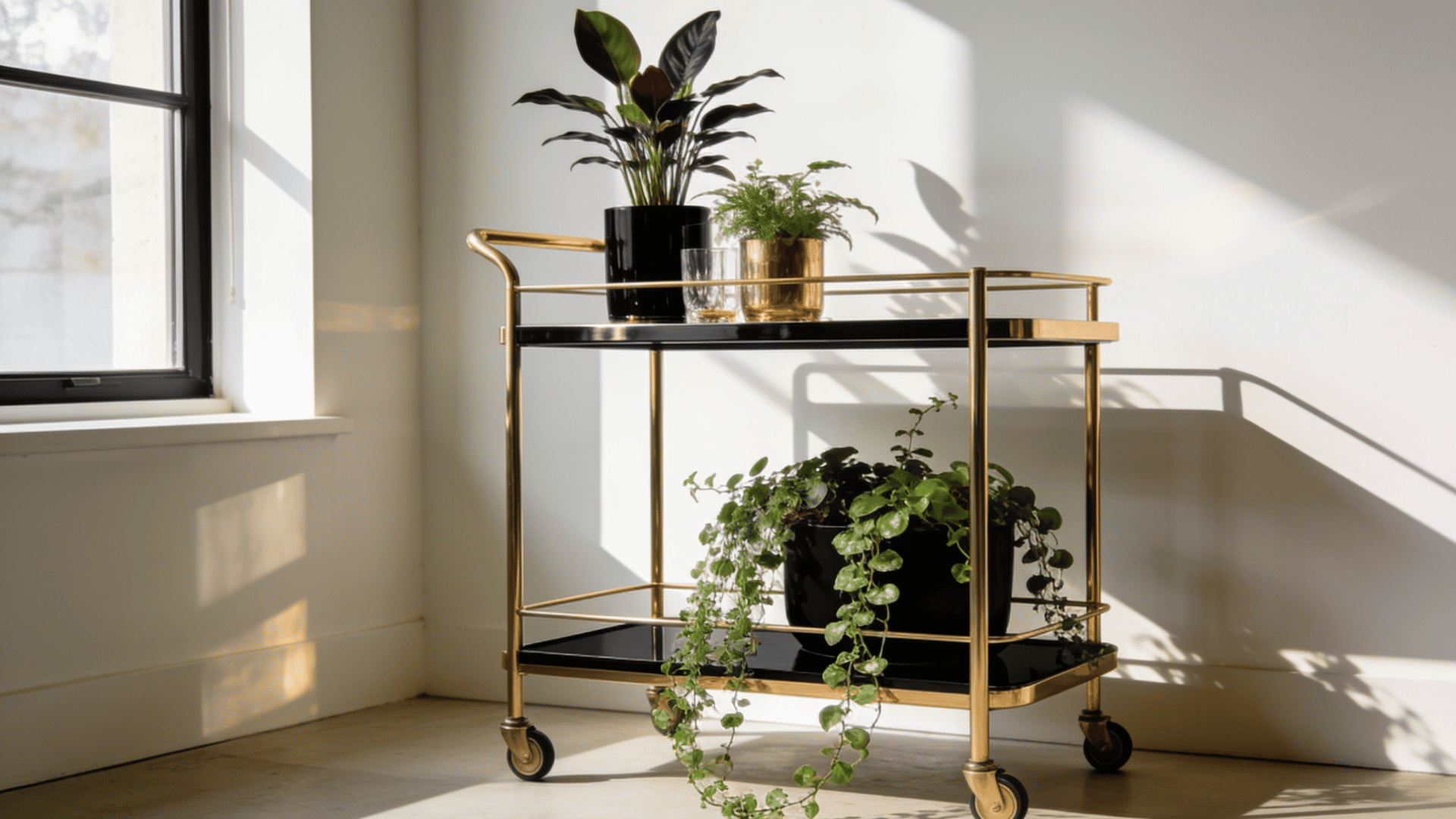
An unused bar cart makes a ready-made two-tier plant display that you can roll around the room.
Place it near a window for light, and arrange plants by height, with taller ones on top and trailing ones hanging over the bottom shelf edge.
The wheels let you move the whole setup if the light changes with the seasons. A bar cart with brass or black metal framing adds a styled, furniture-like quality that a basic wire plant stand or simple stool simply can’t match in a finished living space.
6. Wrap Vines Around a Mirror or Frame
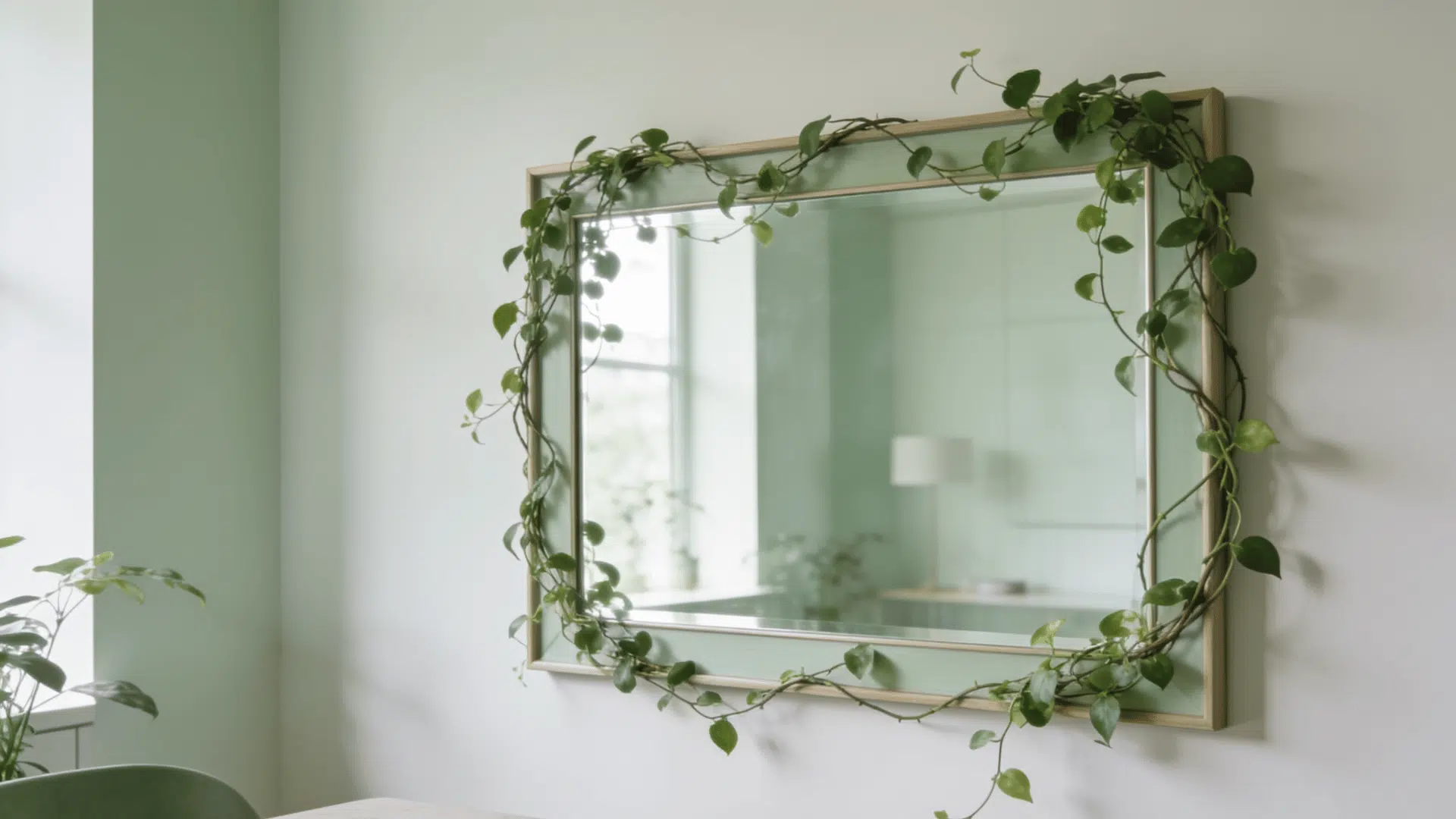
Train a trailing pothos or ivy to grow along the edge of a wall, mirror, picture frame, or open doorway. Use small, clear hooks or plant clips to secure the vine without damaging the wall or paint.
The vine adds a natural border that softens hard edges and makes the mirror feel more like a design feature than a plain flat surface.
Start with a plant placed on a shelf beside or above the mirror and let the vine grow slowly into position over a few weeks of training.
7. Use a Tall Planter to Boost Short Plants
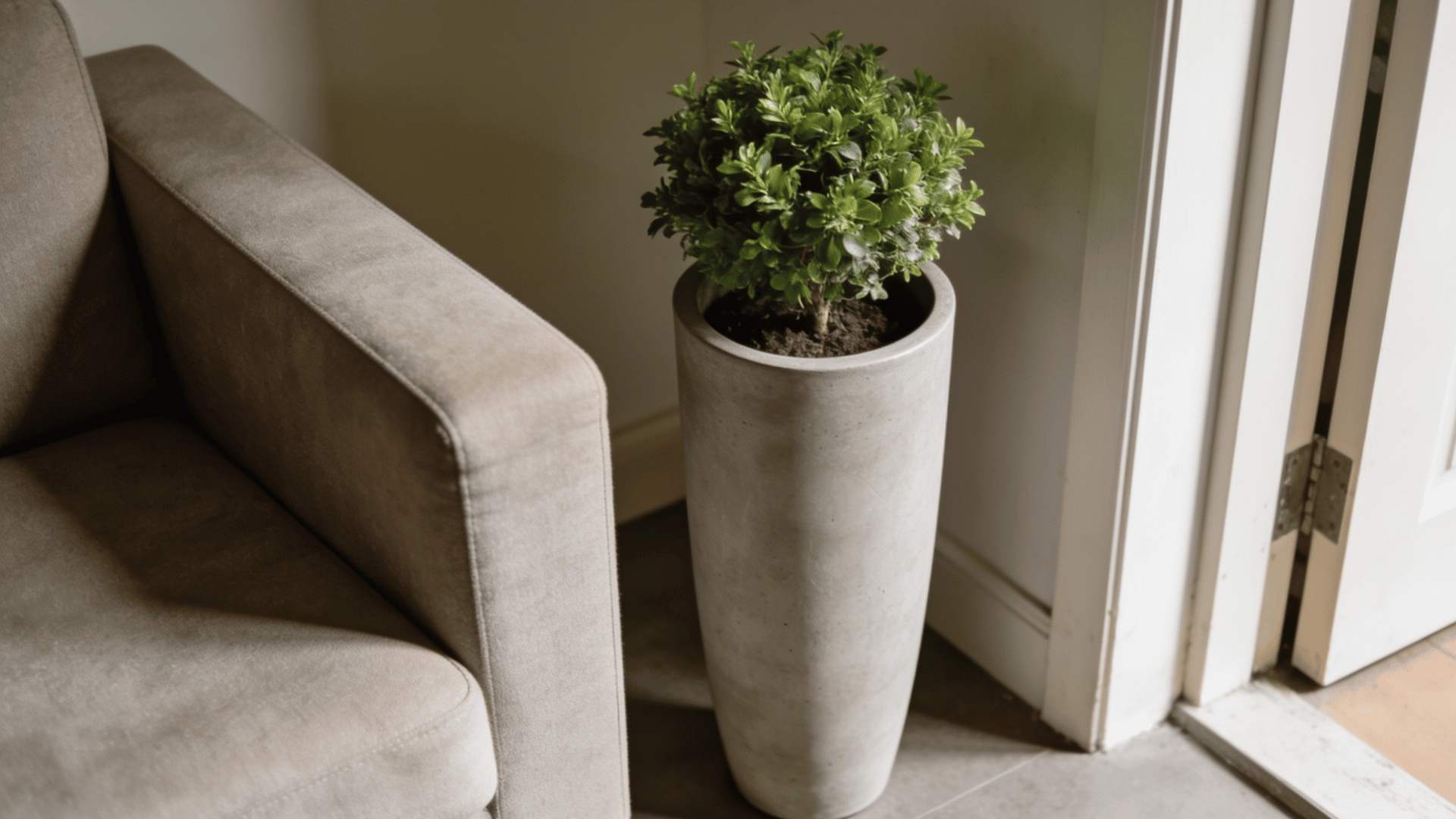
A short plant in a tall, narrow planter looks taller and more finished than the same plant sitting in a low pot on the floor.
This trick works well with ferns, peace lilies, and compact palms that need a height boost to stand out in a room. Ceramic, concrete, and fiberglass planters in matte finishes add a modern look.
Place the tall planter beside a sofa, in a hallway, or next to a front door where the extra height lifts the plant to eye level.
8. Build a Terrarium for Small Spaces
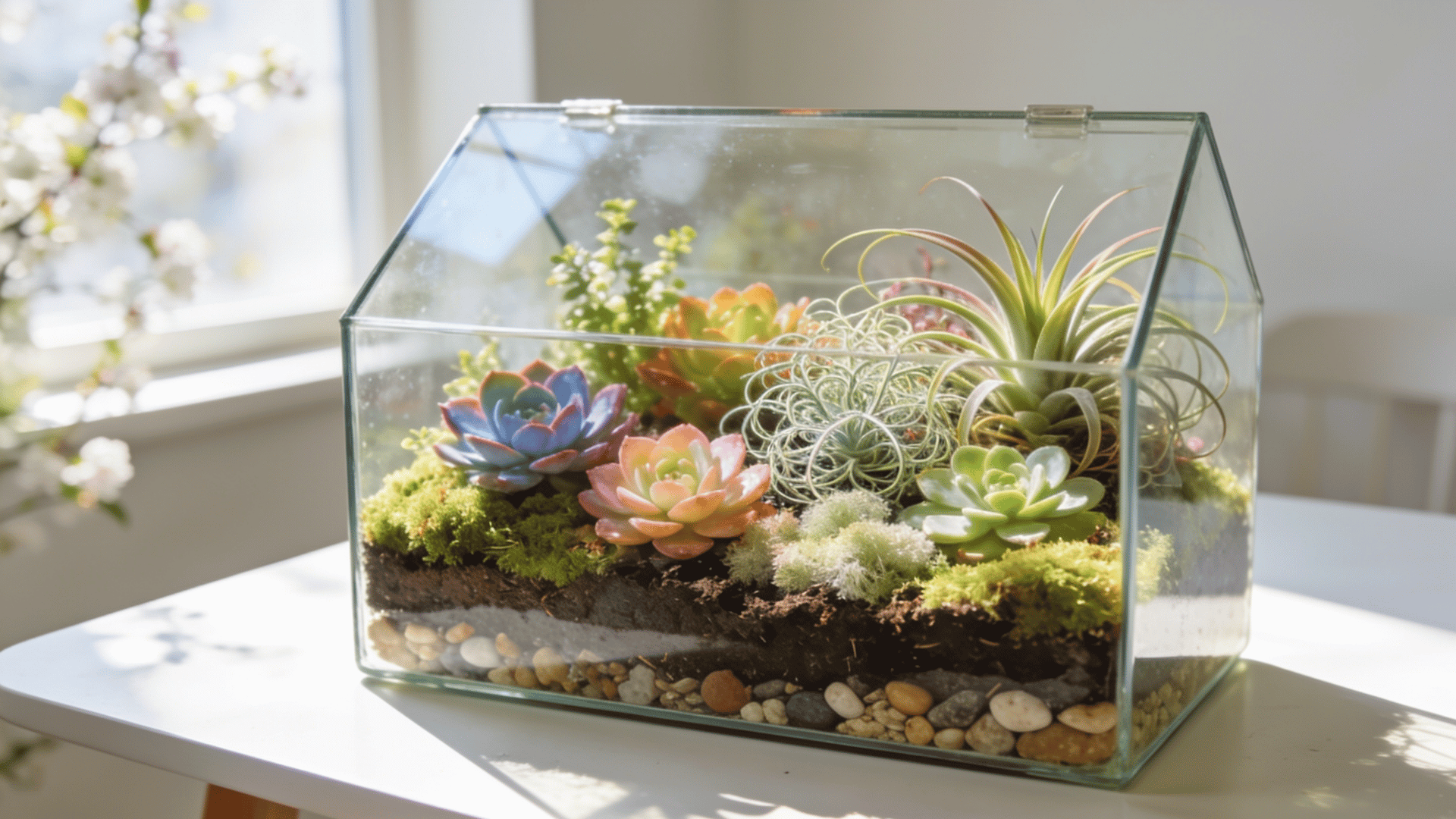
A glass terrarium holds succulents, air plants, moss, and small stones in a compact display that fits anywhere. It works on desks, coffee tables, bookshelves, and windowsills where floor space doesn’t exist.
Open terrariums suit succulents that need airflow, while closed ones work for moisture-loving ferns and mosses. Layer sand, pebbles, activated charcoal, and soil before planting.
Terrariums need very little care and add greenery to apartments, offices, and small bedrooms without requiring a large pot or any floor space at all.
9. Set Plants on Stacked Books or Risers
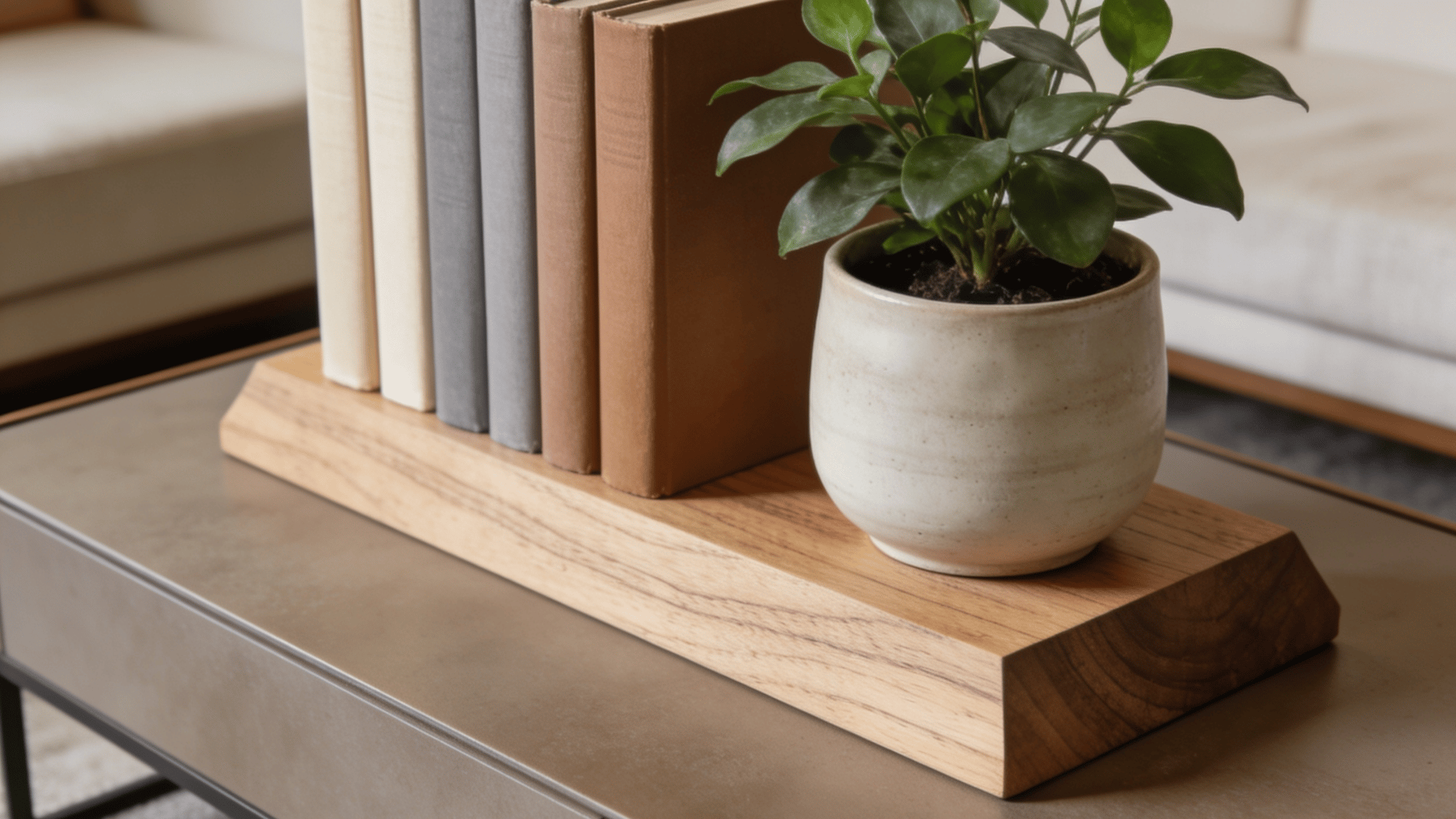
Placing one small plant on top of a stack of two or three hardcover books raises it to a better height and adds visual interest to a flat surface. This works on coffee tables, nightstands, desks, and mantels.
Pick books with neutral or complementary spine colors so the stack looks styled rather than random. A plant on a riser draws more attention than one sitting flat on the surface.
Swap the books seasonally or use wooden risers for a cleaner look that stays the same year-round.
10. Use a Pegboard to Organize Plants
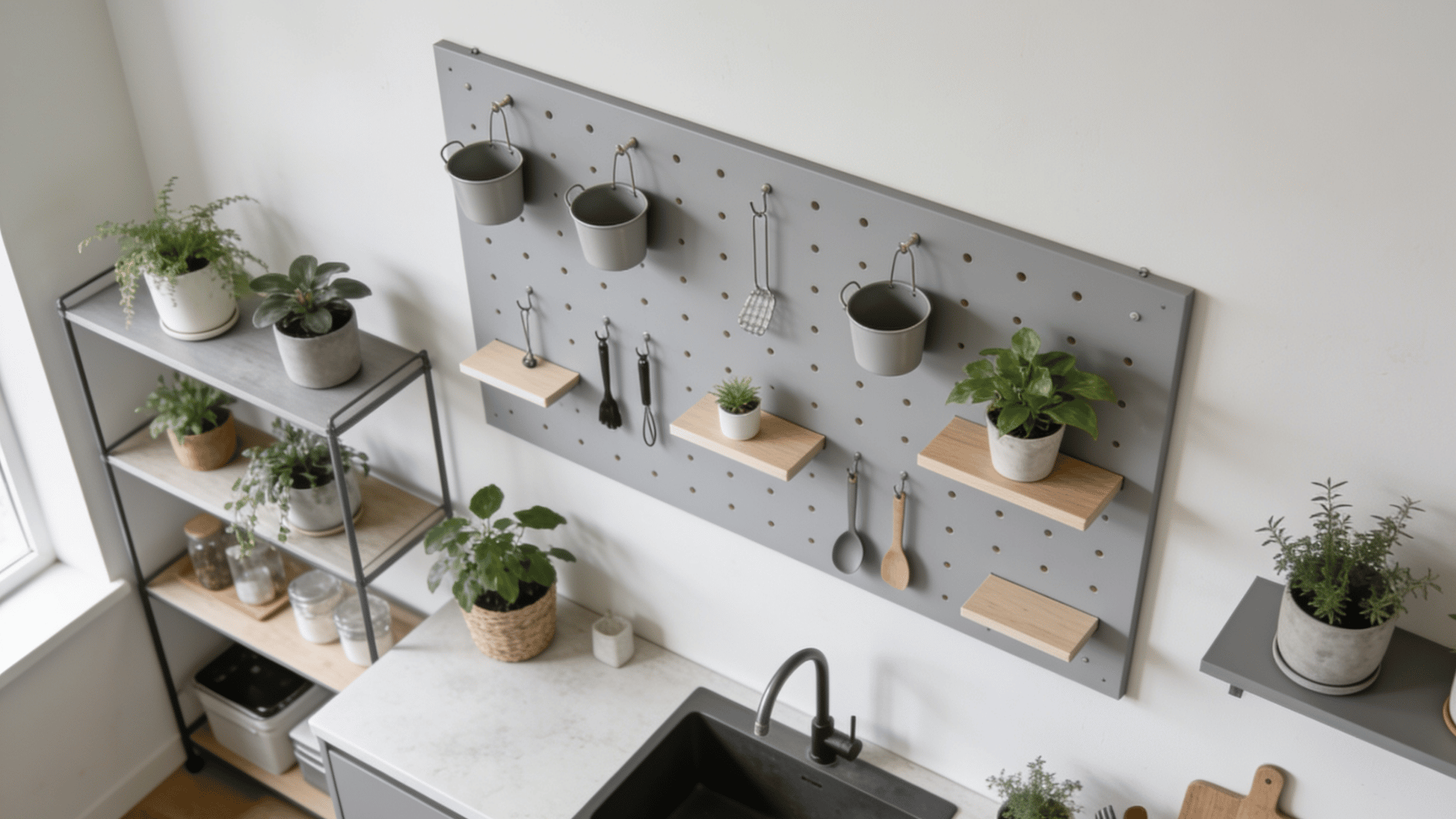
A wall-mounted pegboard holds small pots, hooks, and tiny shelves in a tight grid that keeps plants off counters and floors. Rearrange the hooks any time your collection grows or changes.
This setup works well in kitchens, hobby rooms, entryways, and small home offices where space is tight.
Paint the pegboard to match the wall color so it blends in, or use a contrasting shade to make it stand out as a feature. The grid pattern keeps the display looking organized even as you add more plants.
11. Create a Living Wall With Mounted Planters
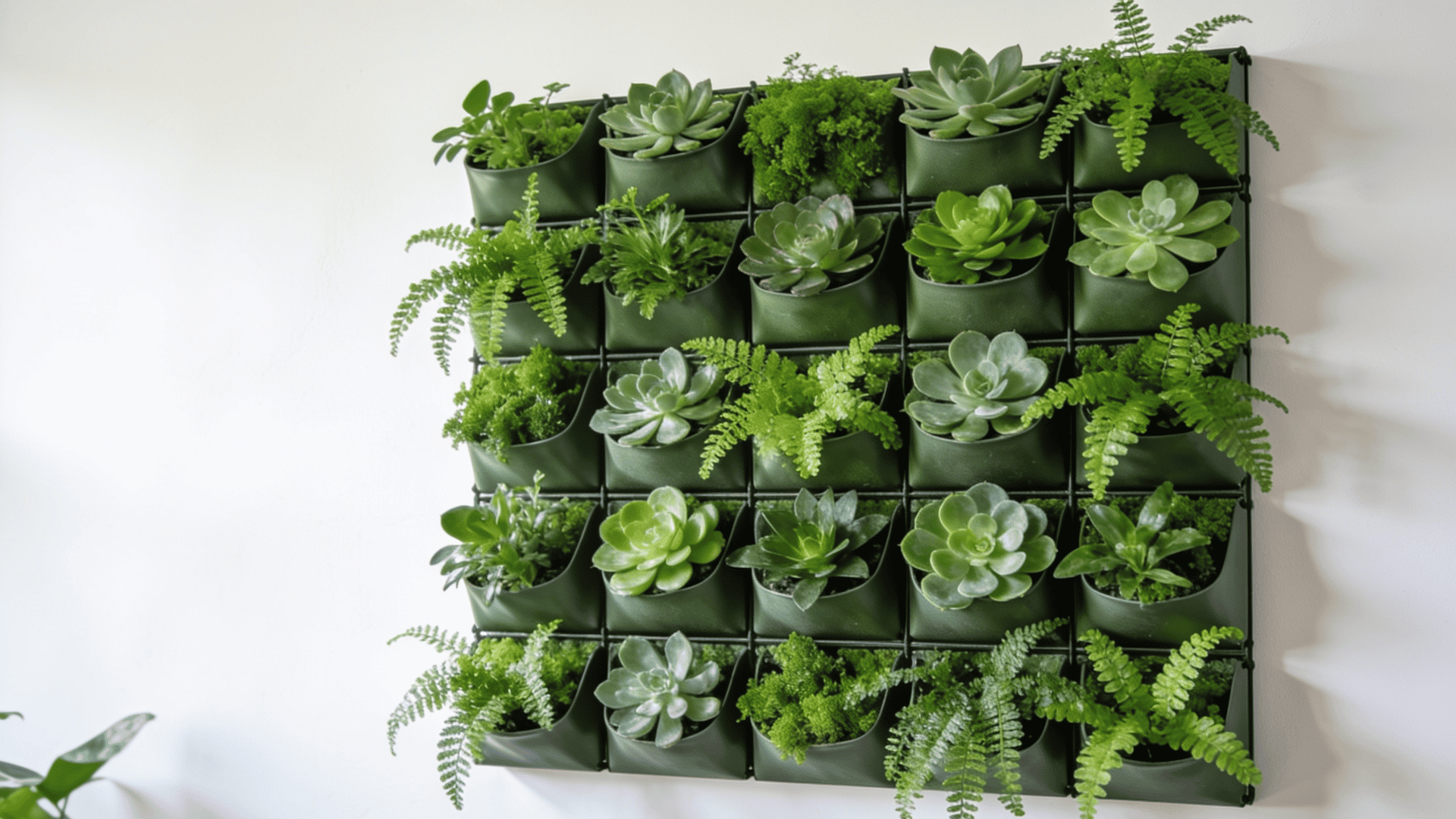
Wall-mounted planters, pocket planters, or vertical garden frames turn a blank wall into a living feature that no painting or print can match.
Start with a small grid of four to six pockets and fill them with low-care plants like succulents, ferns, or air plants. Mount the system near a window or add a grow light above it to keep plants healthy.
Water carefully using a drip tray or self-watering inserts built into the frame. Start small and add more panels over time as you learn what grows well.
12. Display Air Plants in Glass or Wire Holders
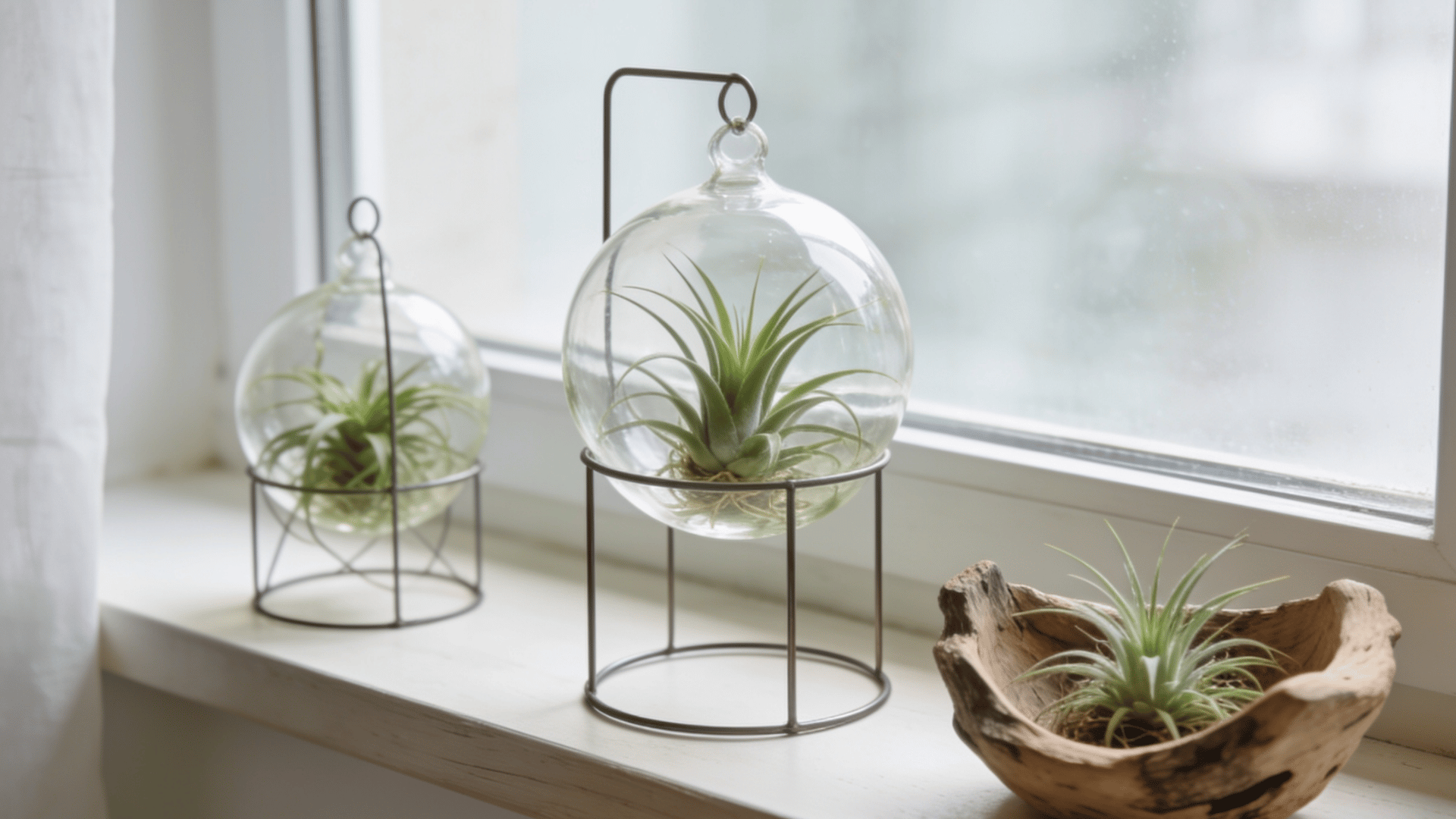
Air plants need no soil and very little water, making them one of the easiest options for shelves, bathrooms, and windowsills. Display them in glass globes, wire frames, driftwood cradles, or set them on a shallow dish.
Mist them two to three times a week or soak them in water for 20 minutes once a week. Group three to five together for a collected look.
Their small size and low maintenance make them a good fit for anyone who wants greenery in the house without having to manage soil and watering schedules.
13. Replace One Piece of Decor With a Plant
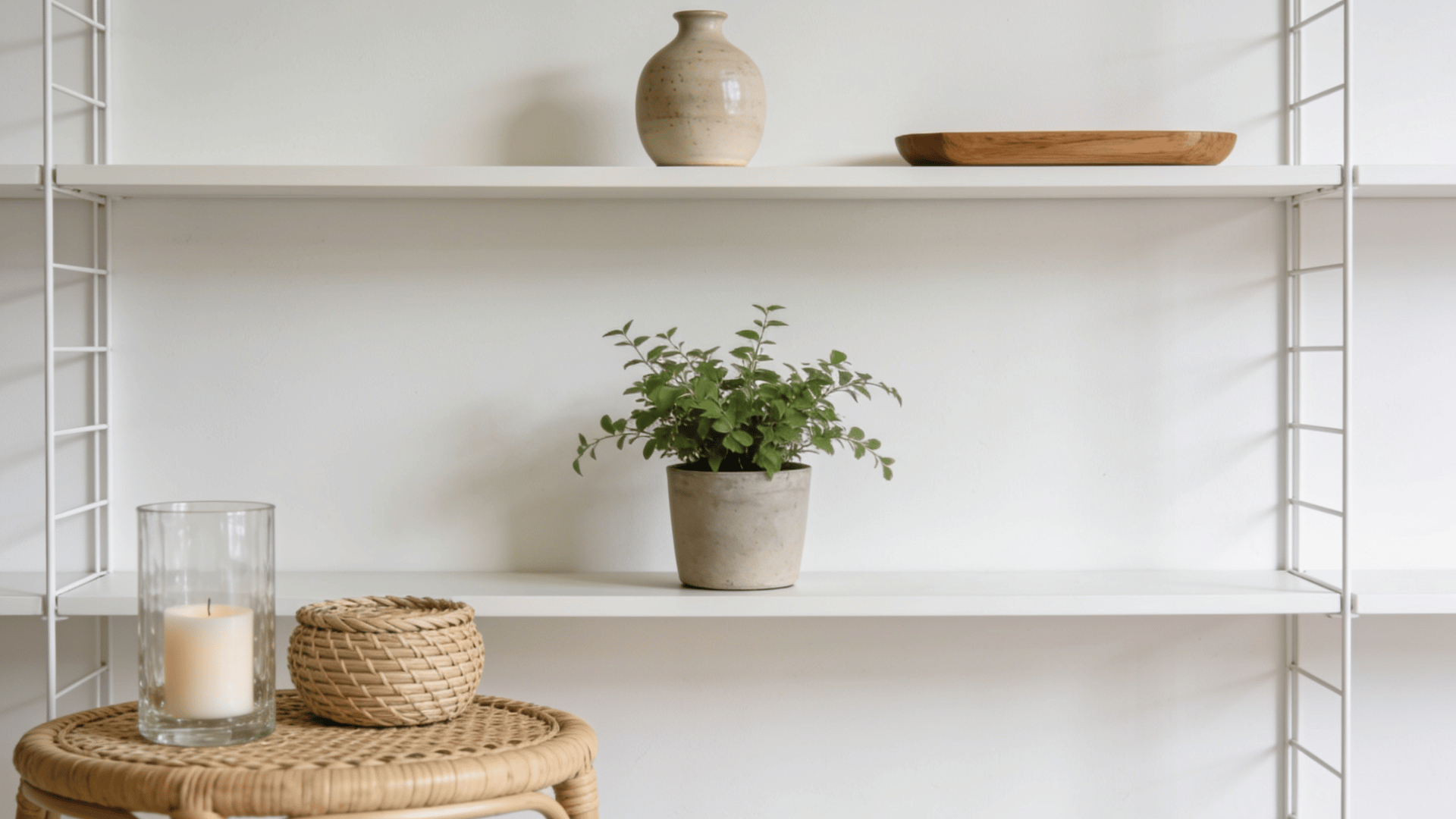
Look at any shelf, table, or surface in your home and swap one decorative item- a candle, a vase or a figurine for a small potted plant.
This keeps the room from feeling overcrowded while adding a living, textured element to the space. A plant where a candle used to sit instantly changes the feel of that corner.
You don’t need extra surfaces or new furniture. Just trade one still object for one that grows, and the space feels fresher and more natural without any other changes.
Common Mistakes to Avoid
Always check the light before choosing a spot; decoration only works if the plant stays alive.
- A full set of identical white pots looks stiff and staged. Mix two or three planter styles in the same color family for a collected, natural feel that looks like it grew over time.
- Five plants on one shelf, with nothing in the rest of the room, look unbalanced. Spread plants across different rooms and surfaces so the green feels like part of the whole house, not a single display.
- That small monstera on your bookshelf will be three feet wide in a year. Always check how big a plant gets before you commit to a permanent spot for it.
- A calathea looks stunning, but it needs high humidity and indirect light; otherwise, it turns brown quickly. Match the plant’s care needs to your actual habits and room conditions, not just its appearance in the store.
Conclusion
Knowing how to decorate with plants comes down to three things: put them where the light is, pick the right size for the space, and choose planters that match your room. You don’t need 30 plants to make a difference.
Plants bring color, shape, and life to spaces that furniture and paint alone can’t fix.
You’ll notice the difference once you place even one or two well-chosen pots in the right corners. It really doesn’t take much to make a room feel alive again.
Start small. Pick one idea from this list, try it in one room this week, and see how it feels. Then add more as you go. Drop a comment below and let us know which room you’re starting with!
Frequently Asked Questions
Do Plants Help With COPD?
Houseplants do not treat COPD or meaningfully clean the air. Keep them if mold, pollen, or scents do not worsen symptoms.
Which Is the Luckiest Plant for Home?
Jade plants and money trees are considered lucky in Feng Shui, especially for wealth, growth, and business prosperity at home.
Which Plant Removes Negative Energy?
Snake plants are believed to reduce negative energy in Feng Shui and Vastu, though this belief is symbolic, not proven.