
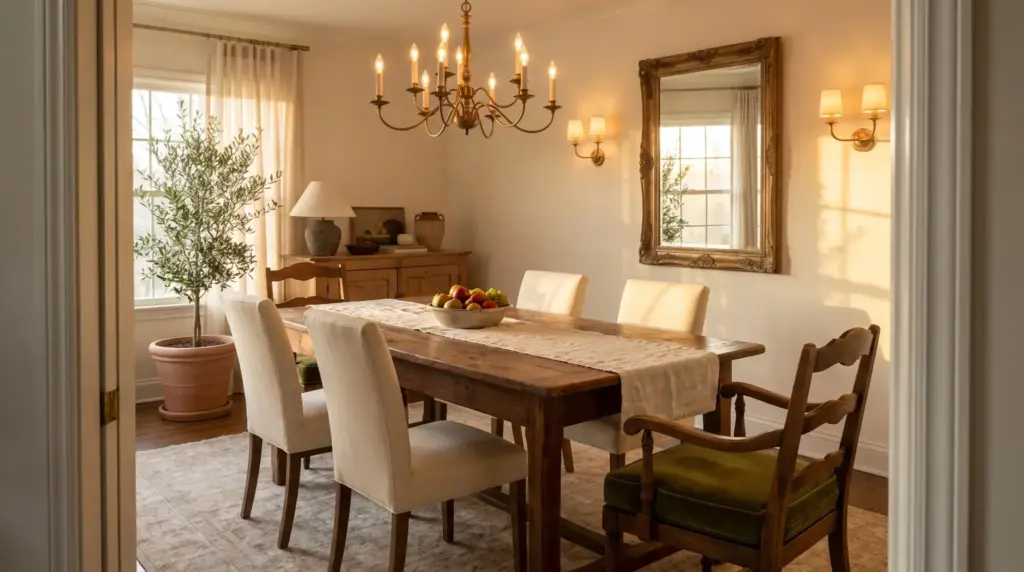
A dining room isn’t just a place to eat. It’s where birthdays happen, where homework gets checked over dinner, where holidays slow down long enough for everyone to sit still at the same time. When a dining room works, you don’t think about the furniture. You think about the people around it. When it doesn’t, you notice everything wrong with it before you even sit down.
The good news is that a warm, timeless dining room doesn’t come from luck or a big budget. It comes from a handful of choices, made in the right order. Here’s where to start.
1. Start With a Table That Can Anchor the Room
Everything else in the room takes its cue from the table, so get this piece right before you worry about anything else. Start with size: measure your space and leave at least three feet of clearance on every side, so chairs can slide out without hitting a wall or a buffet. A table that’s too big makes a room feel cramped, no matter how nice it looks. One that’s too small just looks lost in the space.
Once you know your size, think about how long the table needs to last. This is where Amish dining tables tend to come up, and for good reason — built from solid wood, joined by hand, and made to be repaired rather than replaced, they’re meant to outlast trend cycles by decades, not years. A table like this becomes the piece the rest of the room gets arranged around, and it only looks better with age.
2. Choose Seating People Actually Want to Sit In
A beautiful table with uncomfortable chairs is still an uncomfortable dining room, so sit in a chair for at least ten minutes before you buy it, not ten seconds. Mixing styles is fine, and often better than matching everything exactly. A run of upholstered side chairs with two wood armchairs at the ends adds contrast and gives guests a choice between structure and softness.
Practical details matter just as much as comfort. If you have young kids or expect to for a while, choose a seat fabric that wipes clean rather than one that only looks good in photos. And check the height: leave a gap of at least ten to twelve inches between the seat and the underside of the tabletop, or knees will hit wood all night.
3. Layer Your Lighting Instead of Relying on One Fixture
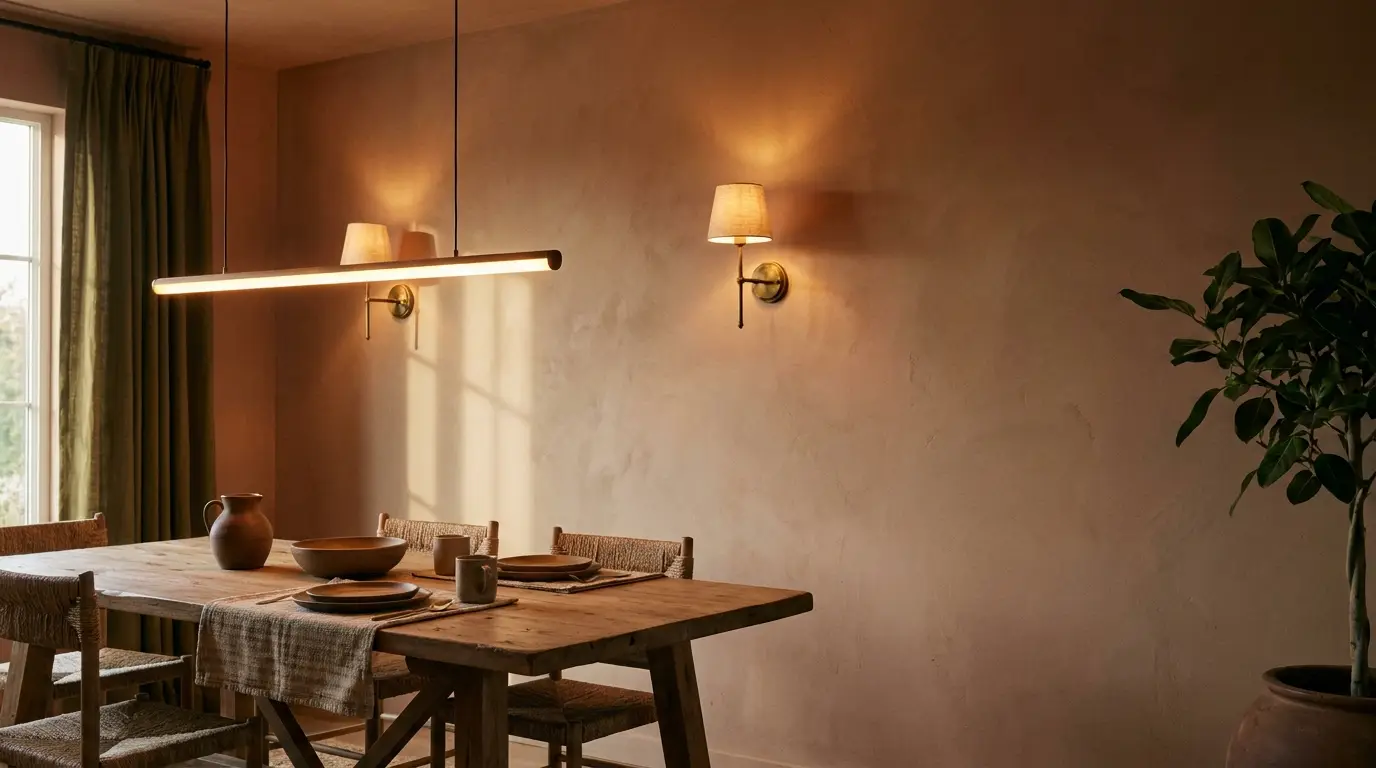
Lighting does more to set the mood of a dining room than paint color ever will. Start with a central fixture sized to your table, not your ceiling. For example, a chandelier or linear pendant should hang about 30 to 36 inches above the tabletop and span roughly two-thirds of its length. Put it on a dimmer. This one change does more for atmosphere than almost anything else on this list.
From there, add a second light source instead of stopping at one. A pair of wall sconces, a lamp on the sideboard, or even candles on the table gives the room depth instead of a single flat pool of light. Choose warm-toned bulbs, in the 2700K to 3000K range — cooler bulbs read as clinical, even in a beautiful room.
4. Pick Finishes That Get Better With Age
Trendy finishes date a room fast. Timeless ones let it grow with you. Wood tones with some depth and grain — walnut, cherry, or a rich oak — tend to hold up better over the years than very light or very gray finishes, which can start to look dated once the trend passes. Metal accents in brass or matte black age gracefully and pair with almost anything you add later.
When you’re choosing a rug, wall color, or drapery, aim for tones that sit in the same family as your table’s finish instead of fighting against it. A room doesn’t need to match perfectly, but it should feel like one conversation, not several arguments happening in the same space.
5. Keep the Décor Simple and Purposeful
The table is the star of the room, so everything else should support it, not compete with it. Keep the tabletop simple when it’s not set for a meal — a low centerpiece, a bowl of fruit, or a runner is plenty. Anything taller than eye level when seated ends up blocking conversation across the table.
On the walls, one or two larger pieces of art or a mirror do more than a cluster of small frames. A mirror across from a window also bounces natural light back into the room, making the whole space feel bigger without adding a single fixture. Leave a little room to breathe, too — a sideboard for extra dishes, a plant in the corner, nothing more.
Bringing It All Together
None of these steps work in isolation. The right table means little under flat lighting, and the best lighting can’t fix a chair no one wants to sit in for more than ten minutes. The order matters: pick a table built to last, choose seating for comfort, layer the light, ground it all in finishes that age well, then keep the styling light.
Do that, and you won’t just have a dining room. You’ll have the room your family and guests choose to linger in, long after the plates are cleared.