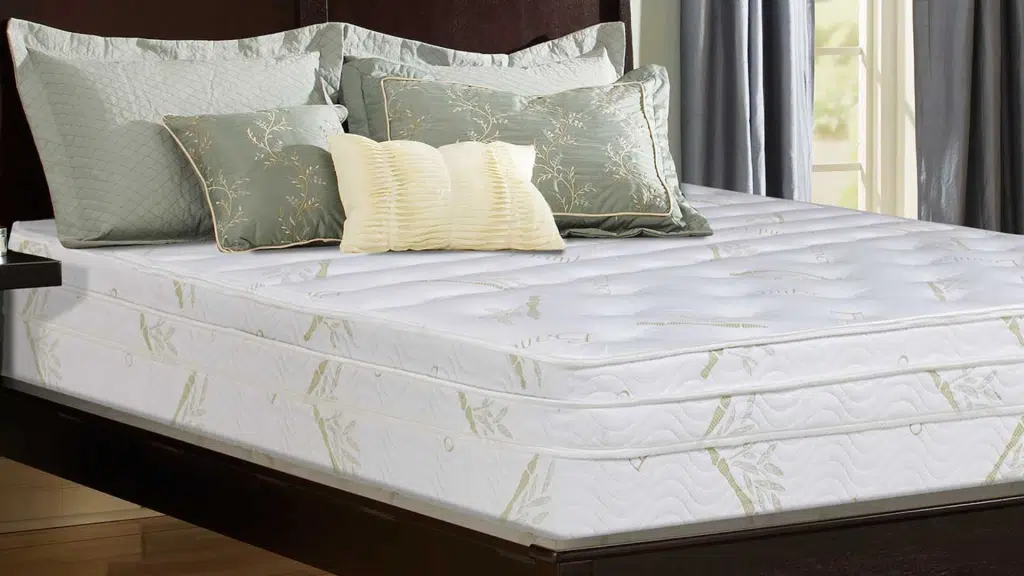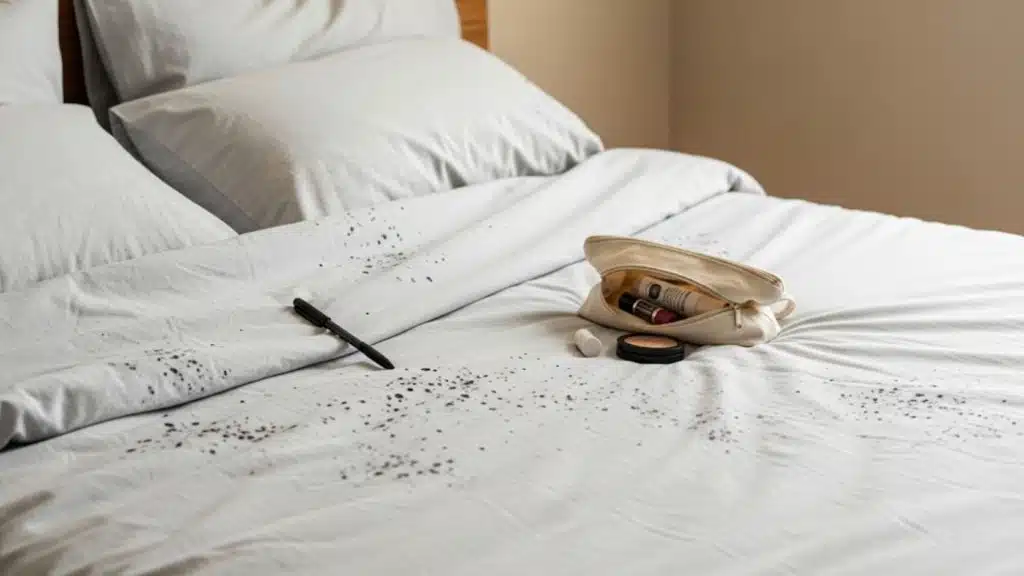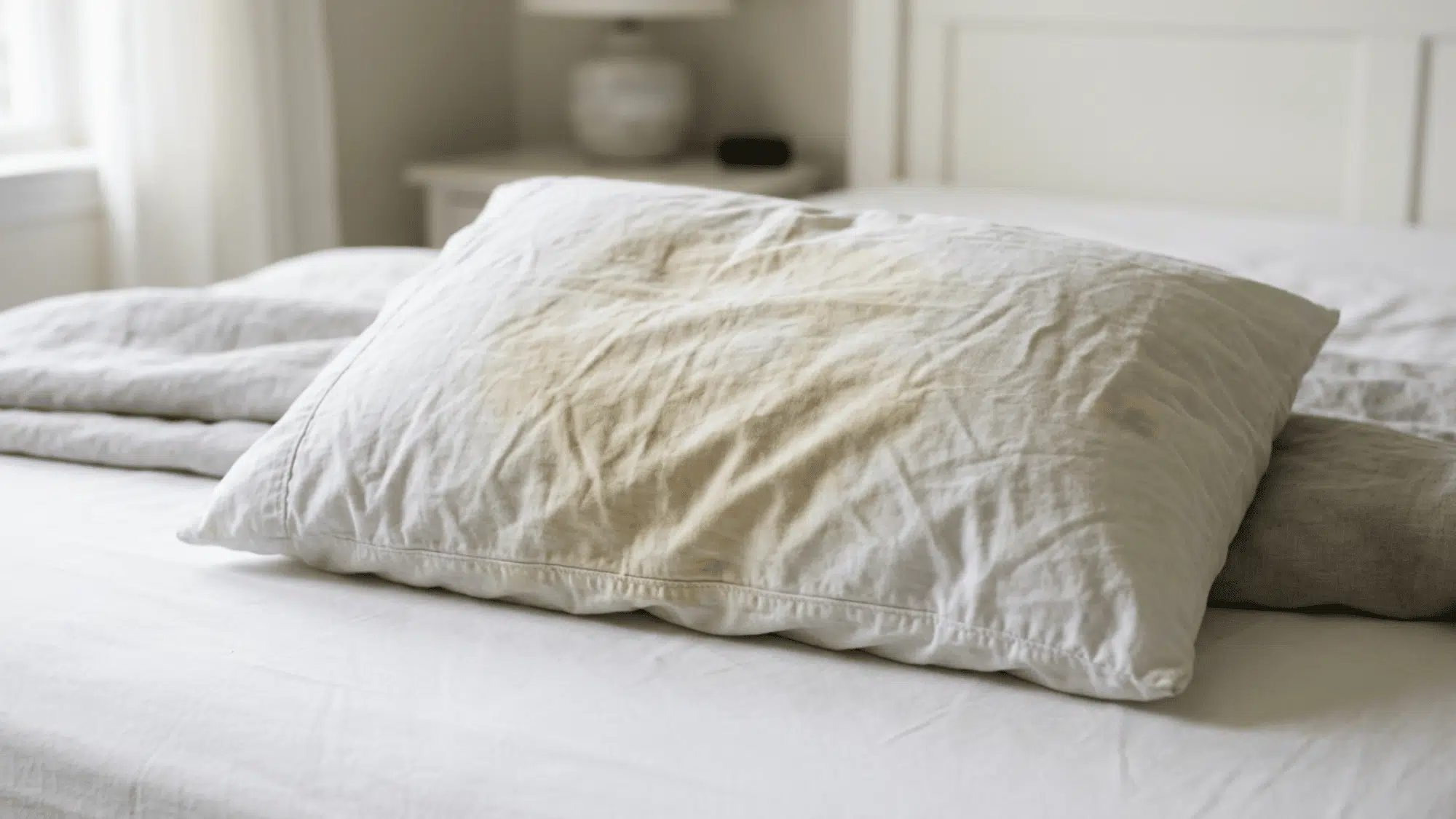

Nightly sleep leaves more behind than rumpled sheets. Sweat, skin oils, dust, moisture, and small spills slowly settle on a mattress.
These materials may create stale odors and dull marks over time. Cleaning a mattress with baking soda can absorb light moisture and reduce many surface smells.
The powder cannot sanitize the bed or pull out every old stain. Careful vacuuming, stain treatment, and full drying still matter.
Read the blog on cleaning a mattress with baking soda to make it cleaner and fresher.
Does Baking Soda Really Clean a Mattress?
Baking soda can freshen a mattress by absorbing surface moisture and reducing odors caused by sweat, skin oils, and everyday use.
Its powder also sits among fabric fibers, where a vacuum can remove it with loose debris.
Its cleaning limits matter. Baking soda does not sanitize the mattress, erase deep stains, remove mold, or solve a bedbug problem.
Old urine, vomit, blood, and drink spills often need a cleaner made for that stain.
A mattress with mold, floodwater exposure, or pests may need professional treatment or replacement rather than another layer of powder.
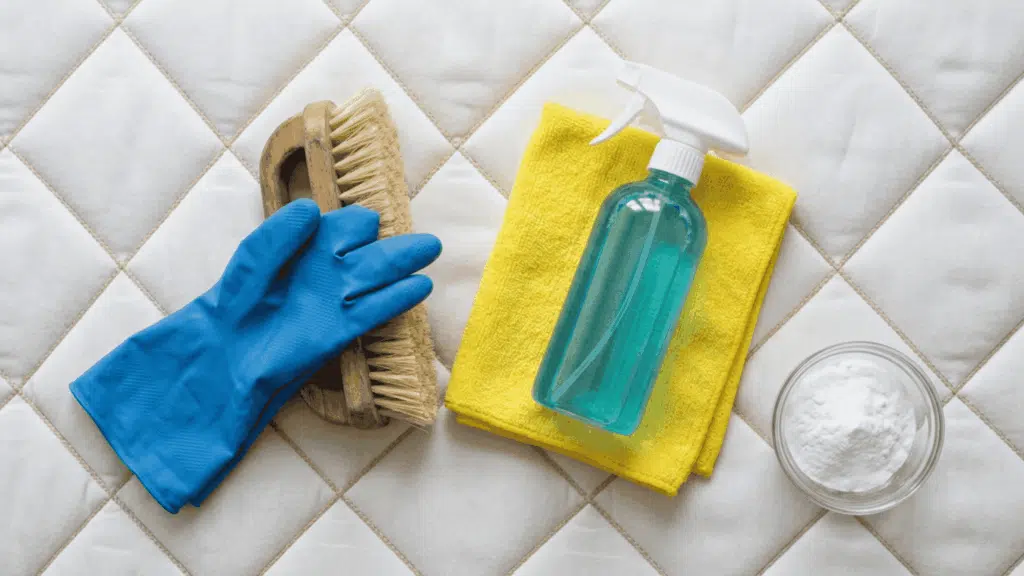
Gather These Mattress-Cleaning Supplies
Set out the supplies before stripping the bed. Having everything nearby prevents long pauses while the mattress remains uncovered.
You Will Need:
- Baking soda
- Vacuum with an upholstery attachment
- Clean white cloths
- Dry towels
- Soft-bristled brush
- Mild liquid detergent
- Spray bottle
- Kitchen sieve
- Enzyme cleaner for biological stains
White cloths make color transfer easier to see and are less likely to mark pale fabric. Skip rough brushes, heavily scented sprays, and excessive water.
Prepare the Mattress Before Adding Baking Soda
Remove the sheets, blankets, pillowcases, topper, and mattress protector. Wash each removable item according to its care label.
Check the mattress label for limits on water, steam, heat, powders, and cleaning liquids.
Next, inspect the surface for stains, damp patches, tears, mold spots, or signs of pests. The mattress should be dry before applying baking soda, as the powder may stick to damp fabric.
Open a window or run a fan so air can move around the bed. Vacuum the top, sides, seams, and edges before treating any marks.
What people on Reddit talk about:
The baking soda should help. You can use lots of baking soda many times. It absorbs odors. If you can’t vacuum it out, just shake off the excess. The worst it can do is be itchy.
How to Clean a Mattress With Baking Soda
Use these seven steps to remove dust, treat stains, reduce odors, and dry the mattress safely.
1. Vacuum the Mattress Thoroughly
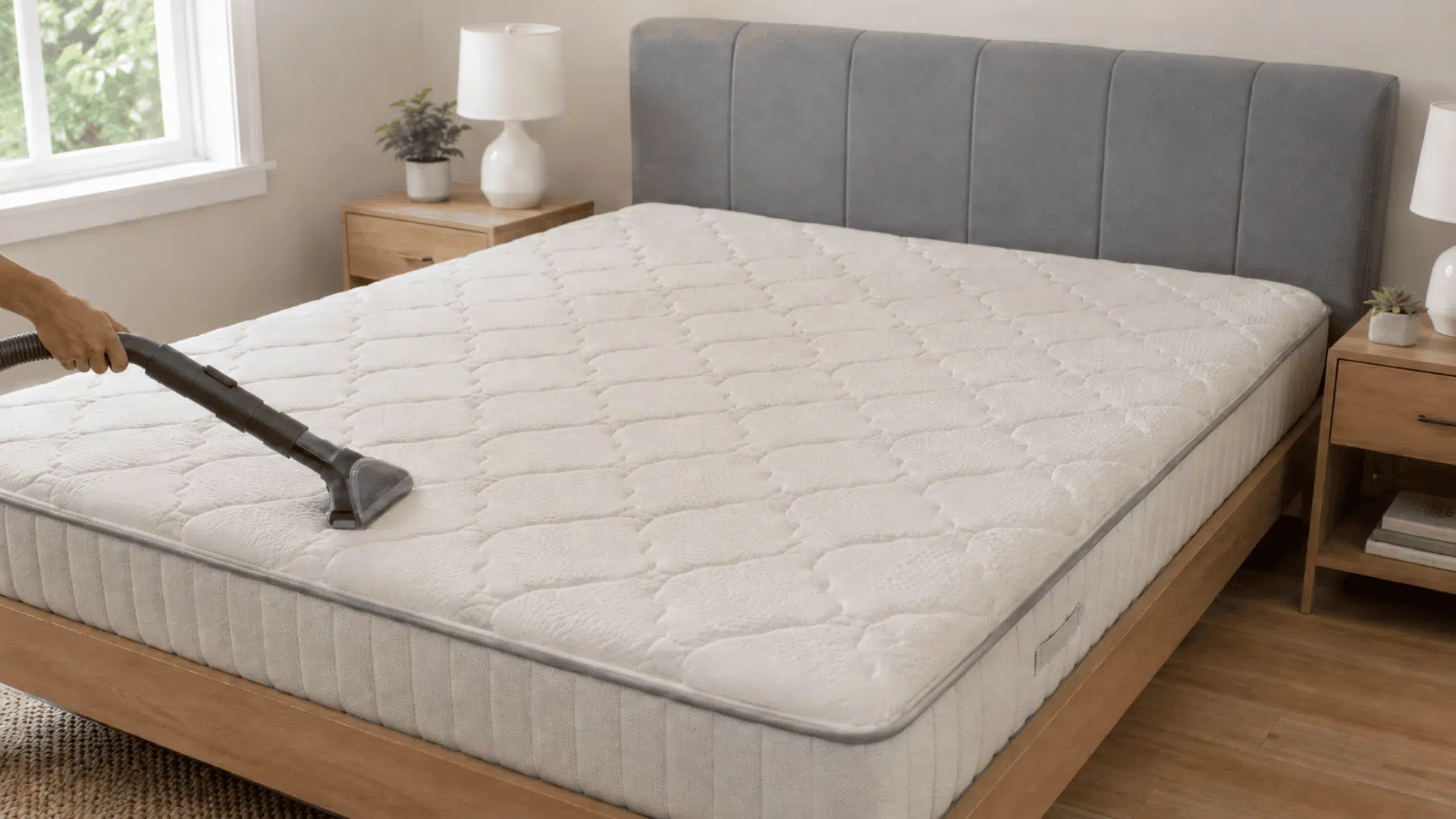
Fit the vacuum with a clean upholstery attachment. Move slowly across the top, sides, seams, buttons, and edges.
Use a crevice tool for narrow gaps. This first pass removes hair, crumbs, dust, skin flakes, and loose dirt.
It also helps the baking soda distribute evenly across the fabric. Empty the canister when suction drops.
Tip: Clean the upholstery attachment before placing it on the mattress to avoid transferring old dirt particles.
2. Spot-Clean Visible Stains
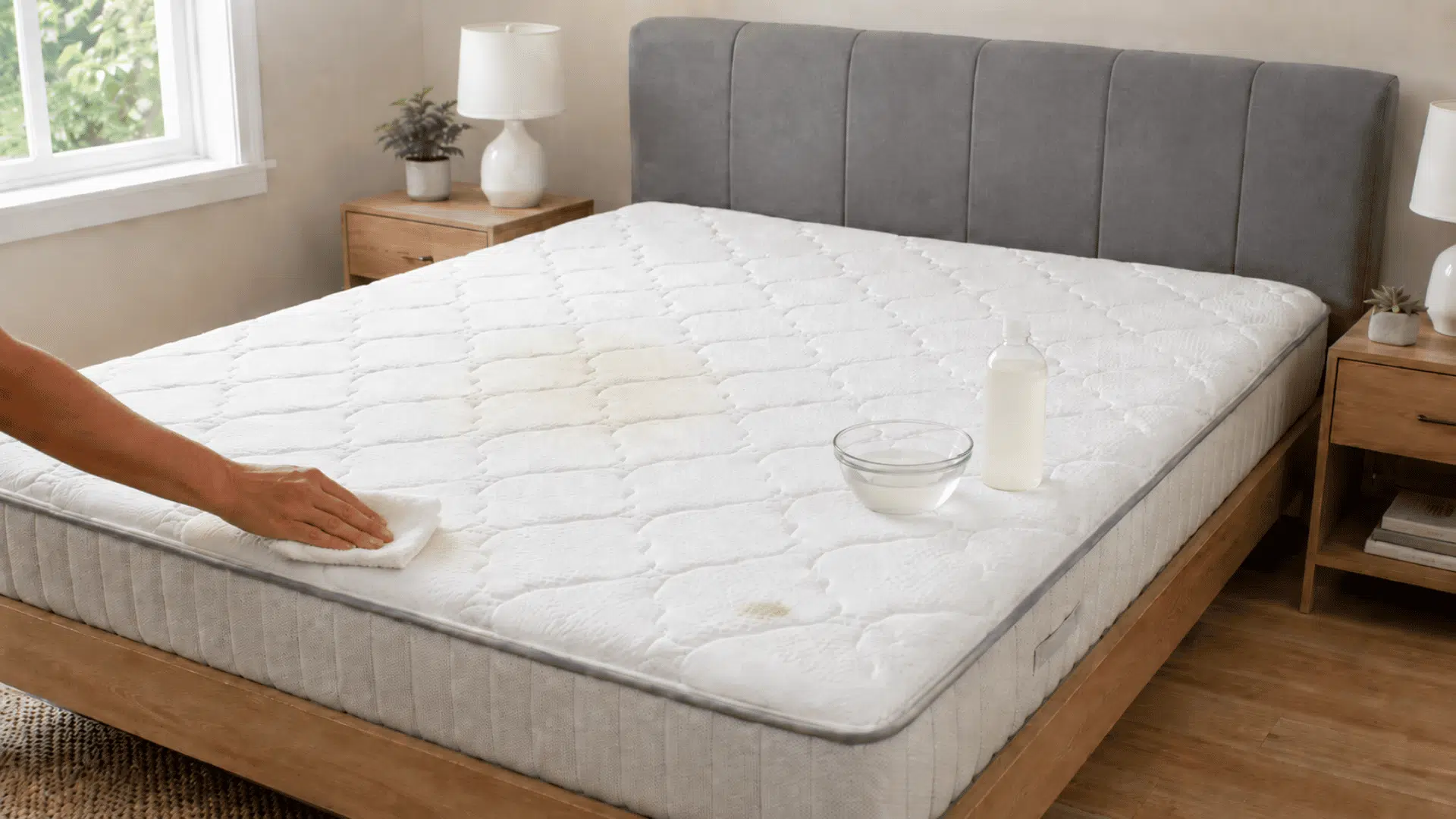
Treat visible marks before adding baking soda. Mix a few drops of mild detergent with cool or lukewarm water.
Dampen a white cloth, squeeze out extra liquid, and blot from the outside toward the center.
Do not rub, since this may spread the stain or push it deeper. Use a mattress-safe enzyme cleaner for urine, vomit, or pet messes.
Tip: Never soak the mattress during any stain treatment at home.
3. Sprinkle Baking Soda Evenly
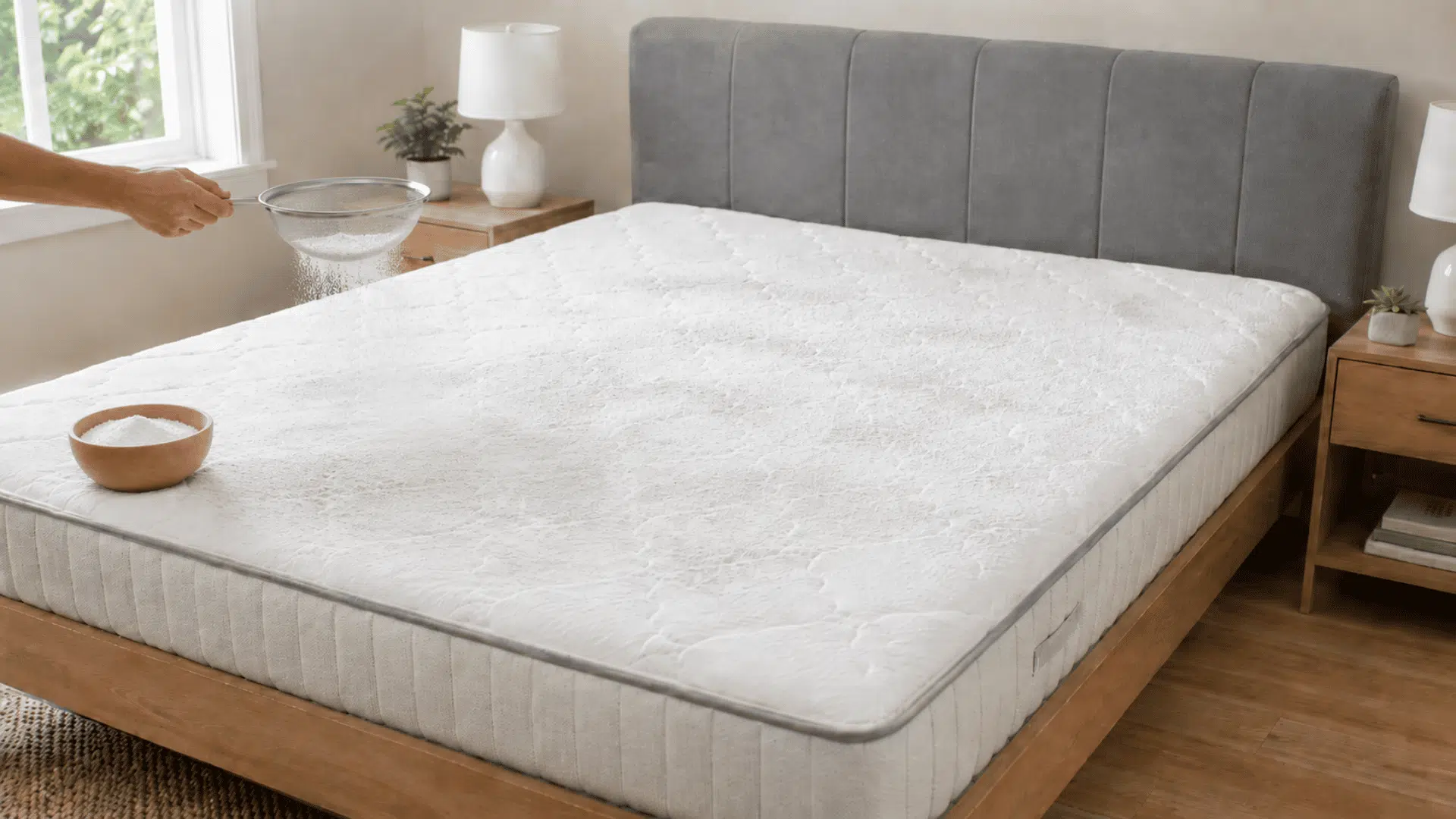
Pour baking soda into a sieve and spread a thin, even layer over the sleeping surface.
Add a little more to stale-smelling areas, but avoid thick piles. Extra powder may settle in seams, clog the vacuum filter, and take longer to remove.
Wait until spot-cleaned areas feel dry or almost dry. Keep children and pets away.
Tip: Baking soda may clump when placed on wet fabric during the cleaning process.
4. Brush the Surface Lightly
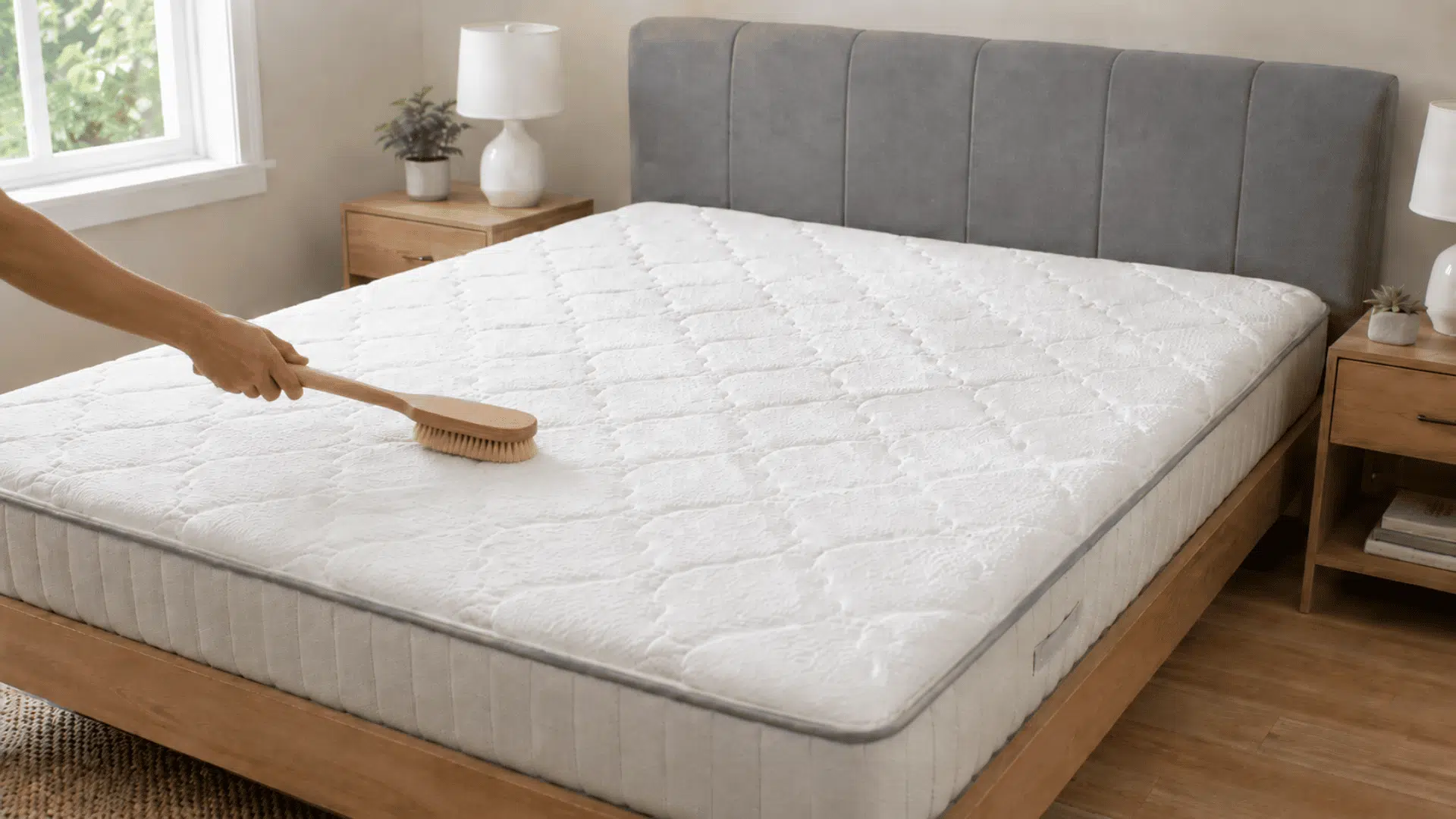
Use a soft-bristled brush only when the mattress cover can handle light brushing.
Move the brush gently across quilted areas and shallow fabric grooves. Do not press the powder into foam, seams, or padded channels.
Skip this step when the care label warns against brushing. A sieve often spreads the powder well enough.
Tip: Check the care label before brushing delicate fabric, foam, or specialty mattress covers during home cleaning.
5. Leave the Baking Soda to Sit
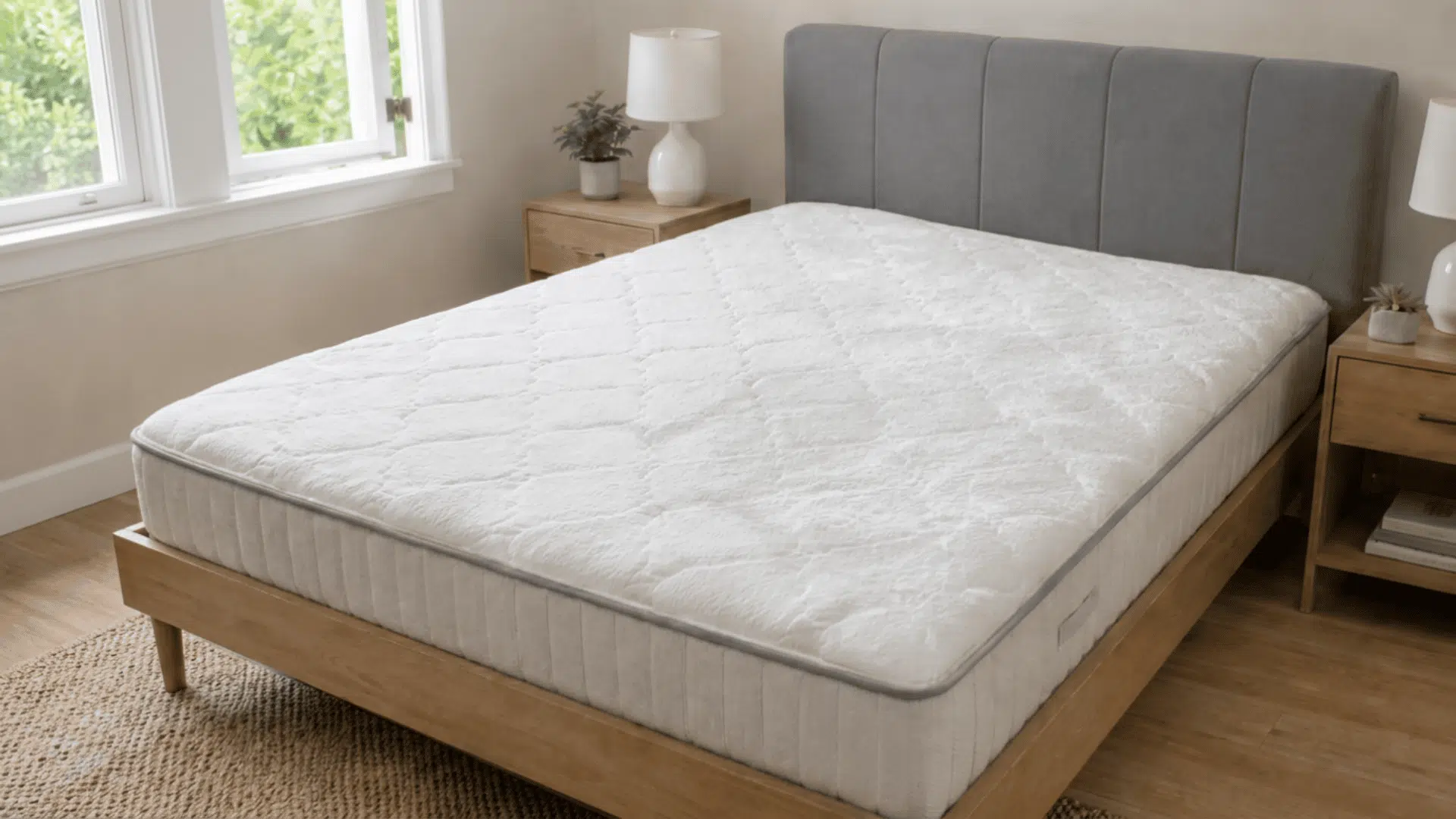
Leave the baking soda for 20 to 30 minutes when the mattress needs light freshening.
Allow two to four hours for stronger surface odors. Overnight treatment may suit a dry mattress in a room with steady airflow.
Keep the bed uncovered so sheets do not press powder into seams. Keep children and pets away.
Tip: Leave baking soda on a dry mattress overnight only in a room with steady airflow.
6. Vacuum the Mattress Again
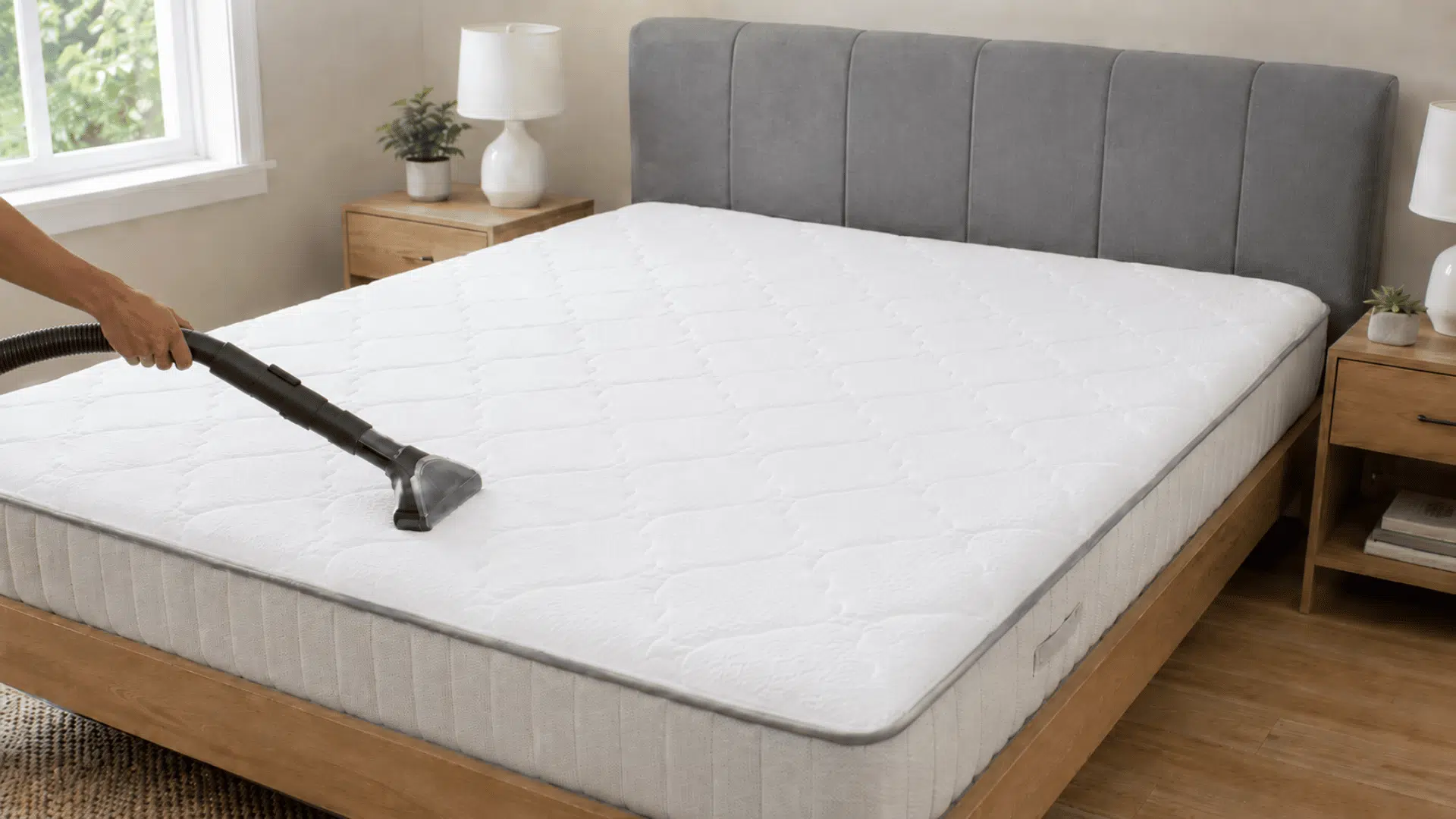
Vacuum in slow, overlapping lines once the waiting time ends. Change direction and repeat each pass to collect powder between fabric fibers.
Use a crevice tool around seams, corners, buttons, and tufted areas. Empty the canister or clean the filter if suction drops.
Check the cover under bright light and feel the surface.
Tip: Continue vacuuming until no white powder or gritty residue remains on the entire surface of the mattress cover.
7. Let the Mattress Air Out
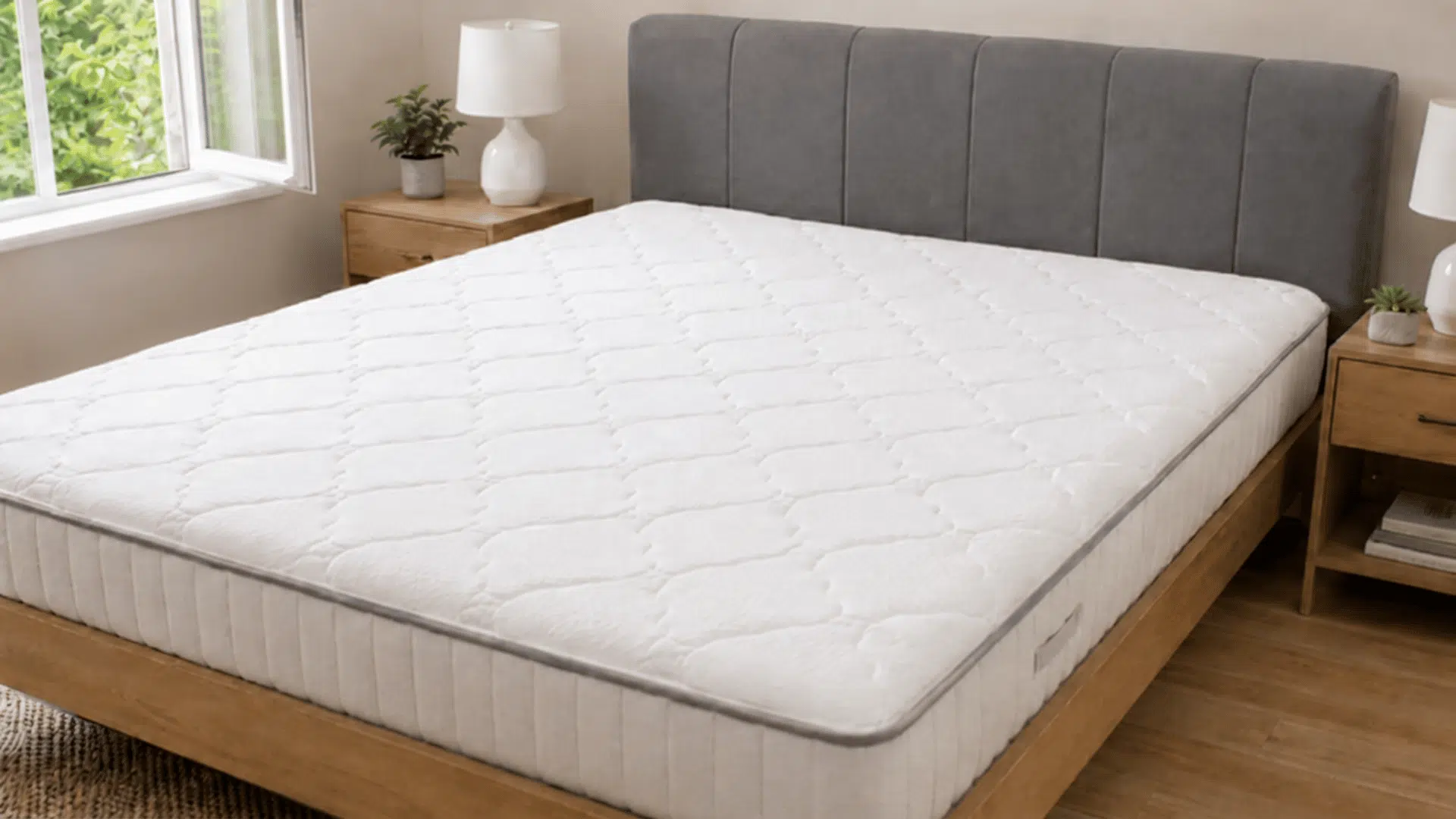
Leave the mattress uncovered after vacuuming. Check each treated area for coolness or dampness, since either may indicate that moisture remains beneath the cover.
Open nearby windows and run a fan to help it dry. Avoid hair dryers, heaters, and strong heat near foam or latex.
Replace the protector and sheets only when the surface feels dry.
Tip: Never remake the bed while any cleaned area still feels damp.
How Long Should Baking Soda Sit on a Mattress?
The waiting time should match the odor level and condition of the mattress.
Keep the mattress uncovered during this period. Extra time will not remove mold, pests, or stains that have reached the inner layers.
| Stain Type | Cleaning Method | Avoid |
|---|---|---|
| Sweat and skin oils | Blot with mild detergent and lukewarm water | Soaking the fabric |
| Urine | Apply a mattress-safe enzyme cleaner | Covering the smell with perfume |
| Blood | Blot with cold water and mild detergent | Warm or hot water |
| Food and drinks | Remove solids, blot liquid, then spot-clean | Hard rubbing |
| Vomit or pet waste | Remove solids and apply an enzyme cleaner | Strong bleach |
How to Remove Sweat Smells From a Mattress
Press a clean, dry towel over damp sweat marks to draw out moisture. Avoid rubbing, as it may spread skin oils and moisture over a wider area.
Mix a few drops of mild detergent with water when a yellow or greasy mark remains.
Dampen a white cloth, blot the spot, and press it with a dry towel. Once the area feels dry, apply a thin layer of baking soda. Leave it for two to four hours, then vacuum slowly.
Repeat the process once when a faint smell remains. A returning odor may sit deeper inside the padding.
How to Treat Common Mattress Stains
Each stain responds differently to water temperature and cleaning products. Test any cleaner on a hidden area first. Let the treated section dry before adding baking soda.
| Stain Type | Cleaning Method | Avoid |
|---|---|---|
| Sweat and skin oils | Blot with mild detergent and lukewarm water | Soaking the fabric |
| Urine | Apply a mattress-safe enzyme cleaner | Covering the smell with perfume |
| Blood | Blot with cold water and mild detergent | Warm or hot water |
| Food and drinks | Remove solids, blot liquid, then spot-clean | Hard rubbing |
| Vomit or pet waste | Remove solids and apply an enzyme cleaner | Strong bleach |
Common Baking Soda Cleaning Mistakes
Baking soda works on mild surface odors and small amounts of moisture. It cannot replace a stain cleaner, mold cleanup, pest treatment, or mattress repair.
Several errors can leave residue or trap moisture:
- Applying baking soda before vacuuming or placing it on damp fabric
- Pouring on too much powder, water, detergent, or stain cleaner
- Scrubbing hard, remaking the bed too soon, or treating mold and bedbugs with baking soda
- Slow vacuuming and thorough drying reduce the risk of powder buildup and musty odors.
How to Remove Baking Soda From a Mattress Properly
Attach a clean upholstery tool and vacuum in slow rows that overlap slightly.
Turn and repeat in the opposite direction so the machine can collect powder sitting between fabric fibers.
Use a crevice tool around seams, buttons, corners, zippers, and tufted areas. Empty the canister when it fills and check the filter for fine dust.
Run a clean hand over the mattress after vacuuming. A gritty or chalky feel means another pass is needed.
Put the bedding back after all visible traces of powder are gone and the surface feels dry.
Final Thoughts
A fresh bed often changes how the whole room feels, making bedtime calmer and morning routines easier.
Small habits can also make future cleaning less stressful and help the bed feel more pleasant between deeper cleanups.
Use the method only when it suits your mattress, and pay attention to any smell or mark that keeps returning.
For more useful cleaning hacks, comment below with your questions, tips, or results, and share what worked best for your mattress at home today.
Frequently Asked Questions
Can You Mix Essential Oils with Baking Soda for My Mattress?
It is better to skip essential oils because they may stain the fabric or bother sensitive sleepers. Use plain baking soda and air out the room after vacuuming.
Does Old Baking Soda Still Work on Mattress Odors?
It may still work when stored in a dry container away from food and strong smells. Replace it when the powder feels damp, forms clumps, or has an off odor.
Can Baking Soda Be Used on a Mattress Topper?
Check the topper’s care label first, as foam, latex, and feather materials require different care. Use a light layer only when powder cleaning is allowed, then vacuum gently.