
Ready to finally sleep through the night?
Your bedroom lighting might be ruining your sleep and you don’t even know it. Harsh overhead bulbs, bright screens and even your choice of wall light fixtures could be sabotaging your sleep cycle right now.
Here’s the low down…
Research shows time and time again that poor lighting at night can suppress melatonin production in your body. That sleepy time hormone is what tells your body when it’s time to rest for the night.
With poor lighting before bed, everything else done to improve sleep won’t matter.
The bright side? Improving your bedroom lighting is one of the easiest changes you can make to your nightly routine to sleep better tonight.
Things you’ll learn:
- How Poor Bedroom Lighting Hurts Your Sleep
- Why Lighting Lowers Sleep-Inhibiting Hormones
- 5 Simple Brass Wall Light Fixture Tips for Better Sleep
- How to Design a Bedroom Lighting Setup That Promotes Sleep
How Poor Bedroom Lighting Hurts Your Sleep
Believe it or not, your bedroom lighting can make or break your sleep each night. Let’s talk about science.
Your sleep quality is affected by melatonin, a hormone produced by your brain. When your brain is exposed to light at night (cue bedroom lights), melatonin production is suppressed.
A study by Harvard Medical School discovered that bedroom lights before bed suppressed melatonin production when compared to dim light. That affected 99% of study participants.
Not only that but bright light before bed shortened melatonin production by about 90 minutes. That means you’re losing over an hour of precious sleep-inducing hormones just because your room is too bright at night.
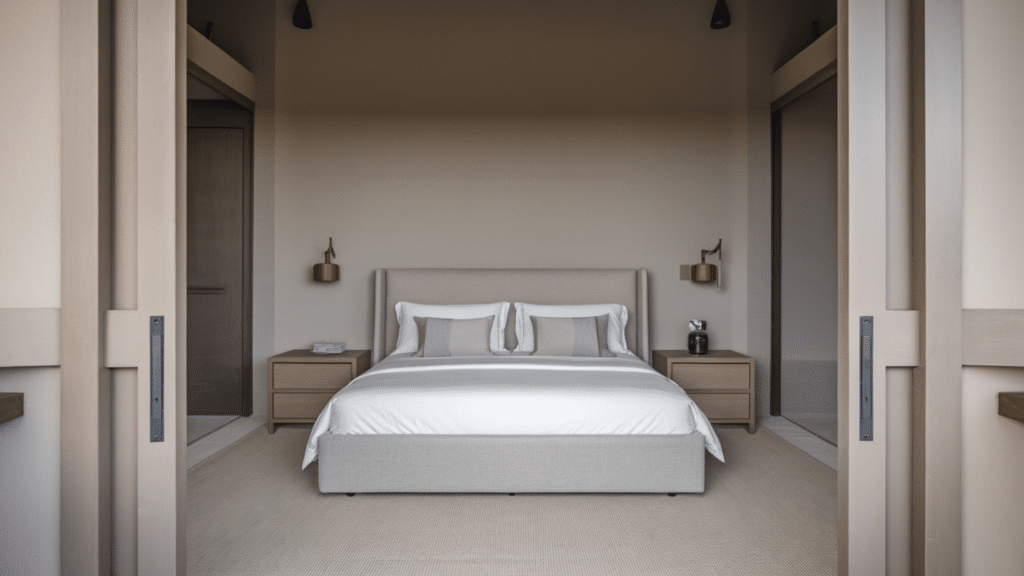
You want to look for warm-toned wall lights for your bedroom. Lighting that has dimmers and warm colour temperatures like wall sconces are ideal.
Why Lighting Lowers Sleep-Inhibiting Hormones
Ok, let’s break this down…
When your eyes are exposed to light at night, cells in your retinas detect it. These cells are called photoreceptors and they send signals to your brain that it isn’t time to sleep yet.
Essentially what that means…
Your body stops producing melatonin because you’re telling your brain you want to stay awake by keeping your bedroom lit.
Researchers followed over 47,000 women for more than 10 years and found that sleeping with a television on increased poor sleep quality by 58%. That compared to sleeping with no light at all. Artificial light at night was also associated with shorter sleep duration and less consistent sleep schedules.
Blue light at night from screens is also terrible for sleep. That’s because blue light falls between 460-480 nanometres. That falls right into the spectrum where your eyes are most sensitive to light signals at night.
5 Simple Brass Wall Light Fixture Tips for Better Sleep
Alright, now that all that science is out of the way. Let’s talk about what you can do about it.
1) Swap to Warm-Coloured Lights
The temperature of your wall light fixtures is important. White/blue light tells your brain that it’s still daytime, making it harder to sleep at night.
What temperature should you use?
Warm coloured lights between 2700K and 3000K. The bulbs should mimic a warm orange colour that you would find in a sunset.
2700K is recommended by many sleep experts for your bedroom.
2) Install Dimmers
Dimmers are your friend when it comes to preparing your body for sleep. Dimmers help you slowly transition from bright lights to total darkness.
Not using a dimmer forces you to keep your overhead lights on when you should be winding down. Then you have to turn them off at the last second before bed.
Your body doesn’t get the chance to gradually adjust like it does when you use a dimmer.
3) Layer Your Lighting
How does layered lighting work? Great question!
By layering your lighting, you have multiple options for lighting your room at different levels. Start with overhead lighting or large wall fixtures for ambient lighting.
Then use a small lamp on your nightstand for task lighting. This gives you more control of the lights in your bedroom as you start to wind down.
4) Avoid Blue Light At Night
Blue light from electronics and screens halts melatonin production like nothing else. Make sure you minimize screen time before bed and replace any bulbs that are blue-toned.
You’d be surprised how many appliances have LED lights with blue lights. For example, laptops, TV remotes and phone chargers.
You can easily cover LED lights with some tape. Or make sure they’re not in your bedroom when you sleep.
5) Place Your Fixtures Thoughtfully
The position of your wall lighting fixtures are just as important. Instead of mounting your lights high up on the wall or ceiling.
Wall mounted fixtures around eye level or below create a softer light. That way, you aren’t looking directly into bright lights when you walk into the room.
Things to avoid…
Bright overhead lights that shine directly into your face. Or placing your lights high up on the wall that causes your light to shine down on you.
Bedroom Lighting Tips for a Good Night’s Sleep
There you have it! Follow these bedroom lighting tips before bed and watch your sleep improve:
- Dim your lights a couple hours before bed. Start by turning off your overhead lights and using your wall fixtures and bedside table lamps.
- Reduce lighting further an hour before bed. Leave only one or two light sources on and try to avoid screens.
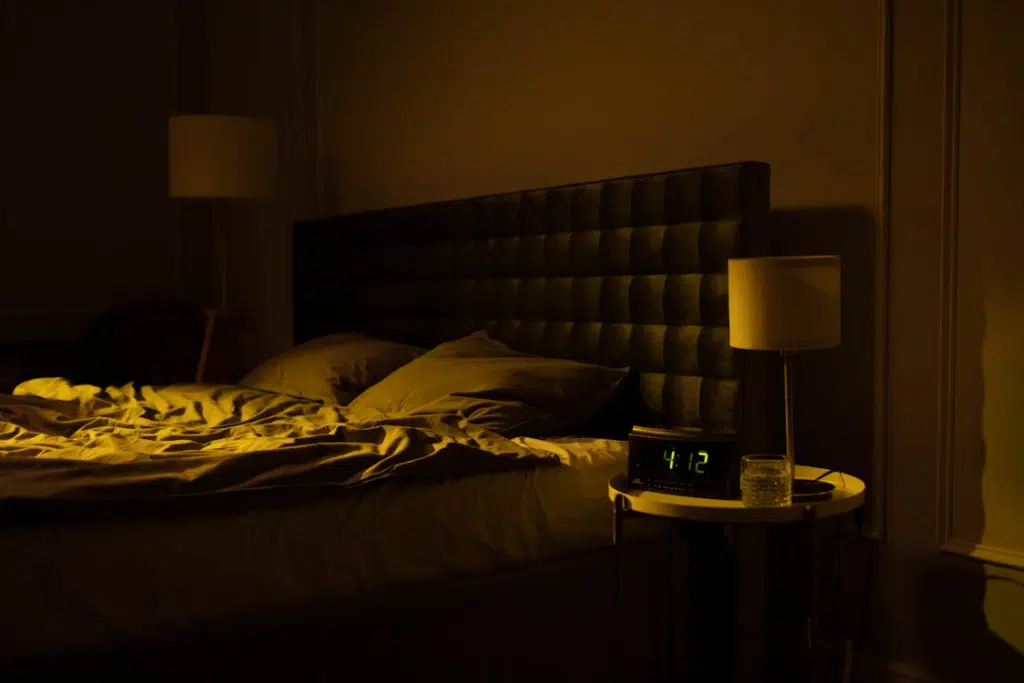
- Get your room dark. At bedtime, turn off as many lights as possible. Use blackout curtains and eliminate as many light sources as you can.
Boom. You’re well on your way to resetting your circadian rhythm and falling asleep quicker at night.
Wrapping Up
Most people sleep with lights on or next to bright screens every night and don’t know how it’s affecting their sleep.
Light at night sets your body clock back by suppressing melatonin. That hormone that makes you tired at night is very important for your sleep.
If you want to sleep better…
- Install dimmers on your fixtures
- Use warm coloured light bulbs (2700-3000K)
- Swap out any blue light bulbs
- Use multiple light sources
- Don’t stare into bright overhead lights when you walk into a room
Pick one or two of these tips and start implementing them into your nightly routine. Remember, it only takes a few days for your body to adjust to new sleep habits.
Sleep tight!