

Nothing kills a good night’s sleep faster than a bed that squeaks every time you move. If your metal bed frame creaks the moment you shift position, you are not alone, and the fix is usually simpler than you expect.
Most squeaking comes down to loose bolts, metal-on-metal friction, or worn-out joints. None of these requires a new bed or a professional. Once you know what to look for, the fix takes minutes.
In my experience researching and testing solutions for common sleep disruptions, this is one of the most fixable problems people put up with far too long. A squeaky frame that wakes you at night often compounds existing issues like neck pain while sleeping, since interrupted rest prevents the muscle recovery that happens in deeper sleep stages.
Below, I walk you through finding the exact source of the noise and cover practical solutions that actually hold up over time. By the end, you will know how to stop metal bed frame from squeaking by finding the exact noise source, tightening loose parts, reducing metal friction, and keeping the frame stable long term.
Common Reasons Your Metal Bed Frame Squeaks
Understanding why your metal bed frame is squeaking makes the fix much easier. Most noise comes from small movements between joints, rails, legs, slats, or the headboard. Over time, bolts loosen, washers wear down, and metal parts begin to rub against each other without sufficient padding.
The good news is that metal bed frame squeaking usually has a clear source once you test each section separately. Uneven floors can also shift pressure onto one side of the frame, creating extra movement.
Sometimes the mattress, box spring, wall contact, or nearby furniture is the real problem. Move the frame away from the wall, press each corner, and check the headboard before applying any fix.
The repeated micro-disruptions caused by this noise also affect people dealing with shoulder pain from sleeping, since broken sleep hinders soft-tissue recovery overnight. This means even a well-assembled metal frame can start squeaking as coatings wear down over time.
How To Find Where The Squeak Is Coming From
Before trying any fix, isolate the squeak source. This step alone saves most people from applying four different solutions to the wrong area. Here is a straightforward process:
- Remove the mattress and box spring entirely: Apply pressure to different sections of the bare frame and listen carefully. If no squeak occurs, the noise is likely from the mattress or box spring, not the frame.
- Move the frame away from the wall by at least 6 inches. Test again; if the squeak disappears, the wall contact was the source.
- Isolate by section: Press down on the center, then each corner, then each rail. The squeak will usually localize to one or two specific points.
- Check the legs separately: Lift each corner slightly and release. A squeak on release often means a leg that isn’t sitting flat or is rubbing against a floor surface.
- Check the headboard connection: Grab the headboard and rock it gently side to side. A loose headboard bracket is one of the most commonly missed squeak sources and is easy to overlook during a general inspection.
Once you know the exact source, the appropriate fix from the list below becomes obvious. Skipping this step is the reason most people spend an hour applying random fixes before accidentally landing on the right one.
How to Stop Metal Bed Frame From Squeaking Properly
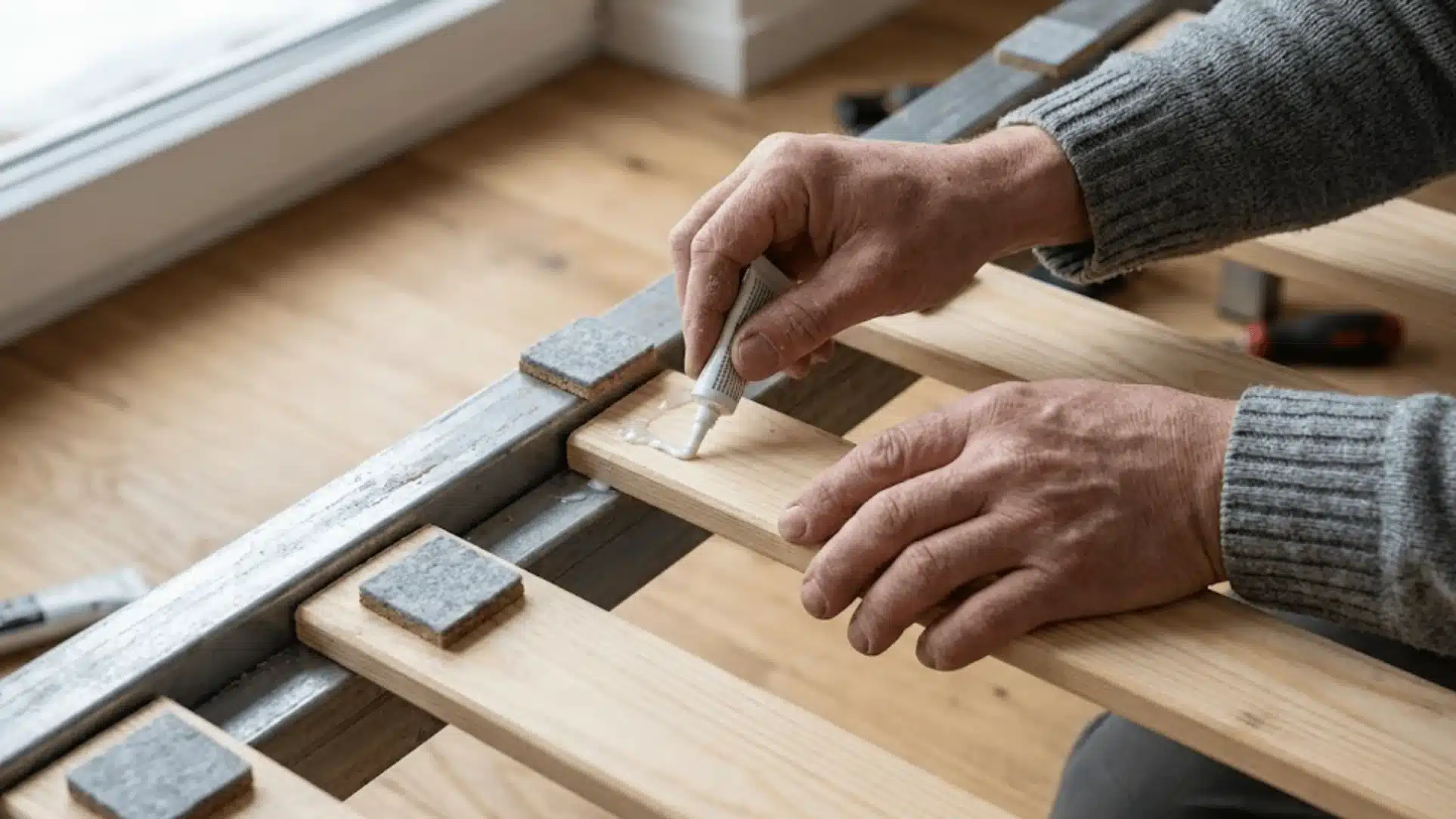
If quick ways haven’t solved the problem, these methods help address the root cause. Each solution focuses on reducing movement, friction, or imbalance to keep your bed quiet and stable over time.
1. Tighten All Frame Connections
Loose bolts and screws are among the most common reasons a metal bed frame begins to squeak. Go through every joint carefully and tighten each connection using the right tools.
Try loosening all bolts completely before re-tightening them in sequence. This resets any built-up misalignment, giving you a cleaner, more secure result overall. Do not overtighten: snug is enough. Forcing bolts past that point strips the threading and creates more metal-on-metal contact, which makes the noise worse.
2. Use WD-40 Or Silicone Spray
Applying lubrication to joints and connection points reduces the friction that causes squeaking between metal parts. Silicone spray is a better long-term option since it attracts less dust than WD-40.
Use WD-40 first if joints show rust or visible corrosion, then follow up with silicone spray once the area is clean. WD-40 is a short-term fix on its own; silicone is what holds up over months of use. Use a small amount and wipe off any excess. This simple step helps your bed frame move smoothly and quietly.
3. Add Felt Pads Or Rubber Washers
Felt pads and rubber washers act as a cushion between metal parts, absorbing movement and reducing vibration.
Place rubber washers on both sides of each bolt connection to prevent direct metal contact. You can find these at any hardware store, and installing them takes only minutes yet delivers a noticeable reduction in noise. If washers are missing entirely from a connection point, that joint is almost certainly your squeak source.
4. Place Fabric Or Cork Between Joints
Cork and fabric create a barrier between metal joints, softening contact points and absorbing movement without using sprays or chemicals. Cut small pieces and place them wherever parts connect or rub together.
Cork works especially well due to its firm yet flexible nature. An old sock also makes a perfectly adequate temporary fix. A small strip of leather wedged between rubbing metal parts is another option worth trying, particularly at rail connections where cork tends to slip.
5. Check And Fix Loose Slats
Loose or shifting slats often create noise that feels like it comes from the frame itself. Check each slat, tighten any loose screws, and add padding where slats meet the frame.
If any slats appear cracked or visibly bowed, replace them entirely. Damaged slats unevenly transfer weight to joints, accelerating wear and worsening noise over time.
You can also try placing a thin sheet of plywood on top of the slats under your mattress. It distributes weight more evenly, reduces individual slat flex, and often eliminates noise that seemed to come from the frame.
6. Level The Bed Frame Properly
An uneven bed frame forces certain areas to carry more weight, leading to movement and noise. Check whether all legs touch the floor evenly using a spirit level.
Use furniture levelers, adhesive shims, or folded cardboard under shorter legs to balance the frame. Even slight corrections reduce joint stress and keep the structure stable and quiet.
7. Add Anti-Slip Pads Under Legs
Rubber anti-slip pads placed under each leg prevent the bed frame from shifting or sliding on the floor. When a frame moves slightly, it creates vibrations and noise that disturb sleep.
These pads absorb small movements, keep the frame steady, and also protect the flooring from scratches. They are affordable, easy to install, and genuinely effective.
8. Replace Worn-Out Hardware
Old or weakened bolts, nuts, and washers lose their grip over time, allowing increased movement between parts and creating noise.
Replacing worn components with new, high-quality hardware that matches the correct size restores proper tension across the entire frame. This small upgrade meaningfully improves overall stability and is one of the most overlooked fixes available.
9. Secure The Headboard Properly
A loose headboard shifting against the wall or frame is a surprisingly common source of squeaking. Tighten any loose screws or brackets and add adhesive foam weatherstripping along the back edge if it contacts the wall.
This fix consistently resolves squeaks that seem difficult to isolate, making it one of the most reliable solutions to try.
10. Reduce Metal-On-Metal Contact
Direct metal-on-metal contact is one of the leading causes of persistent squeaking in bed frames. Identify all contact points and insert a barrier of rubber, felt, or foam between touching surfaces.
Even small contact areas generate noticeable sounds, so inspect the frame thoroughly. Reducing this friction helps all moving parts stay quiet under pressure.
11. Reinforce Weak Frame Areas
Weak or unstable frame sections flex under pressure, generating noise that worsens over time. Adding brackets or support pieces to vulnerable areas strengthens the overall structure and reduces unwanted movement.
Focus on spots that feel less secure or bend under weight. Reinforcing these points improves durability and keeps older frames performing quietly and reliably.
12. Check Whether The Mattress Is The Source
Not every noise you hear at night comes from the frame. Spring mattresses have internal components that can squeak independently, and an old mattress that sags creates uneven pressure on the frame, causing joints to loosen faster.
Try rotating your mattress 180 degrees and testing again before spending time on frame repairs. If the noise shifts position or disappears, the mattress is the culprit, not the frame.
With the right approach and a little patience, fixing a squeaky metal bed frame is entirely manageable. These methods help you maintain a quieter, more stable sleeping setup for the long run.
Long-Term Maintenance Tips
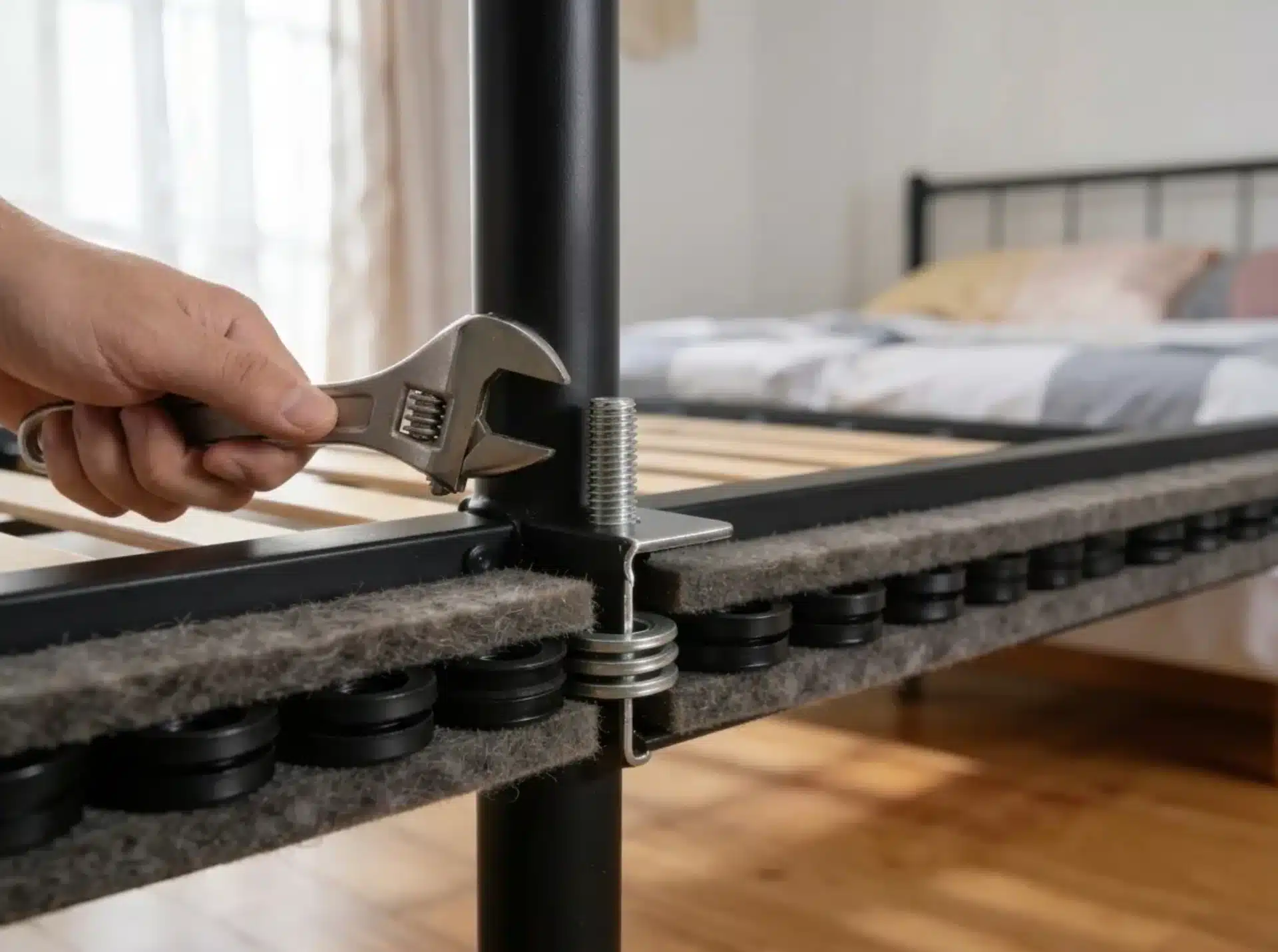
A squeaky metal bed frame can be annoying, but with regular care, you can keep it quiet for years. Small maintenance habits go a long way in preventing long-term noise issues and extending the life of your frame. Here’s what I recommend:
- Checking your frame every few weeks helps catch small issues early before they turn into bigger problems.
- Keeping bolts and screws secure prevents movement that usually leads to squeaking over time.
- Removing dust and rust reduces friction, keeping metal parts moving smoothly without noise.
- Strong, durable hardware improves stability and reduces the risk of loosening and recurring squeaking.
One routine worth building in: every time you change your bedding, run your hand along the side rails and give the corner bolts a quick half-turn check. It takes less than two minutes and catches loose hardware before it becomes a full squeak.
The physical environment around your bed matters just as much as the frame itself. Pairing a quiet, stable frame with a sleep-focused guided meditation routine can meaningfully deepen rest quality by helping your nervous system wind down before sleep.
With these simple steps, you’ll prevent squeaks before they start and significantly extend your bed frame’s life. A little routine care keeps your sleep peaceful and uninterrupted for years to come.
The best long-term answer to how to make metal bed frame not squeak is simple maintenance: check bolts regularly, keep friction points padded, and fix small movement before it becomes loud.
Best Lubricants And Materials To Fix Bed Frame Noise
Choosing the right material plays a big role in reducing noise and keeping your bed frame stable. Match each product to your specific problem area for the very best outcome. Here’s what you need:
| Product / Material | Best Use | Durability |
| Silicone spray | Joints and bolt connections | Long-lasting, doesn’t attract dust |
| WD-40 | Rusted or corroded joints | Short-term: follow up with silicone |
| Bar soap or candle wax | Small friction points, slat edges | Moderate; may need reapplication |
| Rubber washers | Bolt connections | Very durable; physical barrier |
| Adhesive felt strips | Rail-to-rail and slat contact areas | Good; replace if adhesive weakens |
| Cork sheet | Joint gaps and between connecting pieces | Durable; does not compress flat |
| Foam padding | Between the mattress base and the frame | Moderate; trim to size for best fit |
Pick based on your issue type and combine methods when needed for a quieter, more stable setup. Small, thoughtful material choices often make the biggest difference over the long term.
Common Mistakes That Make Squeaking Worse
Learning how to fix a squeaky bed frame is straightforward, but a few common mistakes can make the problem worse. Knowing what to avoid saves you time, money, and unnecessary frustration. Here are the biggest mistakes people make when trying to fix squeaky bed frames, and how to avoid them:
- Over-tightening bolts: This can damage threads and increase friction, leading to increased noise rather than reducing it.
- Using too much lubricant: Excess lubricant attracts dust and buildup, which can worsen friction and cause noise again after some time.
- Ignoring uneven floors: An unbalanced frame puts pressure on certain joints, increasing movement and making squeaking more noticeable.
- Not replacing worn parts: Old or damaged hardware weakens stability, allowing movement that continues to cause noise despite temporary fixes.
Avoiding these mistakes makes every fix you apply far more effective and longer-lasting. Get the basics right, and your bed frame will stay quiet reliably. Avoiding these mistakes will save you time, money, and a lot of frustration. Get these basics right, and your fixes will actually stick.
Final Touches
Fixing a noisy bed is usually easier than it feels at 2 a.m. I’ve found that the biggest difference comes from small, practical checks: tightening loose bolts, padding contact points, leveling the frame, and using the right lubricant only where it is needed.
Now you know how to stop a metal bed frame from squeaking by finding the source instead of guessing. Loose hardware, metal friction, uneven legs, shifting slats, and headboard movement are usually the real causes.
Keep checking the frame during regular bedding changes, and the noise is less likely to return. Try the fixes that match your bed, then share what worked for you.