

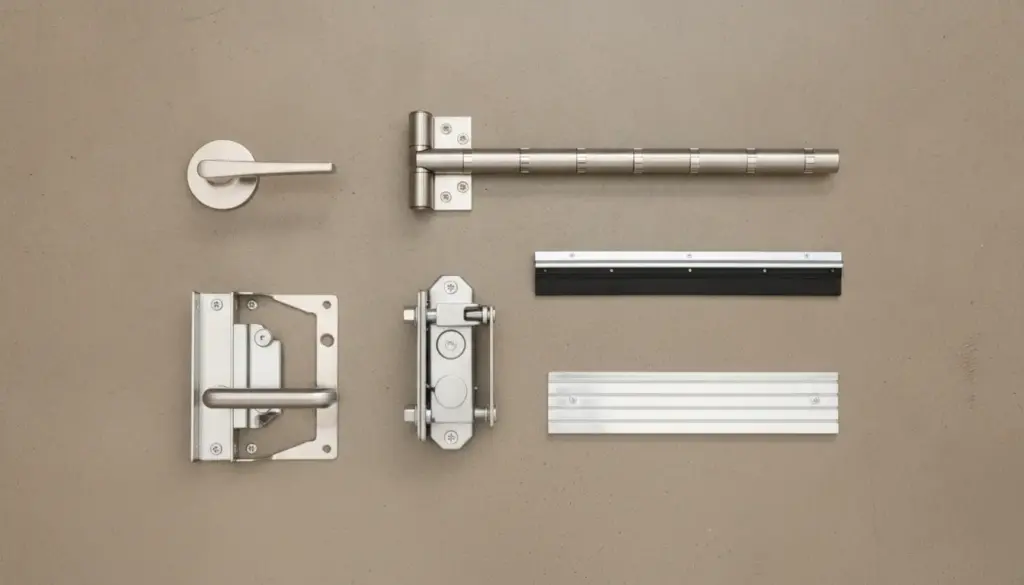
Doors do more than most people notice. They keep out drafts, control access, and help people leave quickly in an emergency. When a commercial door sags, sticks, slams, or leaks air, the fix often comes down to the right hardware. This guide sorts commercial door hardware into five jobs: hanging the door, securing it, exiting through it, controlling how it moves, and sealing it against weather.
Before you buy or replace hardware, remember that building and fire codes vary by location. If a change affects an exit route or fire-rated door, check with your local building and fire officials, often called the authority having jurisdiction, or AHJ.
Key Takeaways
- Choose by job. Decide whether the part hangs, secures, exits, controls, or seals the door.
- Check accessibility. Hardware should work with one hand, without tight grasping or twisting, and mount 34 to 48 inches high.
- Verify rated openings. Fire-rated doors need listed components installed per NFPA 80 and the product listing.
- Match durability to traffic. BHMA Grade 1 suits busy entries.
- Ask the AHJ first. Confirm rules before changing egress or fire-door hardware.
What “Commercial” Hardware Means at Home or in a Small Shop
Commercial mostly signals durability and code awareness, not a specific look. ANSI/BHMA Grade 1 is the most heavy-duty, while Grade 2 fits lighter traffic. A busy storefront usually needs Grade 1; a back office may do fine with Grade 2. Accessibility rules also matter. The U.S. Access Board says accessible door hardware must operate with one hand and without tight grasping, pinching, or twisting of the wrist. Mounting height should fall between 34 and 48 inches, and an accessible door needs at least 32 inches of clear opening width when open 90 degrees.
 Hanging: Hinges and Pivots
Most doors ride on butt hinges, the familiar two-leaf hinges set into the door edge. They work well for standard doors. If you are comparing options for leversets, panic bars, closers, hinges, and seals for a storefront or office, it can help to review a broad roundup of commercial door hardware categories before you decide.
For a heavy metal or glass door that opens hundreds of times a day, consider a geared continuous hinge. It runs the full height of the door, sharing the load along the edge instead of at two or three points. That reduces sag and misalignment. BHMA Grade 1 butt hinges are tested to around 2,500,000 cycles, a useful benchmark for quality hinges.
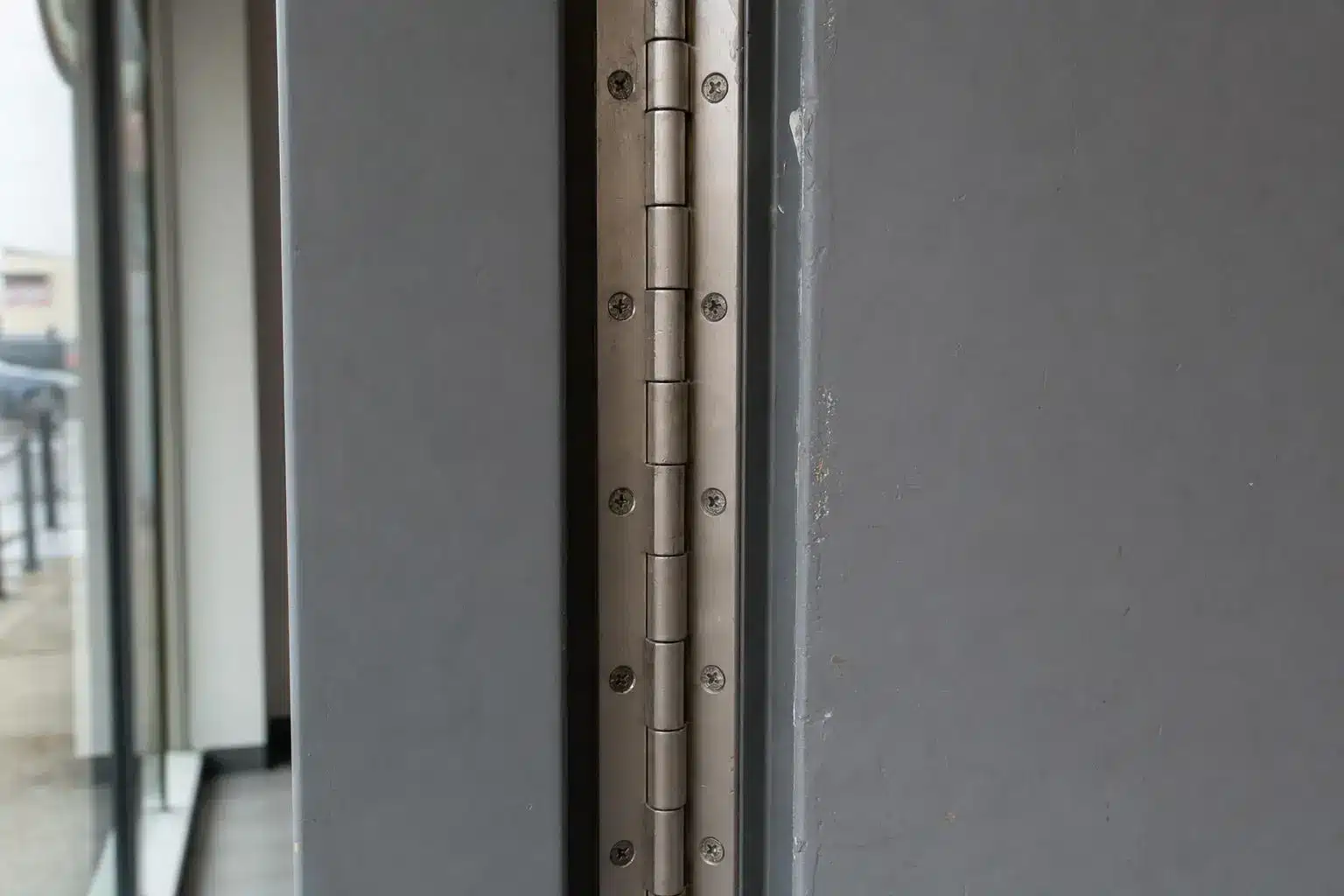 A quick check can prevent a larger repair: tighten loose screws, look for worn knuckles or squeaks, and watch whether the door closes flush.
Securing: Locks and Cylinders
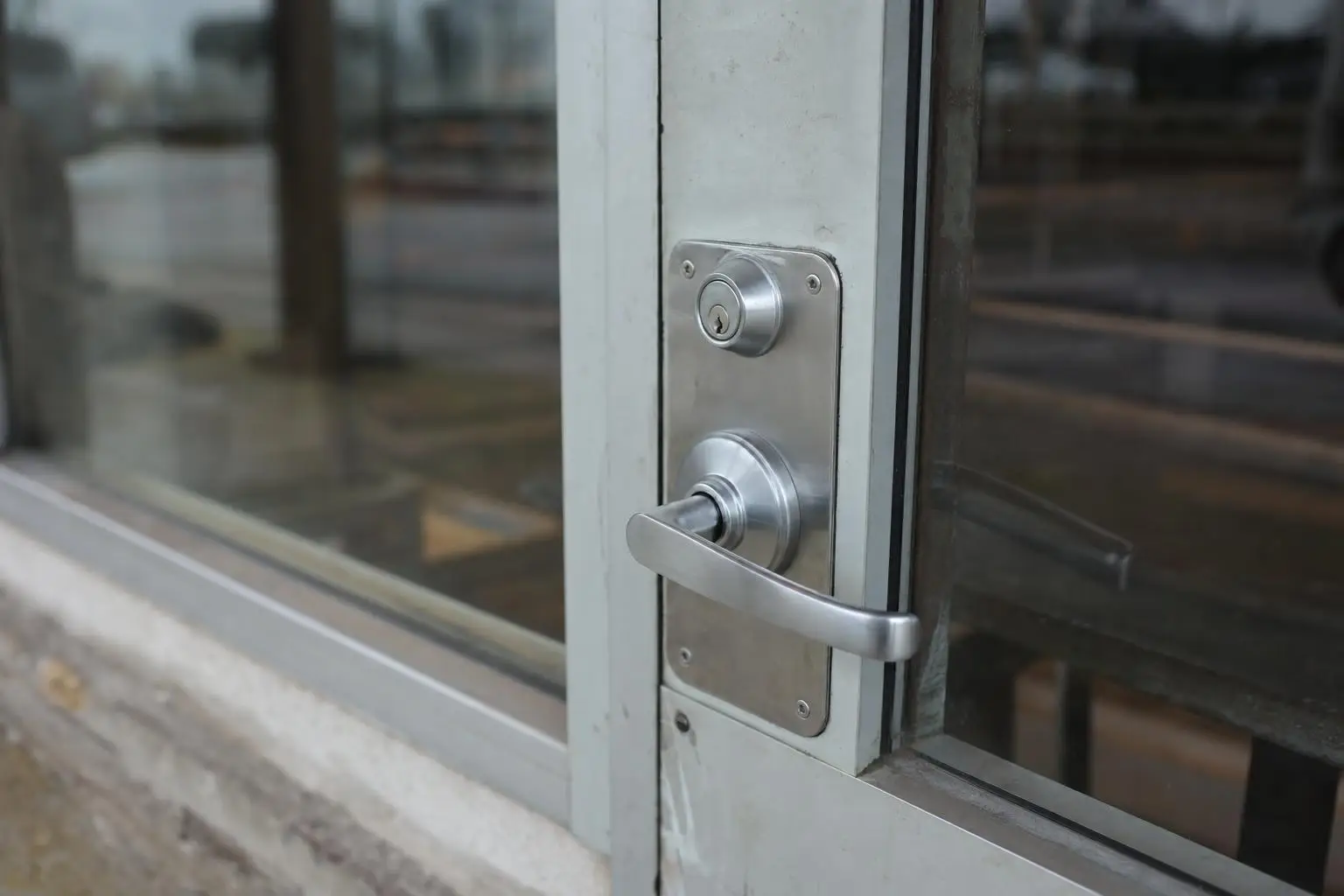
Two lock styles cover most commercial doors. A cylindrical, or bored, lock installs into round holes and is quicker to fit. A mortise lock sits inside a rectangular pocket cut into the door edge. It takes more work to install, but tends to be sturdier and offers more functions. Cylindrical locks fit light-to-moderate uses; mortise locks are common on heavier entries.
BHMA grades apply here too. For accessibility, lever-style hardware is usually better because it does not require gripping or twisting, unlike a round knob. Keep that lever within the 34 to 48 inch mounting range.
Be careful with security add-ons. Double-cylinder deadbolts and any lock that needs a key to exit can create egress problems. Confirm what is allowed with your AHJ before installing anything that could lock people in.
Exiting: Panic and Fire-Exit Devices
Exit devices are push bars that let people leave quickly by leaning on them. Panic hardware is for non-rated exit doors and is listed to UL 305. Fire-exit hardware is for fire-rated openings and must be listed to UL 305 and UL 10C, the positive-pressure fire test standard for door assemblies.
Whether a door requires panic hardware depends on space, occupant load, and local thresholds, so ask officials instead of guessing. Common types include rim devices, with the latch on the door surface, and vertical-rod devices, where rods latch at the top and bottom. Vertical rods often serve pairs of doors and glass storefront doors.
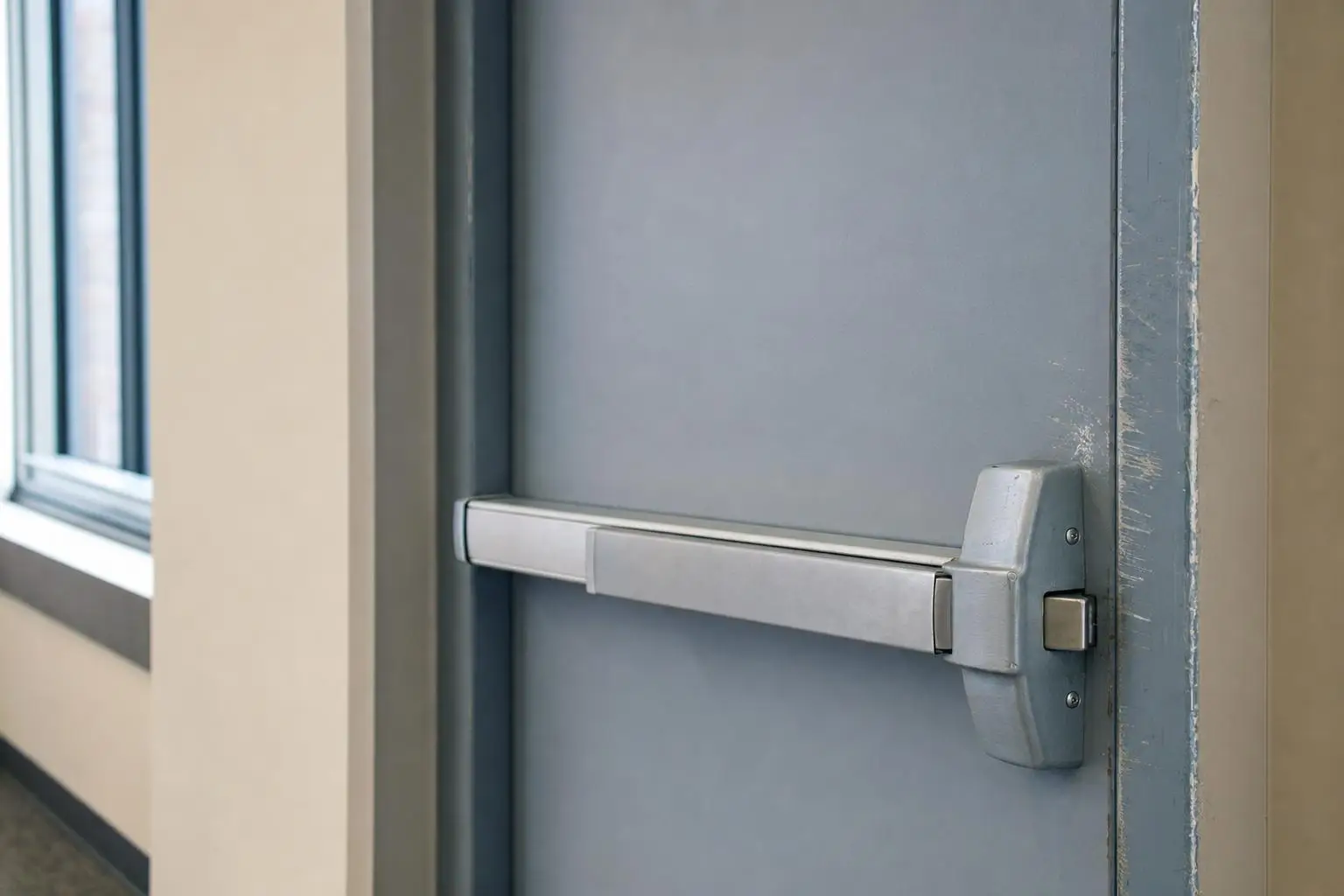 A short list of what not to do: do not add surface bolts or extra latches to a door that must open with one motion; do not dog a fire-rated exit device; and do not swap in non-listed parts on a rated opening. Fire assemblies must follow NFPA 80 and the product listing.
Controlling: Closers and Power Operators
A door closer is the arm that pulls a door shut on its own. Closers come as surface-mounted, concealed, and floor units; surface-mounted closers are the most common and easiest to adjust.
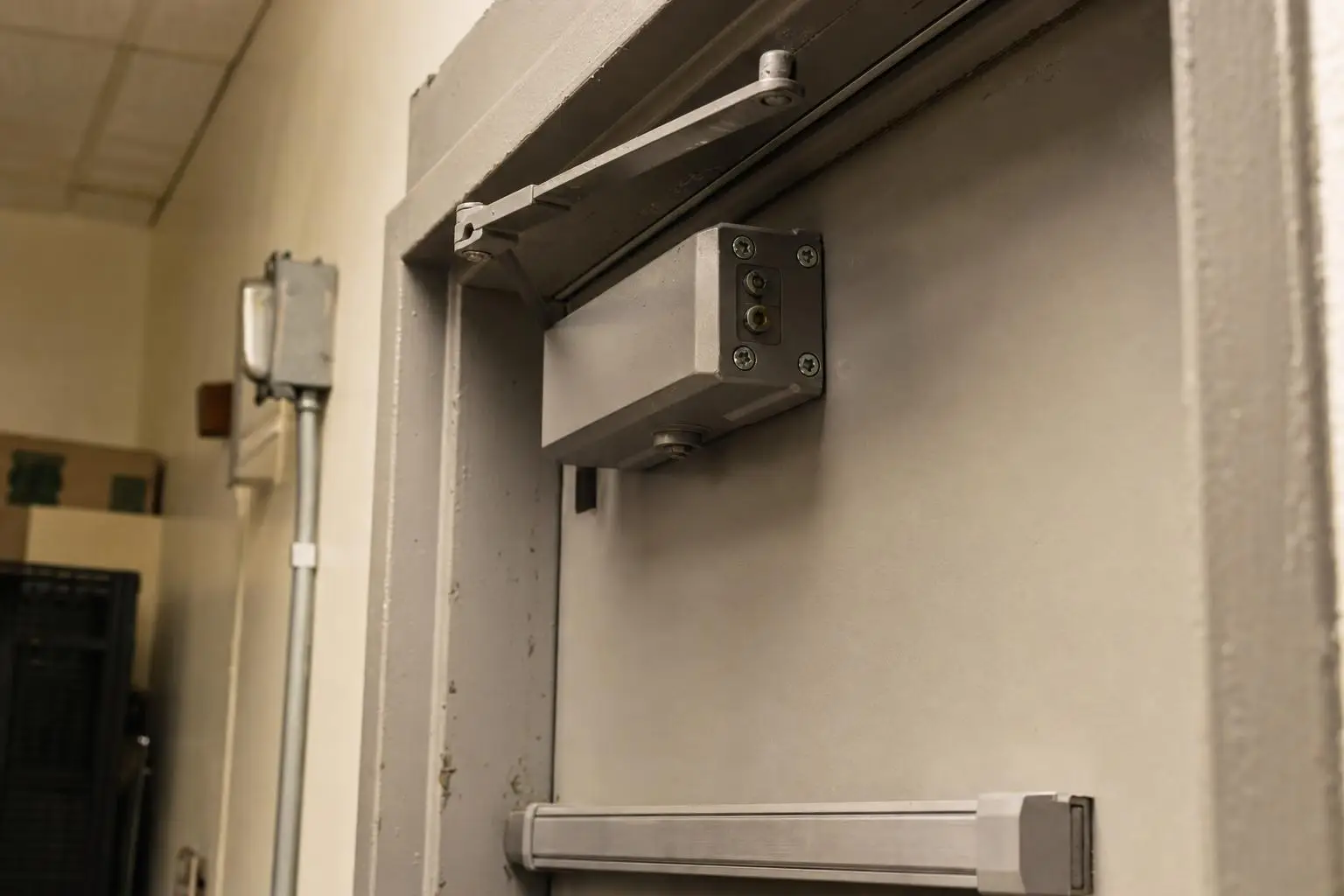 Timing matters for accessibility. On accessible manual doors, a closer must allow at least 5 seconds for the door to move from an open 90 degrees to 12 degrees from the frame. That pause gives people enough time to pass through comfortably.
If you are considering an automatic or power-assist operator, know the difference. Low-energy and power-assist swing doors are addressed by BHMA A156.19. Full-powered automatic pedestrian doors fall under ANSI/BHMA A156.10, which is written to reduce user injury and entrapment. The 2024 International Fire Code also requires power-operated egress doors to be openable manually during a power failure.
Sealing and Protecting: Thresholds, Sweeps, and Plates
The least noticeable hardware often delivers quick results. Weatherstripping, door sweeps, and a good threshold stop drafts, cut noise, and keep out dust and pests. ENERGY STAR says basic air sealing and weatherstripping can trim up to about 10 percent from annual household energy bills, making these inexpensive parts worth checking first.
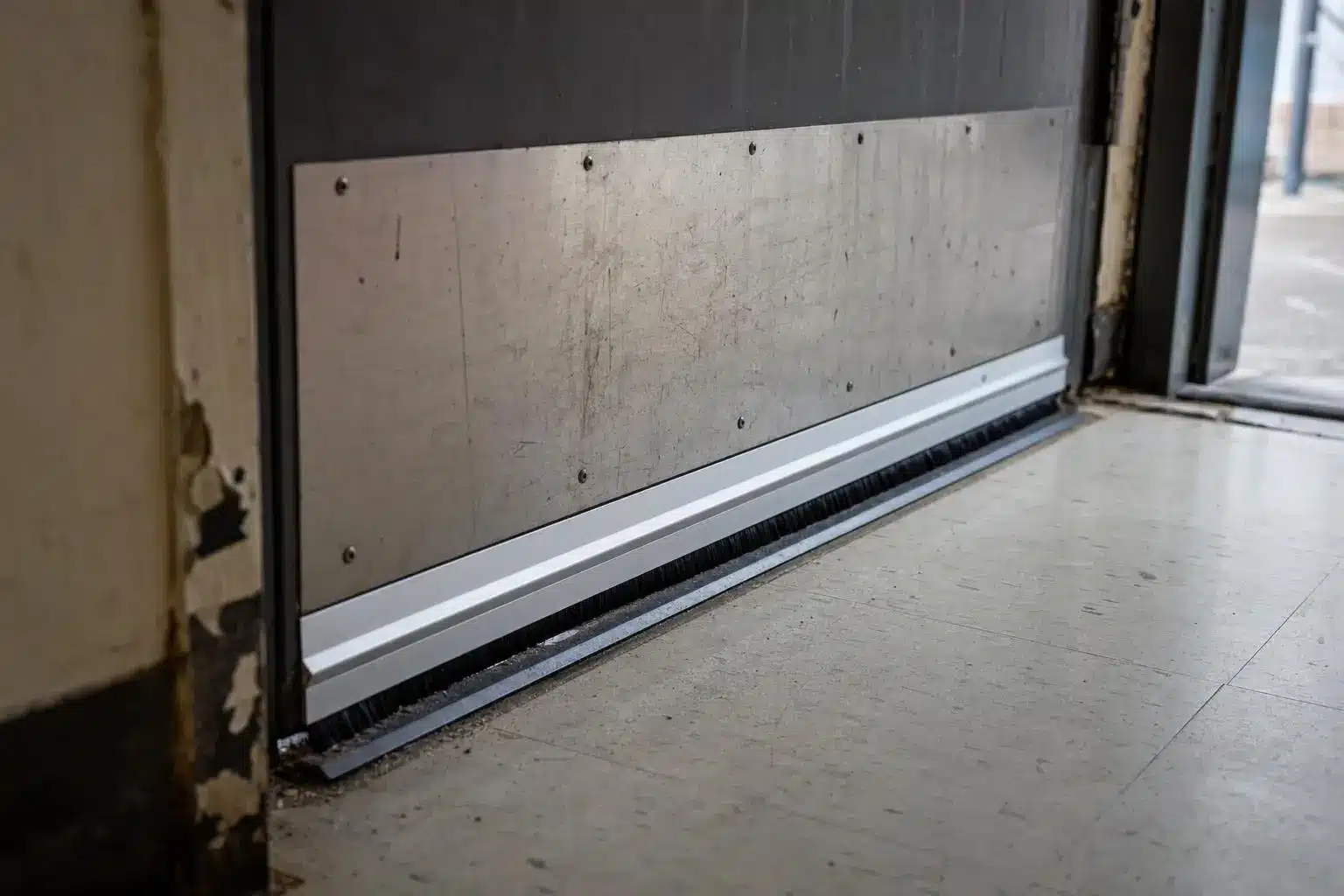 Kick plates and armor plates protect the lower face of a door from carts, shoes, and daily wear. Keep accessibility in mind: the ADA limits new-construction thresholds to 1/2 inch in height, with beveling required above 1/4 inch, and the push side bottom of a door should stay smooth so it is easy to operate.
Quick Checklists by Doorway Type
Use these checklists as starting points, not substitutes for local code review. The right hardware depends on the door rating, traffic level, and whether the opening is part of an exit route.
Storefront Entry
- Continuous hinge for a heavy or frequently used door
- Grade 1 lock or exit device for durability
- Lever hardware mounted 34 to 48 inches high
- Threshold plus sweep to control drafts and dust
Stairwell or Fire Door
- Listed fire-exit hardware, including UL 305 and UL 10C where required
- Self-closing closer that lets the door relatch
- Fire label and any listed viewer left intact
- Annual inspection consistent with NFPA 80
Buying and Planning Tips
When you shop, start with the grade. A BHMA Grade 1 exit device is tested to around 500,000 cycles, so match the label to traffic rather than overbuying.
Next, confirm listings on any rated door. Panic hardware carries UL 305; fire-exit hardware carries UL 305 and UL 10C. If a door has a fire label, hardware must match that rating and be installed per NFPA 80 and the product listing. Repeated latch failures, rust, or worn frames can justify planning a stronger entry system.
Then match operator type to the need: low-energy for light-use accessible entries, full-powered automatic doors for higher traffic, and manual operation on power loss either way.
Finally, call a professional for egress changes, fire-rated openings, or a new lock keying plan, and confirm requirements with your AHJ.
The Simple Way to Decide
Door hardware feels less complicated when you sort it by job. Ask what the part needs to do, then pick the sensible grade and the correct listing for that door. Keep accessible openings within the ADA basics, protect exit routes, and treat fire-rated doors as listed assemblies.
Start with the easy wins, plan safety-critical changes carefully, and check with your local officials before you touch anything on an egress or fire door.