You’ve probably wondered whether you can sneeze in your sleep. Maybe you woke up mid-sneeze and assumed it happened while you were out cold.
It’s one of those body questions that sounds simple but has a surprisingly interesting answer rooted in how your brain works during rest.
The answer has everything to do with how your brain behaves once you fall asleep. Your reflexes don’t work the same way during rest, and that changes whether a sneeze can even happen
This blog breaks down what causes sneezing, how sleep stages suppress it, and when nighttime sneezing might need a doctor’s attention!
Can You Actually Sneeze While You’re Asleep?
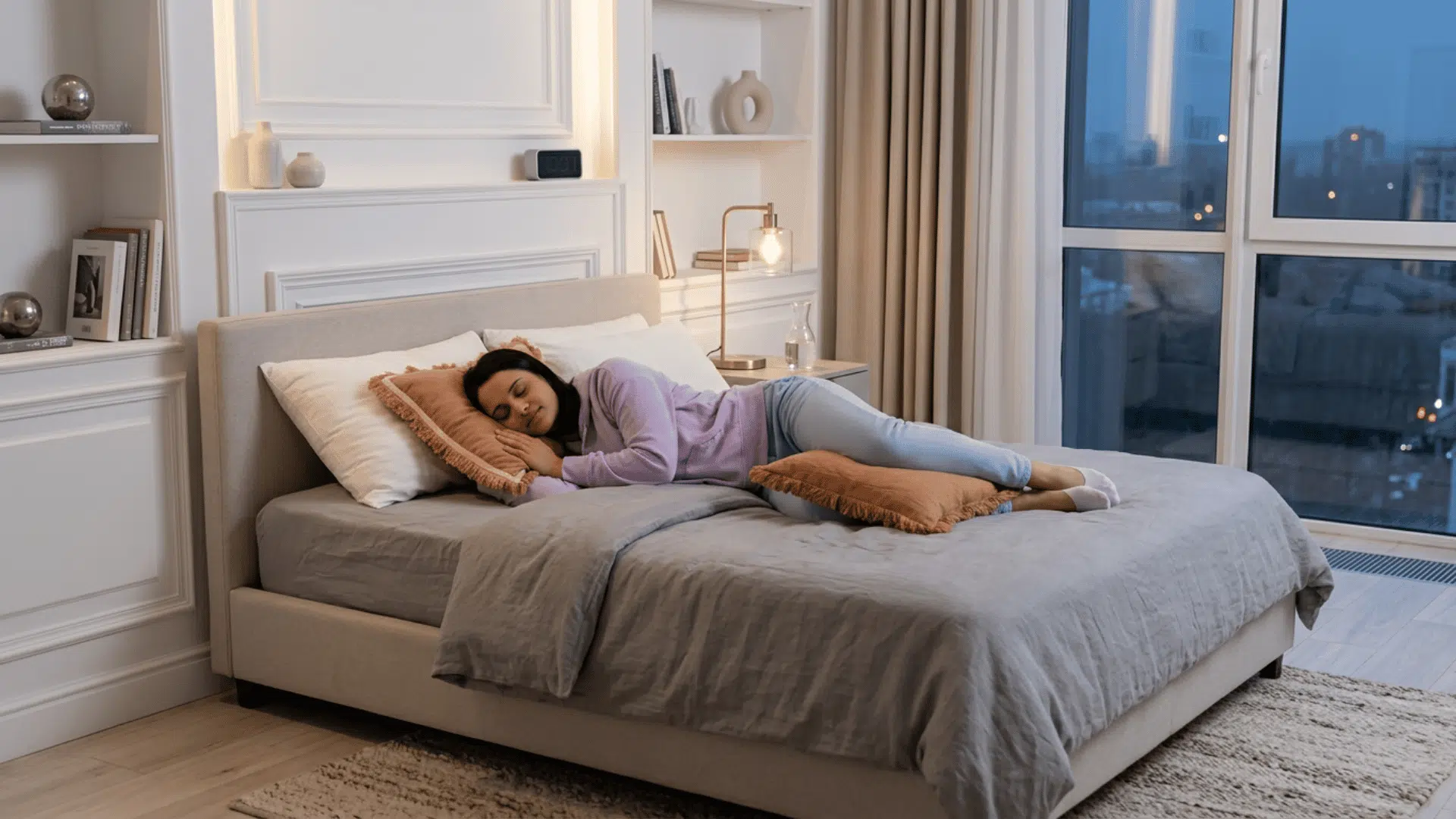
No, you cannot truly sneeze while you are asleep. Your brain shuts down the nerve signals and muscle controls needed to trigger one.
Sneezing takes a coordinated burst from your chest, throat, and facial muscles, and your sleeping brain blocks that effort.
Why Can’t You Sneeze in Your Sleep?
During deep and REM sleep, your body enters a state called muscle atonia. Your main muscles can’t move or contract. The part of your brain that notices nasal irritation also goes into a resting state.
So what happens if dust or pollen irritates your nose at night? Your brain wakes you up just long enough to sneeze. You fall back asleep so fast that you may not even remember it.
What Is a Sneeze and Why Does It Happen?
A sneeze is a sudden, forceful burst of air from your nose and mouth.
Your body uses it to clear out unwanted particles like dust, germs, and pollen. It’s a reflex, meaning you don’t choose to do it. Your brain handles the whole thing automatically.
Tiny particles land inside your nose and irritate the lining. A nerve in your nose fires a quick signal to your brain. Your brain then tells your chest, belly, and face muscles to push air out at high speed.
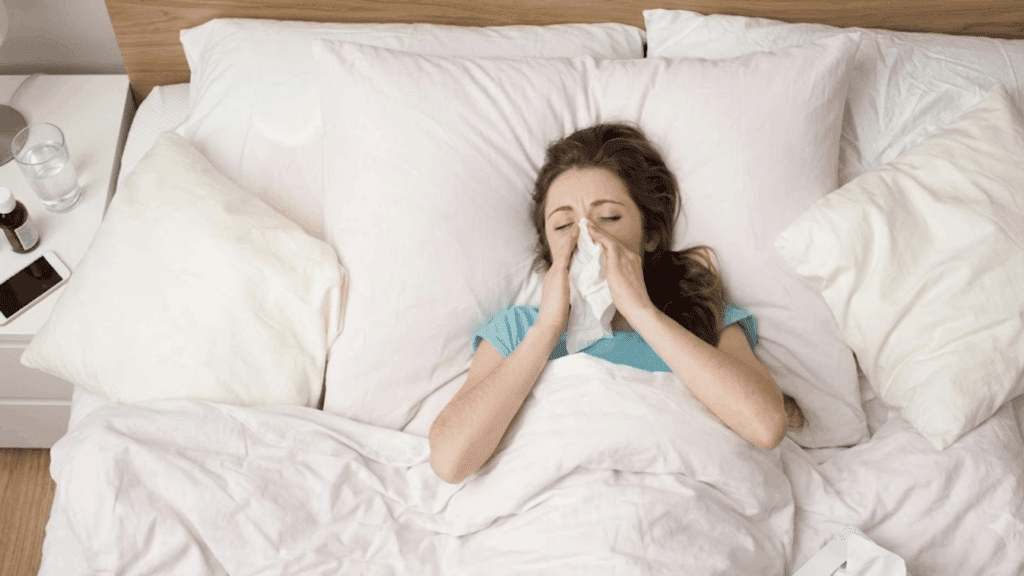
Common triggers include allergies from pollen or pet fur, cold and flu viruses, and even bright sunlight. Some people sneeze when they step into strong light because of the way their brain’s nerves are wired.
How Do Different Sleep Stages Affect Your Ability to Sneeze?
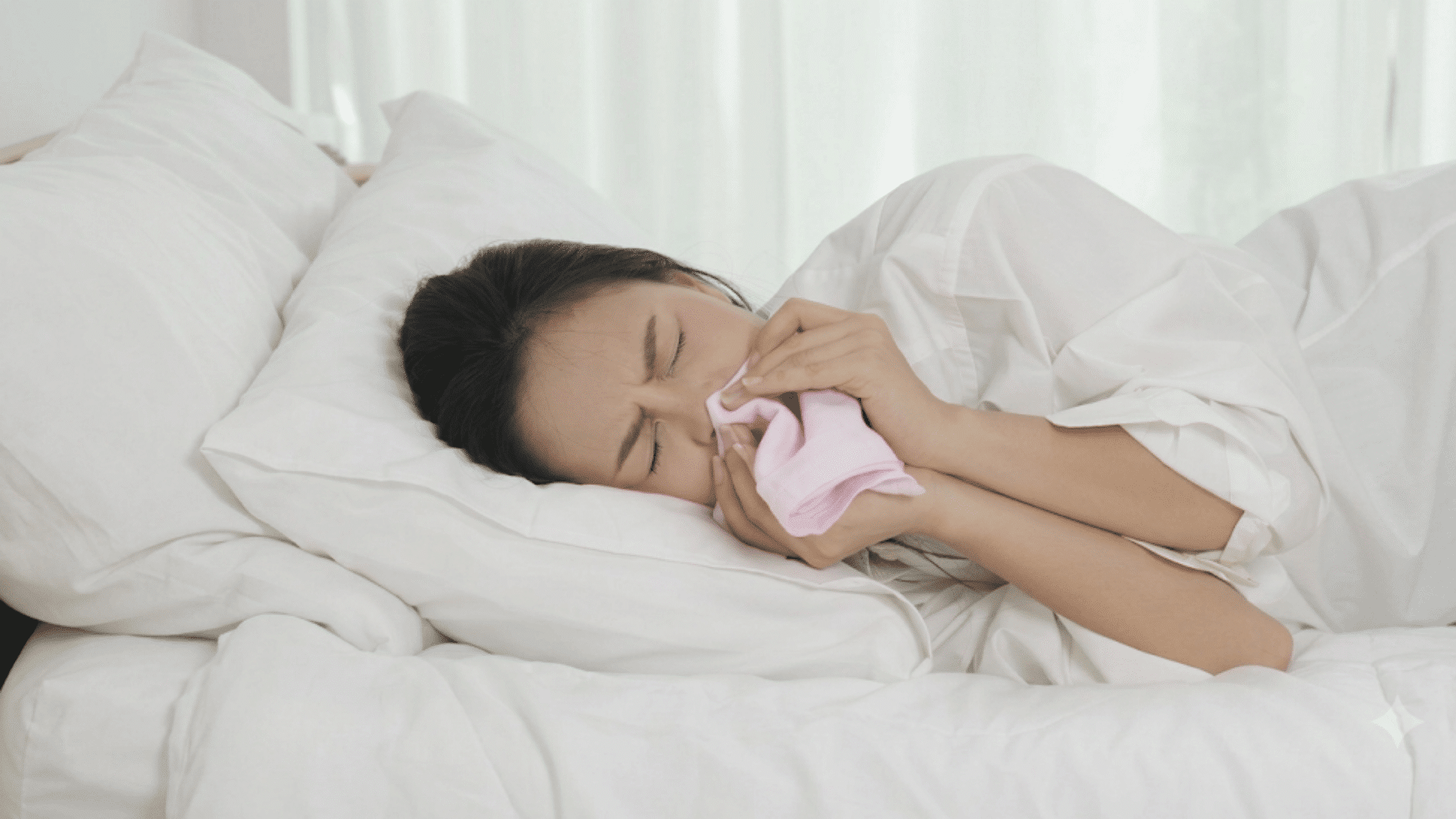
Your ability to sneeze drops as you move deeper into sleep. Each stage changes how your brain handles sensory signals and motor control, and that directly affects whether a sneeze can fire.
Light Sleep (NREM Stage 1 and Stage 2)
This is the lightest phase of sleep. Your muscles start to relax, but they haven’t fully shut down yet. Motor suppression is still incomplete.
Your arousal threshold is also low, meaning it doesn’t take much to pull you awake. This stage is the closest your body gets to being able to sneeze during sleep.
But even a strong nasal irritant usually causes a brief awakening first. You wake up, sneeze, and fall back asleep often without remembering it.
Deep Sleep (NREM Stage 3)
This is the most restorative stage of sleep. Your muscles are highly relaxed, and your brain slows down sensory processing by a large margin.
The arousal threshold is very high; waking you up during this stage is tough. Minor irritants like dust or pet fur barely register. The signals from your nose get muted before they ever reach the brain’s sneeze center.
So the sneeze reflex is completely blocked. Even if particles are sitting in your nasal passages, your brain treats them as background noise and ignores them.
REM Sleep
During REM sleep, your brain is active, but your body enters temporary muscle paralysis called atonia. Nearly all your skeletal muscles shut down except the eyes and diaphragm.
A sneeze needs your chest, throat, belly, and facial muscles to contract in a precise, rapid sequence. With those muscles locked out, that coordinated response is physically impossible.
Even if the trigeminal nerve in your nose fires an irritation signal, the brain cannot recruit the muscles to act on it. Sneezing during REM is as close to impossible as it gets.
Research is less conclusive about light and deep NREM sleep, but a person may need to partially or fully awaken before sneezing.
When to See a Doctor About Nighttime Sneezing
Most nighttime sneezing is harmless and settles down with basic bedroom changes. But some situations need a doctor’s attention.
- Your Sleep Keeps Getting Disrupted: Sneezing, congestion, or postnasal drip wakes you up regularly and leaves you exhausted during the day.
- Over-The-Counter Medicines Aren’t Working: Antihistamines and nasal sprays from the store don’t reduce your symptoms after consistent use.
- Symptoms Drag on for Weeks: Nighttime sneezing continues for weeks or months without a clear cause or improvement.
- You Notice Pain or Pressure: Intense sinus headaches, earaches, or facial pain alongside sneezing can signal a deeper issue.
- You Have Trouble Breathing: Wheezing, chest tightness, shortness of breath, thick green or brown mucus, or high fever these need prompt medical attention.
Disclaimer: This information is for general education only and does not replace professional medical advice, diagnosis, or treatment from a qualified healthcare provider.
Conclusion
So, can you sneeze in your sleep? Almost never. Once your brain enters deeper sleep stages, it shuts down the reflex signals and muscle coordination a sneeze demands.
Even strong nasal irritation won’t trigger one; it’ll wake you up first.
That said, frequent nighttime sneezing right before or after sleep still deserves attention. Allergens in your bedroom, dry air, or an underlying health issue could be the cause.
If home fixes like washing bedding and using air filters don’t help after a few weeks, it’s worth talking to a doctor.
Your sleep matters. Don’t let sneezing or what’s causing it steal the rest you need!
Frequently Asked Questions
Why Do You Wake Up Sneezing at 2 Am?
Nighttime sneezing often happens due to bedroom allergens like dust mites, pet dander, mold, or dry air.
Can You Stop a Sneeze?
You can reduce an upcoming sneeze by pressing your upper lip, blowing your nose, or touching your mouth’s roof.
Is Sneezing a Symptom of Any Disease?
Sneezing can occur with colds, flu, allergies, sinus problems, or allergic rhinitis caused by environmental triggers.