
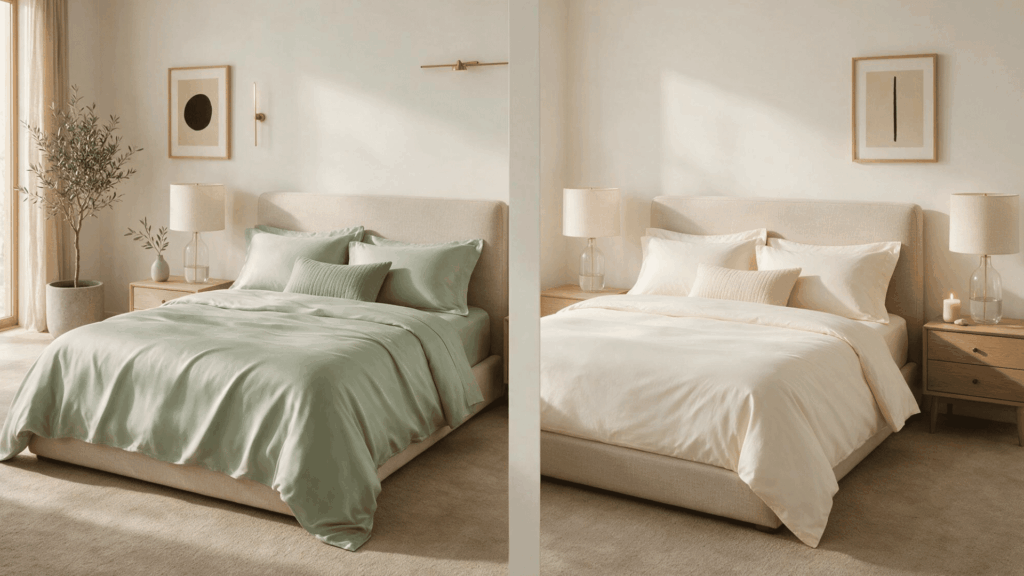
Choosing between bamboo and cotton sheets can feel simple at first, but the right choice often comes down to personal comfort and everyday preferences.
Some sleepers prefer a softer, smoother surface, while others prefer a crisp, familiar feel. The way sheets feel, wash, and perform over time can also shape how comfortable they are to use every night.
A closer comparison can make it easier to choose the option that fits your needs without relying on marketing claims alone.
If you are deciding between these two popular materials, keep reading to compare them clearly and choose the sheets that best suit your sleep style.
What are Bamboo and Cotton Sheets?
Bamboo sheets are normally made from rayon or viscose produced from bamboo-based cellulose.
Bamboo is processed into soft textile fibers, creating sheets with a smooth texture, gentle drape, and comfortable feel.
Cotton sheets are made from standard cotton fibers spun into yarn and woven into fabric. Their texture depends on the cotton type and weave. Percale cotton feels crisp and light, while sateen feels smoother.
When comparing bamboo vs cotton sheets, the main difference starts with how each fiber is produced and how the finished fabric feels, performs, and responds to regular washing.
Bamboo vs Cotton Sheets: Key Differences
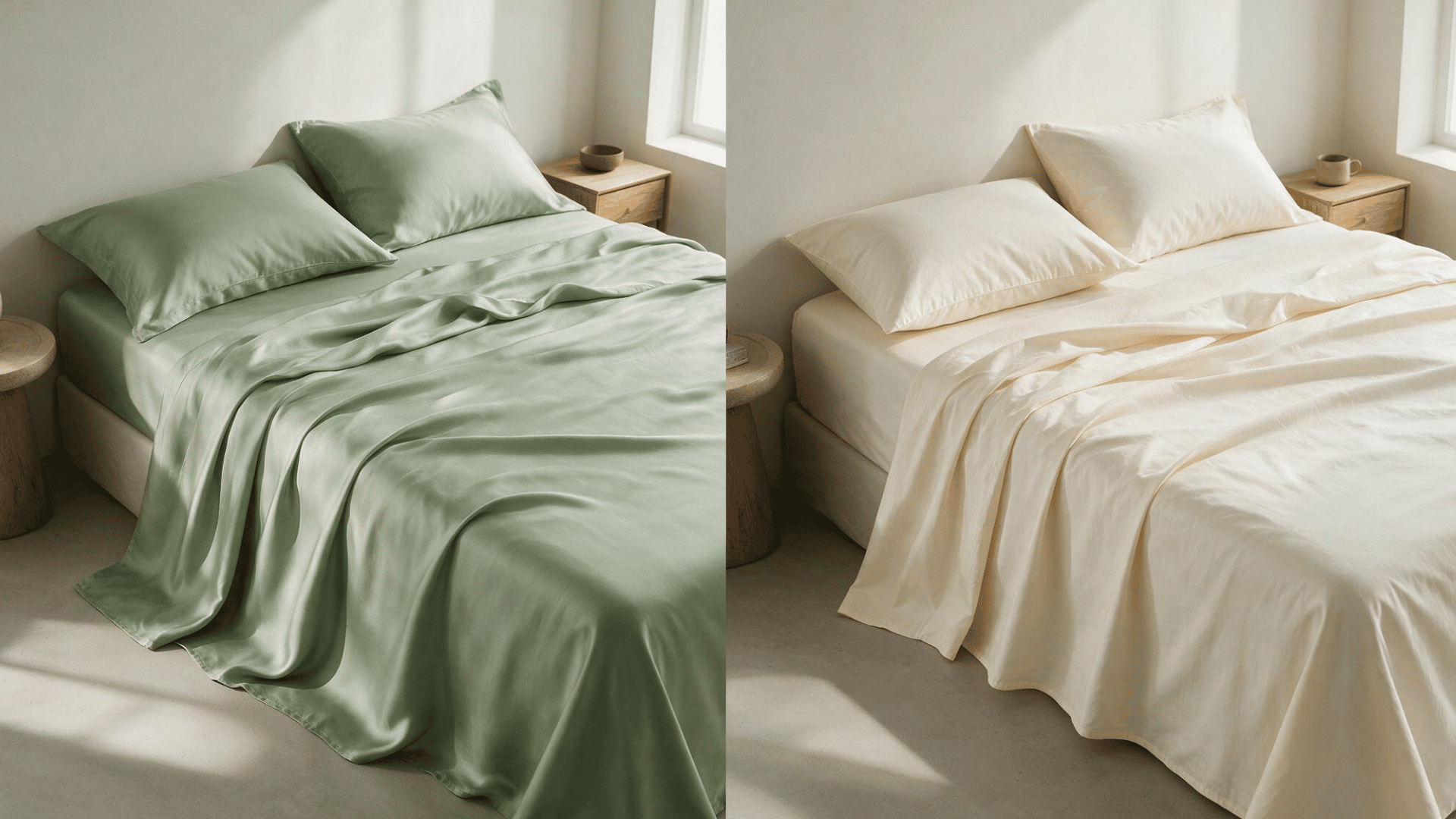
Comparing key features helps shoppers understand how bamboo and cotton sheets differ in comfort, performance, maintenance, durability, and overall value.
Which Feels More Comfortable?
Bamboo sheets often feel smooth, elastic, and light against the skin, which can create a relaxed sleeping surface from the first use.
Cotton offers more variety because the weave changes the feel significantly. Percale feels sharp and airy, while sateen feels softer and smoother.
Comfort also depends on room temperature, mattress type, and bedding layers. For ordinary use, the better choice is the fabric texture that feels most normal to you.
Which Sheets are Softer?
Bamboo-calculated sheets are often noticeably delicate when new, particularly when made from rayon or viscose calculated from bamboo. Their surface tends to feel smooth and graceful rather than crisp.
Cotton softness varies further by fiber quality and weave. Sateen cotton usually feels smoother, while percale has a fresher, crisper texture. Cotton may also soften further with repeated washing.
Shoppers focused mainly on softness may prefer bamboo, while cotton offers more texture options overall.
Which is More Breathable?
Both bamboo-derived and cotton sheets can allow airflow, but weave plays an important role in how breathable the fabric feels. Cotton percale is particularly known for its light, crisp construction and sharp finish.
Bamboo-derived sheets can also feel breathable because the fabric is often lightweight and smooth.
However, denser weaves may feel warmer regardless of material. For better airflow, shoppers should compare fabric weight, weave, and construction instead of relying only on the fiber name.
Which Sheets Are Better for Cooling?
Bamboo-derived sheets often feel cool when first touched because of their smooth surface and light drape.
Cotton percale can also work well for fiery sleepers because its retarded weave allows air to move through the fabric. Cooling performance depends on more than fiber alone.
Mattress protectors, blankets, room temperature, and fabric density can entirely affect warmth. For summer use, light bamboo-derived sheets and cotton percale are both practical options worth comparing closely.
Which is More Durable?
Cotton sheets can be very durable. They’re also popular for daily use and washing.
Bamboo sheets can be durable as well; however, some types of bamboo require careful maintenance to prevent pilling, stretching, and breaking.
Durability can be quite different from product to product; thus, consumers should look at such factors as quality of material, stitching, washing requirements, and warranty before buying.
Which Sheets are Easier to Care For?
Cotton sheets are normally easy to maintain and can often handle regular machine washing without complex instructions.
Bamboo sheets may require cooler water, moderate detergent, and infernal drying temperatures to help protect the fibers. Care needs can vary by brand, weave, and fabric construction, so the product label should always come first.
Buyers who prefer retarded laundry routines may lean toward cotton, while bamboo sheets can work well for those who prefer gentler washing methods.
Which Offers Better Value?
Value depends on price, comfort, durability, care needs, and how often you’ll use the sheets.
Cotton is accessible across a wider price range, from inexpensive, ordinary options to premium long-staple varieties.
Bamboo sheets are often positioned in mid-range or higher price categories. A higher price does not mechanically mean better performance. Shoppers should compare fabric quality, washing requirements, and preferred feel.
Advantages of Bamboo and Cotton Sheets
Both materials offer useful benefits, but their strengths differ in feel, care, variety, and everyday performance.
Bamboo Sheets | Cotton Sheets |
|---|---|
Smooth and soft feel | Wide range of textures |
Often feels cool initially | Breathable, especially in percale weaves |
Drapes softly over the bed | Available in many weaves and finishes |
Can absorb moisture well | Easy to find across different budgets |
Comfortable for people who prefer silky sheets | Often suitable for regular machine washing |
Usually feels soft from the first use | Can become softer with repeated washing |
Offers a refined, fluid appearance | Widely available in many quality levels |
Bamboo Viscose vs Egyptian Cotton Sheets
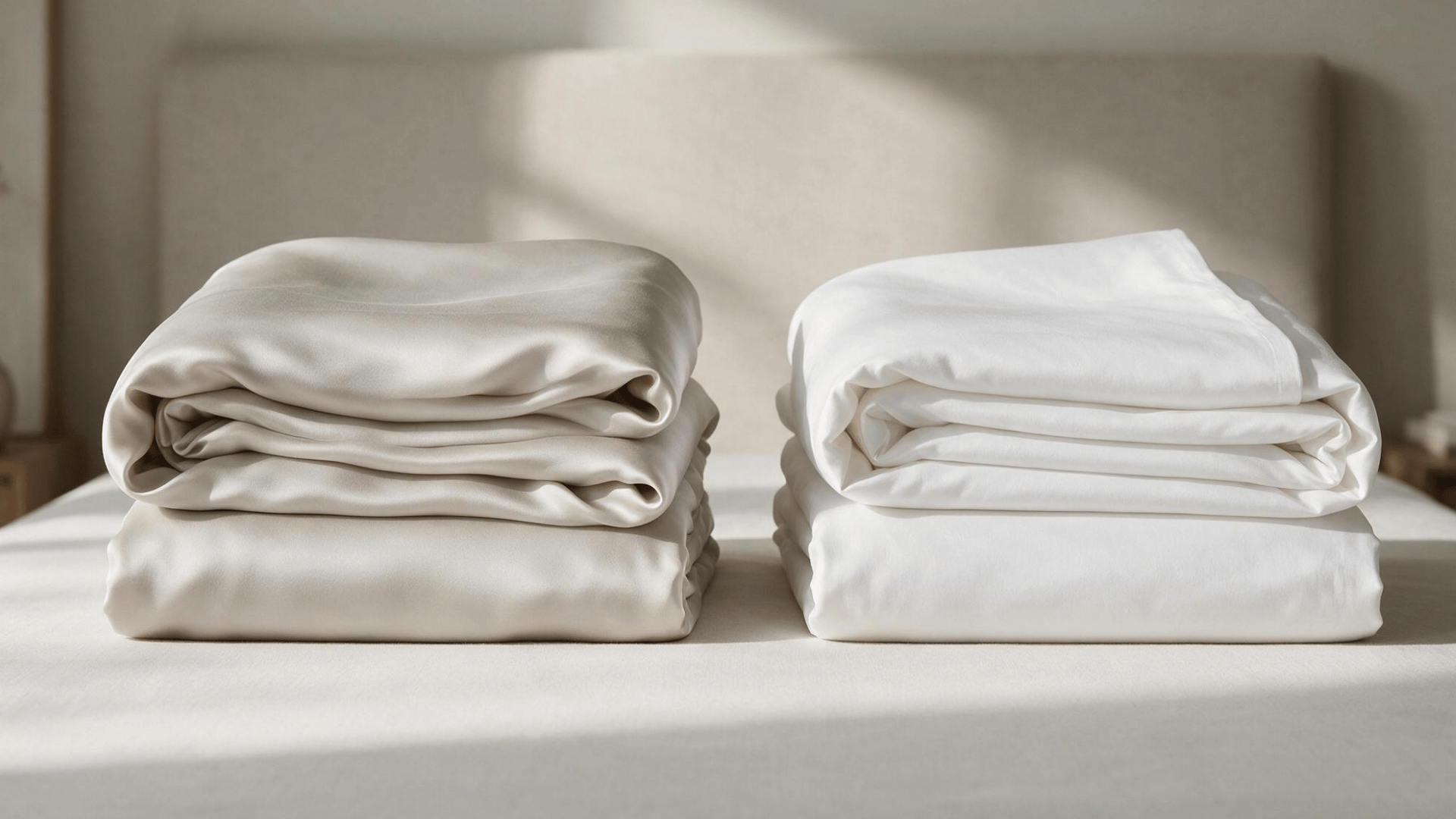
Bamboo viscose sheets are made from cellulose taken from bamboo and processed into delicate textile fibers.
They normally feel fast, silky, and lightweight, with a graceful drape that suits sleepers who prefer a softer surface.
Egyptian cotton sheets are made from cotton grown in Egypt and are often valued for their long fibers, strength, and soft texture.
Their feel varies by weave, with percale offering a crisp finish and sateen providing a softer surface.
When comparing bamboo viscose vs Egyptian cotton sheets, consider softness, weave, care, durability, price, and the type of sleeping feel you prefer.
How to Choose Between Bamboo and Cotton Sheets
The right choice depends on your preferred feel, sleeping temperature, laundry routine, budget, and expectations for long-term everyday use.
1. Choose Bamboo-Derived Sheets for a Silky Feel: They suit sleepers who prefer smooth, soft bedding with a fluid drape.
2. Choose Cotton for More Texture Options: Cotton is available in crisp percale, smooth sateen, and several other constructions.
3. Consider Your Sleeping Temperature: Lightweight bamboo-derived sheets and cotton percale can both work well for warmer sleepers.
4. Think About Care Needs: Cotton is often easier to wash, while bamboo-derived fabrics may require gentler cleaning.
5. Compare Your Budget: Cotton offers more choices across price ranges, while bamboo-derived sheets are often mid-range or premium.
6. Check The Label and Weave: Fiber content, weave, stitching, and care instructions can matter as much as the material name.
Final Takeaway
Bamboo and cotton sheets can both be comfortable choices, but they offer different strengths depending on what matters most to you.
Bamboo-derived fabrics often appeal to sleepers who prefer a smooth, soft feel, while cotton offers more variety in texture, weave and price.
The best option depends on your comfort preferences, care routine, budget, and the type of sleeping surface you enjoy. Looking at the full fabric, not just one feature, makes the decision much easier.
Use these points to compare your options before buying, and comment below to share whether bamboo or cotton sheets work better for you.
Frequently Asked Questions
Can Bamboo Sheets Pill Over Time?
Yes, some bamboo-derived sheets can pill depending on fabric quality, washing methods, friction, and how frequently they are used.
Do Cotton Sheets Shrink After Washing?
Cotton sheets may shrink slightly, particularly with high heat, so the care label can help maintain their original size.
Are Bamboo Sheets Suitable for Sensitive Skin?
Fast bamboo-derived fabrics may feel gentle against the skin, but comfort varies by person, fabric finish, detergent, and individual sensitivity.