

Seeing your newborn sleep peacefully can be reassuring until you notice their lips slightly parted. A baby sleeping with their mouth open can leave parents wondering whether it’s a quirky sleep habit or something worth watching more closely.
The interesting part is that the same appearance can have very different explanations, depending on what else is happening while your baby sleeps.
You’ll find practical ways to tell ordinary sleep behavior from patterns that deserve attention, along with simple comfort measures and signs that should not be ignored.
If you’ve been watching those little breathing changes at bedtime, keep reading to put them into perspective.
Is Baby Sleeping with Mouth Open Normal?
Seeing your baby sleep with their mouth slightly open can look unusual, but it does not automatically mean something is wrong. Babies can have different facial expressions and positions while sleeping.
The mouth may naturally fall open during certain periods of sleep, particularly when the jaw is relaxed. A brief change in mouth position alone usually does not tell you whether your baby has a breathing problem.
Instead of focusing on whether the lips are closed, notice how your baby seems overall during sleep.
Comfortable breathing, normal feeding, and peaceful rest are more useful signs than mouth position by itself. If the pattern becomes persistent or you notice a clear change in your baby’s usual sleep or breathing, it deserves closer attention.
What Causes a Baby to Sleep with Their Mouth Open?

Most babies sleep with their mouths open due to congestion or natural muscle relaxation. Less common airway or structural issues may become noticeable as they grow.
1. Nasal Congestion (Most Common Cause)
Nasal congestion is a common reason babies sleep with their mouths open. Newborns mainly breathe through their noses, but narrow nasal passages can become blocked by mucus, dry air, or mild irritation.
When congestion restricts nasal airflow, a baby may naturally open their mouth to breathe more comfortably during sleep. This is usually temporary and improves as congestion clears, especially with sleep hygiene habits such as humidity control.
2. Active Sleep and Muscle Relaxation
Active sleep and natural muscle relaxation can also cause babies to sleep with their mouths open. During infant sleep, especially active sleep, the muscles around the face, jaw, and mouth relax, allowing the lips to part slightly.
Babies spend a much larger share of their sleep in active (REM) sleep than adults do, so this behavior can be more noticeable in newborns.
If your baby sleeps peacefully with their mouth slightly open and has no other symptoms, it is often a normal part of infant sleep.
3. Structural and Less Common Causes
Enlarged adenoids or tonsils can make nasal breathing harder, and parents comparing snoring versus sleep apnea in older children often trace it back to this cause.
Less common causes include oral differences such as tongue-tie or a deviated septum. These are usually considered when open-mouth breathing continues regularly or occurs with signs like feeding difficulties, snoring, or restless sleep.
4. Dry Air and Habit
Dry indoor air can sometimes irritate a baby’s nasal passages and make comfortable nose breathing more difficult. Some babies may also continue resting with their mouths slightly open after experiencing repeated congestion.
These causes are usually minor and often improve once parents build a well-designed sleep environment that keeps humidity and temperature steady, or the original irritation goes away.
Is My Baby Sleeping with Their Mouth Open Normal or a Concern?
Occasional open-mouth sleeping is usually harmless when a baby breathes comfortably. Whether it’s a concern depends on how often it happens, how long it lasts, and whether other symptoms appear.
Usually Normal | Worth Checking |
|---|---|
Mouth slightly open during active sleep | Mouth open every night for long periods |
Breathing sounds calm and normal | Loud snoring or breathing pauses |
Happens during a cold or congestion | Continues after congestion clears |
Baby feeds and sleeps normally | Feeding problems or restless sleep |
What Parents Can Do If Their Baby Sleeps with Mouth Open
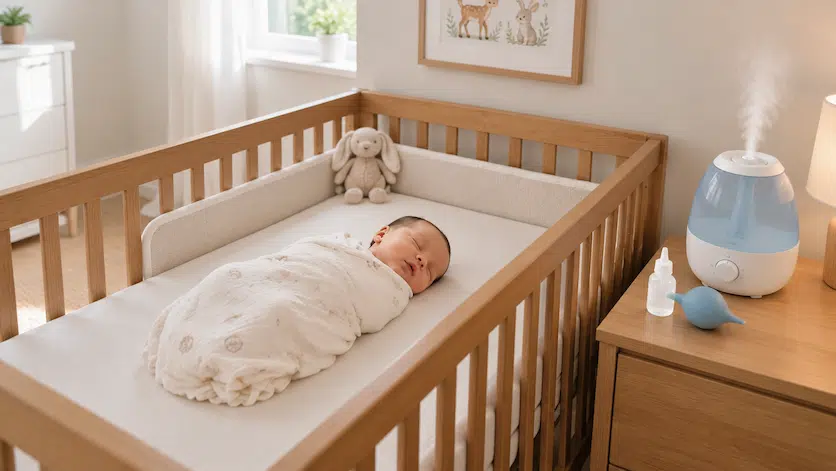
Simple steps can improve comfort when open-mouth sleeping happens due to nasal blockage. Parents should focus on easier breathing, a comfortable environment, and safe sleep habits instead of changing sleep positions.
- Clear Nasal Congestion Before Bedtime: Gently clear mucus before bedtime to improve airflow and make breathing through the nose easier.
- Use Infant-Safe Saline Drops: Saline drops can loosen mucus and clear nasal passages. Follow product instructions and ask a pediatrician if congestion affects feeding or sleep.
- Keep Indoor Air Comfortably Humid: Dry air can irritate sensitive nasal passages. A cool-mist humidifier may help maintain comfortable humidity, especially during dry seasons or when you use heating.
- Follow Safe Sleep Practices: Continue placing your baby on their back on a firm, flat surface. Avoid pillows, wedges, rolled towels, or raising the mattress, as these can create unsafe sleeping conditions.
- Monitor Breathing Instead of Changing Sleep Positions: Watch your baby’s breathing rather than trying to keep their mouth closed. Discuss frequent snoring, breathing pauses, or feeding difficulties with a pediatrician.
What are the Long-Term Effects of Sleeping with the Mouth Open?
Long-term mouth breathing may affect sleep quality, oral development, and breathing comfort, particularly when it continues beyond infancy because of an underlying airway or nasal issue.
1. Poorer Sleep Quality: Persistent mouth breathing can sometimes occur alongside disrupted sleep, especially when nasal or airway obstruction makes breathing less comfortable.
2. Dry Mouth: Regular mouth breathing can reduce moisture in the mouth, which may cause dryness, particularly as children get older.
3. Dental and Oral Changes: Long-term mouth breathing during childhood has been associated with changes in oral development and facial growth, although these concerns are generally more relevant to persistent mouth breathing beyond infancy.
4. Ongoing Airway Problems: If mouth breathing continues because of nasal obstruction, allergies, enlarged adenoids, or another condition, leaving the underlying cause untreated may allow the breathing problem to persist.
5. Daytime Effects from Disrupted Sleep: When chronic mouth breathing is linked to poor-quality sleep, older children may experience daytime tiredness, difficulty concentrating, or behavioral changes.
When Does Mouth-Open Sleep Need a Doctor’s Attention?
How often and how long a baby sleeps with their mouth open can help determine whether they need medical advice. Occasional open-mouth sleeping is usually harmless when a newborn is breathing comfortably.
However, frequent mouth breathing may sometimes indicate an airway or breathing issue. It is worth discussing with a pediatrician if it happens regularly.
Seek medical advice if mouth breathing occurs with loud snoring, breathing pauses, gasping, feeding difficulties, restless sleep, or unusual fussiness. These signs may suggest restricted airflow and need evaluation.
Seek emergency help if your baby has serious breathing difficulties, such as blue lips or skin, chest pulling in with breaths, or repeated grunting with each breath.
Final Thoughts
Seeing your baby sleeping with mouth open can raise questions, especially when you are watching every little change in your newborn. In many cases, an open mouth alone is not a reason to panic.
Temporary congestion or normal sleep patterns may be at play. Still, regular mouth breathing along with snoring, feeding trouble, breathing pauses, or signs of breathing difficulty deserves medical attention.
Watch your baby’s overall breathing, feeding, and sleep rather than focusing only on mouth position. Has your baby been sleeping with their mouth open? Share your experience or questions in the comments below.
Frequently Asked Questions
Can Teething Cause a Baby to Sleep with Their Mouth Open?
Teething may increase drooling or cause temporary mouth movements, but it is not a common direct cause of open-mouth sleeping.
Do Babies Outgrow Sleeping with Their Mouth Open?
Many babies stop this habit as their nasal passages mature and temporary causes like congestion become less frequent.
Can a Baby Sleep with Their Mouth Open but Still Breathe Through the Nose?
Yes, some babies may rest with their lips slightly apart while still breathing normally through their nose.