A restless night can be more than just poor sleep. Loud snoring, sudden awakenings, or constant daytime fatigue may signal an underlying sleep issue that needs attention.
An at-home sleep study offers a convenient way to evaluate possible sleep apnea without spending a night at a clinic.
This blog explains how home testing works, what it measures, who may need it, expected costs, insurance coverage, and how to prepare for accurate results.
Read on to understand the process and find the right next step for your sleep health.
What is an At-Home Sleep Study?
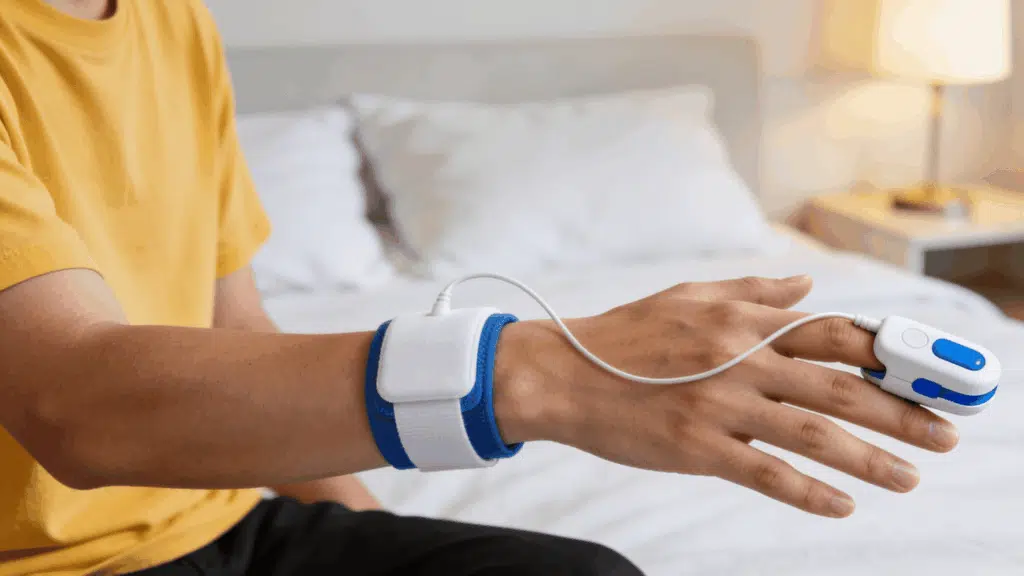
An at-home sleep study is a portable test that records important sleep-related information while you sleep in your usual environment.
Unlike a full overnight sleep study performed in a clinic, a home test uses a smaller monitoring device.
It commonly tracks breathing patterns, oxygen levels, heart rate, airflow, and snoring to help identify signs of obstructive sleep apnea.
A healthcare provider usually orders the test after reviewing symptoms and medical history.
The device is then provided through a sleep clinic, testing company, or approved healthcare service.
How Does an At-Home Sleep Study Work?
An at-home sleep study involves provider evaluation, device setup, overnight recording, and result review to identify possible sleep-related breathing issues.
Provider Evaluation
A healthcare provider reviews symptoms such as snoring, breathing pauses, morning headaches, or daytime tiredness to decide if home testing is suitable.
Device Setup and Testing
The patient receives instructions for placing sensors on areas like the finger, chest, or nose. The device records sleep information overnight while the user follows their normal routine.
Results Review
A sleep specialist reviews the recorded data and prepares a report. If results are unclear, additional testing may be recommended based on symptoms.
What Does an at-Home Sleep Study Measure?
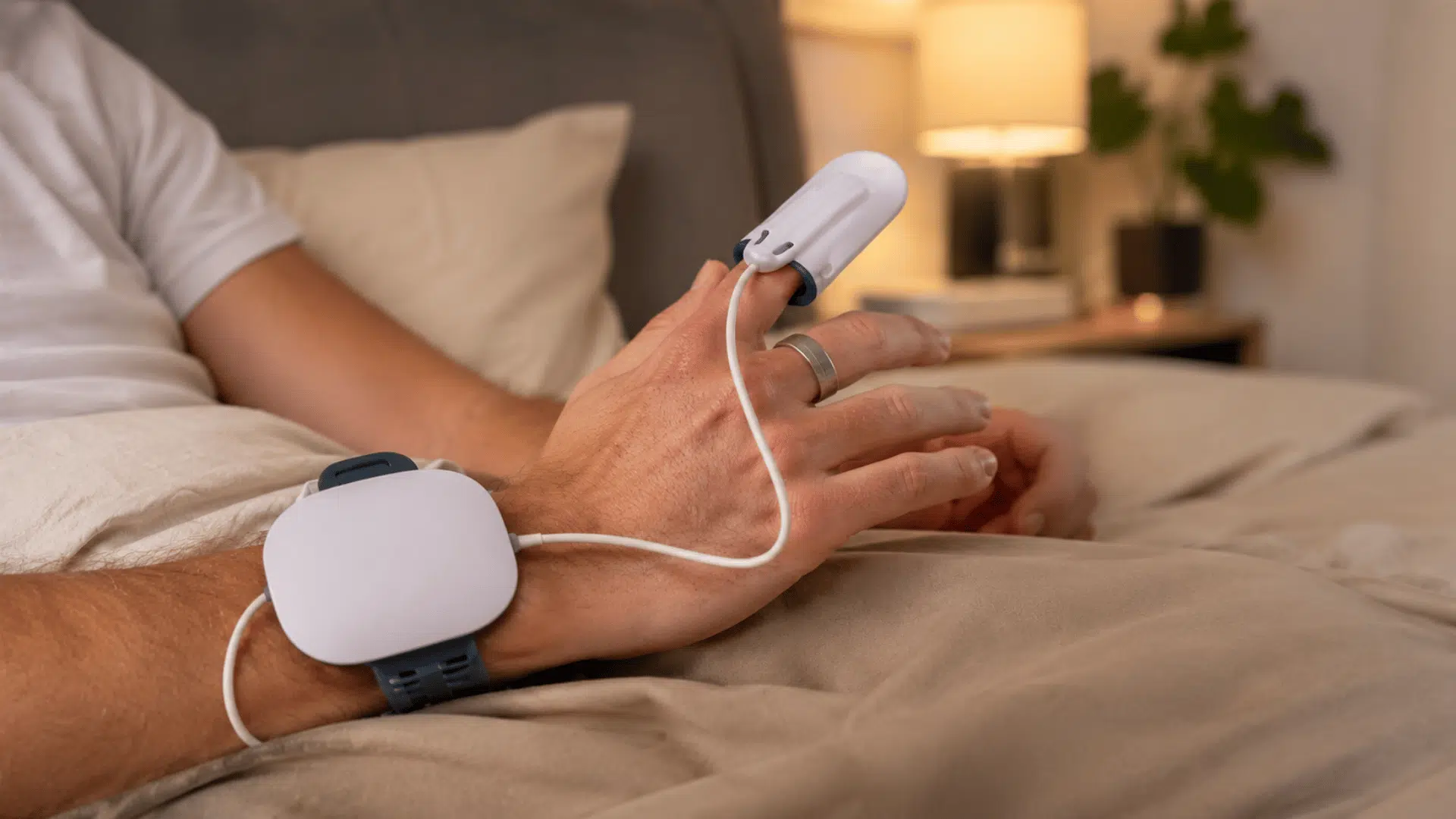
An at-home sleep study tracks breathing-related changes during sleep to help providers identify signs of obstructive sleep apnea. Common measurements include:
- Breathing Airflow: Tracks air movement through the nose and mouth to identify possible pauses or reductions in breathing.
- Oxygen Levels in The Blood: Records changes in oxygen saturation that may occur when breathing becomes interrupted.
- Heart Rate Changes: Monitors variations in heart activity that can happen during sleep disruptions.
- Breathing Effort: Measures the body’s effort to continue breathing during possible airway blockages.
- Snoring Patterns: Records snoring activity that may indicate restricted airflow.
- Sleep-Related Movement: Detects certain movements that may provide additional sleep-related information.
How to Book an At-Home Sleep Study
Booking a home sleep test follows a few simple steps from the first doctor visit to receiving results. Here is what the process typically looks like.
Step 1: Schedule a Provider Consultation
Meet with a doctor to discuss symptoms like snoring, breathing pauses, or fatigue. The provider reviews medical history and issues a testing order if home testing fits the patient’s needs.
Step 2: Confirm Insurance Coverage
Contact the insurance company to confirm approved testing providers, referral requirements, and expected costs. Confirming this early helps patients avoid unexpected out-of-pocket expenses later in the process.
Step 3: Select an Approved Testing Provider
The provider’s office or insurance plan usually directs patients to an approved sleep testing company. Some offer telehealth options, letting patients complete this step without an in-person visit.
Step 4: Schedule The Test and Receive the Device
Patients set a testing date and receive the monitoring device by mail or at a clinic. Setup instructions arrive with the device and should be reviewed before test night.
Step 5: Complete The Test and Return The Device
The patient wears the device overnight, then returns it by mail or drop-off. A sleep specialist reviews the results and schedules a follow-up to discuss findings.
At-Home Sleep Study vs. Lab Sleep Study
Both tests evaluate sleep problems but serve different needs. The right choice depends on symptoms, health history, and provider advice.
Lab sleep studies provide more detailed monitoring, including brain activity and muscle movement.
| Feature | At-Home Sleep Study | Lab Sleep Study |
|---|---|---|
| Location | Completed at home | Completed at a sleep center |
| Monitoring | Focuses mainly on breathing and oxygen | Tracks more body functions |
| Comfort | Uses your normal sleep environment | Requires overnight clinic stay |
| Cost | Usually lower, depending on coverage | Generally more expensive |
| Best for | Suspected obstructive sleep apnea | Complex sleep concerns |
Who Should Consider an At-Home Sleep Study?
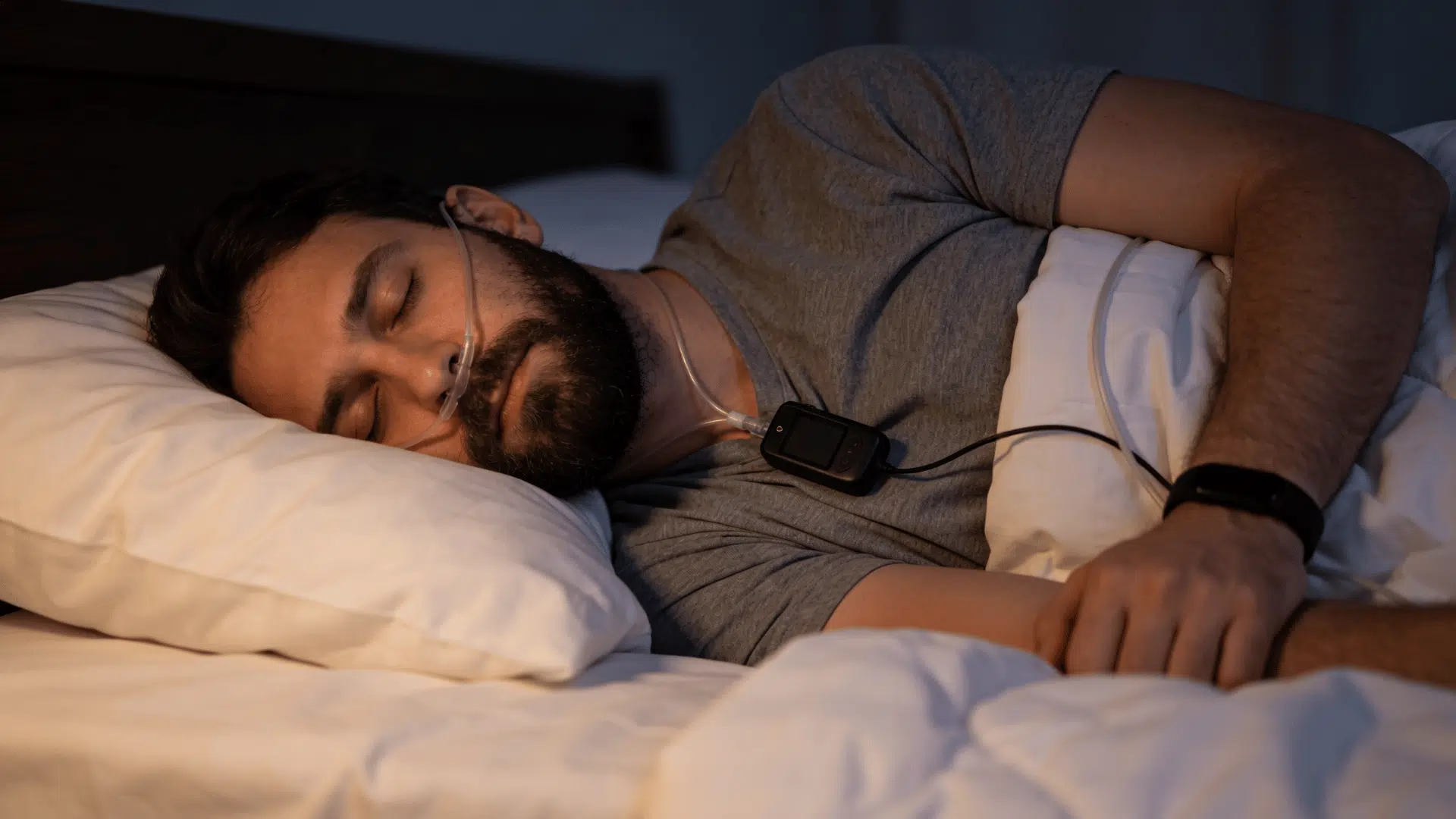
An at-home sleep study may be suitable for adults experiencing symptoms linked to obstructive sleep apnea, especially those with loud snoring, breathing pauses, gasping during sleep, or ongoing daytime tiredness.
Healthcare providers may recommend home testing when symptoms and health history suggest a possible sleep-related breathing issue.
Adults without complex medical conditions are often considered suitable candidates after provider evaluation.
However, the right testing option depends on individual symptoms and medical needs.
How Much Does an At-Home Sleep Study Cost?
The cost of an at-home sleep study depends on the test type, provider, device, and insurance coverage. In general, prices may fall into these ranges:
- Direct-to-Consumer Home Sleep Tests: Around $150 to $300, usually including the device and basic results review.
- Provider-Ordered Home Sleep Studies: Approximately $250 to $500, depending on consultation fees, device rental, and professional interpretation.
- Insurance-Covered Home Sleep Apnea Testing: Costs vary based on your plan, but eligible patients may only pay deductibles, copays, or coinsurance.
- Repeat Testing or Additional Evaluations: May add extra costs if the first test does not provide enough information or further assessment is needed.
Does Insurance Cover an at-Home Sleep Study?
Many insurance plans may cover an at-home sleep study when it is considered medically necessary and ordered by a qualified healthcare provider.
Coverage depends on factors such as your insurance policy, provider requirements, and approved testing services.
Before scheduling, contact your insurance company to confirm benefits, required documentation, and possible out-of-pocket costs.
Medicare and private insurers may have specific rules for covering sleep apnea testing. Checking coverage in advance can help you understand your expenses and avoid delays during the testing process.
Tips to Prepare for an at-Home Sleep Study
Preparing properly can help ensure your device collects accurate sleep information. Follow these steps before completing your test:
1. Read Device Instructions Carefully: Understand how to place sensors and operate the equipment before bedtime.
2. Maintain Your Normal Routine: Follow your usual sleep schedule to capture typical sleep patterns, even if you’re worried about falling asleep during the test itself.
3. Avoid Major Lifestyle Changes: Follow provider advice about alcohol, medications, and bedtime habits.
4. Track Your Symptoms: Note sleep issues, tiredness, or nighttime disruptions to discuss with your provider.
Conclusion
Better sleep starts with understanding what is affecting it. An at-home sleep study can provide valuable insights into possible sleep apnea while allowing many patients to complete testing in their own environment.
From knowing how the device works and what it measures to comparing home tests with lab studies, understanding costs, insurance options, and preparation steps can make the process easier.
The right choice depends on your symptoms and health history as well as guidance from a healthcare provider.
If you have experienced sleep-related concerns or completed a home sleep test, share your thoughts and experiences in the comments to help others make informed decisions.
Frequently Asked Questions
Can Children Use Home Sleep Tests?
Most home sleep studies are designed for adults unless specifically recommended otherwise.
Do I Need a Prescription for an at-Home Sleep Study?
Many provider-backed tests require a healthcare order before use.
Can Medications Affect at-Home Sleep Study Results?
Some medications may influence sleep patterns and should be discussed beforehand.